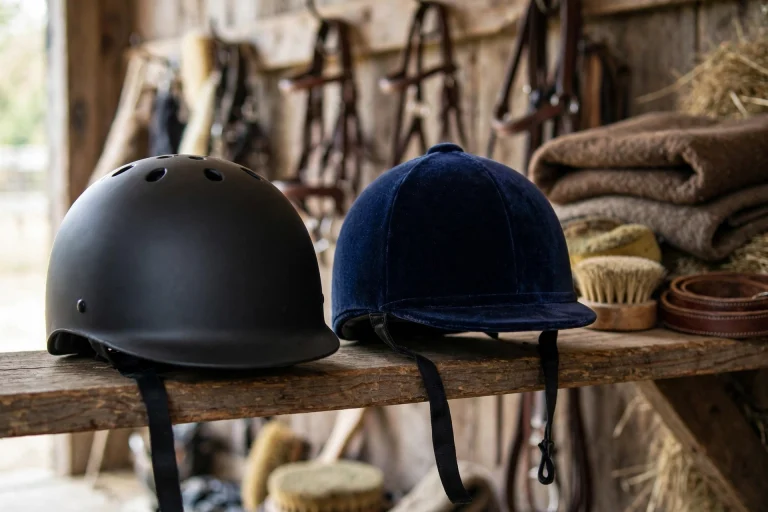
To choose a riding helmet for hot weather, pick a certified helmet with plenty of vents, a light-coloured or reflective shell, a moisture-wicking removable liner, and a fit that stays snug without squeezing — ventilation and fit matter far more than brand or price. Heat builds up fast under a helmet, and the right design lets air move across your scalp instead of trapping warm air against it.
This guide explains what actually keeps a helmet cool, how much ventilation is enough, and the fit and care details that make summer riding bearable.
What Makes a Riding Helmet Good for Hot Weather?
Three things decide how hot a helmet feels: airflow, colour, and the liner against your skin. Vents let outside air in and warm air out as you ride. A pale shell reflects sunlight instead of absorbing it the way a black shell does. And a liner that wicks sweat away from your forehead stops that clammy, dripping feeling that makes riders want to take the helmet off.
Certification comes before all of it. A hot-weather helmet still has to be a safety helmet first — look for the certification label inside, showing it meets a recognised standard such as ASTM/SEI or one of the European standards. Ventilation holes are engineered into certified designs so cooling does not come at the cost of protection; a fashion hat with holes punched in it is not the same thing.
Weight helps too. In general terms, lighter helmets feel less oppressive on long, hot rides, and many warm-weather models use in-moulded shells and trimmed-down harness webbing to save grams without giving up the certified structure underneath.
How Much Ventilation Do You Actually Need?
More vents help, but placement matters as much as count. Front vents scoop air in as you move, top vents let rising heat escape, and rear vents exhaust it — a helmet with vents only on top often feels little cooler than a closed one because the air has no path through. Mesh-covered vents are a good middle ground: they pass air while keeping insects and arena dust out.
Think about how you actually ride. A rider schooling in an indoor arena on still, humid days gets almost no natural airflow, so maximum venting matters most for them. A trail rider moving at a working trot outdoors generates their own breeze and can manage with moderate venting. Riders in very hot, dry climates should also look for wide vent channels cut into the foam liner itself, which guide air across the whole scalp rather than letting it stall at the front.
One honest limit: no helmet is air-conditioned. In extreme heat, the helmet is only part of the answer — ride in the cooler hours, take shade breaks, and drink water. A well-vented helmet makes those sensible habits work; it does not replace them.
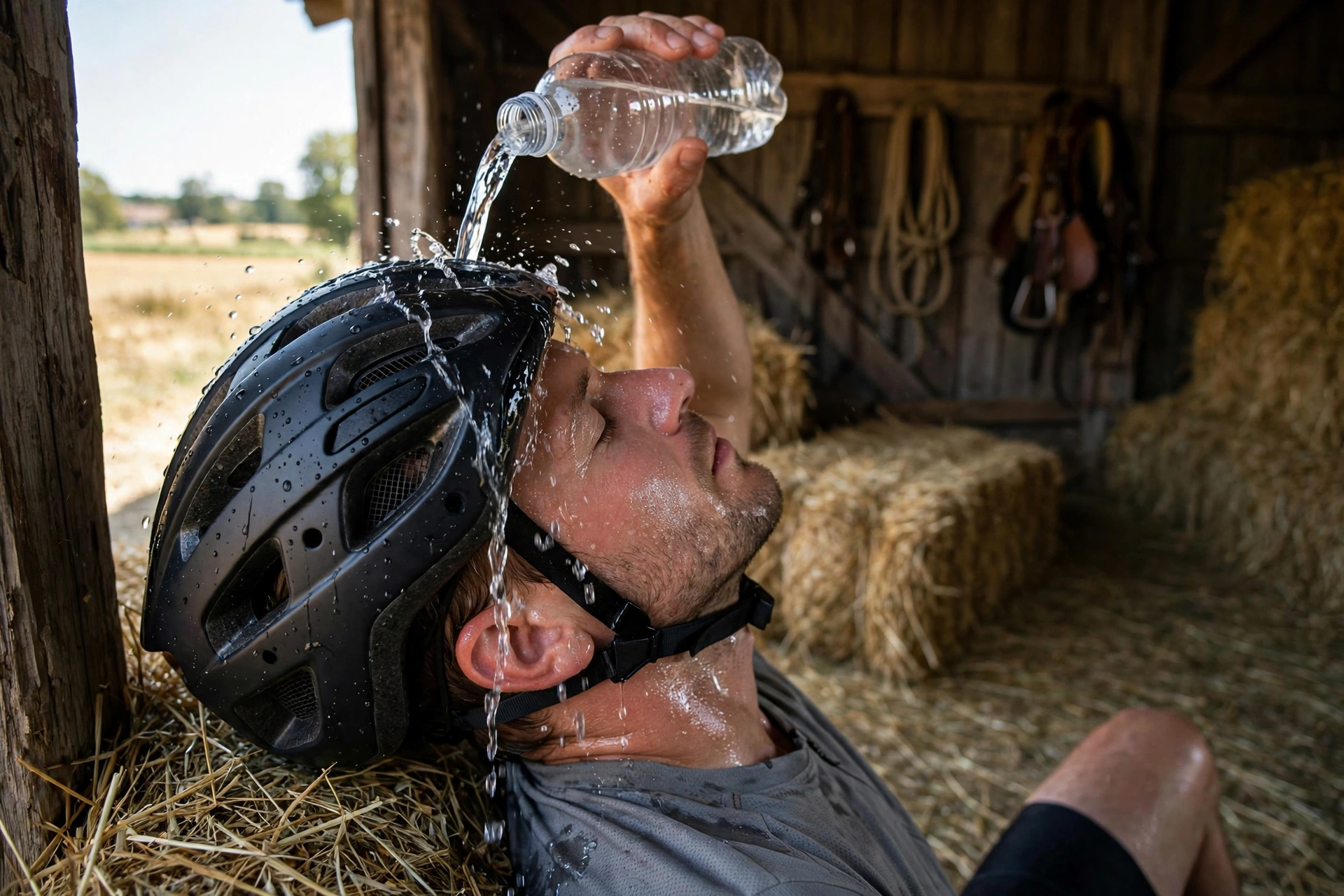
Which Colours and Materials Stay Coolest?
Colour is the simplest win. White and pale shells reflect a meaningful share of the sun’s heat, while black and dark navy absorb it — on a still, sunny day a dark helmet can feel noticeably hotter within minutes. Matte pale finishes and shells with reflective panels push the effect further. If your discipline’s dress code allows a choice at home, school in the pale helmet and save the dark one for the show ring.
Shell material plays a smaller role. Most modern helmets use a thin polycarbonate or similar shell over impact foam, and the foam itself is an insulator — which is why vent channels matter more than shell material for cooling. What does help is a liner made from wicking, quick-drying fabric, ideally removable so you can wash the sweat out and swap in a dry spare between rides.
Some helmets add a short peak or visor that shades the eyes and face. A little shade over the face reduces squinting and sun exposure, but check the visor is the flexible, breakaway type supplied with the helmet rather than a rigid add-on.
How Should a Hot-Weather Helmet Fit in Summer?
The fit rules do not change with the season: the helmet should sit level, about a finger’s width above the eyebrows, feel snug all around without a painful pressure point, and stay put when you shake your head with the harness unfastened. Sweat makes helmets slip, so a helmet that is merely “okay” in the shop can creep down over your eyes by the third ride on a hot day.
Beware two summer temptations. The first is buying a size up “for airflow” — a loose helmet moves in a fall and protects less, and the gap does not create useful cooling anyway. The second is stuffing a thick cap or scarf underneath, which lifts the helmet and breaks the fit. If you need sun protection under the helmet, use only a thin skull cap or liner made for the purpose, and re-check the fit with it on.
Rotational protection is worth considering in any season. Some certified helmets add a low-friction liner system designed to reduce twisting forces in a fall — if you are comparing options, it helps to understand what MIPS is for helmets and how that kind of liner works before you decide it is or is not worth having.
How Do You Care for a Helmet in Summer Heat?
Heat and sweat are hard on helmets. The biggest mistake is storing a helmet in a hot car or a sealed tack box in the sun — sustained high temperatures can degrade the impact foam over time, quietly shortening the helmet’s useful life. Store it somewhere cool, dry, and ventilated, and let it air out after every ride rather than sealing it away damp.
Wash the liner regularly; dried sweat is abrasive, smells, and can irritate skin. If the liner is not removable, a gentle wipe with mild soap and water and a thorough air-dry does the job — never use harsh solvents or heat to dry it. Check the harness webbing too: sweat and sunscreen soften and soil webbing, and a frayed or stretched harness is a reason to replace the helmet, not to soldier on.
Finally, remember the standing rules apply in summer too: replace the helmet after any fall or impact, and retire it after roughly five years of use in general terms, sooner if the foam, shell, or harness shows wear. A cool head is the goal — a protected one is the point.
Frequently Asked Questions
Q: Are more vents always better on a hot-weather riding helmet?
A: Not automatically. Vent placement and the channels inside the liner matter as much as the number — front, top, and rear vents that let air flow through beat a cluster of holes on top. All the helmets worth buying are certified designs, so their venting is engineered not to compromise the structure.
Q: Does a white helmet really stay cooler than a black one?
A: Yes, noticeably in direct sun. Pale shells reflect sunlight while dark shells absorb it and pass that heat inward. The difference is biggest on still, sunny days; under cloud or indoors, ventilation and liner choice matter more than colour.
Q: Can I wear a cap under my helmet to soak up sweat?
A: Only a thin liner or skull cap designed to go under a helmet, and only if the helmet still fits snugly and level with it on. Thick caps, bandanas, and hairstyles that lift the helmet break the fit and reduce protection — fit always wins over sweat management.

Olivia
Writer at Helmet Today, covering helmet reviews, fit and riding safety.