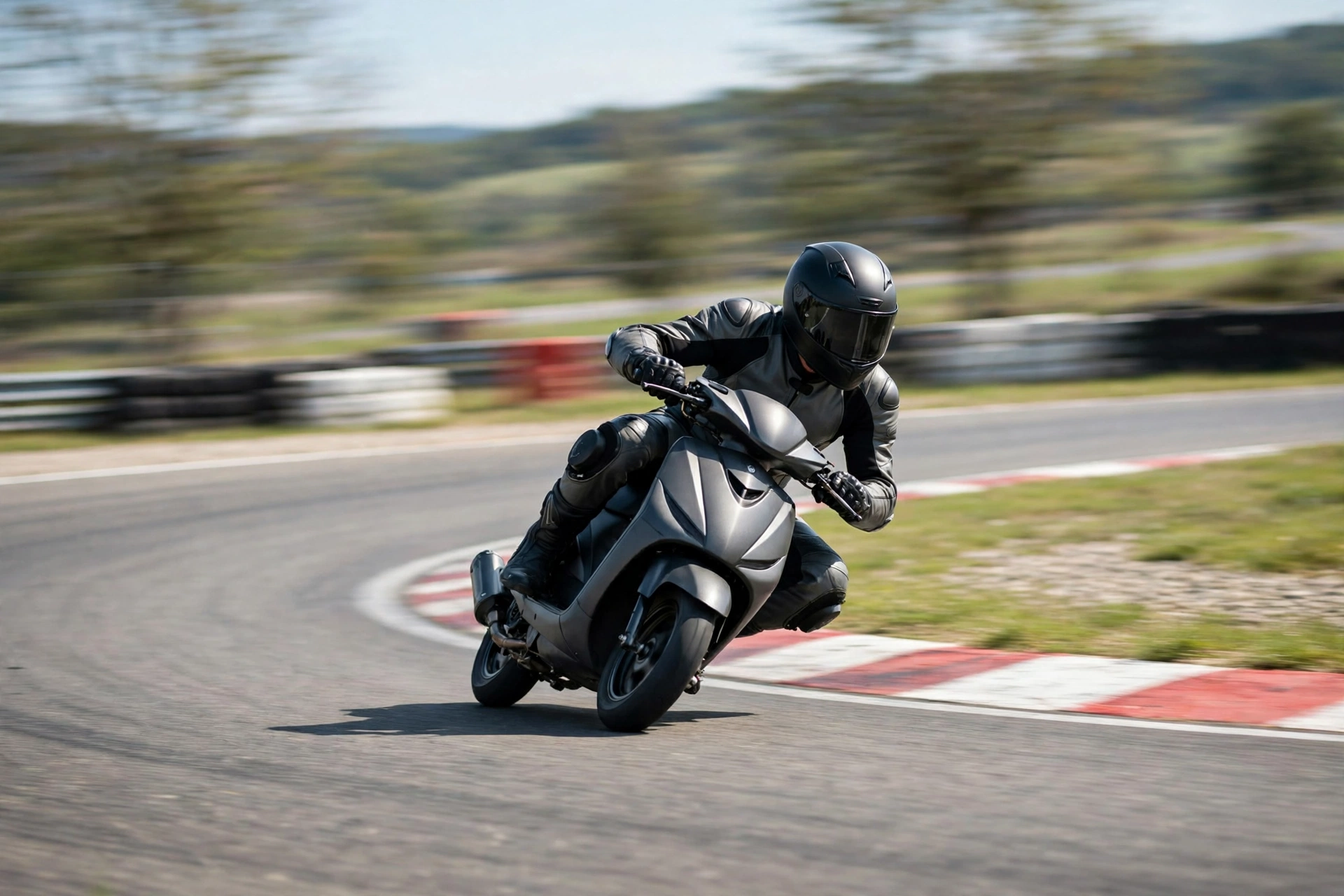
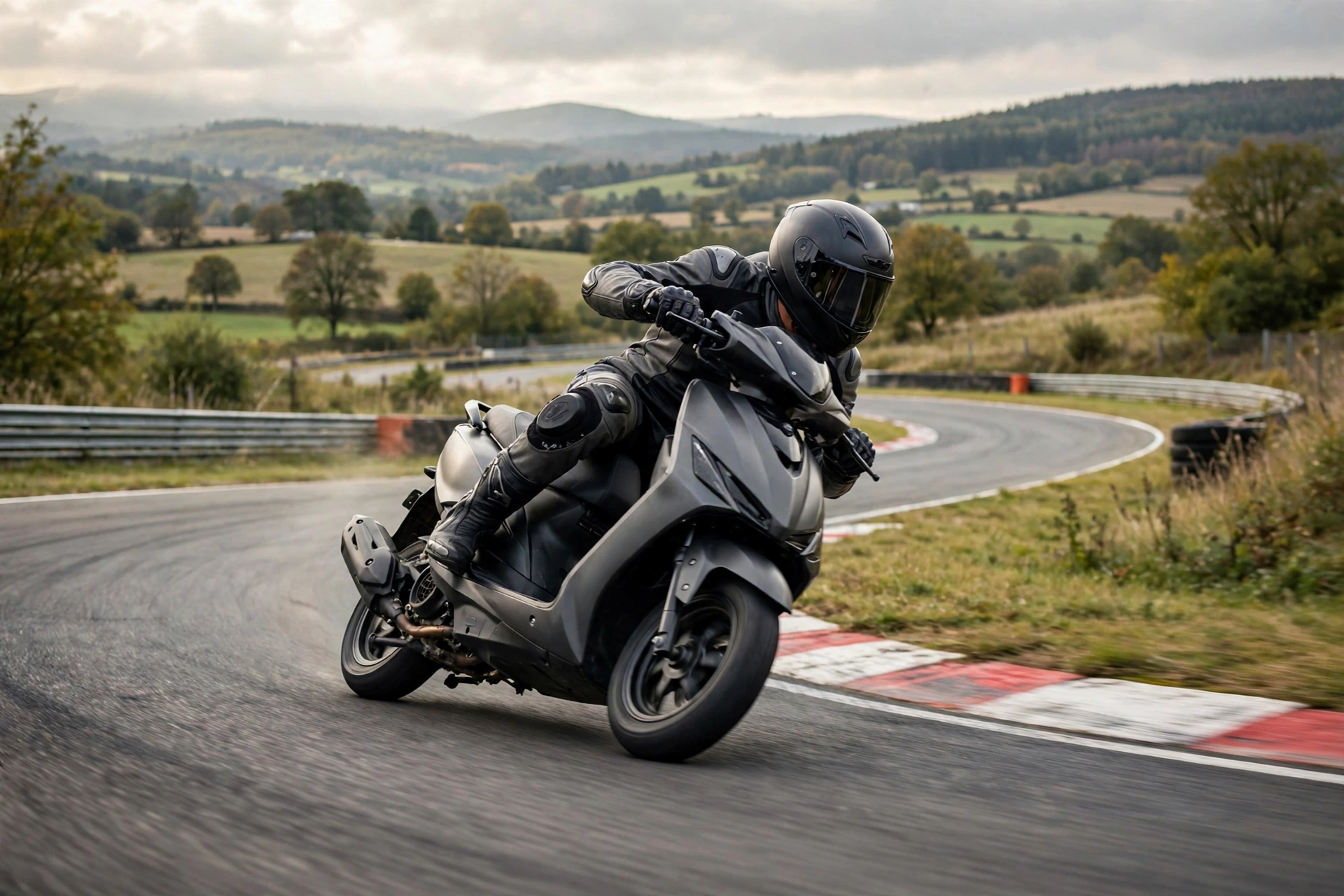
A helmet for scooter racing is a helmet worn by a rider on a small-wheeled racing scooter to protect the head from hard falls, knocks from the scooter, and impacts with the track, and in general terms every scooter racer should wear one that fits well, fastens securely, and is in good condition. Scooter racing is a motorsport in which riders race small, step-through scooters around a closed circuit, leaning hard into corners and reaching speeds that are far higher than everyday road riding. A fall at racing speed can be a serious one, so a helmet is treated as essential safety equipment, not as an optional extra.
Racing scooters are light, quick, and very different from a road scooter used for a short trip to the shops. The rider sits low, the wheels are small, and the track surface is hard tarmac. A small mistake in a corner can send the rider sliding across the ground, and the head can strike the track, a kerb, or another scooter. A helmet gives the rider protection in that moment.
What kind of helmet is best for scooter racing?
The best helmet for scooter racing is, in general terms, a full-face helmet with a hard outer shell, a secure chin strap, and a visor that gives a clear view of the track ahead. A full-face helmet covers the chin and jaw as well as the top and sides of the head, and that extra coverage matters in a sport where a rider can slide face-first along the tarmac. Many scooter racers use a helmet made for motorcycle racing or karting, because those helmets are built for speed, for repeated use, and for the kind of impacts that can happen on a circuit.
An open-face helmet leaves the chin and face exposed, so it is a weaker choice for racing, even if it feels cooler on a hot day. A scooter racing helmet should also have good ventilation, because racing is hard physical work and a hot, stuffy helmet becomes a distraction. The visor should be clear and scratch-free, and it should close firmly so that wind, dust, and insects cannot get in at speed.
How should a helmet for scooter racing fit?
A helmet for scooter racing should fit snugly, sit level on the head, and stay in place when the rider shakes their head or leans hard into a corner. The helmet should cover the forehead and the top of the head, and the chin strap should be fastened securely every time the rider is on the scooter. A strap that is left loose lets the helmet lift in the wind or slide in a fall, and a helmet that comes off at speed is no help at all.
The fit should be checked with the goggles or glasses the rider will actually wear, if any, because eyewear can change how a helmet sits. The rider should also check that the helmet does not block their hearing, because a scooter racer needs to hear other scooters, the sound of their own engine, and any warnings from the track marshals. A new helmet often feels tight at first and then settles as the lining shapes to the head, but it should never press painfully on one spot or pinch the ears.
What safety rules apply to scooter racing helmets?
In general terms, most scooter racing clubs and events ask riders to wear a helmet that meets a recognised safety standard and is in good condition, and some events check helmets before a rider is allowed on the track. A rider who is unsure should check the rules for the club or the event before the race day, because the rules can differ from one organiser to another. Wearing a helmet that is damaged, very old, or bought second-hand with an unknown history is a risk that is easy to avoid by choosing a new helmet from a trusted seller.
A helmet that has taken a hard impact in a fall should be looked at with care, and in general terms a helmet that has taken a serious impact should be replaced rather than used again. The damage may not be easy to see, because the part that absorbs the impact can be hidden inside the shell. A rider who keeps a record of falls and knocks will find it easier to judge when a helmet has done its job and needs to be retired.
What other kit should a scooter racer wear?
A helmet is only one part of a scooter racer’s kit, and it works best when the rider also wears the rest of the protective clothing that the sport calls for. Gloves protect the hands in a slide, and a racing suit or leathers protect the arms, legs, and body from road rash on the tarmac. Sturdy boots protect the feet and ankles, and they should fasten firmly so they do not come off in a fall. Riding in ordinary clothes and trainers leaves the skin exposed, and a fall at racing speed can cause painful injuries that proper kit would have prevented.
The rider should also think about the scooter itself, because a well-kept scooter is a safer scooter. Brakes, tyres, and steering should be checked before every race, and anything loose or worn should be fixed before the rider goes out on the track.
How should a scooter racing helmet be looked after?
A scooter racing helmet should be looked after with regular cleaning and sensible storage, in the same way as any motorsport helmet. After a race day, the rider should wipe the shell clean, clean the visor with a soft cloth, and let the lining air out so it does not stay damp with sweat. Strong heat, such as a hot car, can harm the materials in a helmet over time, so a cool, dry place is a better choice for storage.
The helmet should be kept where it will not be knocked about or used as a seat or a shelf, because a hard knock can damage it even when no crack is visible. A helmet bag is a simple way to protect it between race days. Riders who are choosing a new helmet may also want to learn about features that can help in a fall, including a system designed to reduce rotational forces, such as MIPS, which is found in some helmets made for motorsport and speed. A well-kept helmet, worn every time, gives a scooter racer the best chance of enjoying a fast day on the track in safety.
Can a road scooter helmet be used for scooter racing?
A road scooter helmet that fits well and is in good condition can be a starting point, but in general terms a full-face helmet made for racing is a better choice for the track. Check the rules of the club or event first.
Do scooter racers have to wear a full-face helmet?
Many clubs and events expect a full-face helmet, because it protects the chin and jaw as well as the head. A rider who is unsure should check the rules before race day.
When should a scooter racing helmet be replaced?
A scooter racing helmet should be replaced after a hard impact or a fall, or when it no longer fits well, shows damage, or has been worn for a long time. When in doubt, replace it rather than keep racing in it.

Olivia
Writer at Helmet Today, covering helmet reviews, fit and riding safety.