To fit a climbing helmet correctly, choose the size that matches your head measurement, set the helmet level on your head so it covers your forehead, then adjust the rear dial and chin strap until the helmet stays put when you shake your head — snug all round, with no rocking, tipping, or pressure hotspots. A climbing helmet only protects you if it stays in exactly that position during a fall or when rockfall hits, so fit is not a comfort detail. It is the whole point of wearing the helmet.
This guide walks through measuring your head, adjusting the cradle, straps, and dial in the right order, and the fit checks that tell you the helmet is genuinely secure — including how to allow for a beanie or hood on cold alpine days.
What Does a Correctly Fitting Climbing Helmet Feel Like?
A well-fitted climbing helmet feels even and secure all the way around your head. The inner cradle or foam should contact your head without any single point digging in, and the helmet should sit level — roughly two fingers’ width above your eyebrows — rather than tipped back like a cap. When you shake your head side to side and nod firmly, the helmet should move with your head, not a half-second behind it.
There should be no side-to-side rock: if you can wiggle the helmet while your head stays still, the cradle is too loose or the size is wrong. Equally, it should not feel like a vice — a fit that gives you a headache after ten minutes in the shop will only get worse on a long route.
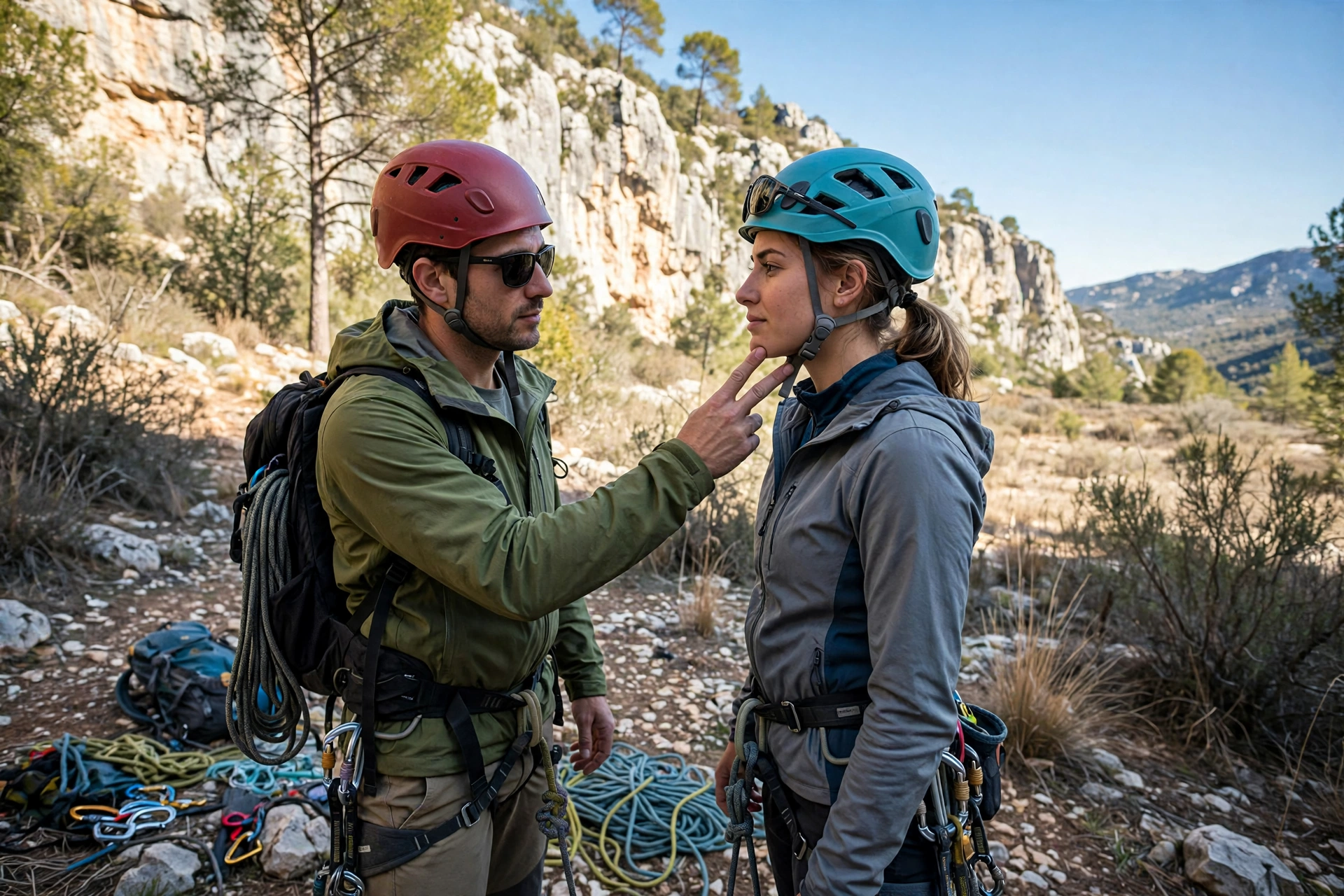
Your chin strap should be snug — one or two fingers between strap and chin — and the helmet should not lift when you push up on the front brim. If it slides backwards, the retention system is not doing its job yet.
How Do You Measure Your Head for a Climbing Helmet?
Wrap a soft tape measure around the largest part of your head — just above your eyebrows at the front and around the widest point at the back of your skull. Keep the tape level and snug but not tight, and note the measurement in centimetres. If you do not have a tape measure, use a piece of string and measure it against a ruler afterwards.
Compare your measurement with the size range printed for the helmet you are considering. Most climbing helmets come in one or two sizes, each covering a range of head circumferences, and the adjustable cradle covers the span in between. If your measurement falls right at the boundary between two sizes, try both if you can — head shape matters as much as head size, and oval and round heads fit the same shell differently.
Measure with whatever you realistically wear underneath. A thin beanie or sun cap adds a little circumference, so if you climb in cold conditions and fit your helmet over a light hat, measure with the hat on.
How Do You Adjust the Straps and Dial on a Climbing Helmet?
Work in a set order: size first, position second, straps last. Start with the helmet undone. Use the rear adjustment dial or sliding cradle to open the headband fully, place the helmet level on your head, then tighten the dial until the cradle grips evenly. On many helmets the rear cradle can also be raised or lowered, or folded away for packing — set it so it cups the back of your skull, because that is what stops the helmet tipping forward.
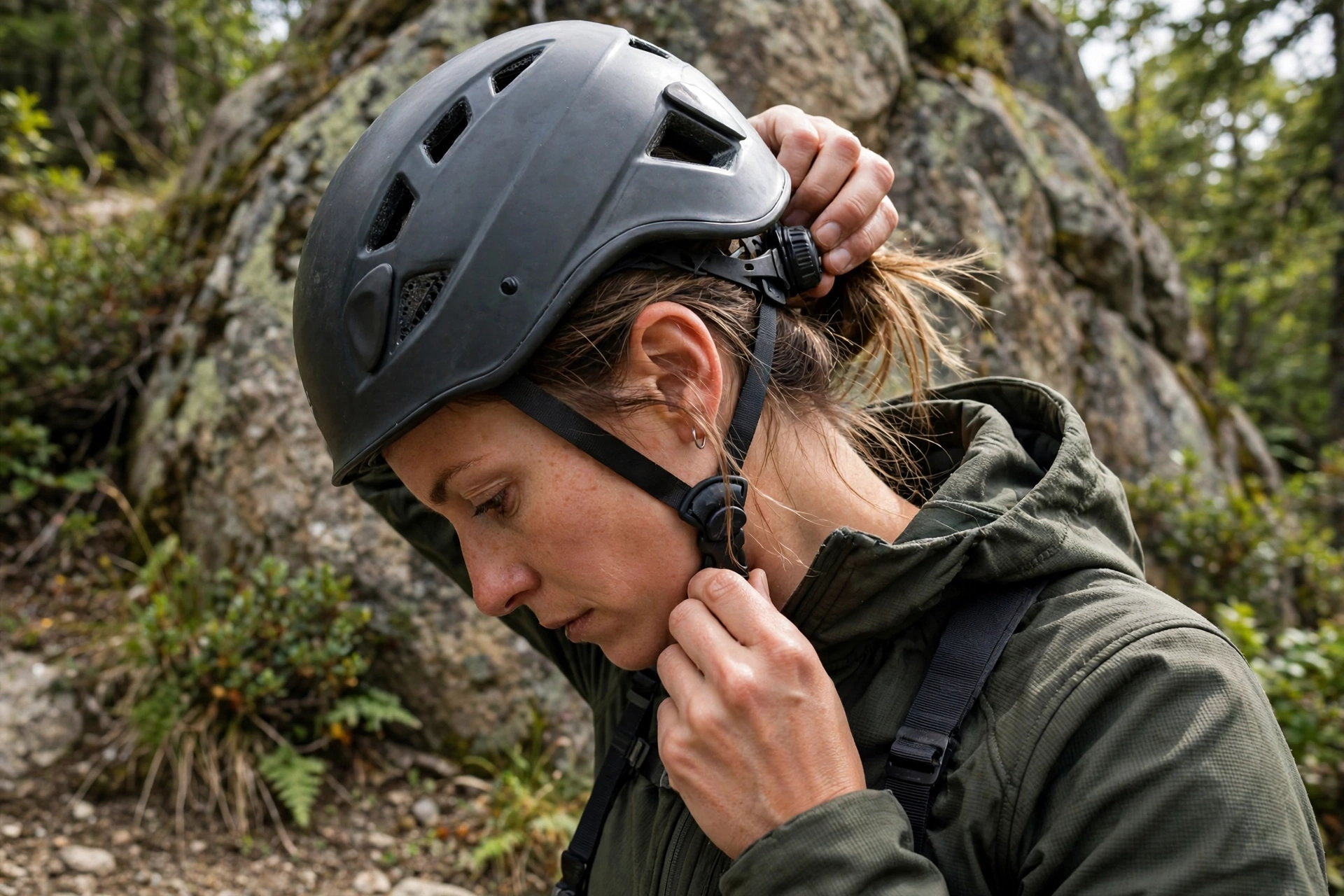
Next, the side straps. These usually form a Y shape on each side, and the junction of the Y should sit just below your ear lobe. If the straps have sliders, even them up so both sides match — an uneven Y pulls the helmet crooked no matter how tight the dial is. The straps should lie flat against your face without twists.
Finally, buckle the chin strap and tighten it until it is snug under your chin. Test the result: open your mouth wide, shake your head, and look up and down as you would scanning a route. The helmet should stay level and planted through all of it. If it shifts, work back through dial, then side straps, then chin strap, in that order.
Why Does Fit Matter So Much for Protection?
A climbing helmet manages impact energy by crushing or deforming its foam liner in a controlled way, spreading the force of falling rock or a swing into the wall over a larger area and a longer moment. That system assumes the helmet is sitting squarely over the part of your head it was designed to cover. A helmet that has rotated, tipped back, or slid to one side leaves exactly the area it should protect exposed.
Fit matters for retention too. In a fall, forces can try to pull the helmet off your head entirely, which is why climbing helmets are tested as a complete system of shell, liner, and straps. Some modern designs also add low-friction layers intended to reduce rotational forces in an angled impact — the idea behind systems explained in our guide to what MIPS is for helmets. Whatever the technology, none of it works if the helmet is not held firmly in place.
In general terms, this is why a cheaper helmet that fits you perfectly is a better buy than a premium helmet that almost fits. Prioritise the fit checks over the feature list every time.
How Should a Climbing Helmet Fit With a Beanie or Hood?
Cold-weather climbers often wear a thin beanie under the helmet or pull a hood over it. A thin, smooth beanie is fine if you re-run the fit checks with it on: open the dial a click or two, confirm the helmet still sits level, and check the beanie’s rim has not pushed it up off your forehead. Thick hats, folded cuffs, and bulky seams change the fit enough to matter, so avoid them.
Hoods usually go over the helmet rather than under it. Put the helmet on first, adjust it properly, then pull the hood up and check it does not drag the helmet backwards when you turn your head. If the hood’s drawcord catches on the helmet, loosen it — you need full head movement to look up at your leader or down at your feet.
Whatever layer combination you climb in, do your final fit check wearing exactly that combination. A helmet fitted bare-headed in a warm shop can feel very different at a windy belay.
Frequently Asked Questions
Q: Should a climbing helmet be tight?
A: Snug, not painful. It should grip evenly all round with no rocking or sliding, but it should not create a pressure hotspot or headache. If it hurts in one spot after a few minutes, try a different size or model — head shape matters.
Q: How far down should a climbing helmet sit on the forehead?
A: Roughly two fingers’ width above your eyebrows, sitting level rather than tipped back. If the front brim is up near your hairline, the helmet is too far back to protect your forehead in a fall.
Q: Can I wear a cap or beanie under a climbing helmet?
A: A thin, smooth layer is fine if the helmet still passes the shake and push tests with it on. Thick, bulky hats change the fit and can let the helmet shift, so re-adjust the dial and straps whenever you add or remove a layer.

Olivia
Writer at Helmet Today, covering helmet reviews, fit and riding safety.