Yes — climbing helmets do expire. The foam, shell, and straps slowly degrade with age, sunlight, sweat, and knocks, so in general terms manufacturers recommend replacing a climbing helmet after a number of years of use, and immediately after any significant impact, even if it looks undamaged. There is no single expiry date stamped on every helmet, but age and condition together decide when a helmet stops being protection and starts being a hat.
This guide explains why climbing helmets age, what speeds it up, the warning signs to inspect for, and whether a helmet you have barely used can still be past its best.
Why Do Climbing Helmets Wear Out Over Time?
The part of a climbing helmet that saves your head is mostly foam — expanded polystyrene (EPS) or expanded polypropylene (EPP) — covered by a thin plastic shell. The foam protects you by crushing permanently in an impact, absorbing energy that would otherwise reach your skull. Over the years, that foam can become more brittle, the shell can lose flexibility, and adhesives holding the layers together can weaken. Some modern helmets also add low-friction layers to reduce rotational forces in angled impacts — the idea explained in our guide to what MIPS is for helmets — and those layers age along with everything else.
Ultraviolet light is one of the main culprits. Sunlight slowly breaks down the polymers in the shell and webbing, which is why a helmet that lives on a sunny dashboard or hangs in bright gear-room windows ages faster than one stored in the dark. Heat accelerates the process, and so do the chemicals in sunscreen, insect repellent, and some cleaning products.
The straps and buckles age too. Webbing gets abraded, stitching wears, and plastic adjustment parts can crack or stop gripping. Since the retention system is what keeps the helmet on your head in a fall, tired straps are a genuine safety issue, not a cosmetic one.
What Shortens a Climbing Helmet’s Life?
Every knock counts a little. Dropping the helmet onto rock, swinging it into the cliff while it hangs from your harness, or letting it rattle around loose in a pack with hardware all add up. A single hard impact — from a falling stone or a fall where your head hits the rock — can use up the foam in one spot even when the shell springs back and shows nothing.
How you store the helmet matters just as much. Helmets left in hot cars, squashed under heavy loads in a gear bin, or stored near solvents and fuel degrade much faster than helmets kept cool, dry, and unstressed. Sweat left to soak into the padding and straps after every climb also shortens their life if the helmet is never aired out.
Heavy use is the obvious factor. A guide who climbs two hundred days a year will wear a helmet out long before a weekend climber does, which is why blanket calendar rules are only a rough guide — condition and history matter more than the date alone.
How Can You Tell a Climbing Helmet Is Worn Out?
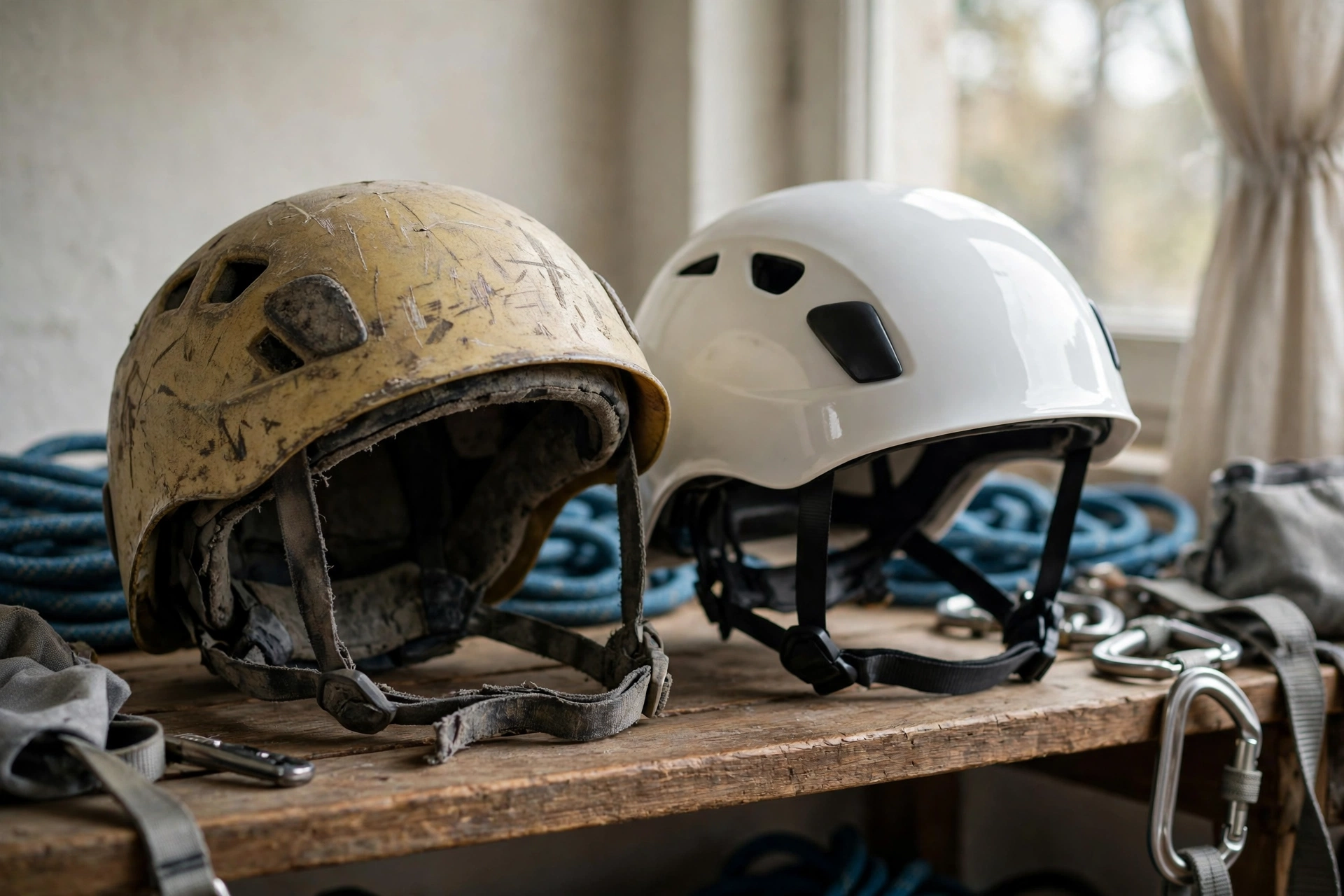
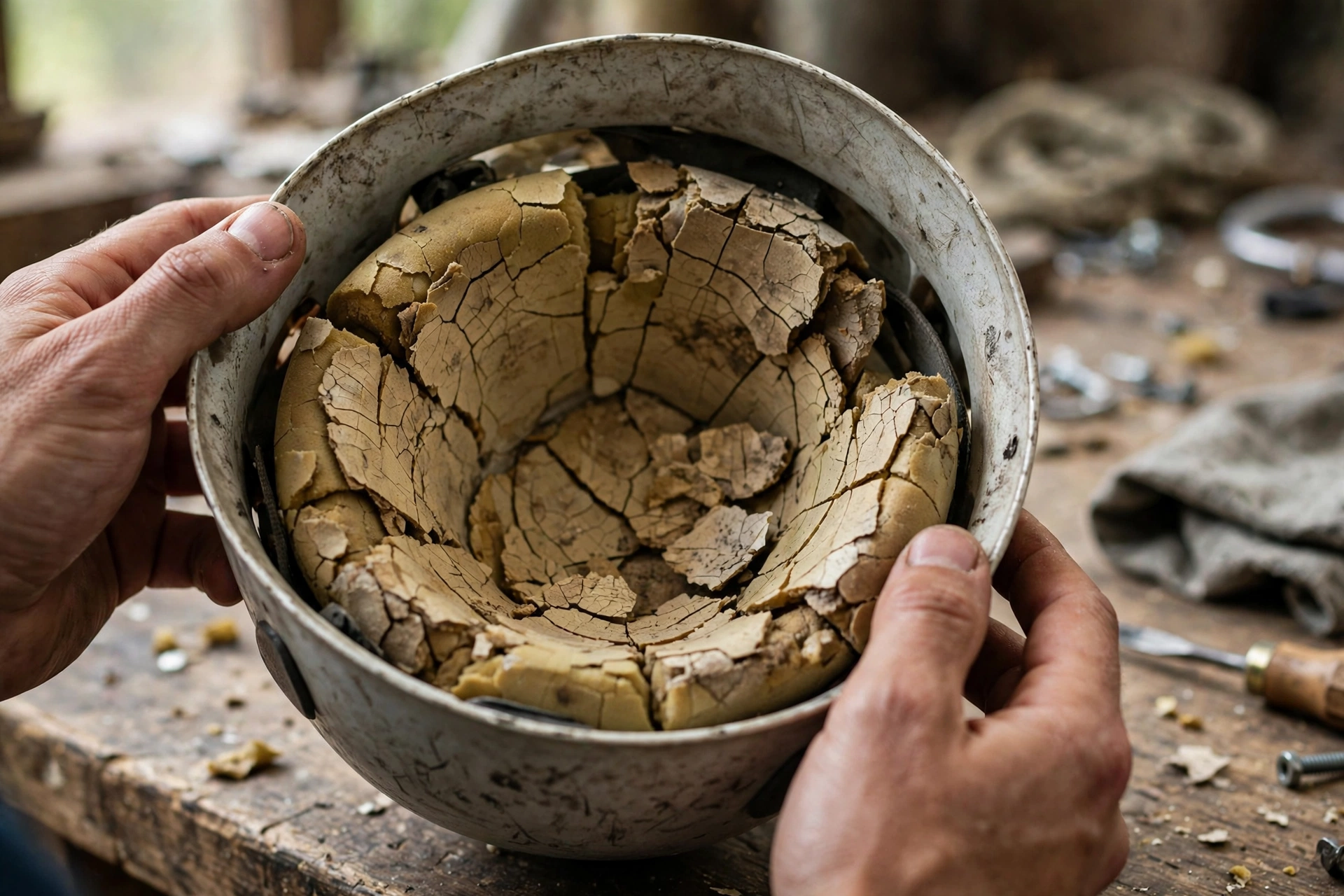
Inspect your helmet a few times a season, inside and out. Look for cracks, dents, or white stress marks in the shell, and check the foam underneath for crumbling, dents that have not sprung back, or sections pulling away from the shell. On helmets with a thin shell over foam, squeeze gently — soft, spongy, or delaminated areas are a bad sign.
Check the harness system with equal care. Frayed or fuzzy webbing, a buckle that slips or will not click positively, a rear dial that no longer holds its setting, and stretched or torn headlamp clips all say the helmet is nearing the end. Comfort padding that has gone flat is less critical, but it often signals the foam behind it has had a long life too.
Also trust the history test. If the helmet has taken a real impact — your head hit rock, or a sizeable stone struck it — retire it even if your inspection finds nothing. The damage that matters is inside the foam, and in general terms it cannot be checked by eye.
Does a Climbing Helmet Expire If You Never Use It?
Slowly, yes. A helmet stored perfectly in a cool, dark place will age far more slowly than one in daily use, but the materials still change over time, and manufacturer guidance usually counts a helmet’s lifespan from when it starts being used, with an overall limit even for stored helmets in some cases. Check the guidance that came with your model.
The practical answer is to judge an unused older helmet on condition and provenance. If it has been kept boxed, dark, and cool, and a careful inspection shows supple straps, sound foam, and no cracks, it may still be serviceable. If its storage history is unknown — a bargain second-hand find, for example — you cannot know what it has absorbed, and most climbers would not trust their head to it.
When in doubt, replacement is cheap compared with what the helmet is for. If you find yourself wondering whether an old helmet is still good, that doubt is usually the answer.
How Can You Make a Climbing Helmet Last Longer?
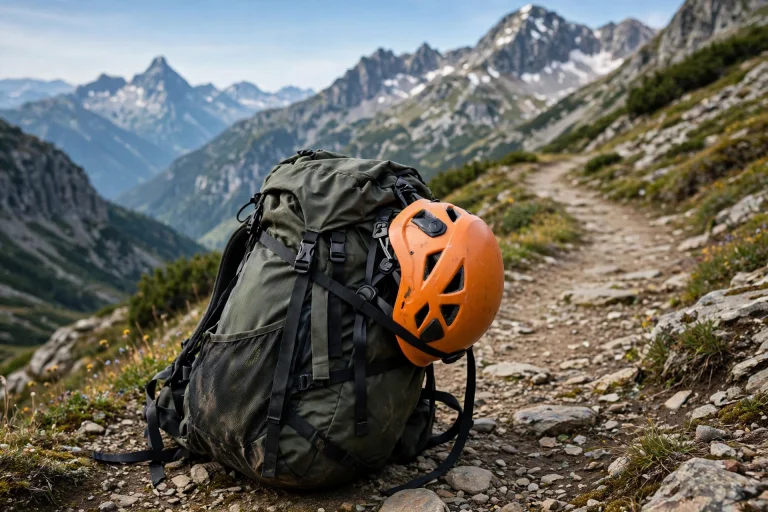
Treat it as protective equipment, not luggage. Carry it attached to the outside of your pack or in a helmet holder rather than crushed at the bottom, keep it out of direct sun when you are not wearing it, and never sit or stand on it at the crag. Avoid leaving it in a hot car boot, which is one of the fastest ways to age foam and glue.
Keep it clean with lukewarm water and mild soap only, let it air-dry fully, and store it somewhere cool, dark, and dry with nothing heavy resting on it. Keep solvents, fuel, and strong repellents away from it, and wipe sunscreen off the shell and straps after a day out.
Finally, keep a rough note of when you bought it and any hits it has taken. Lifespan decisions are much easier when you are not guessing about a helmet’s age or history.
Frequently Asked Questions
Q: How many years does a climbing helmet last?
A: In general terms, manufacturers commonly suggest a few years of regular use as a working life, with the exact figure varying by model. Heavy use, sun exposure, and any significant impact shorten that; careful storage can help a lightly used helmet reach the longer end.
Q: Can I keep using a climbing helmet after it was dropped?
A: A small drop onto soft ground is usually not a concern, but a hard drop onto rock or concrete — or any impact with your head in it — is reason to inspect carefully and retire the helmet if there is any doubt. Hidden foam damage cannot be ruled out by looking.
Q: Is it safe to buy a second-hand climbing helmet?
A: Most climbers avoid it. You cannot know a used helmet’s age, storage history, or whether it has already absorbed an impact, and the damage that matters is hidden inside the foam. A new helmet with a known history is the safer buy.

Olivia
Writer at Helmet Today, covering helmet reviews, fit and riding safety.