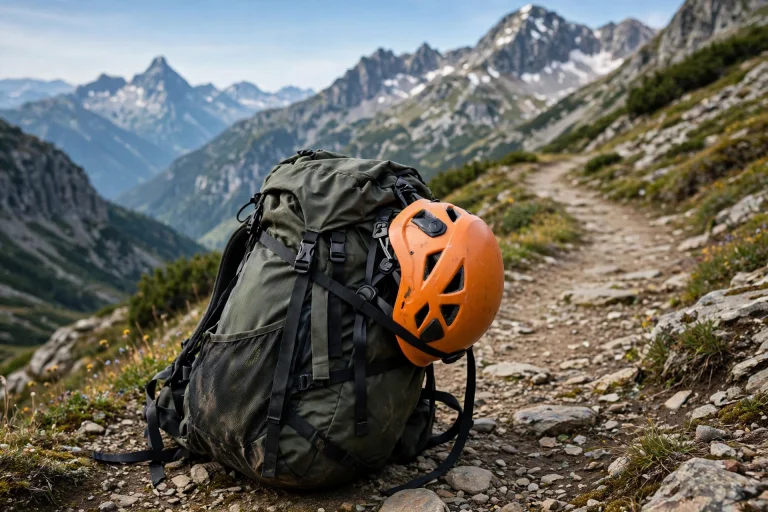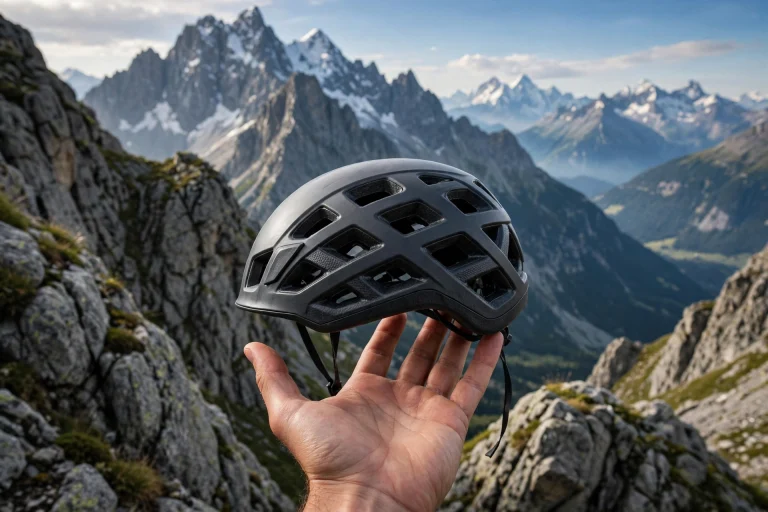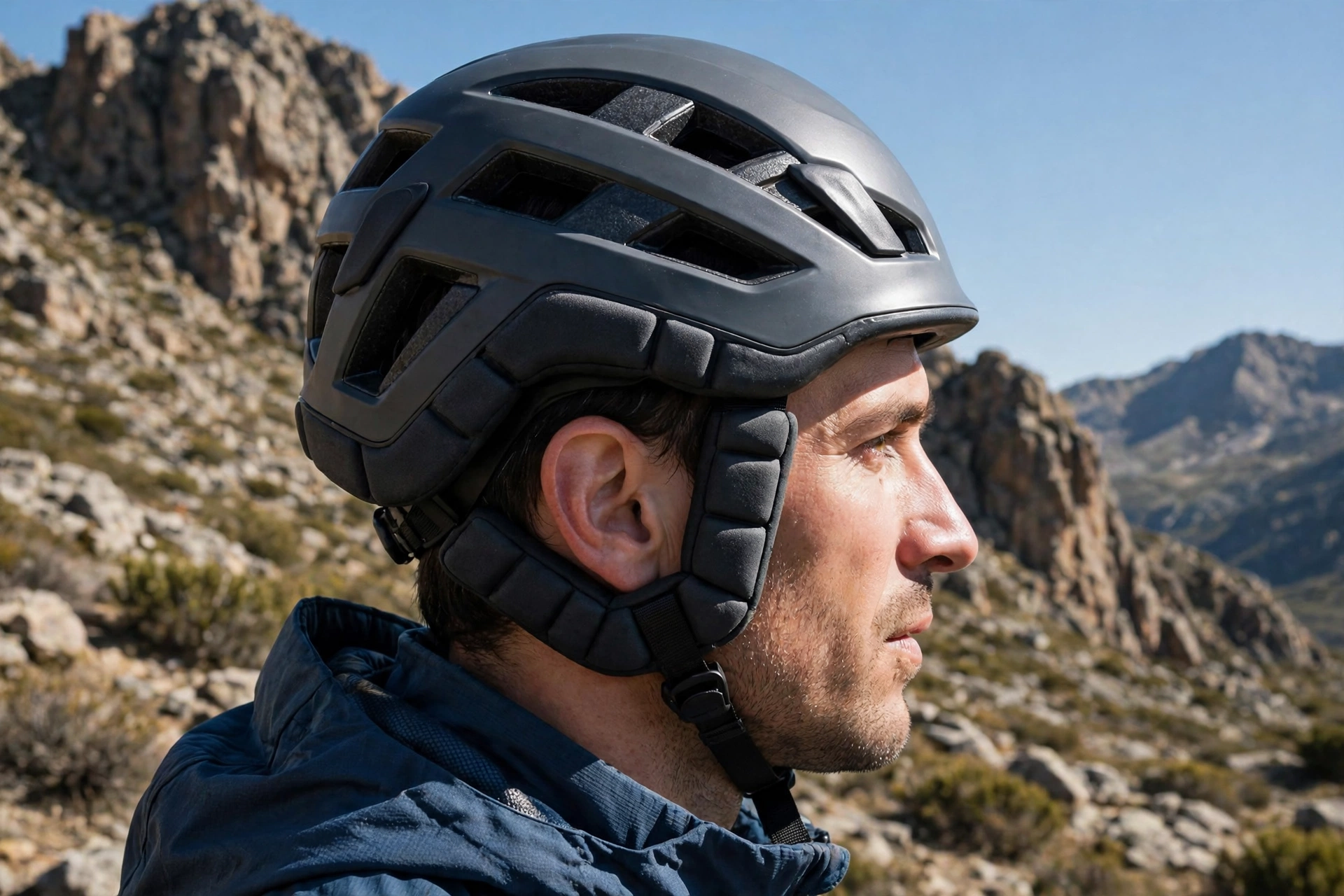
Side impact protection in a climbing helmet means the helmet is designed to absorb blows to the sides of your head — not just rockfall landing on top. Traditional climbing helmets focused on the crown, but many modern designs extend foam coverage lower around the temples and ears, because real climbing falls often swing you sideways into the rock. Understanding the difference helps you choose a helmet that matches the climbing you actually do.
This guide explains why side impacts happen, how the standards treat them, how newer helmets add protection around the sides, and what to look for when you buy.
Why Do Side Impacts Matter in Climbing?
The classic climbing helmet scenario is rockfall: a stone drops from above and strikes the crown. But a large share of real head injuries in climbing happen differently. When you fall, you often swing — a pendulum into the wall on a traverse, a sideways slam after a foot slips, or a tumble on steep ground. In those moments it is the side of your head, around the temple, that meets the rock.
The temple area is also vulnerable territory. The skull is thinner at the sides than at the crown, and there is less natural padding. A helmet that only armours the top leaves this area covered by little more than a thin shell edge or nothing at all.
Mountaineering adds more sideways scenarios: slipping on ice and sliding into rocks, being knocked over by wind or a slipped crampon, and glancing blows from falling ice. Side coverage is not a niche concern — for many climbers it is the more realistic one.
How Do Climbing Helmet Standards Treat Side Impacts?
In general terms, the long-established climbing helmet standards were written mainly around impacts from above — a weight dropped onto the crown — plus tests for penetration by a sharp object and for the straps keeping the helmet on. That reflects the original design brief: protect climbers and mountaineers from things falling on them.
Side impacts were historically tested less rigorously, if the helmet covered the sides at all. Many classic designs sat high on the head like a hard hat, with the foam concentrated on top and the sides of the head largely open. They passed the standards of their day while offering modest sideways protection.
Newer voluntary ratings and updated design thinking have pushed the industry to test and build for impacts around more of the head. When you shop, this means the standards label tells you the helmet passed the required tests, but it does not tell the whole story about side coverage — you have to look at the helmet itself.
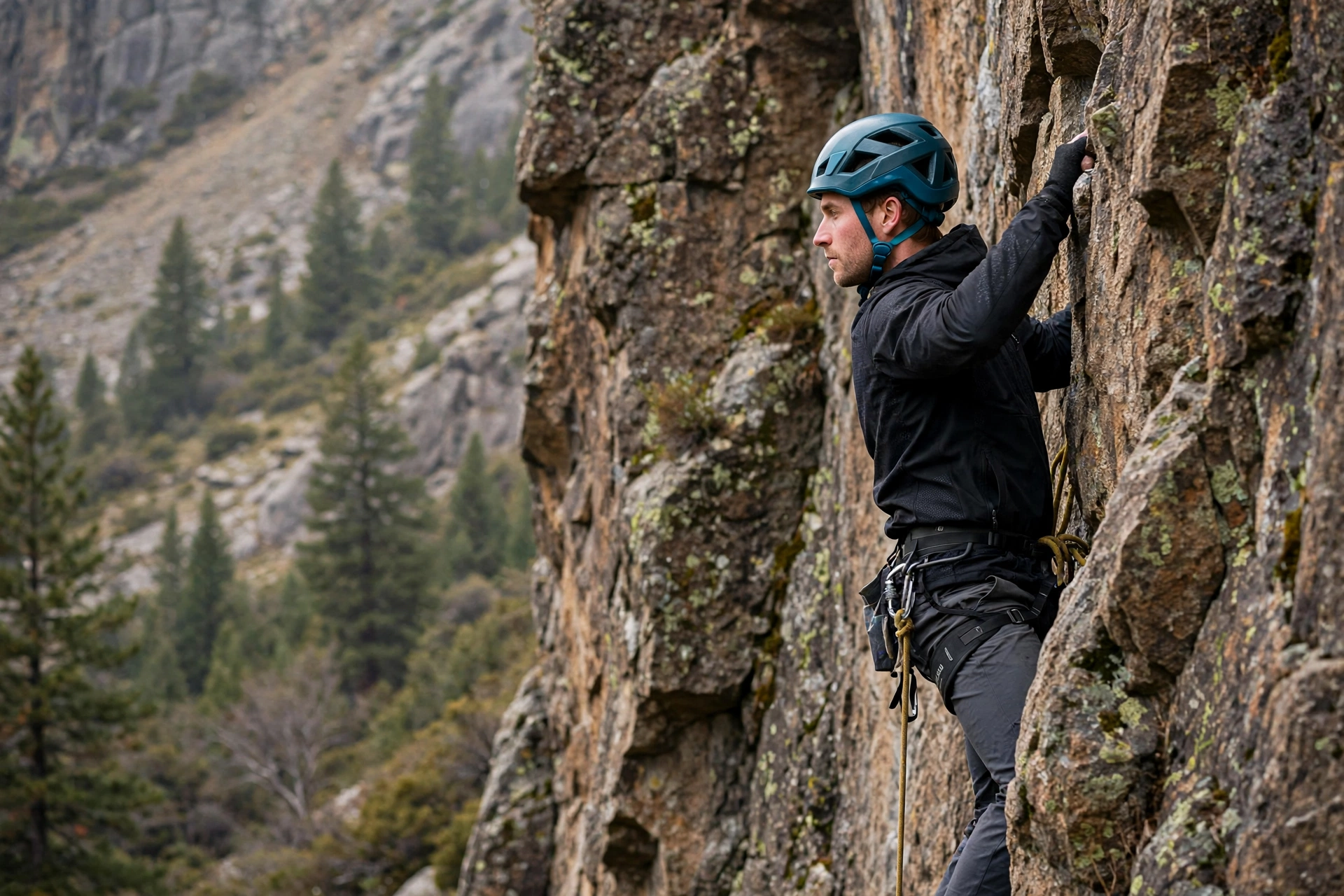
How Do Modern Helmets Add Side Protection?
The simplest change is coverage. Many current helmets wrap the energy-absorbing foam lower and further around the head, so the foam — not just a shell rim — sits over the temples and above the ears. Extended rear coverage protects the back of the skull in a backwards fall or slide as well.
Materials have evolved too. Some helmets use different foam densities in different zones, or tougher foam types that handle repeated smaller knocks better, spreading protection around the whole head instead of concentrating it on the crown. Hybrid designs combine a hard shell with foam that wraps the sides, aiming for durability plus all-round absorption.
Designers also think about rotation. In an angled side impact, your head can twist sharply, and some helmets add low-friction layers intended to let the helmet move slightly relative to the head and reduce that twisting — the same rotational-force idea covered in our explainer on how MIPS works in helmets. Not every climbing helmet includes such a system, but it is increasingly part of the conversation.
What Should You Look for When Buying for Side Protection?
Start by holding the helmet and looking at where the foam sits. Put it on and check that foam — not just shell — covers your temples and the area above your ears, and that the coverage stays there when you tilt your head. A helmet that rides high to save weight may leave the sides exposed on your particular head shape.
Check the fit as part of protection. Side foam only helps if it stays in position, so run the standard checks: the helmet should not rock side to side, and the straps and rear cradle should hold it planted when you shake your head. A loose helmet can rotate away from the impact zone before the blow lands.
Then match the helmet to your climbing. Sport climbers taking pendulum falls, alpinists on mixed ground, and anyone climbing under loose rock have the most to gain from generous all-round coverage. If your climbing is mostly top-down rockfall risk on big walls, crown performance still matters most — the best modern helmets no longer force you to choose between the two.
Does Side Protection Make a Helmet Heavier or Hotter?
It can add a little of both, and this is the honest trade-off. More foam around the head usually means slightly more weight and slightly less ventilation than an ultra-minimal design that is mostly a crown cap. For many climbers the difference is small enough to be worth it; for weight-obsessed alpine climbers moving fast, it is a genuine judgment call.
Manufacturers are narrowing the gap every season, using lighter foams and vent channels cut through the foam so coverage does not have to mean a sweaty head. Compare models in person if you can — venting and comfort vary a lot between designs with similar coverage.
What you should not do is remove protection to fix discomfort. If a helmet feels hot, look at vent design and fit first. The side coverage is there for the fall you did not plan, and it only works if it is on your head and in position.
Frequently Asked Questions
Q: Do all climbing helmets protect the sides of your head?
A: No. Older and ultra-minimal designs concentrate foam on the crown and leave the temples largely uncovered. Many modern helmets extend foam around the sides and back, so check the actual coverage on your head before buying.
Q: Are side impacts common in climbing?
A: They are a realistic part of climbing falls — pendulum swings into the wall, slips on steep ground, and slides on ice all tend to strike the side or back of the head rather than the crown. Rockfall from above is only one of several scenarios a helmet should handle.
Q: Does a bike helmet protect the sides better than a climbing helmet?
A: Bike helmets are designed and tested for a different kind of fall, and generally cover lower around the head. But they are not built for rockfall or climbing use, and the two helmet types are not interchangeable — use the helmet certified for your activity.

Olivia
Writer at Helmet Today, covering helmet reviews, fit and riding safety.