If you have a big head or a small head, the right climbing helmet is the size whose stated range puts your head measurement comfortably inside it — not at the very edge — adjusted so the cradle grips evenly with no rocking and no pressure hotspots. Measure your head first, then shortlist helmets that genuinely cover your size; most ranges span roughly the low-50s to low-60s centimetres, and a good fit is available at both ends if you shop by measurement, not by guessing.
This fit guide covers how to measure, how big-headed and small-headed climbers each get a secure fit, and the sizing mistakes that leave a helmet loose, perched, or painful.
What Head Sizes Do Climbing Helmets Come In?
Climbing helmets are usually sold in one or two sizes, each with an adjustable cradle covering a span of head circumferences. In general terms, a smaller size might cover heads from around the low 50s centimetres up to the high 50s, and a larger size from the mid 50s to the low or mid 60s. The exact ranges vary by brand and model, so always check the figures for the specific helmet you are looking at.
Two helmets with the same stated range can fit very differently. Internal shape matters: some shells run rounder, others more oval, and a head that is long front-to-back may feel squeezed at the sides in one brand and perfect in another. This is why climbers at the extremes of the size range benefit most from trying several models.
Also look at how much adjustment the cradle offers. A wide, smooth-working adjustment range gives you room to fine-tune — and room for a thin beanie in winter — while a helmet already at the very end of its adjustment has nowhere left to go.
How Do You Get a Good Fit With a Big Head?
Start with helmets whose larger size tops out comfortably above your measurement, so the cradle is working in the middle of its range rather than fully extended. A helmet at maximum extension often grips unevenly and can feel perched on top of your head instead of wrapping around it.
With the helmet on, check depth as well as circumference. On a big head, a shallow shell may sit too high, leaving your forehead and temples exposed and the rear cradle riding above the bump at the back of your skull where it should cup. The cradle needs to sit low enough to hold the helmet down and level.
Watch for pressure at the forehead and temples, the classic big-head hotspots. Even, firm contact is fine; a single painful point means the internal shape does not match yours, and no amount of loosening the dial fixes a shape problem — try a different model with a rounder or roomier fit.
How Do You Get a Good Fit With a Small Head?
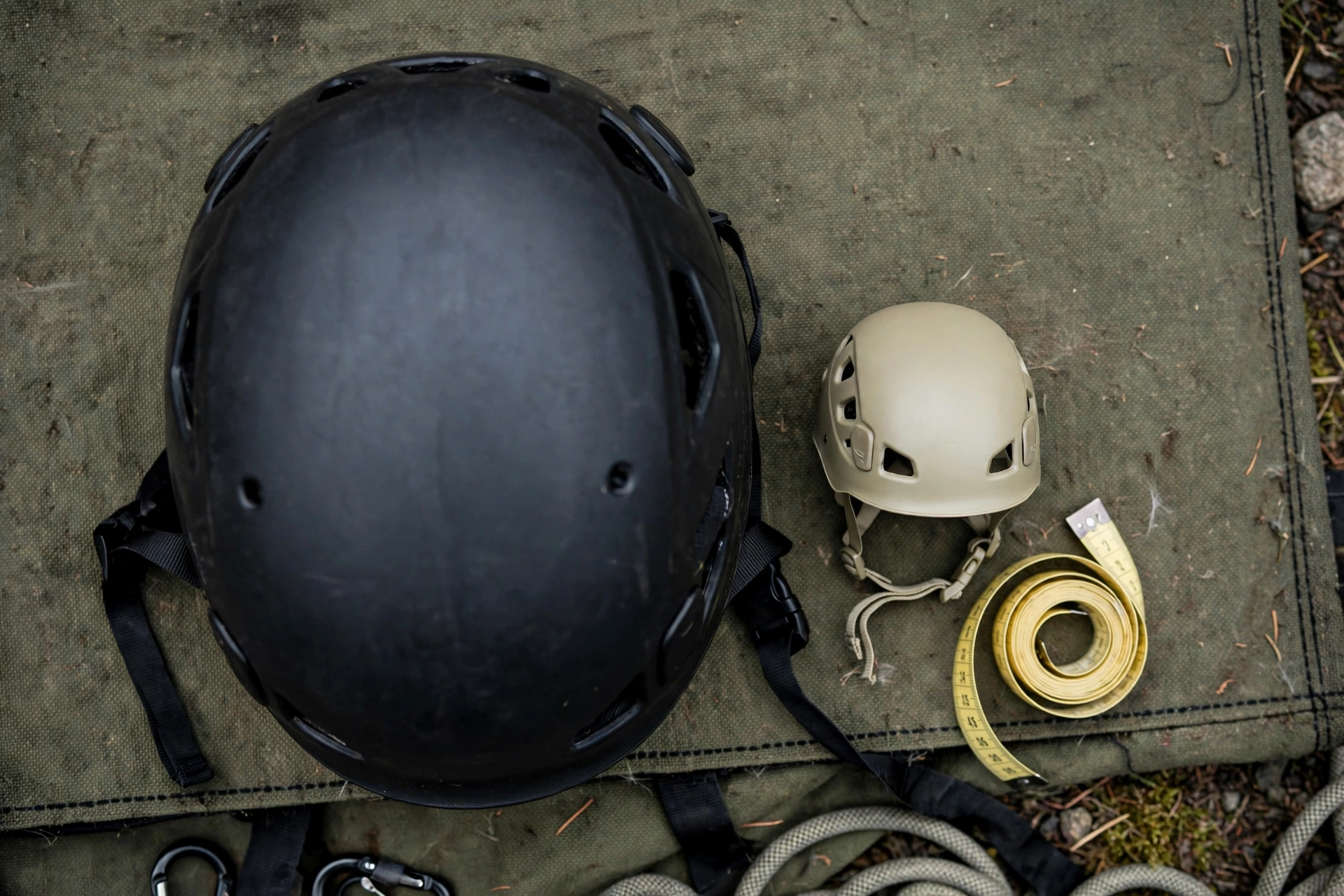
Small-headed climbers have the opposite problem: a helmet at the smallest end of its range can still wobble if the cradle does not close down far enough. Choose a model whose smaller size starts at or below your measurement, and check that tightening the dial actually eliminates side-to-side rock rather than just pulling the strap tighter.
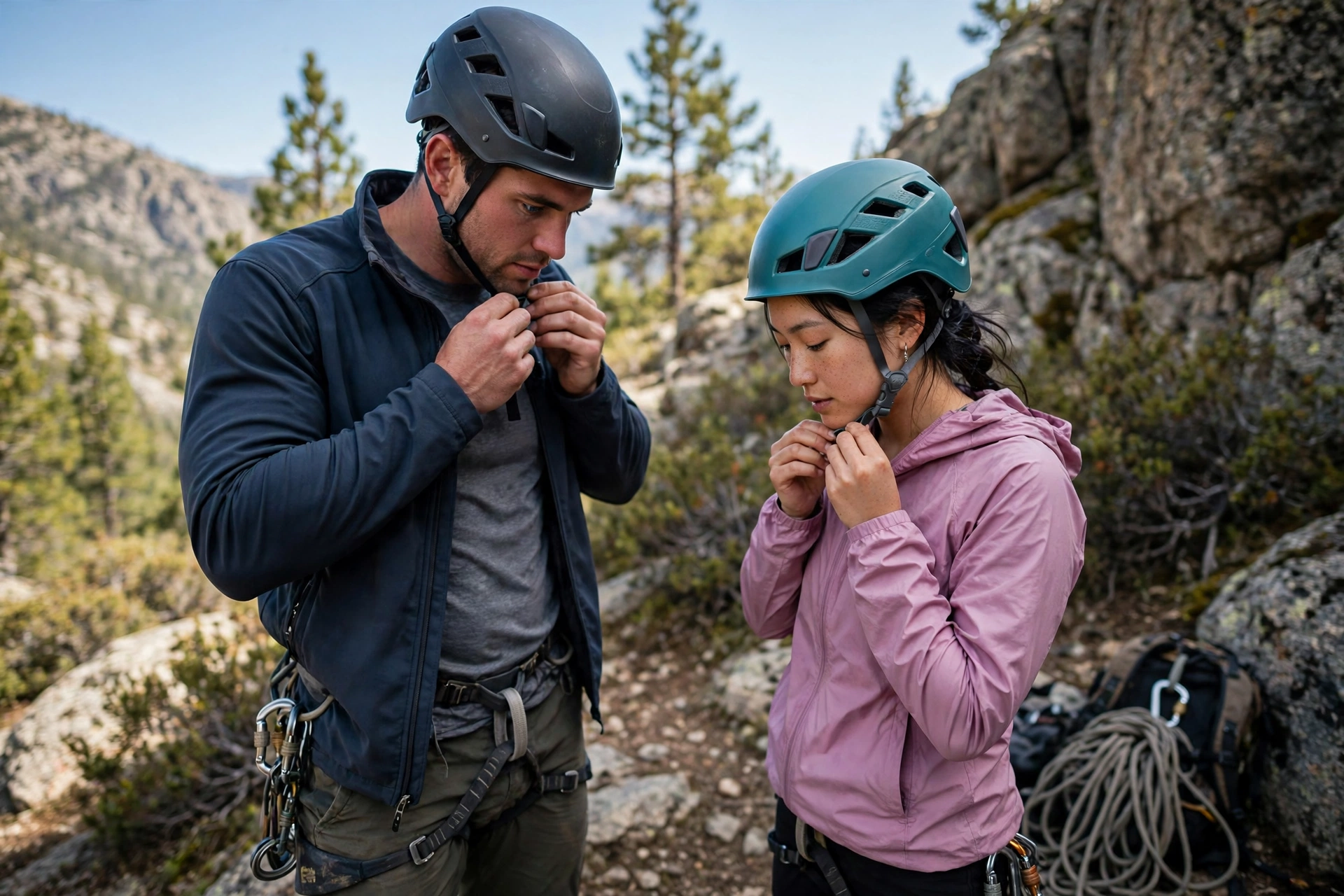
Pay attention to the chin strap and side straps too. On a small head there can be a lot of spare webbing, and the Y-junction of the side straps should still sit just below your ears — if it ends up halfway down your cheek, the helmet is too big for you regardless of what the dial does. Tidy away excess strap so it cannot flap or loosen.
Some climbers with small heads are tempted by children’s or junior helmets. Be careful: junior helmets are designed and certified for children’s proportions and use, and an adult should wear an adult helmet that fits. With the range of adult sizes now available, a proper adult fit is almost always achievable.
What Sizing Mistakes Should You Avoid?
The most common mistake is buying by your usual hat size or by the size of a different brand’s helmet. Sizes are not standardised across brands, and a medium in one range can equal a large in another. Always go by your measured circumference against that model’s stated range.
Padding tricks are the second mistake. Stuffing extra foam, wearing a thick hat to fill space, or adding a bulky liner to make a too-big helmet feel snug creates a fit that feels padded but still shifts in a fall. The shell and cradle must fit your head itself; thin comfort layers are for fine-tuning only.
Finally, do not ignore the shake test because a helmet feels comfortable. Comfort and security are different things — a helmet can feel pleasantly loose and still fail completely at staying in place. If it rocks, slides, or lifts when you push the brim, it is the wrong size or the wrong shape, however nice it feels in the shop. That matters because the foam — and features like the rotational-impact layers described in our guide to what MIPS is for helmets — can only manage impact energy if the helmet is sitting where it belongs when the impact arrives.
Can You Adjust One Helmet to Fit Different Head Sizes?
Within its range, yes — that is what the adjustable cradle is for, and partners or family members with similar head sizes can often share a helmet if each wearer re-adjusts it properly. The key word is properly: every change of wearer means re-setting the dial, side straps, and chin strap, and re-running the fit checks.
Sharing has limits, though. If one person’s head is at the very top of the range and the other’s at the very bottom, neither may get an ideal fit, and each person’s sweat and wear is ageing the same helmet faster. Regular climbers are better off with their own helmet, fitted once and checked each season.
However you buy, revisit the fit periodically. Padding compresses over time, straps stretch slightly, and a helmet that fitted perfectly two seasons ago may need a click more on the dial — or may be telling you it is ready for replacement.
Frequently Asked Questions
Q: What is the largest head a climbing helmet fits?
A: It depends on the model. In general terms, the larger sizes of most climbing helmets reach into the low-to-mid 60s centimetres of head circumference. Check the stated range of the specific helmet, and aim for your measurement to sit inside the range rather than right at its limit.
Q: My head is between two sizes. Which should I choose?
A: Try both if you can. The better choice is the one that sits level, grips evenly with the cradle in the middle of its adjustment, and passes the shake test. If you climb in winter with a beanie, factor that layer into the decision.
Q: Can a small adult wear a kids’ climbing helmet?
A: It is not recommended. Children’s helmets are designed and certified for children, and adults should use an adult helmet in the correct size. Most brands offer adult sizes that start small enough for petite heads, so a proper fit is usually available.

Olivia
Writer at Helmet Today, covering helmet reviews, fit and riding safety.