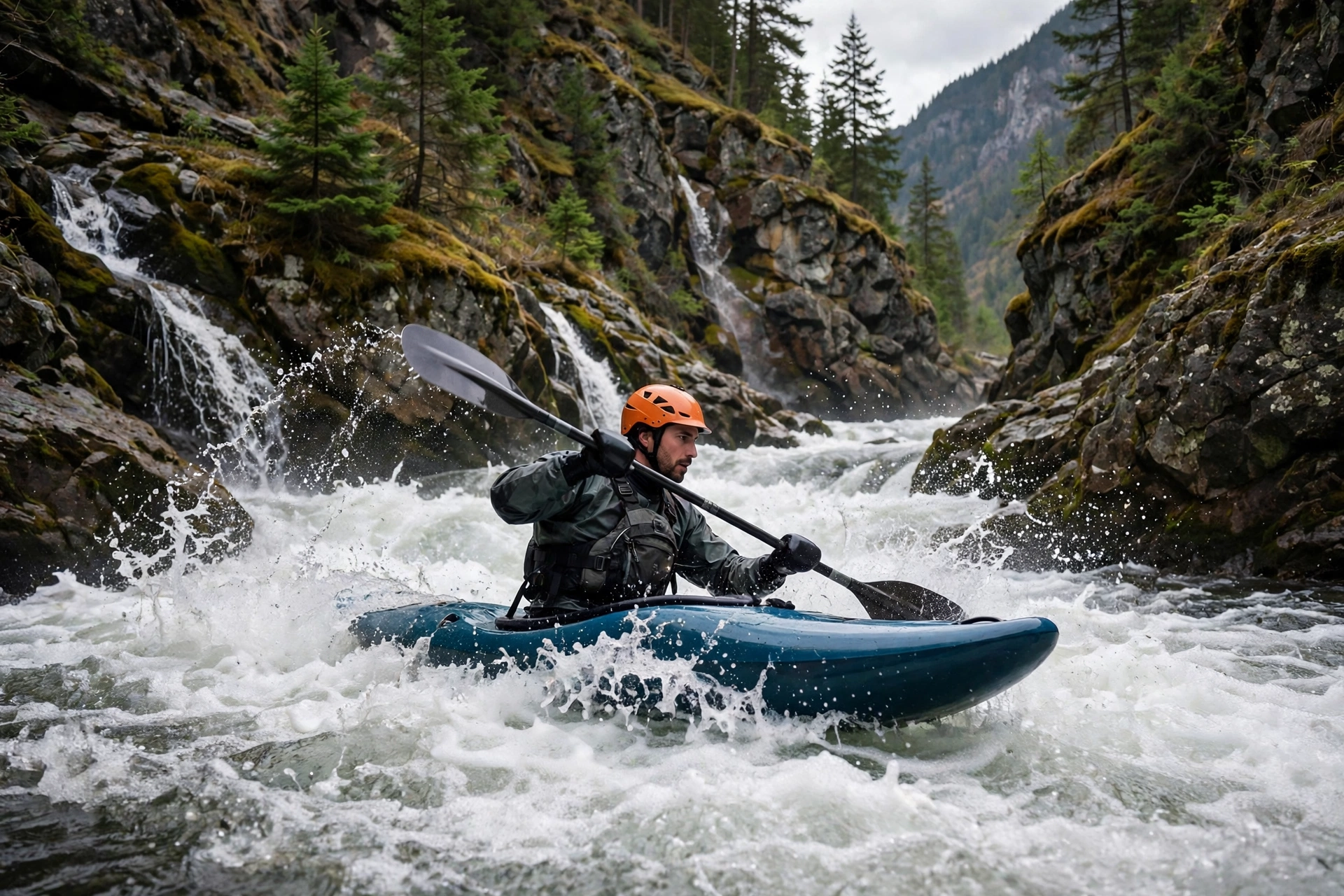
Whitewater and canyoning helmets differ from climbing helmets in how they handle water: whitewater helmets are built for repeated knocks against river rocks in moving current, with drainage, a quick-drying or non-absorbent liner, and coverage that often protects the ears; canyoning helmets blend climbing-style protection against falling rocks with drainage holes and materials that shrug off constant immersion. A standard climbing helmet is not designed for either job.
This guide breaks down what makes each type different, why the differences matter for safety, and whether one helmet can cover climbing, canyoning, and whitewater.
Why Can’t You Just Use a Climbing Helmet in the Water?
A climbing helmet assumes a mostly dry world. Its comfort padding absorbs water like a sponge, its foam and shell are not shaped to drain, and once soaked it becomes heavy, cold, and slow to dry. In a canyon or on a river, where your head goes under repeatedly, that waterlogged weight sits on your neck all day.
The impact profile is different too. Climbing helmets are designed primarily around a single significant impact — falling rock or a fall — after which the foam may be spent. Climbing designs increasingly borrow ideas from other helmet sports, including the rotational-force layers covered in our guide to what MIPS is for helmets, but the base assumption is still one big hit. River sports involve frequent lower-energy knocks: glancing off boulders while swimming a rapid, bumping rocks on every descent. Whitewater helmets are built with that repeated-knock life in mind.
Retention behaves differently in current. Moving water tries to rip a helmet backwards off your head, and a climbing helmet’s straps and fit are not tested against that force. Water helmets are shaped and strapped to stay put while water flows hard over them.
What Makes a Whitewater Helmet Different?
Coverage is the most visible difference. Many whitewater helmets come in a full-cut style that covers the ears, protecting them from rock strikes while swimming rapids, alongside shorter half-cut styles that leave the ears open. Ear coverage also affects hearing and warmth, so paddlers choose based on their rivers and climate.
Inside, the liner is made to get wet. Whitewater helmets use closed-cell or fast-draining padding that does not soak up water, and the shells have drainage so water runs out instead of pooling. The fit systems are designed to be adjusted with cold, wet hands and to keep gripping when everything is slippery.
They are also certified to a watersports standard rather than a climbing one, tested for the impacts and retention demands of river use. In general terms, that certification — not the look of the helmet — is what makes it a whitewater helmet. A helmet can look rugged and still be the wrong tool for a river.
What Makes a Canyoning Helmet Different?
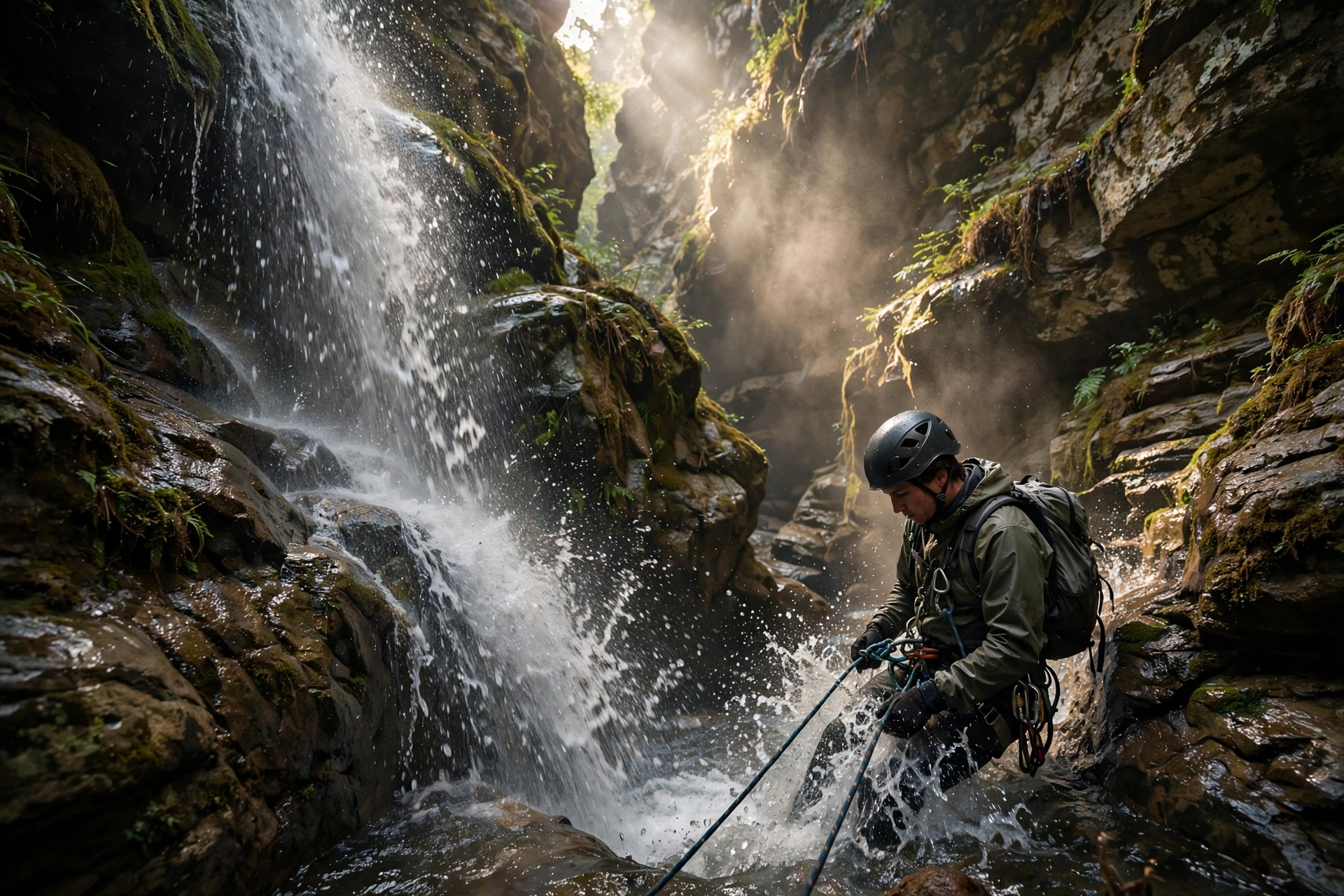
Canyoning sits between the two worlds. A canyon trip involves abseiling down waterfalls, jumping into pools, swimming, and scrambling — with genuine rockfall risk from above and plenty of chances to slip on wet rock. A canyoning helmet has to protect like a climbing helmet while living like a water helmet.
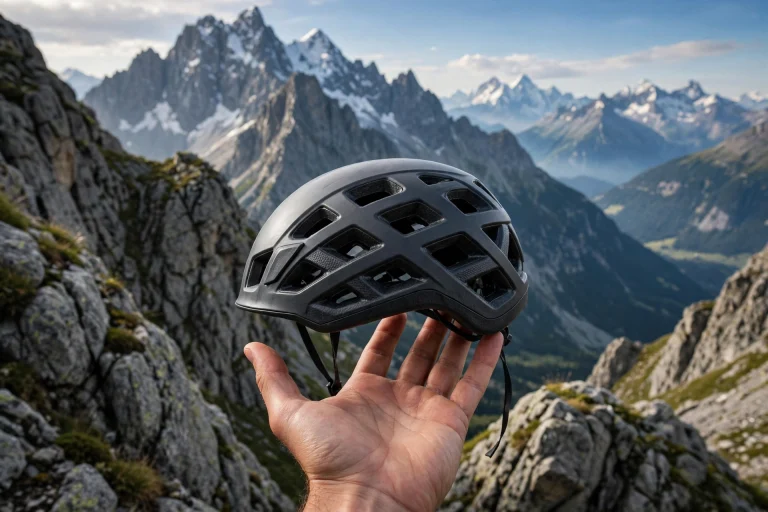
The giveaway features are drainage holes in the shell, so water pours out after every plunge instead of sloshing around inside, and a liner that does not absorb water. Many canyoning helmets are in fact built on climbing helmet designs with drainage added, and some carry certification for climbing use as well — check the labels on the specific model.
Fit matters differently in a canyon, too. You will look up a lot while abseiling and managing ropes, often with water cascading over you, so the helmet must stay level and secure while tilted back, and the chin strap must hold firm through jumps and swims. Headlamp clips are a genuine plus, because canyons get dark early and trips often finish late.
Can One Helmet Do Climbing, Canyoning, and Whitewater?
Partly. A canyoning helmet with a climbing certification is a legitimate single helmet for rock climbing and canyoning, since canyoning protection grew out of climbing design. Plenty of canyoneers use exactly that combination and simply accept a slightly heavier, wetter helmet on dry rock days.
Whitewater is the harder crossover. A climbing or canyoning helmet is not certified for river use and is not shaped for repeated swimming knocks and current forces, so paddling whitewater in one is a compromise most instructors would steer you away from. Conversely, a dedicated whitewater helmet lacks the rockfall-focused design and certification expected for climbing.
The honest rule: match the certification to the activity carrying the biggest risk that day. Occasional crossover at the edges — a canyoning helmet on rock, for instance — is normal practice; using one helmet for everything because it happens to be in the car is how gaps in protection happen.
How Do You Choose Between Them?
Start with where you spend your days. Mostly rivers? Buy a certified whitewater helmet and choose ear coverage for your conditions. Mostly canyons? A canyoning helmet with drainage and, ideally, climbing certification covers canyon and crag. Mostly climbing with the odd canyon trip? A climbing helmet will survive occasional canyon use, but expect it to stay wet, heavy, and slow to dry — many regular canyoneers quickly buy the dedicated helmet.
Fit checks are the same discipline in every case: the helmet should sit level, grip evenly, and stay put when you shake your head — and for water use, when you tilt your head back and imagine current pushing on it. Try water helmets on expecting to wear them with nothing underneath in summer and possibly a thin neoprene hood in winter, and size accordingly.
Whichever you buy, inspect it like the safety equipment it is. Retire it after a significant impact, keep it out of hot cars and solvents, and remember that a helmet’s certified purpose is its real specification — shape and colour are not.
Frequently Asked Questions
Q: Can I wear my climbing helmet for kayaking?
A: It is not recommended. A climbing helmet is not certified for watersports, absorbs water in its padding, drains poorly, and is not designed for repeated knocks or for staying on in strong current. A certified whitewater helmet is the right tool for the river.
Q: What is the difference between a canyoning helmet and a climbing helmet?
A: Mainly water handling. Canyoning helmets add drainage holes and non-absorbent liners to a climbing-style design, and some are certified for both activities. The protection brief — falling rocks and slips — is similar; the canyoning version just lives happily soaked all day.
Q: Do whitewater helmets cover your ears?
A: Many do. Full-cut styles cover the ears for protection against rock strikes while swimming rapids; half-cut styles leave ears open for better hearing. Both styles exist within certified whitewater ranges, so you can choose based on your river and comfort.

Olivia
Writer at Helmet Today, covering helmet reviews, fit and riding safety.