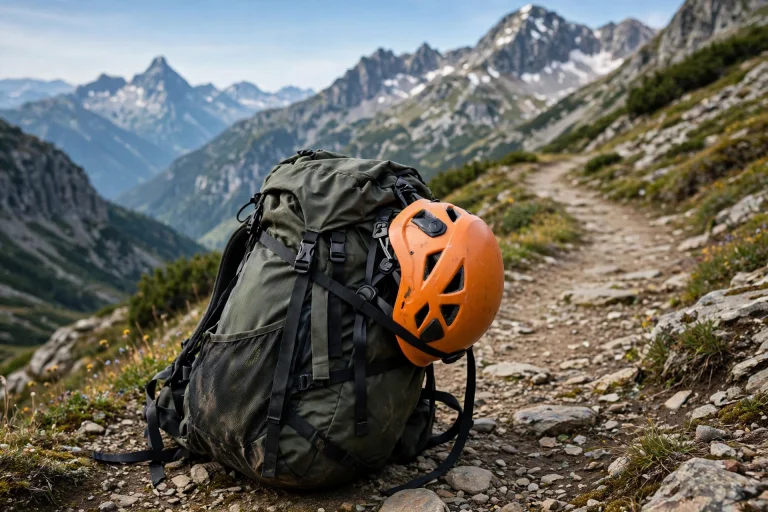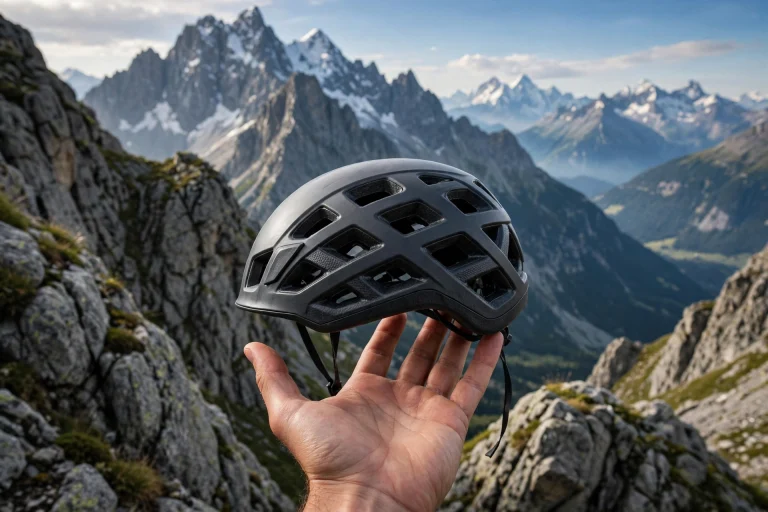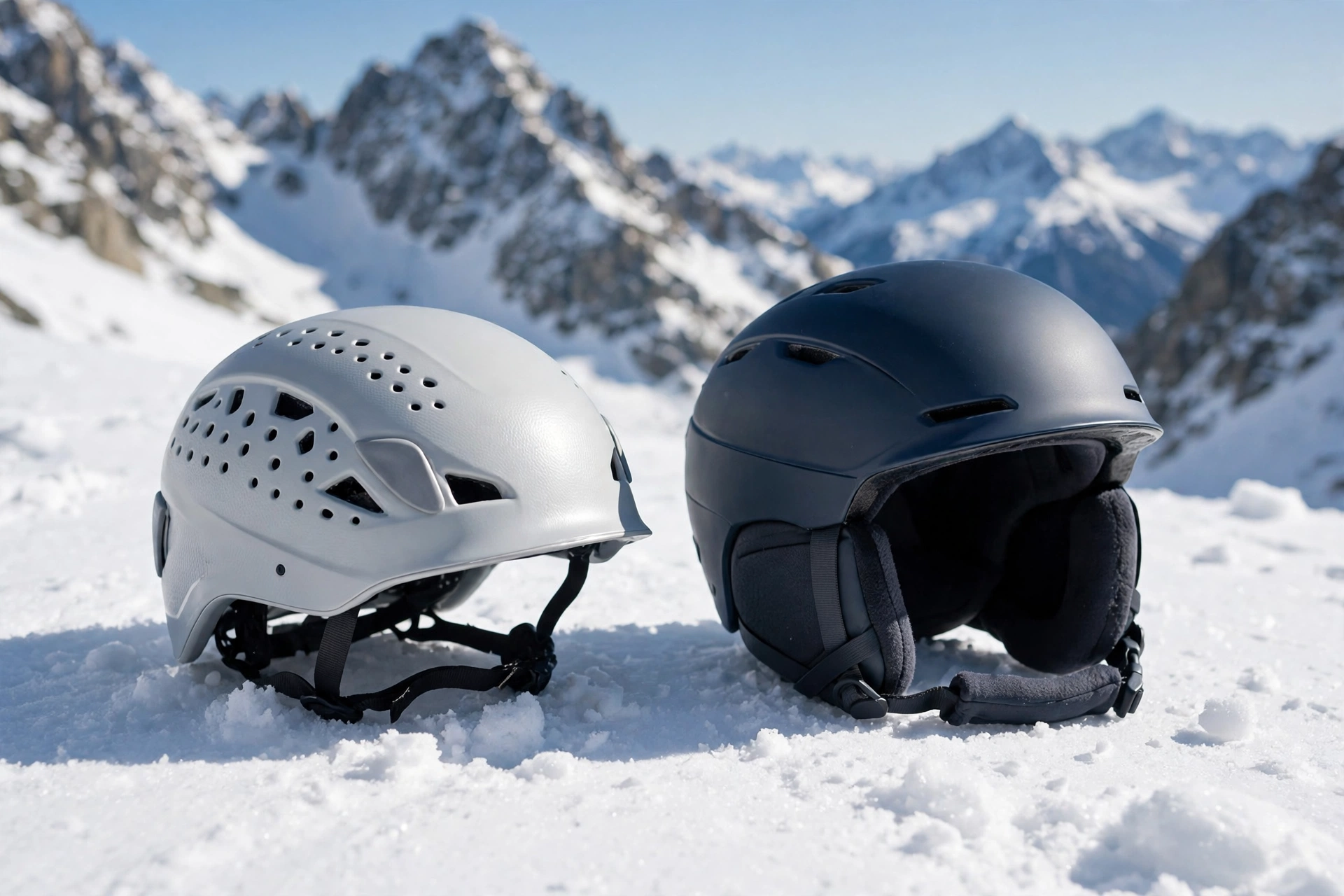
A mountaineering helmet is a light climbing helmet built for rockfall and falls on rock and ice, with lots of ventilation and room for a headlamp; a ski helmet is a warmer, heavier helmet built for falls at speed on snow, with insulation, ear covers, and goggle integration. One helmet can do both jobs only if it carries certification for both climbing and skiing — a growing category of dual-certified helmets aimed at ski mountaineering.
This guide compares the two designs, explains what happens if you use each one for the other’s sport, and shows how to decide whether a dual-certified helmet makes sense for you.
What Is the Difference Between a Mountaineering Helmet and a Ski Helmet?
Start with the design brief. A mountaineering helmet protects against things falling on you — rock, ice, dropped gear — and against your head hitting rock in a fall. It is built light, because you carry and wear it all day on the climb up, and it is heavily vented because climbing is hot work. Coverage often sits a little higher on the head to save weight.
A ski helmet starts from the fall, not the falling object. Skiers fall at speed on hard snow, so ski helmets generally wrap lower around the head, carry insulation and ear pads for warmth, seal around goggles to stop wind and snow getting in, and include features like goggle clips and adjustable vents you can close on a lift. The result is warmer and more comfortable on the piste — and noticeably heavier.
The two are also certified against different standards written for their different accident patterns. In general terms, a climbing certification does not imply a ski certification and vice versa, whatever the helmets look like side by side in the shop. The same goes for shared features: both sports’ helmets increasingly offer rotational-impact systems of the kind covered in our explainer on what MIPS is for helmets, but a shared feature does not transfer a certification from one sport to the other.
Can You Ski in a Mountaineering Helmet?
People do — ski mountaineers have used climbing helmets for decades, especially on the uphill. A mountaineering helmet is light, vents well on the ascent, takes a headlamp for dawn starts, and with a beanie underneath and ski goggles it can be serviceable on the descent too.
The compromises are real, though. It will be colder and noisier than a ski helmet, with wind whistling past uncovered ears and goggles that do not seal against the helmet’s shape, letting snow and cold air in. Coverage around the sides and back is often less than a ski helmet’s, and the helmet has not been certified for skiing’s impact pattern.
For resort skiing, it is the wrong tool — cold, draughty, and not designed for lift-served speeds. For ski touring where the day is mostly climbing, many accept the trade knowingly, and increasingly they solve it with a dual-certified helmet instead.
Can You Climb in a Ski Helmet?
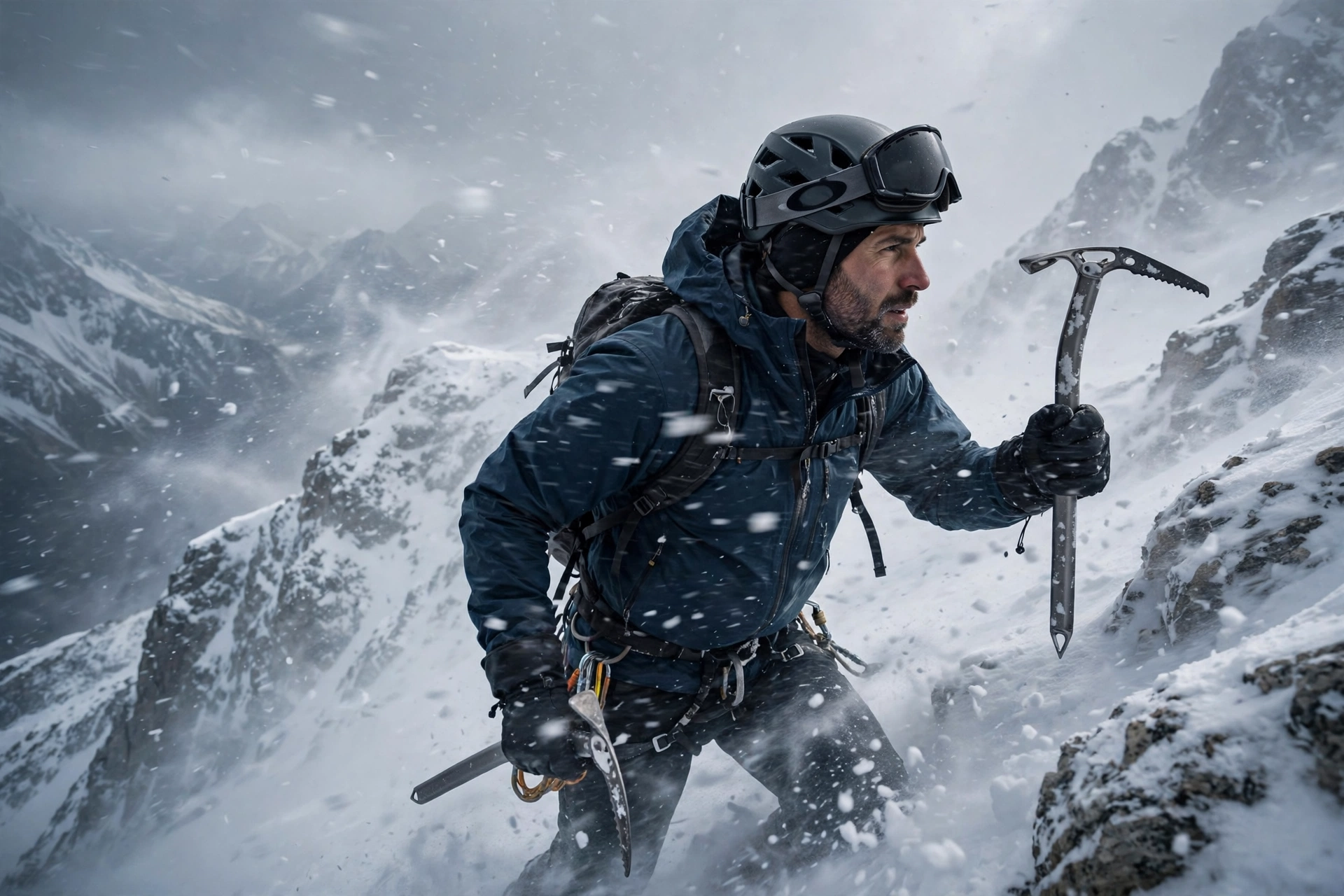
This direction works less well. A ski helmet is heavy for a full day of climbing, its insulation makes it hot on summer rock or a strenuous ice route, and its vents often cannot open enough to dump that heat. Looking up — which climbers do constantly — a bulky ski helmet with a low back can push against your pack or your shoulders and shift out of position.
There are practical mismatches too. Ski helmets are shaped around goggles, not headlamps, so night starts and late finishes get awkward. And like the reverse case, the certification points the wrong way: the helmet was tested for snow falls, not for a falling rock striking the crown.
In winter mountaineering, where the climbing is on snow and ice at low temperatures, a ski helmet is at its least bad — warm and protective against falls. But even there, most mountaineers choose a climbing helmet with a warm layer underneath, because the ascent is where the day is won or lost.
What About Dual-Certified Helmets for Ski Mountaineering?
Dual-certified helmets exist precisely because ski mountaineering straddles both worlds: you climb like a mountaineer and descend like a skier. These helmets are tested and certified for both climbing and skiing use, and they split the design differences — light and well vented like a climbing helmet, but with better side and rear coverage, removable ear pads or insulation, and goggle compatibility borrowed from ski helmets.
If your winter life is ski touring and ski mountaineering, a dual-certified helmet is usually the cleanest answer: one helmet you can wear for the skin up, the summit ridge, and the ski down, with the paperwork to back both halves of the day. Check that the specific model genuinely carries both certifications — “suitable for ski touring” marketing is not the same thing.
The remaining trade-offs are warmth and price. Even a dual-certified helmet will not be as plush as a dedicated resort ski helmet on a bitter lift-served day, and it typically costs more than a basic climbing helmet. For pure climbers who never ski, it buys little; for pure resort skiers, likewise. It earns its place in the crossover.
How Do You Decide Which Helmet You Need?
Be honest about your calendar. Mostly rock and alpine climbing with no skiing: a mountaineering helmet. Mostly resort or freeride skiing: a ski helmet. A real mix built around ski touring and ski mountaineering: look seriously at dual-certified models.
Whichever you choose, apply the same buying discipline. Fit comes first — level, snug, no rocking, tested with the layers you actually wear, whether that is a beanie under a climbing helmet or goggles with a ski helmet. Then check the certification matches your activity, and only then compare weight, vents, and features.
And treat the helmet like the single-impact safety device it is: retire it after a significant hit, whichever sport delivered it, and do not let a helmet that has done its job once talk you into a second season.
Frequently Asked Questions
Q: Is a ski helmet safer than a mountaineering helmet?
A: Neither is simply safer — they are certified against different standards for different accidents. A ski helmet is tested for falls on snow; a mountaineering helmet for rockfall and climbing falls. Safety comes from matching the certified helmet to the activity you are doing.
Q: Can one helmet really be certified for both climbing and skiing?
A: Yes. Dual-certified helmets are tested against both the climbing and ski helmet standards and are made for ski mountaineering and touring. Check the labels inside the specific model to confirm it carries both certifications, not just one.
Q: Why is a mountaineering helmet so much lighter than a ski helmet?
A: Because it is carried and worn all day on climbs where every gram counts, and it skips the ski helmet’s insulation, ear pads, and heavier shell construction. The weight saving is deliberate — mountaineering helmets trade warmth features for low weight and ventilation.

Olivia
Writer at Helmet Today, covering helmet reviews, fit and riding safety.