

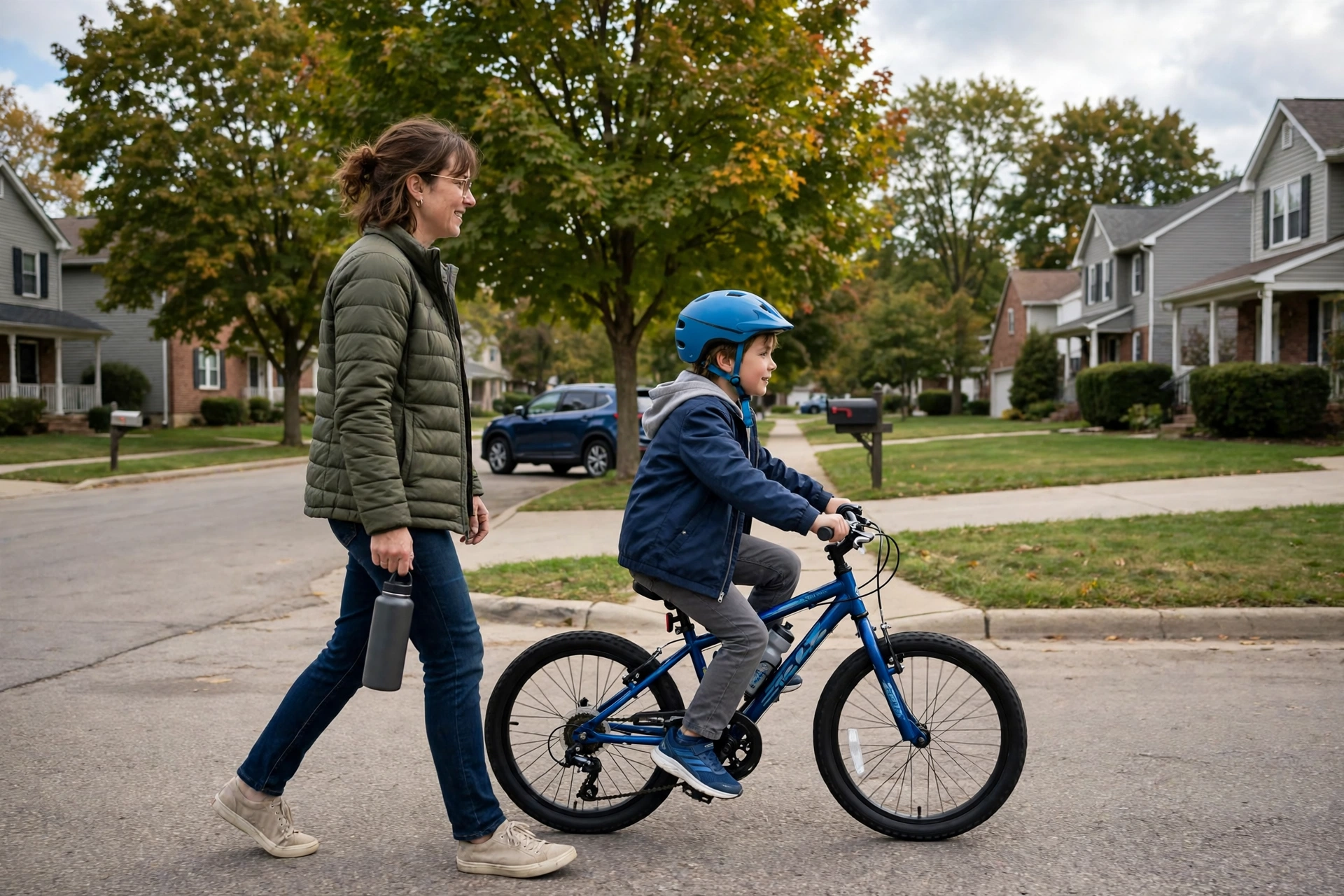
Illinois does not have a statewide bicycle helmet law for children. No state statute requires a child, or an adult, to wear a helmet while riding a bike on Illinois roads, paths, or sidewalks. Some cities and towns have their own local rules, though, so the practical answer depends on where your child rides.
What Illinois State Law Actually Says
Illinois treats bicycles largely as vehicles. State law covers things like riding on the right side of the road, using lights at night, having working brakes, and obeying traffic signals. What it does not do is set an age, or any rule at all, for bicycle helmets. There is no state helmet requirement to meet, and no state helmet ticket for a child riding without one.
That makes Illinois different from a good number of other states, which set a specific age, often under 16 or under 18, below which a helmet is legally required. If you ride with your family in more than one state, do not assume the rules travel with you. Our guide to which states do have helmet laws lists the states that require helmets, and for which ages, so you can check before a trip or a move. You will find Illinois is not on that list, and that is the point: at the state level, the choice is left to parents. For a broader state-by-state view, see our helmet laws by state overview as well.
One caution: other vehicles are not the same thing. Rules for e-bikes, scooters, mopeds, and motorcycles are handled separately and can include their own equipment requirements. A lack of a bicycle helmet law should not be read as a lack of rules for everything with two wheels. If your child is moving up to a motorized ride, check that vehicle’s rules on their own.
Local Ordinances and Other Rules Can Differ
State law being silent does not mean every ride is rule-free. Illinois home-rule cities and towns can pass their own ordinances, and those local rules are where parents most often get caught out. Chicago, for example, has long had helmet rules for working bicycle messengers and delivery riders, people riding as part of a job. That is not a general rule for a child riding to school or around the block, but it shows how a city can add requirements the state has not.
Other municipalities, park districts, and trail operators can also set conditions for the paths and facilities they run. A rule might apply to a particular trail system, pump track, skate park, or organized program rather than to every street in town. Schools, summer camps, scout troops, racing leagues, and cycling clubs can all require helmets for their own activities, no law needed. If your child rides in an organized program, that program’s rule is the one that matters on the day.
Because these rules vary and can change, the safest way to check is local. Look at your city or village municipal code, your park district’s trail rules, and any school policy that applies to riding to school. Start from the simple position that Illinois state law does not require a helmet, then check whether anyone with authority over your child’s actual route or activity has added a rule of their own.
Why a Helmet Still Makes Sense Without a Law
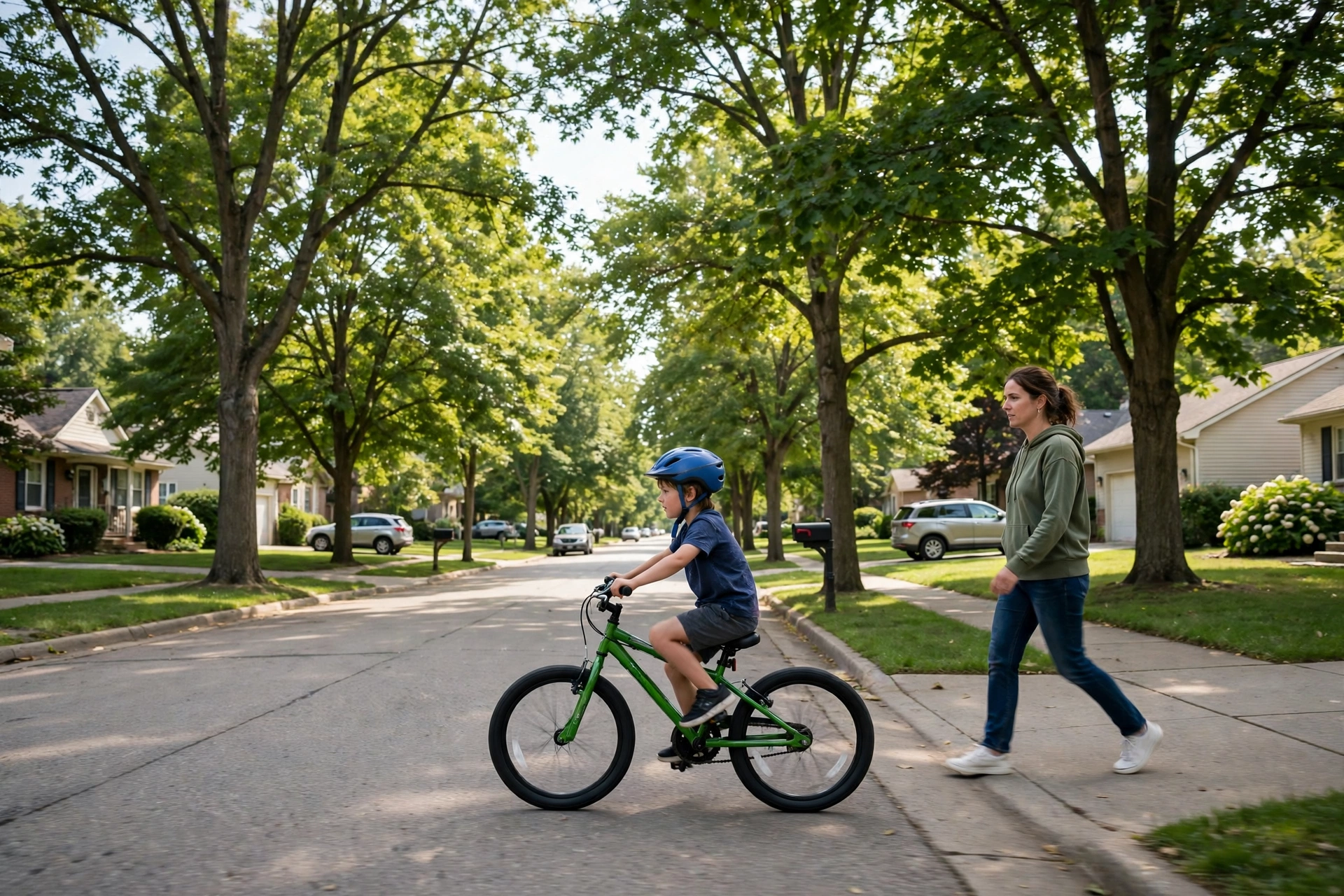
A law is a minimum, not a measure of risk. Children’s heads are just as vulnerable in a state without a helmet mandate as they are in one with a strict law, and most children’s cycling falls are not dramatic high-speed crashes. They are driveways, curbs, loose gravel, a wheel caught in a crack, a wobble while looking over a shoulder. Children are still building balance, judgment of traffic, and the habit of scanning ahead, and a simple fall from bike height is enough to cause a serious head injury.
A helmet only helps if it is the right kind and it fits. For bicycle riding in the United States, look for a helmet that meets the federal Consumer Product Safety Commission standard, shown by a CPSC sticker inside the helmet. That standard applies to bicycle helmets sold in the US, so it is an easy first check when you shop. Avoid novelty helmets without that sticker, and be careful with hand-me-downs whose history you do not know. A helmet that has already been in a crash may look fine while its foam has done its one job and can no longer protect as designed.
Wearing one yourself matters, too. Children copy what they see far more than what they are told, and a parent who clips on a helmet for every ride makes the habit normal rather than a punishment aimed only at kids.
How to Fit a Child’s Bicycle Helmet Properly
Good fit is not complicated, and it takes about two minutes to check. Work through these points before the first ride and again as your child grows:
- Size first: measure around the head, just above the eyebrows, and choose the size that matches. Do not buy a helmet to grow into. A loose helmet shifts in a fall.
- Level, not tilted: the helmet should sit level, low on the forehead, about two finger-widths above the eyebrows. It should not tip back like a cap.
- Straps in a V: the side straps should form a V just under each ear, with the sliders adjusted so the straps stay in place.
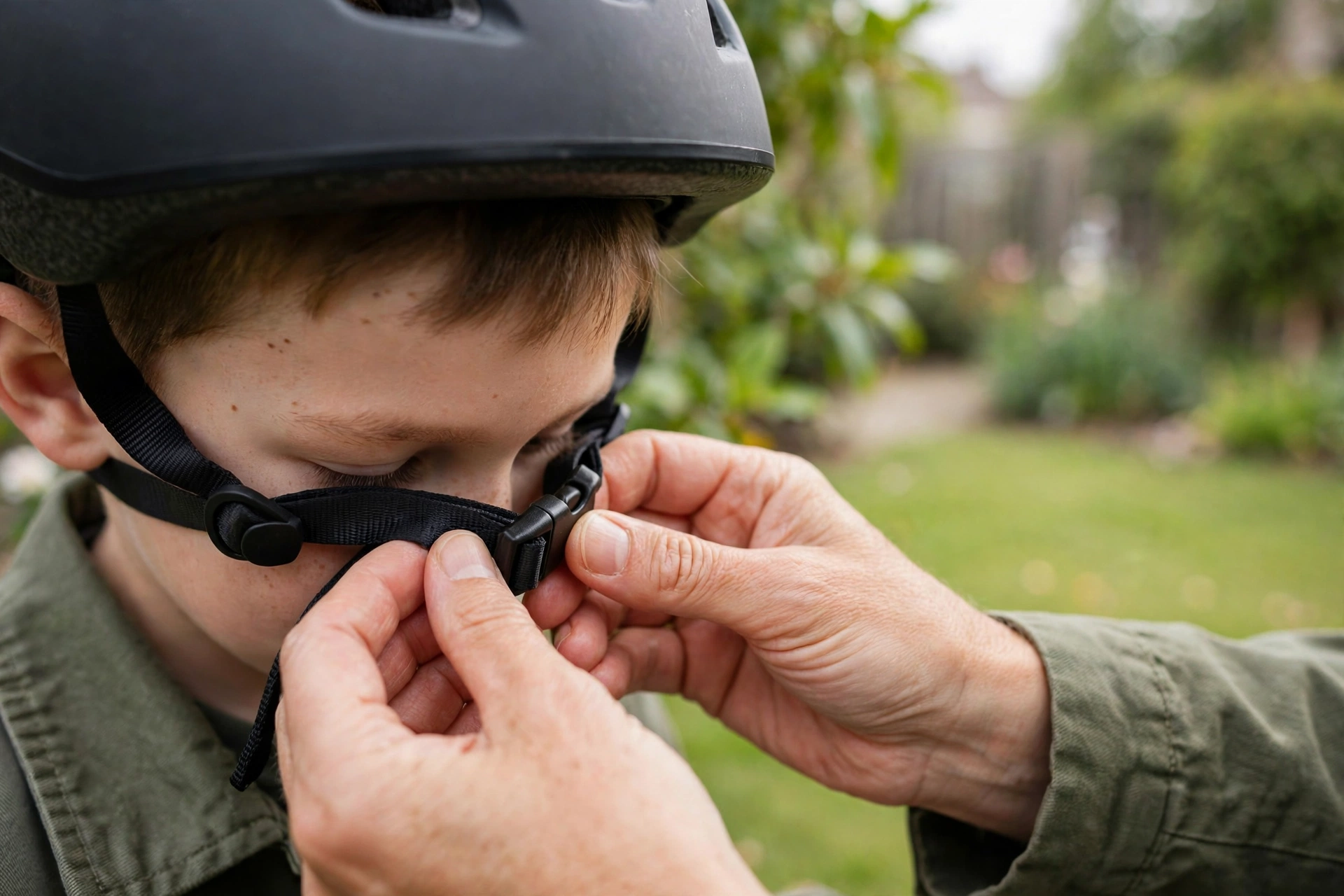
- Buckle snug: fasten the chin strap so you can fit one or two fingers between the strap and the chin. Looser than that and the helmet can come off.
- Shake test: with the buckle open, the helmet should still stay mostly in place when your child shakes their head. Use the fit dial or pads to fine-tune.
Then make it routine. One family rule, helmet on for every ride, every distance, removes the daily negotiation about whether this particular trip counts. Replace the helmet after any crash or hard impact, when straps or buckles are damaged, or when your child outgrows it, and store it indoors rather than baking in a hot car or garage.
Frequently Asked Questions
Can a child be fined in Illinois for not wearing a bike helmet?
Not under state law, because Illinois has no statewide bicycle helmet requirement to enforce. A local ordinance, where one exists, could carry its own penalty, which is another reason to check your own town’s rules.
Does Illinois require a helmet for a child in a bike seat or trailer?
State law does not set a helmet requirement for young passengers either. It is still strongly recommended: follow the seat or trailer maker’s guidance and fit the child with a proper helmet for every ride.
Should my child wear a helmet even on short neighborhood rides?
Yes. Most falls happen close to home, at low speeds, on familiar streets. A helmet on for every ride, however short, is the habit that protects your child when the unexpected fall happens.

Olivia
Writer at Helmet Today, covering helmet reviews, fit and riding safety.


