In-mould construction is a way of building a helmet in which the outer shell and the foam liner are bonded together in the same mould, forming a single piece. Instead of making the shell and liner separately and fitting them together afterwards, the maker places the shell material and the foam into one mould and fuses them as the helmet takes shape. The result is a light, well-joined helmet with a smooth finish.
You will see in-mould construction most often in cycling, ski and climbing helmets, where low weight matters. This guide explains how the process works, why makers use it, what its limits are, and how it compares with other ways of building a helmet.
How Is an In-Mould Helmet Made?
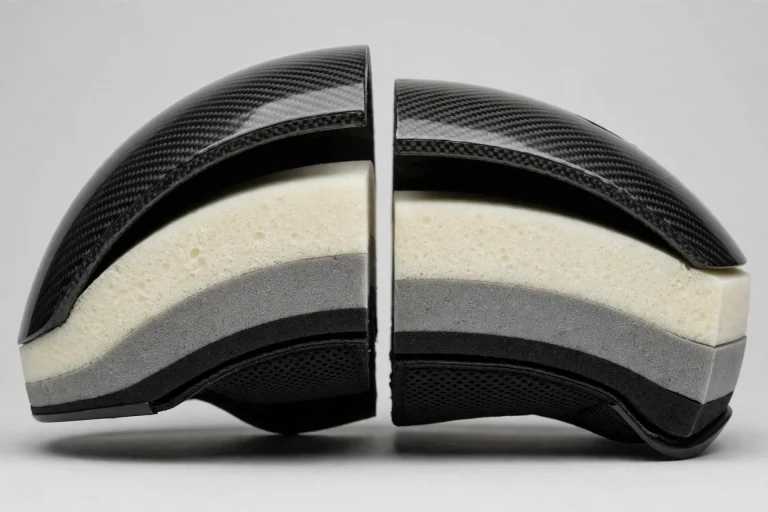
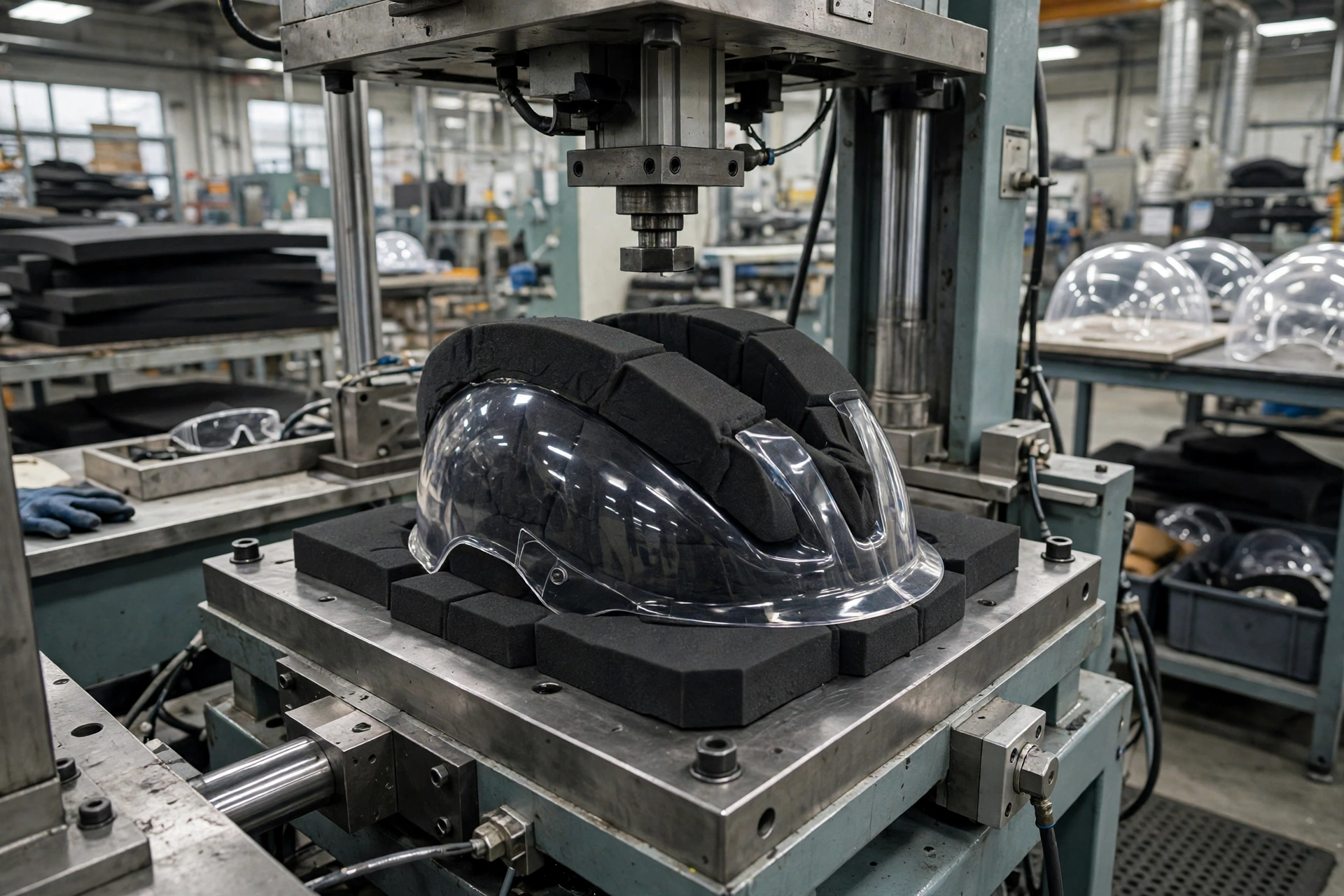
The process starts with a thin outer shell, usually made from polycarbonate, a tough, light plastic. This shell is placed into a mould shaped like the finished helmet. Then the foam, usually expanded polystyrene (EPS), is formed inside it. Heat and pressure bond the foam to the shell as it expands, so the two become one piece.
Because the shell and liner are joined during moulding, there is no need for glue or extra fixings to hold them together. The bond is even across the whole helmet, which helps the shell and foam work as a unit when the helmet takes a knock.
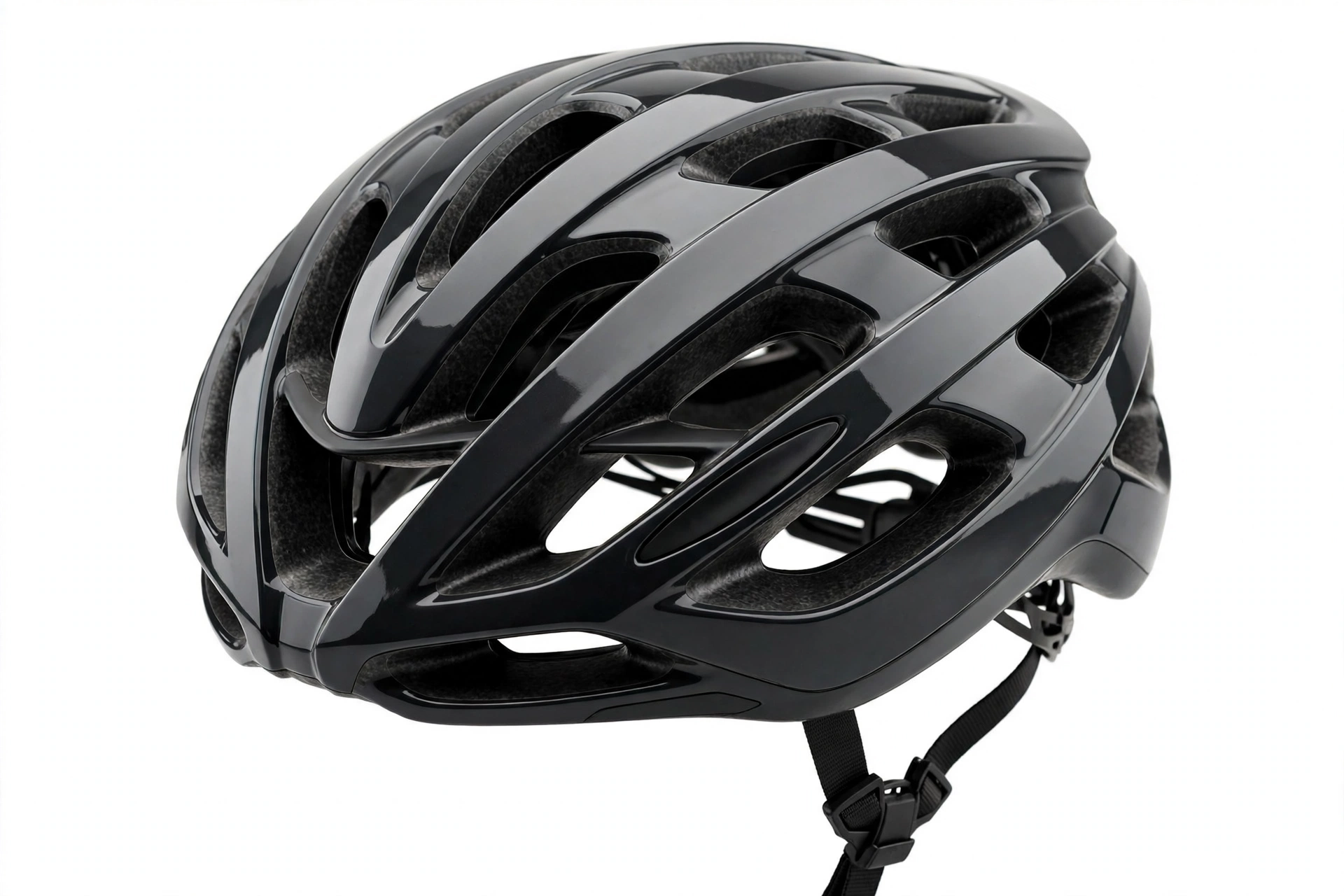
Vents are part of the mould too. The mould shapes the vent openings in the shell and the foam at the same time, so the air channels line up neatly. That is one reason in-mould helmets often have clean, well-finished vents and a smooth look.
Why Do Makers Use In-Mould Construction?
The main reason is weight. Because the shell is thin and the foam is bonded directly to it, an in-mould helmet can be lighter than a helmet built by fitting a separate shell over a liner. For cycling and climbing, where every gram counts over a long day, that saving matters.
Another reason is finish. In-mould helmets have a smooth, polished outer surface with no visible join between shell and liner. The vents are neat, the edges are clean, and the helmet looks well made. That matters to buyers, but it also matters in use: a smooth shell slides more easily across a surface in a fall.
The bond between shell and liner is also a practical benefit. Because the two are fused, the shell is less likely to separate from the liner in a knock, and the helmet holds its shape well over time. In general terms, an in-mould helmet is a single, coherent structure rather than two parts held together.
The process also suits helmets with complex shapes. Because the shell and foam are formed together, makers can create helmets with deep channels, sculpted ridges and integrated peaks that would be hard to assemble from separate parts. This freedom lets designers shape the helmet around the head more closely, which can improve both the fit and the look. For riders, the result is a helmet that feels like a single, well-made piece rather than a shell with a liner tucked inside it.
What Are the Limits of In-Mould Construction?
In-mould construction is not without limits. The thin polycarbonate shell is lighter than a thick composite shell, but it is also easier to dent or puncture. A sharp knock on a thin in-mould shell can mark it more easily than the same knock on a hard-shell helmet. That is why in-mould helmets are common in cycling and climbing, where the risks are different from those in motorsport.
Repairs are also limited. If the shell cracks or separates from the foam, the helmet cannot be repaired in a useful way and should be replaced. The bonded construction means you cannot swap the shell or the liner separately, which is the trade-off for the light weight and clean finish.
Cost is another factor. In-mould helmets can be more expensive than simple hard-shell helmets, because the moulding process needs precise tooling. At the budget end of the range, hard-shell helmets are often cheaper, while in-mould helmets sit a step up in price.
How Does In-Mould Compare with Hard Shell Construction?
A hard-shell helmet is made by forming a separate, thicker shell, usually from ABS plastic, and fitting the foam liner inside it afterwards. The shell is tougher against dents and scrapes, and the helmet is often cheaper. It is also usually heavier, and the join between shell and liner is a separate step rather than part of the moulding.
An in-mould helmet is lighter, smoother and often better ventilated, because the vents are shaped as part of the mould. It suits riders who value low weight and good airflow. A hard-shell helmet suits riders who want a tough, affordable helmet that can take rough handling, such as a commuter or a skatepark rider.
Neither type is automatically safer. Both can meet the same safety standards, and both rely on the foam liner to absorb energy. The choice is about weight, durability, price and the kind of riding you do. If you are learning about helmet technology, reading about what MIPS is for helmets can help you understand a feature that may be added inside either type of helmet.
How Should You Look After an In-Mould Helmet?
Care for an in-mould helmet much as you would any helmet, with a little extra attention to the thin shell. Clean it with mild soap and water and a soft cloth, and do not use solvents or abrasive cleaners. Avoid dropping it onto hard surfaces, and do not stack heavy things on top of it.
Store it in a cool, dry place, out of direct sunlight and away from strong heat. A helmet bag helps protect the shell from scratches and dents when the helmet is not being worn. Check the shell regularly for cracks, dents or areas where it has separated from the foam.
Replace the helmet after any significant impact, even if the shell looks fine, because the foam inside may be damaged. And replace it if the shell is cracked or the liner feels loose, since a damaged in-mould helmet cannot be repaired.
Frequently Asked Questions
Q: Is an in-mould helmet safer than a hard-shell helmet?
A: Not automatically. Both types can meet the same safety standards. In-mould helmets are usually lighter, while hard-shell helmets are usually tougher against dents.
Q: Why are in-mould helmets so light?
A: The shell is thin and bonded directly to the foam in the mould, so there is no extra material or fixings. That keeps the weight down without removing the foam that does the protective work.
Q: Can an in-mould helmet be repaired if the shell cracks?
A: No. A cracked or separated shell means the helmet should be replaced. The bonded construction cannot be repaired in a way that restores its original strength.

Olivia
Writer at Helmet Today, covering helmet reviews, fit and riding safety.