In Michigan, motorcycle helmets are required for riders and passengers under 21. Riders who are 21 or older can ride without a helmet only if they meet specific conditions: at least $20,000 in first-party medical benefits coverage, plus either two years with a motorcycle endorsement or completion of an approved safety course.
Michigan’s exemption is one of the most condition-heavy in the country, so it pays to understand exactly who qualifies before riding helmet-free.
What Is the Exemption Age in the Michigan Motorcycle Helmet Law?
The exemption age is 21. Everyone under 21 — operators and passengers — must wear a DOT-approved helmet in Michigan, with no exceptions based on insurance or training.
At 21, the law gives riders a choice, but it is a conditional choice, not a free one. Meeting the age requirement alone is not enough. You must also satisfy the insurance and experience conditions described below, and all of them must be true at the same time.
If any one condition is missing — for example, you are 25 with plenty of experience but your insurance does not include the required medical benefits — the exemption does not apply to you, and the helmet is legally required.
What Insurance Do You Need to Ride Without a Helmet in Michigan?
The operator must carry at least $20,000 in first-party medical benefits coverage (personal injury protection for motorcyclists) specifically because they ride without a helmet. This is separate from liability insurance and is not automatically included in every motorcycle policy, so riders should confirm the coverage with their insurer and keep proof available.
Passengers have their own version of the rule. A passenger who is 21 or older and rides without a helmet must be covered by at least $20,000 in medical benefits as well, which can come through the operator’s policy or the passenger’s own coverage, depending on how the insurance is written.
Because Michigan’s no-fault insurance system for motorcycles works differently from car insurance, do not guess. One call to your insurance agent to confirm the exact medical benefits amount is the difference between a legal ride and a citation — or worse, an uncovered injury bill.
What Experience or Training Does the Michigan Exemption Require?
On top of age and insurance, an operator must meet one of two experience conditions: hold a motorcycle endorsement for at least two years, or successfully complete an approved motorcycle safety course. New riders who just earned their endorsement and have not taken an approved course do not qualify, even if they are over 21 and insured.
This condition exists because crash data consistently shows newer riders are at the highest risk. Michigan’s compromise was to open the helmet choice only to riders with some seasoning or formal training.
Note that the experience condition applies to the operator. A qualifying operator cannot “cover” an under-21 passenger, and a passenger’s own experience does not replace the operator’s requirements.
What Happens If You Ride Without a Helmet and Don’t Qualify?
Riding without a helmet in Michigan when you do not meet the exemption is a civil infraction. You can be stopped and cited, and the fine is set under Michigan’s traffic code and court schedules — fines vary by court, so the total with costs differs between jurisdictions.
The bigger risk is financial rather than legal. If you crash without a helmet and without the required medical benefits coverage in place, you may have no first-party coverage for your own injuries at all, which in Michigan can leave you relying on health insurance or paying out of pocket.
Riders traveling through several states should remember that Michigan’s conditional system is unusual. Our roundup of helmet laws by state shows how Michigan compares with universal and age-based states.
Should You Ride Without a Helmet Even If You Qualify?
That is a personal decision Michigan leaves to qualifying adults. It is still worth weighing honestly: helmets significantly reduce the risk of fatal head injury, and Michigan riding includes deer crossings, gravel shoulders, and sudden lake-effect weather.
Many experienced Michigan riders who legally ride without a helmet on short local trips still wear one for highway speeds and long tours. Others invest in a comfortable, well-ventilated DOT helmet and wear it every ride, exemption or not.
Either way, make sure your paperwork matches your choice. If you ride helmet-free in Michigan, be 21 or older, carry the required $20,000 medical benefits, and meet the endorsement or safety-course condition — all three, every time.
Riders who split the difference often keep a lightweight half or three-quarter helmet for in-town use in states that require one, and a full-face helmet for touring. That approach keeps you legal everywhere without giving up comfort on Michigan’s short summer hops.
How Can You Be Sure You Qualify Before Riding Without a Helmet in Michigan?
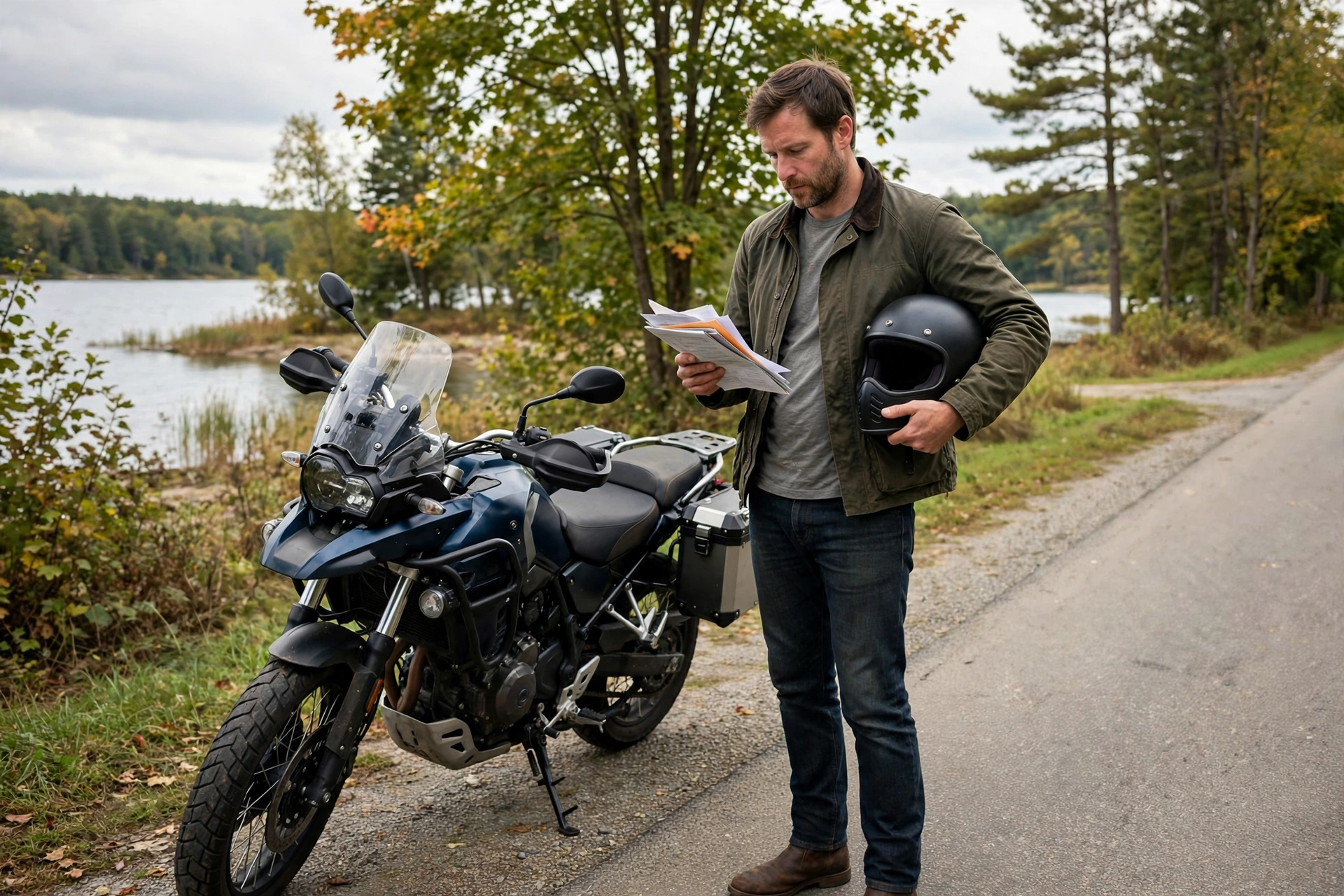
Work through a simple checklist. First, are you at least 21? Second, have you held your motorcycle endorsement for at least two years, or have you completed an approved motorcycle safety course? Third, does your insurance include at least $20,000 in first-party medical benefits that applies when you ride without a helmet?
If the answer to any item is no or “I’m not sure,” wear the helmet until you can confirm it. The insurance point is the one riders most often get wrong, because standard motorcycle policies in Michigan do not automatically include the medical benefits the exemption requires — it is coverage you may need to request specifically.
Keep proof of insurance with you when you ride, as Michigan riders are expected to be able to show their coverage. Riders who tour with passengers should also confirm whether their policy’s medical benefits extend to a helmet-free passenger, or whether the passenger needs their own qualifying coverage.
And remember that the exemption ends at the state line. Neighboring Ohio has its own under-21 and novice rules, Indiana requires helmets under 18, and Ontario, Canada requires helmets for everyone — a Michigan exemption means nothing once you cross into another jurisdiction.
Frequently Asked Questions
At what age are you exempt from Michigan’s motorcycle helmet law?
The exemption starts at 21, but age alone is not enough. You also need at least $20,000 in first-party medical benefits coverage and either two years with a motorcycle endorsement or an approved safety course.
Do passengers need a helmet in Michigan?
Passengers under 21 must always wear a helmet. A passenger 21 or older can ride without one if they are covered by at least $20,000 in medical benefits coverage.
Can new riders go without a helmet in Michigan?
No. Even if you are over 21 and insured, you must also have held your endorsement for two years or completed an approved motorcycle safety course to qualify for the exemption.

Olivia
Writer at Helmet Today, covering helmet reviews, fit and riding safety.