


New Jersey law requires everyone under the age of 17 to wear a helmet when riding a bicycle. The same rule applies to passengers under 17, including young children riding in a child seat. New Jersey’s under-17 cutoff is one of the strictest bicycle helmet age limits in the United States.
The requirement applies on public roads, public parks, and other public land across the state. Here is what New Jersey parents and young riders need to know.
What age does New Jersey’s bicycle helmet law cover?
The law covers riders and passengers under 17 — in other words, everyone age 16 and younger. A teenager who can legally ride without a helmet in most other states still needs one in New Jersey. The requirement ends on a rider’s 17th birthday.
The rule applies when riding on public roadways, in public parks, and on other publicly owned land. Like most states, New Jersey’s law is aimed at riding in public spaces rather than on your own private property, but the helmet habit is worth keeping everywhere.
Practically speaking, this means a New Jersey teenager needs a helmet for the ride to school, the trip to a friend’s house, laps in the park, and boardwalk riding where bicycles are allowed. Organized rides, school bike-safety programs, and summer camps in New Jersey build the under-17 rule into their own policies as well, so a young rider without a helmet will often be turned away from activities even before the law itself comes into play. Keeping a helmet with the bike — locked to it or hanging from the handlebars when parked — removes the most common excuse, which is simply forgetting it at home.
Does the law also cover scooters, skateboards, and skates?
New Jersey is unusual because its helmet rules reach beyond bicycles. The state’s under-17 helmet requirements also extend in some respects to young people using inline skates, skateboards, and certain scooters. That broader coverage is one reason New Jersey’s youth helmet rules are considered among the most comprehensive in the country.
This article focuses on bicycles, but if your child moves between a bike, a scooter, and a skateboard, the practical takeaway is simple: in New Jersey, under-17s should expect to wear a helmet for all of them. Checking the specific device rules is worthwhile if your child uses a motorized scooter, since additional regulations may apply.
What kind of helmet does New Jersey require?
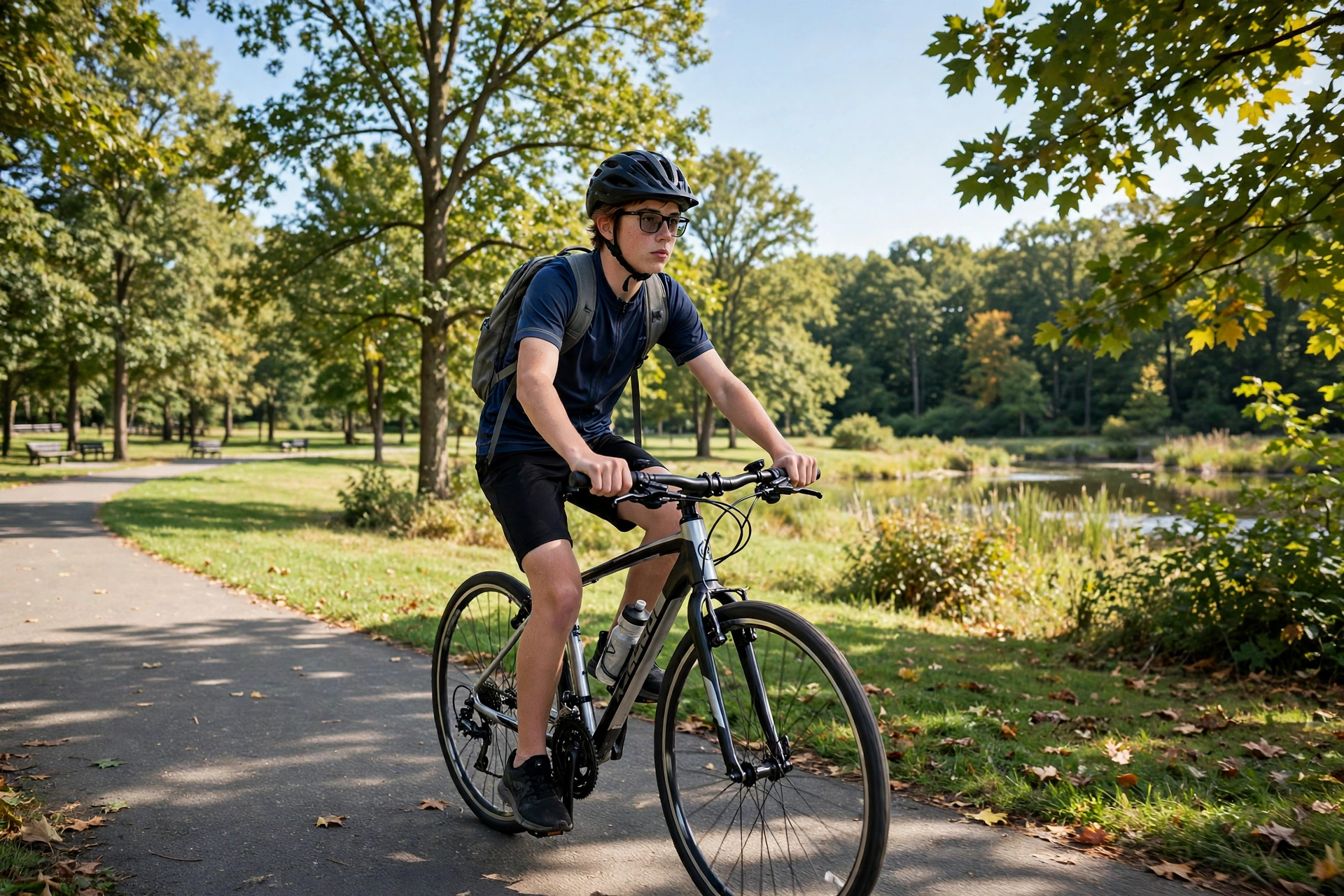
The helmet must be a proper bicycle helmet that meets federal safety standards — look for the U.S. CPSC (Consumer Product Safety Commission) certification label inside the helmet. It must fit properly and be worn properly: level on the head, low on the forehead, with the chin strap fastened and snug.
A helmet that dangles from the handlebars or sits unstrapped on the back of the head does not satisfy the law or provide real protection. Parents should check fit regularly, because children outgrow helmets faster than expected, and replace any helmet that has been in a crash. If you want to see how New Jersey compares nationally, our guide to what states have helmet laws shows the full state-by-state picture.
Who is responsible if a child rides without a helmet?
New Jersey places responsibility on parents and guardians as well as young riders. Selling or renting a bicycle to a minor without the required helmet provisions can also create issues for shops, which is why many New Jersey bike shops actively remind families about the under-17 rule at the point of sale.
Violations can lead to a fine, and amounts vary by situation. In many first-offense cases the emphasis is on getting the child into a helmet rather than punishing the family, but repeat violations are taken more seriously. The cheapest and safest course is always the same: helmet on, strap fastened, every ride. New Jersey also runs periodic helmet giveaway and fitting programs through police departments, hospitals, and community groups, so cost alone should never be the reason a child rides unprotected.
Why did New Jersey choose 17 as the cutoff?
New Jersey set its age limit higher than most states because teenagers account for a large share of youth bicycle injuries. Sixteen-year-olds ride faster, travel longer distances, and ride in traffic more often than younger children. Lawmakers concluded that ending protection at 14, as many states do, left a risky gap.
Whether or not you agree with the higher age, the practical effect for families is clear: plan on helmets for every New Jersey rider under 17, and budget for a good-fitting helmet as part of the cost of every bike your child owns.
Fit is where many families unknowingly fall short. A New Jersey-compliant helmet must be worn properly to count: level on the head, with the rim about an inch above the eyebrows, the side straps forming a V under each ear, and the chin strap fastened snugly. If the helmet can be pushed off the head with a firm tug, it will not stay on in a crash. Most children’s helmets include extra padding sets in the box — swapping pad thickness is the easiest way to fine-tune fit as a child grows.
Parents should also replace a helmet after any crash involving a head strike, even a minor-looking one. The impact foam crushes permanently to absorb energy, and it cannot do the same job twice. The same goes for a helmet that has been left baking in a hot car for long periods or one that is more than about five years old — materials age, and an old helmet is a false sense of security.
For families near the state border, keep in mind that the rules change quickly. New York requires helmets only under 14, and Pennsylvania has its own younger age cutoff, so a teenager who rides in several states is safest simply wearing a helmet everywhere. One habit works in every state.
Frequently Asked Questions
Do adults need a bicycle helmet in New Jersey?
No. New Jersey’s bicycle helmet requirement applies only to riders and passengers under 17. Adults are not covered, although helmets are recommended for riders of all ages.
Does New Jersey’s helmet law cover skateboards and scooters too?
In part, yes. New Jersey’s under-17 helmet rules extend to some other devices, including inline skates, skateboards, and certain scooters. The bicycle rule itself covers all riders and passengers under 17.
At what age can a New Jersey teen stop wearing a bike helmet?
At 17. The legal requirement covers everyone under 17, so it ends on the rider’s 17th birthday.

Olivia
Writer at Helmet Today, covering helmet reviews, fit and riding safety.


