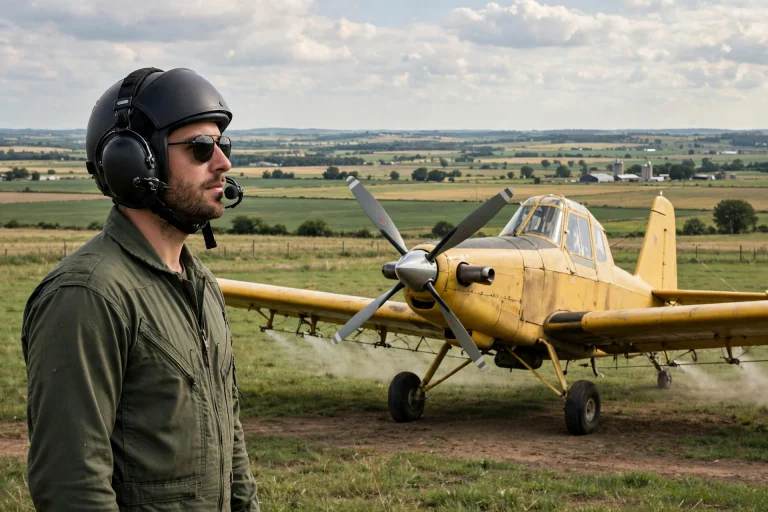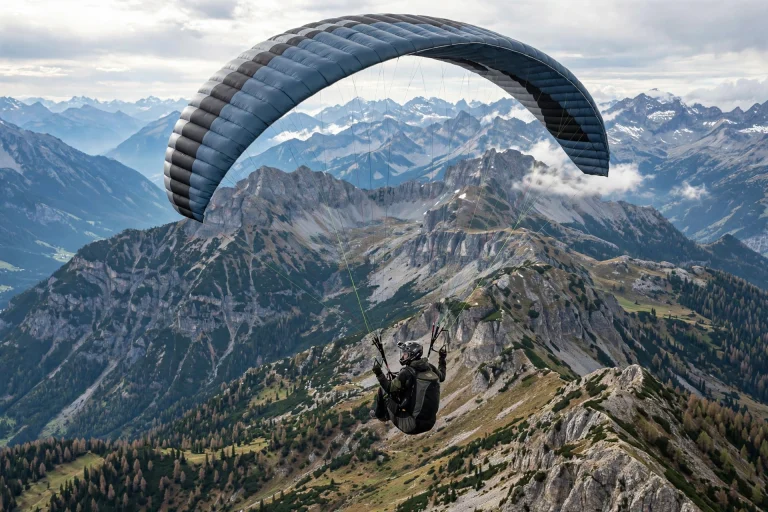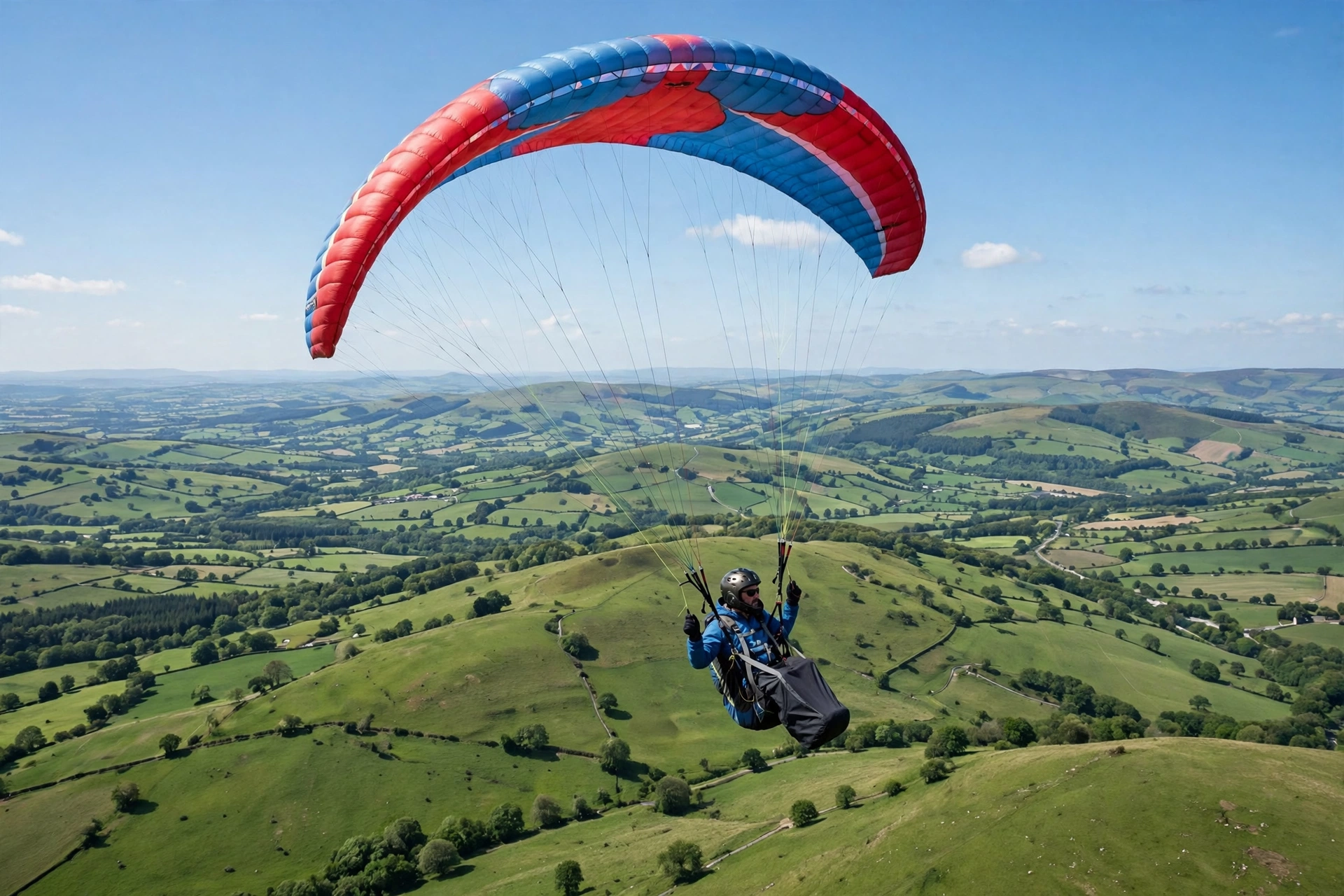
In general terms, the difference between a paragliding helmet and a skydiving helmet is that a paragliding helmet is built for a long, slow, open-air flight with maximum hearing and ventilation, while a skydiving helmet is built for a short, very fast freefall with a tight, aerodynamic fit and room for an altimeter and camera. They look similar at a glance, but they are designed for different speeds, different risks, and different jobs in the air.
Both sports involve falling or flying through the air with a canopy overhead, and both require head protection. But a paraglider pilot spends an hour or more in the air, steering gently, listening to a variometer, and landing on their feet, while a skydiver spends under a minute in freefall at very high speed before opening a parachute. Those different flights shape the helmets.
How Does Speed Change the Helmet Design?
Speed is the biggest difference. A paraglider flies relatively slowly, so a paragliding helmet can be open, light, and well-ventilated without worrying much about wind buffeting. Many paragliding helmets are open-face, with generous ear cut-outs that let the pilot hear the wind, the variometer beeps, and radio calls clearly — hearing matters a lot when you are reading the air for lift.
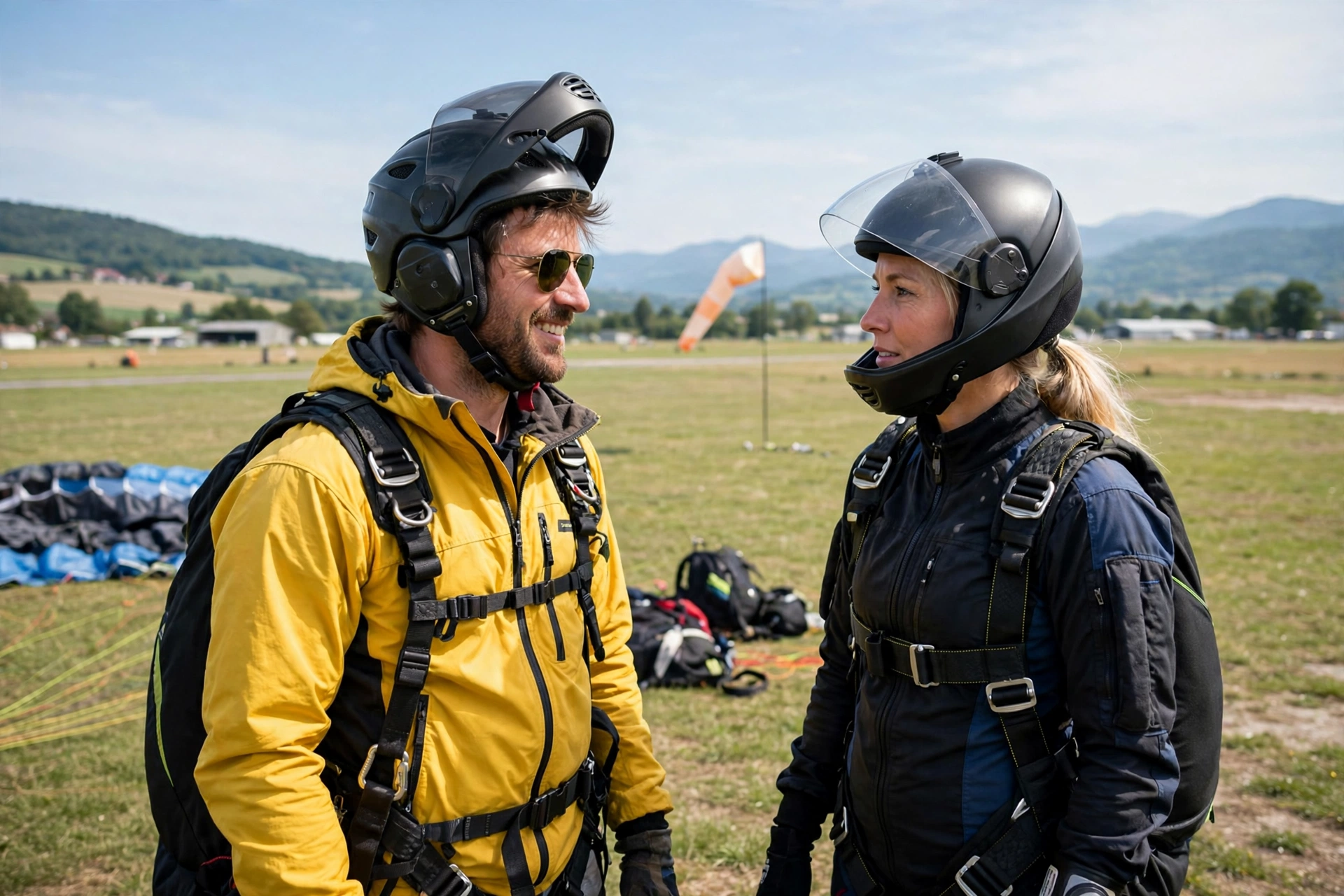
A skydiver, by contrast, falls at speeds where an open, loose helmet would buffet violently, catch the wind, and possibly shift on the head. Skydiving helmets are therefore close-fitting and aerodynamic, with a smooth shell that slips through the air cleanly. Many are full-face, which also protects the face and chin at high speed and keeps the mouth and nose shielded from the rushing air.
The fit reflects this too. A paragliding helmet should be comfortable for hours, with soft padding and room to move the head freely to look around. A skydiving helmet should be snug and stable, staying exactly in place through the violent airflow of freefall and the sudden deceleration of canopy opening.
What About Hearing and Communication?
Hearing is central to paragliding. Pilots listen to their variometer — a small instrument that beeps faster as they climb in a thermal — and to radio instructions from instructors or fellow pilots. A paragliding helmet is therefore designed not to block sound: open ear areas, thin padding over the ears, and sometimes cut-outs for earphones are all common.
Skydivers also use audible altimeters, which beep at set altitudes to warn the jumper it is time to deploy, but the design problem is different. At freefall speed, wind noise is so loud that the altimeter must be loud and close to the ear, and the helmet must hold it securely in place. Many skydiving helmets have pockets or mounts for audible altimeters built into the lining.
Radio communication differs too. Paragliding radios are used for long, conversational exchanges during a flight, so comfort over time matters. Skydiving radios are used for short, critical calls — usually during canopy flight rather than freefall — so clarity in a brief window matters more than long-term comfort.
Can You Use a Paragliding Helmet for Skydiving, or Vice Versa?
In general terms, no — you should use a helmet made for the sport you are doing. A paragliding helmet used for skydiving may buffet, shift, or fail to hold an altimeter securely at freefall speed, and it may not offer the face protection a full-face skydiving helmet provides. A skydiving helmet used for paragliding will be heavier, hotter, and harder to hear through, which makes a long flight less safe as well as less comfortable.
The certification and standards differ as well. Paragliding helmets are typically certified to standards for air sports with lower impact speeds, while skydiving helmets are built to withstand the forces of freefall and canopy opening. A helmet certified for one sport has not necessarily been tested for the conditions of the other, so swapping them means relying on protection that was not designed for the job.
If you do both sports, the practical answer is two helmets. It is an extra cost, but each helmet will last longer since it is only used for its own sport, and you will be properly protected in both. Many pilots who fly both paragliders and skydive keep a dedicated helmet for each, just as they keep separate canopies and instruments.
Which Features Matter Most in Each Helmet?
For paragliding, prioritise light weight, ventilation, hearing, and all-day comfort. Look for an open-face design with good ear access, vents that work at low speed, and a chin strap that stays comfortable for hours. A visor is optional — many paragliding pilots fly without one, relying on sunglasses — but if you fly in cold or wet conditions, a visor or goggles help.
For skydiving, prioritise a snug, aerodynamic fit, a secure visor, and mounts for your altimeter and camera if you use them. A full-face helmet protects the chin and jaw at high speed and keeps the face warm, while an open-face skydiving helmet suits jumpers who prefer more airflow and easier communication under canopy. Either way, the helmet must stay put in freefall — that is the non-negotiable test.
In both sports, remember that fit is what makes any helmet’s protection work — including systems that address angled impacts, as explained in this guide to what MIPS means for helmets. A helmet that fits your head and your sport is the one that will protect you when it matters.
How Do You Choose the Right Helmet for Your Sport?
Start with the sport, not the helmet. If you paraglide, look at paragliding helmets from air-sport brands and try them on with your variometer and radio in place. If you skydive, look at skydiving helmets and try them on with your audible altimeter fitted, checking that you can hear it and that the helmet does not shift when you shake your head hard.
Next, consider your experience level. Beginners in both sports benefit from simpler, lighter helmets that are easy to fit and comfortable to wear for a long session. More experienced pilots and jumpers may want extra features — camera mounts, oxygen compatibility, or specialist visors — but those features only help if the basic fit is right.
Finally, buy from a specialist retailer for your sport, not a general sports shop. A paragliding shop or a skydiving gear store will know the standards, the fitting quirks, and the accessories that work with each helmet, and they can advise you far better than a general retailer. A well-chosen helmet, fitted by someone who knows the sport, is worth the trip.
Frequently Asked Questions
Q: Is a skydiving helmet stronger than a paragliding helmet?
A: In general terms, they are built for different forces rather than one being simply stronger. Skydiving helmets handle high-speed airflow and opening shock, while paragliding helmets prioritise light weight and hearing for slow flight.
Q: Can I wear sunglasses under a paragliding helmet?
A: Yes — most paragliding helmets are open-face and work well with sunglasses or goggles, which many pilots prefer to a fixed visor for a long flight.
Q: Do I need a full-face helmet for skydiving?
A: Not necessarily. Many jumpers use open-face skydiving helmets, but full-face helmets offer more face protection and warmth at high speed, so the choice depends on your jumping style and comfort.

Olivia
Writer at Helmet Today, covering helmet reviews, fit and riding safety.