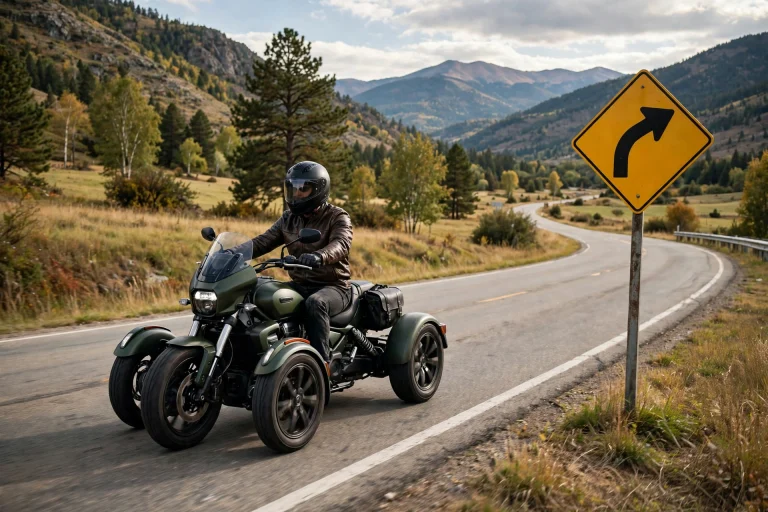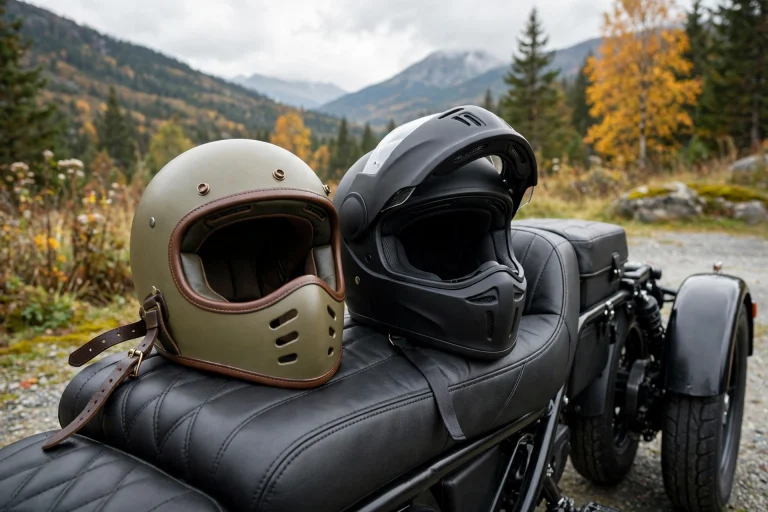
Sidecar helmet communication options include wired intercoms, Bluetooth headsets, and simple hand signals, and the best choice depends on whether you need to talk to the rider, to another passenger, or to riders on other machines. In general terms, a Bluetooth headset built into the helmet is the most convenient option for most sidecar outfits, because it needs no wires and lets the rider and passenger talk clearly at speed.
Communication matters more in a sidecar than on a solo motorcycle, because the rider and passenger are separated by the sidecar tub and the wind, and shouting does not work at speed. A good system lets the rider warn the passenger of a bump, agree a stop, or simply enjoy a conversation. This guide explains the main options and how to choose between them.
How Do Bluetooth Helmet Headsets Work in a Sidecar?
A Bluetooth headset is a small unit that mounts on the side of the helmet, with speakers that sit in the helmet’s ear pockets and a microphone that sits near the mouth. It connects wirelessly to a matching headset in the other helmet, so the rider and passenger can talk to each other as if they were on the phone. Most systems also connect to a phone, so you can take calls, listen to music, or hear navigation directions through the same speakers.
The range between two Bluetooth headsets is usually enough for a rider and a sidecar passenger, who are only a metre or so apart, and many systems can also connect to headsets on other machines for group riding. Battery life is usually several hours, which covers most day rides, and the headset charges over a standard USB cable. The main limitation is wind noise: at high speed, the microphone can pick up wind, so a good microphone with a wind cover and a helmet with decent wind sealing will give clearer sound.
What About Wired Intercoms?
A wired intercom connects the rider’s and passenger’s helmets with a cable, usually through a small control box mounted on the motorcycle or the sidecar. The sound quality is often very clear, because there is no wireless signal to drop out, and there is no battery to charge. Wired systems are also usually cheaper than Bluetooth systems, and they are a good choice for riders who do not need to connect to a phone or to other machines.
The downside is the cable itself. It runs between the helmets and the control box, and it can snag, pull, or get in the way when the passenger gets in or out of the sidecar. The cable also limits movement: the passenger cannot easily step away from the outfit without unplugging. For that reason, wired intercoms are most popular with riders who use the sidecar regularly and want a simple, reliable system, while Bluetooth suits riders who value convenience and the freedom to move around.

Can You Use Hand Signals Instead?
Hand signals are the simplest option, and they cost nothing. The rider and passenger can agree a few basic signals before the ride: a tap on the shoulder to slow down, a wave to stop, or a thumbs-up to say all is well. Hand signals work well at low speed and on short rides, and they are a useful backup even if you have an electronic system, because electronics can fail.
The problem with hand signals is that they only work when the rider can see the passenger, which is not always the case in a sidecar, and they are useless at speed, when the passenger cannot safely take a hand off the grab handles. They also cannot carry a conversation, so they are no substitute for a proper communication system on a long ride. Most experienced sidecar riders use hand signals as a backup and an electronic system as the main way to talk.
What Should You Check Before Buying a Helmet Communication System?
Start with the helmet. Check that it has speaker pockets or enough room in the ear pads for speakers, and that the microphone can be mounted without interfering with the chin strap or the visor. Some helmets are made with communication systems in mind and have built-in pockets and channels for wires, while others have tight ear pads that make fitting speakers difficult. If you are buying a new helmet and a communication system together, it is worth checking the combination in the shop.
Then think about what you need the system to do. If you only need rider-to-passenger talk, a basic two-way Bluetooth system is enough. If you want music, phone calls, and navigation as well, look for a system that connects to a phone. If you ride in a group, look for a system that can connect to several headsets at once. And if you want to understand the helmet itself, reading about what MIPS is for helmets can help you make sense of the safety features listed on the box, so you can choose a helmet that protects well and works with your communication system.
How Do You Look After a Helmet Communication System?
Look after the headset by keeping it dry and removing it before washing the helmet’s lining, since most headsets are not made to be washed. Charge the battery before a ride, and check the battery level so the system does not die halfway through the day. Keep the microphone wind cover clean, because a dirty or damaged cover lets in more wind noise and makes your voice harder to hear.
Check the mounting regularly: the clamp or adhesive pad that holds the headset to the helmet can loosen over time, especially in heat or after a knock. If the speakers sound muffled, check that they are sitting correctly in the ear pockets and not blocked by padding. And remember that a communication system is a convenience, not a safety device: it should never distract you from the road, and if the system fails, pull over safely rather than trying to fix it while riding.
Frequently Asked Questions
Q: Can I fit a Bluetooth headset to any helmet?
A: In general terms, yes, as long as the helmet has room in the ear pads for speakers and a place to mount the control unit. Helmets with speaker pockets are easiest, but most helmets can take a headset with a clamp or adhesive mount.
Q: Do I need a communication system for short sidecar rides?
A: Not necessarily. For short rides at low speed, hand signals and a pre-ride briefing may be enough. For longer rides, or riding at higher speeds, a Bluetooth or wired system makes the ride safer and more enjoyable.
Q: Will a headset make my helmet noisier?
A: It should not, if it is fitted properly. A badly fitted speaker can press on your ear or let in wind, so make sure the speakers sit flat in the ear pockets and the microphone is covered against the wind.

Olivia
Writer at Helmet Today, covering helmet reviews, fit and riding safety.