A trials motorcycle helmet is different because it is built for slow, technical riding: it is light, open, and made for balance and control, not for speed. Trials riding is about picking a line over rocks, logs, and steep banks at walking pace, often with the rider standing on the footpegs. The helmet has to protect the head without getting in the way, without trapping heat, and without blocking the rider’s view of the ground just in front of the wheel. That is a very different job from a road or motocross helmet.
From a distance, a trials helmet can look like a cross between a motocross helmet and an open-face helmet. It has a peak and a lightweight shell, but it has no visor and a wide, open face area. This design makes sense once you understand what trials riding asks of the rider: constant head movement, quick glances down at obstacles, and bursts of effort that build up heat fast. This guide explains what makes a trials helmet different, how it protects the rider, and what to look for if you are choosing one.
What Is Trials Riding and Why Does It Need a Different Helmet?
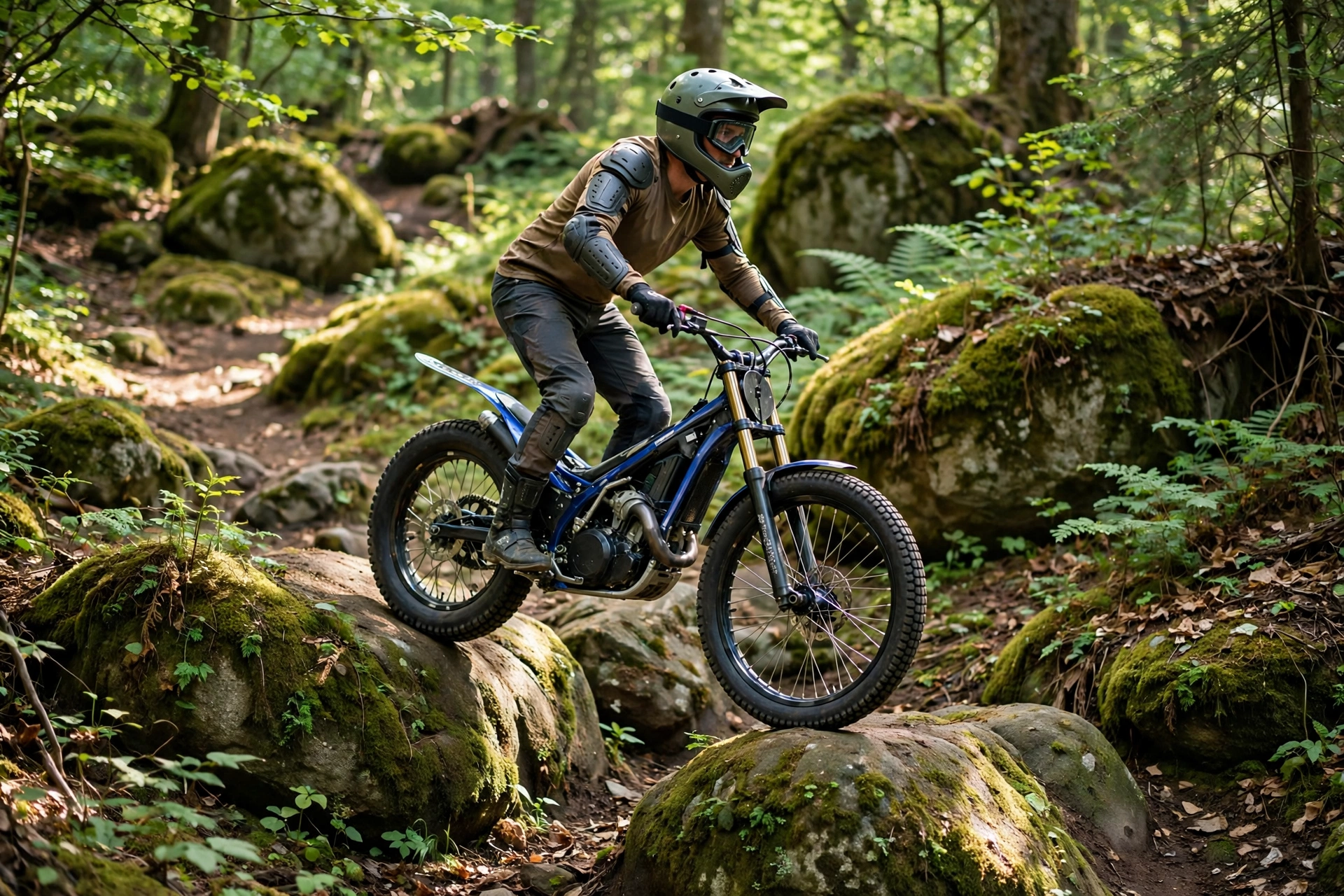
Trials riding is a motorcycle sport built around balance and precision rather than speed. Riders tackle a course of marked sections filled with rocks, tree roots, steep climbs, and tight turns, and they score points for putting a foot down or stopping. The bike is light, the speeds are low, and the rider spends much of the time standing up, shifting their weight to keep the bike balanced. A fall in trials is usually a slow tip-over rather than a high-speed crash.
Because the speeds are low, the helmet does not need the aerodynamic shell or the sealed visor of a road helmet. What it needs instead is lightness, ventilation, and a wide view. It also needs to stay comfortable during hard physical effort, because trials riding is surprisingly tiring, and a hot, heavy helmet makes it harder to concentrate.
How Is a Trials Helmet Shaped Differently?
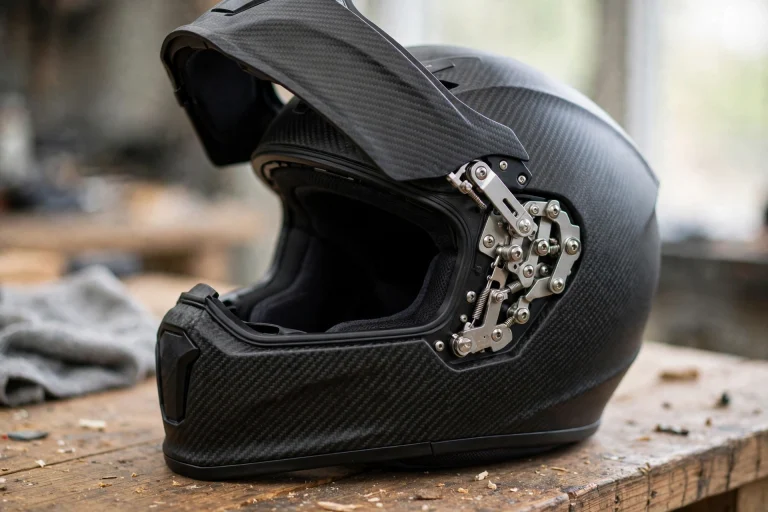
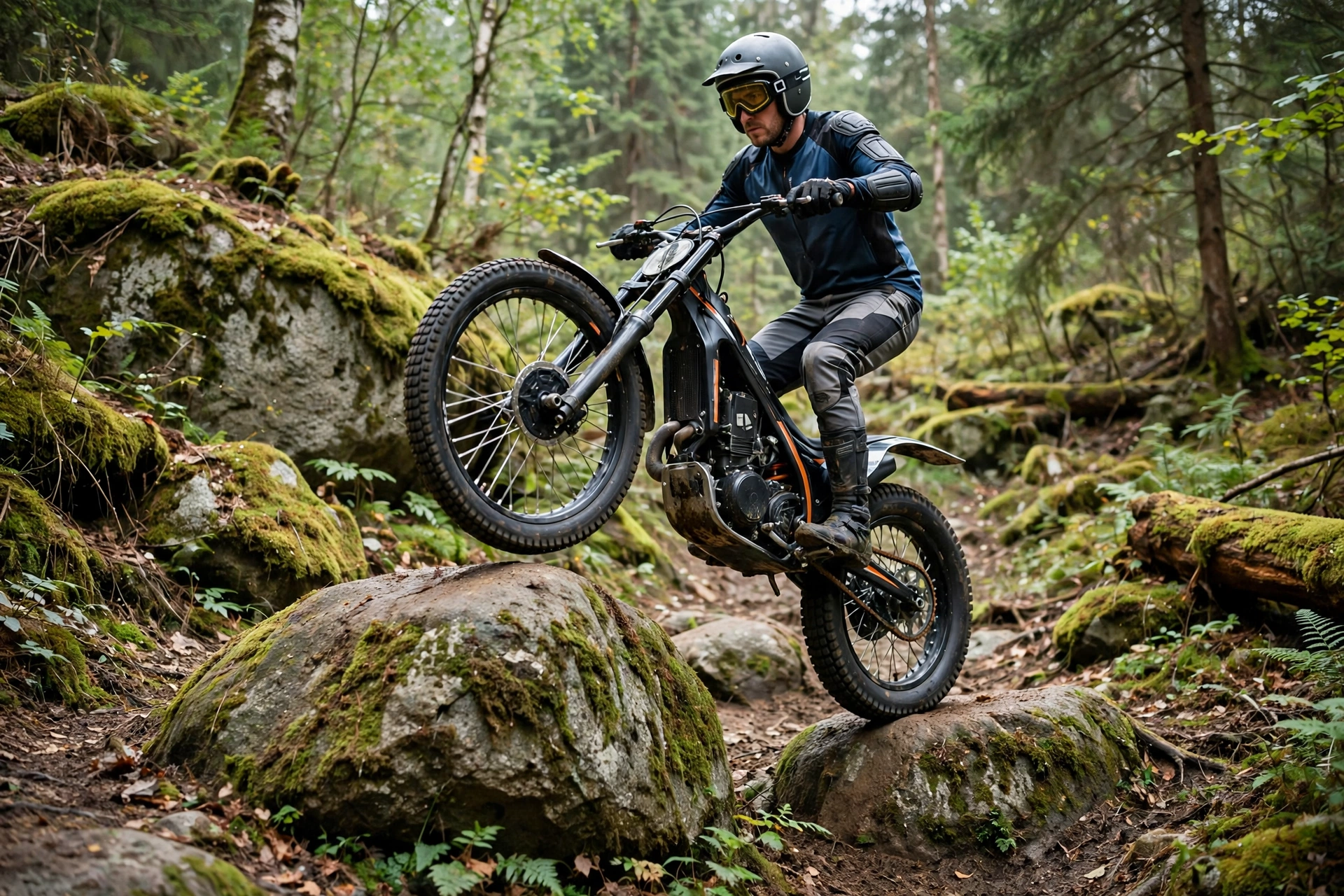
The most obvious difference is the open face. A trials helmet has no chin bar and no visor, so the whole lower face is exposed. The shell covers the top, sides, and back of the head, and it extends down a little at the back for extra coverage, but the front is open. This gives the rider a wide, unobstructed view, especially downward, which is essential when picking a line over rocks and roots.
The peak, or visor, on a trials helmet is longer and flatter than on many other helmets. It shades the eyes from the sun and keeps rain and branches out of the rider’s face, without blocking the view ahead. It is usually made to flex or break away if it catches on something, because trials riders often ride close to trees and rocks. A peak that is too stiff can snag and pull the rider’s head, so a flexible design is safer in this kind of riding.
How Much Protection Does a Trials Helmet Offer?
A trials helmet is designed to protect against the kinds of impacts that happen in trials riding. The shell and the energy-absorbing liner inside are made to reduce the force that reaches the head if the rider falls onto rocks or hard ground. Because trials speeds are low, the impacts are usually less severe than a road crash, but rocks and hard surfaces can still cause serious injury, so a proper trials helmet is essential. Learning about what MIPS is for helmets can help you compare the safety features inside different helmets.
It is important to be clear about the limits of an open-face design. A trials helmet protects the top, sides, and back of the head, but it does not protect the chin or jaw in the way a full-face helmet does. That is a trade-off the sport accepts, because a chin bar would block the view and add weight that trials riders do not want. Riders manage the risk by wearing goggles for eye protection and by riding at low speeds where a face-first fall is less likely.
When choosing a trials helmet, check that it meets the safety standards that apply where you ride. A helmet made for trials should carry the correct certification for motorcycle use, not just for cycling or climbing. The fit matters too: the helmet should sit level, feel snug without pressing, and stay in place when you move your head quickly. A loose trials helmet can shift and block your view at the worst moment, so take the time to find one that fits your head shape.
Why Are Trials Helmets So Light and Well Ventilated?
Weight is a big deal in trials, because the rider is constantly moving their head to look at obstacles and check their balance. A heavy helmet pulls on the neck and makes it harder to move quickly, so trials helmets are made as light as practical. They use a slim shell and light padding, and they leave out the visor, chin bar, and heavy ventilation systems that other helmets need. The result is a helmet that feels almost weightless compared with a full-face road helmet.
Ventilation is just as important, because trials riding involves short bursts of hard effort. The rider may be pushing the bike, hopping it over an obstacle, or holding a balance position for several seconds, and all of that builds up heat. A trials helmet has large openings and vents that let air flow freely over the head, and the open face means sweat can evaporate easily. This keeps the rider cooler and helps them concentrate on the next section.
Can You Use a Trials Helmet for Other Types of Riding?
In general terms, a trials helmet is best kept for trials and very slow off-road riding. It is not a good choice for road riding, because it has no visor to protect against wind, rain, insects, and road debris, and no chin bar to protect the face. At road speeds, the open face leaves the rider exposed, and the peak can catch the wind and pull the helmet back. For any ride above walking pace on a public road, a full-face or proper road helmet is the safer choice.
If you ride both trials and other kinds of motorcycling, you will need more than one helmet. That is normal: different types of riding ask different things of a helmet, and no single design does everything well. Keep your trials helmet for trials, and use a helmet designed for the road or for motocross when you ride in those settings. Each helmet will last longer and protect you better when it is used for the job it was made for.
Frequently Asked Questions
Q: Why do trials helmets have no visor?
A: Trials riders need a wide, open view, especially downward, and they ride at very low speeds. An open face with goggles gives them the vision and airflow they need, while a visor would block their view and trap heat.
Q: Is a trials helmet safe enough for trials riding?
A: Yes, when it is a proper motorcycle trials helmet that meets the right safety standards. It protects the top, sides, and back of the head against the slow falls that happen in trials, though it does not protect the chin like a full-face helmet.
Q: Can I wear a trials helmet on the road?
A: In general terms, it is not a good choice for road riding. It has no visor or chin bar, so your face is exposed to wind, rain, and debris, and the peak can catch the wind at speed. Use a full-face road helmet for road rides.

Olivia
Writer at Helmet Today, covering helmet reviews, fit and riding safety.