A vintage style motorcycle helmet can be safe to ride in, but only if it is a modern helmet built to current standards — an old helmet, however good it looks, should not be trusted on the road. Vintage style is popular for good reason: round shells, plain colours, leather trim, and bubble visors give a motorcycle a timeless character. The problem is that the helmets that originally came with that look are now decades old, and helmet materials age, harden, and weaken over time, even if the helmet looks fine on the outside.
This guide explains how to enjoy the vintage look without taking a risk with your safety. It covers the difference between a vintage helmet and a vintage style helmet, how to check whether a helmet is still safe, what certification to look for, and which modern features you should not give up for the sake of appearance. The aim is simple: a helmet that looks classic and protects you properly.
What Is the Difference Between Vintage and Vintage Style?
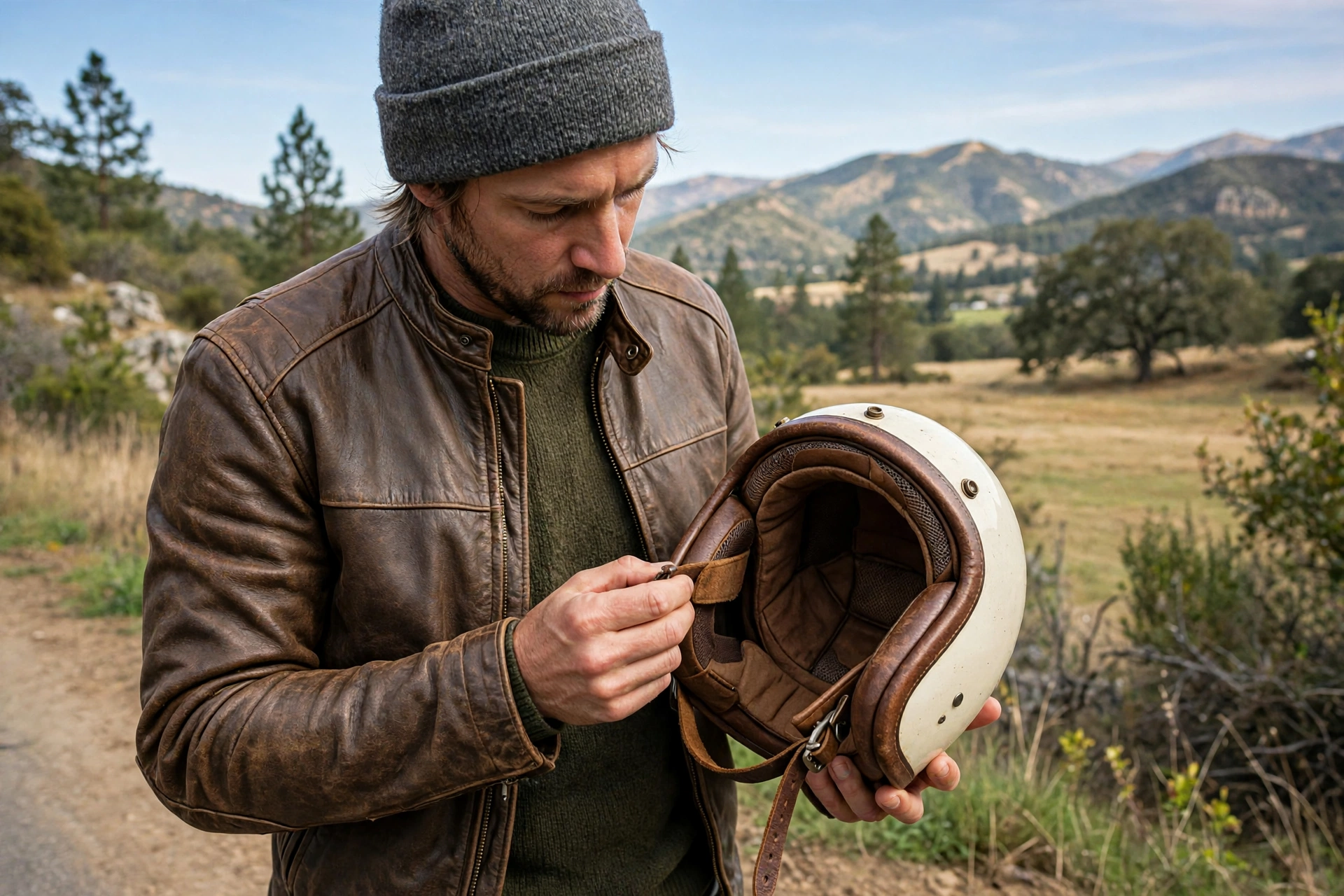
A vintage helmet is an old helmet, made years or decades ago. It may be a genuine period piece, with the shell, liner, and strap from its original era. It may look beautiful, and it may have real value as a collector’s item. But it was made to the standards of its time, and its materials have been ageing ever since. The foam liner inside hardens with age, the shell can become brittle, and the strap can weaken, even if the helmet has never been in a crash.
A vintage style helmet is a new helmet that looks old. It is made today, with a modern shell, a modern energy-absorbing liner, and a modern strap, but it is shaped and finished to look like a classic helmet. It has the round shell, the plain colours, and the simple detailing of a vintage design, but inside it is a current helmet. That is the difference that matters: one is an old helmet, the other is a new helmet with an old look.
How Do You Check Whether a Helmet Is Still Safe?
The first check is the age of the helmet. Most helmet makers suggest replacing a helmet after a number of years of use, because the materials inside degrade over time, even with careful storage. If you do not know when a helmet was made, look for a date label inside the helmet, usually under the lining or on the strap. If there is no date, or the date is many years ago, treat the helmet as unsafe for riding.
The second check is the condition of the liner and shell. Press the liner gently: it should feel firm and springy, not hard, crumbly, or compressed. Look at the shell for cracks, dents, or fading, and check the strap for fraying, stiffness, or a buckle that does not close firmly. Any of these signs means the helmet should be replaced. A helmet that has been dropped hard or involved in a crash should also be replaced, even if it looks undamaged, because the liner may have been compressed inside.
What Certification Should a Vintage Style Helmet Have?
Certification is the simplest way to tell a safe vintage style helmet from a fashion item. A proper vintage style helmet will carry a clear certification mark, showing that it has been tested for impact protection and meets the standard that applies where it is sold. The mark is usually found on the back of the shell, on the strap, or on a label inside the helmet. If you cannot find it, ask the seller, and do not buy the helmet if they cannot show it to you.
Be careful with helmets sold as vintage style that have no certification at all. Some are made as novelty items or for display, and they may look convincing on the outside while offering very little protection inside. They may have a thin shell, a soft liner, or no liner at all. These helmets are not made for riding, and wearing one on the road is a serious risk. The price is not a reliable guide either: a cheap certified helmet protects better than an expensive uncertified one.
When you buy a vintage style helmet, buy it from a reputable seller who can tell you which standard it meets and when it was made. Keep the receipt and any paperwork that comes with it, because that helps if you need to check the helmet later. A good seller will be happy to explain the certification and the fit, and will not pressure you to buy a helmet that does not fit properly.
What Modern Features Should You Keep?
A good vintage style helmet keeps the classic look without giving up the features that make a modern helmet safe and comfortable. The most important of these is the energy-absorbing liner, which is hidden inside the shell and does not change the look of the helmet at all. It is the part that reduces the force reaching your head in a crash, so never choose a vintage style helmet that lacks a proper liner. Learning about what MIPS is for helmets can help you compare what different helmets offer.
Ventilation and a good visor also matter, even if they are not part of the original vintage look. A vintage style helmet with small, discreet vents will be cooler and more comfortable than one with no ventilation at all, and a clear, well-fitting visor or good goggles will protect your eyes. You do not need to give up comfort for style: the best vintage style helmets hide their modern features inside a classic shape, so you get both.
How Do You Look After a Vintage Style Helmet?
Looking after a vintage style helmet is much like looking after any other helmet. Store it in a cool, dry place, out of direct sunlight, and keep it away from heat and chemicals that can damage the shell and liner. Do not hang it on a mirror or handlebar, where it can fall, and do not leave it on the ground where it can be knocked over. A helmet that is well stored will last longer and stay safer.
Clean the shell with a soft cloth and mild soap, and clean the visor with a soft cloth and water or a visor cleaner. Avoid harsh chemicals and rough cloths, which can scratch the shell and the visor. If the lining is removable, take it out and wash it regularly, following the maker’s instructions. A clean lining is more comfortable and lasts longer than one that is left dirty.
Frequently Asked Questions
Q: Can I ride in a genuine vintage helmet?
A: In general terms, no. An old helmet’s materials age and weaken over time, even if it looks fine, and it was made to older standards. Keep a genuine vintage helmet for display, and ride in a modern vintage style helmet instead.
Q: How can I tell if a vintage style helmet is certified?
A: Look for the certification mark on the shell, strap, or label inside the helmet. A reputable seller should be able to tell you which standard it meets and when it was made. If there is no mark, do not ride in it.
Q: How often should I replace a vintage style helmet?
A: Replace it after a number of years of use, following the maker’s guidance, and replace it at once after a crash or a hard knock. Even with careful storage, the liner inside ages, so a helmet that looks classic should still be replaced on time.

Olivia
Writer at Helmet Today, covering helmet reviews, fit and riding safety.