A work helmet and a sports helmet are made for different jobs, and in general terms a work helmet protects against falling objects and bumps on a work site, while a sports helmet protects against falls and crashes during a sport. They may look similar at first glance, because both are hard shells worn on the head, but they are designed, tested, and built to different standards.
The difference starts with the risks each helmet is made to handle. A work helmet, often called a hard hat, is made for a building site, a factory, or any workplace where things can fall from above or where you can bump your head on beams, pipes, and machinery. A sports helmet is made for riding, cycling, climbing, or playing a sport, where the main risk is a fall or a crash at speed.
What is a work helmet designed to do?
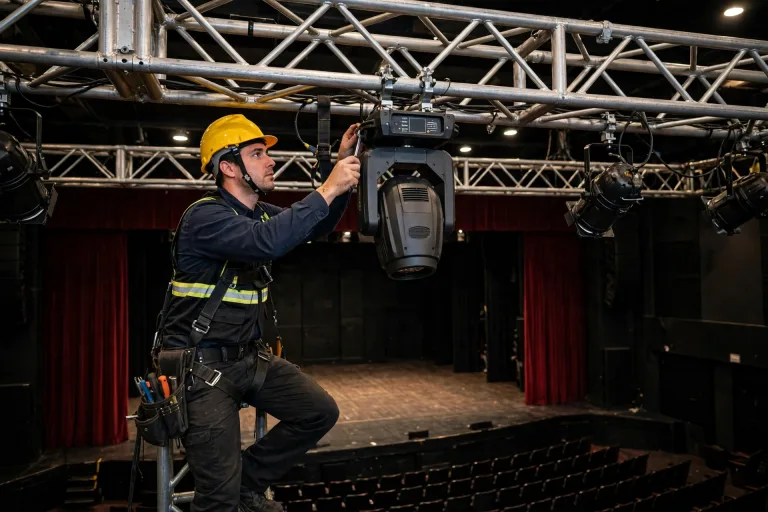
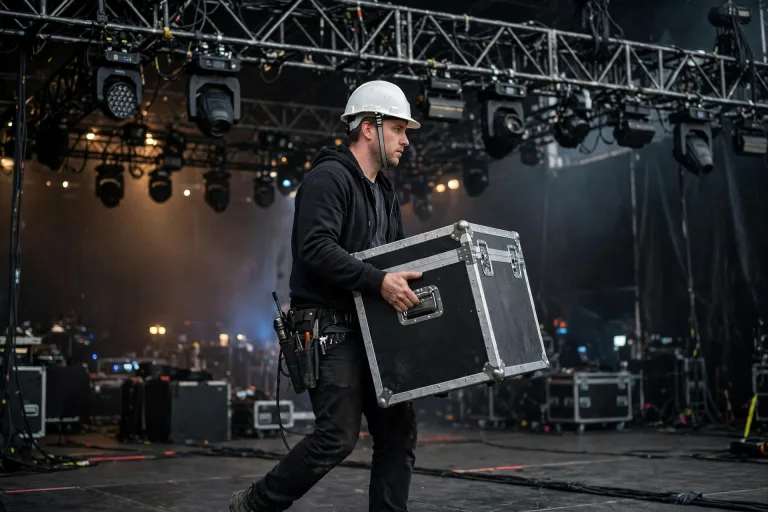
A work helmet is designed to protect the head from objects falling from above and from bumps against fixed objects at work. The shell is hard and spreads the force of an impact over a wider area, and inside the shell there is a suspension system, which is a set of straps that holds the shell away from the head. In general terms, a work helmet is built to take a hit from above and keep working day after day on a site.
A work helmet is also designed to be worn for a full working day, so comfort and practical features matter. The helmet should sit level on the head and stay in place when you bend over or look up, and the chin strap, where one is fitted, keeps it from falling off. A work helmet is usually checked and replaced on a schedule set by the employer or the site rules, because the shell can weaken over time, especially after exposure to sunlight.
What is a sports helmet designed to do?
A sports helmet is designed to protect the head during a fall or a crash in a sport, where the head may hit the ground or another hard surface at speed. The shell is usually lighter than a work helmet, and inside there is a layer of foam that crushes on impact to absorb the energy of the crash. This foam layer is the key part of a sports helmet, because it slows the head down more gently than a hard shell alone could. In general terms, a sports helmet is built to take one serious impact and then be replaced.
A sports helmet is also shaped for the sport it is made for, so a motorcycle helmet covers the whole head and face, a cycling helmet has vents to keep the rider cool, and a climbing helmet is light and sits close to the head so it does not catch on rock. The fit is snug, because a sports helmet that moves around in a crash cannot protect the head properly. Most sports helmets also have a retention system, such as a chin strap or a dial at the back, that keeps the helmet in place during fast movement.

How are work helmets and sports helmets different in construction?
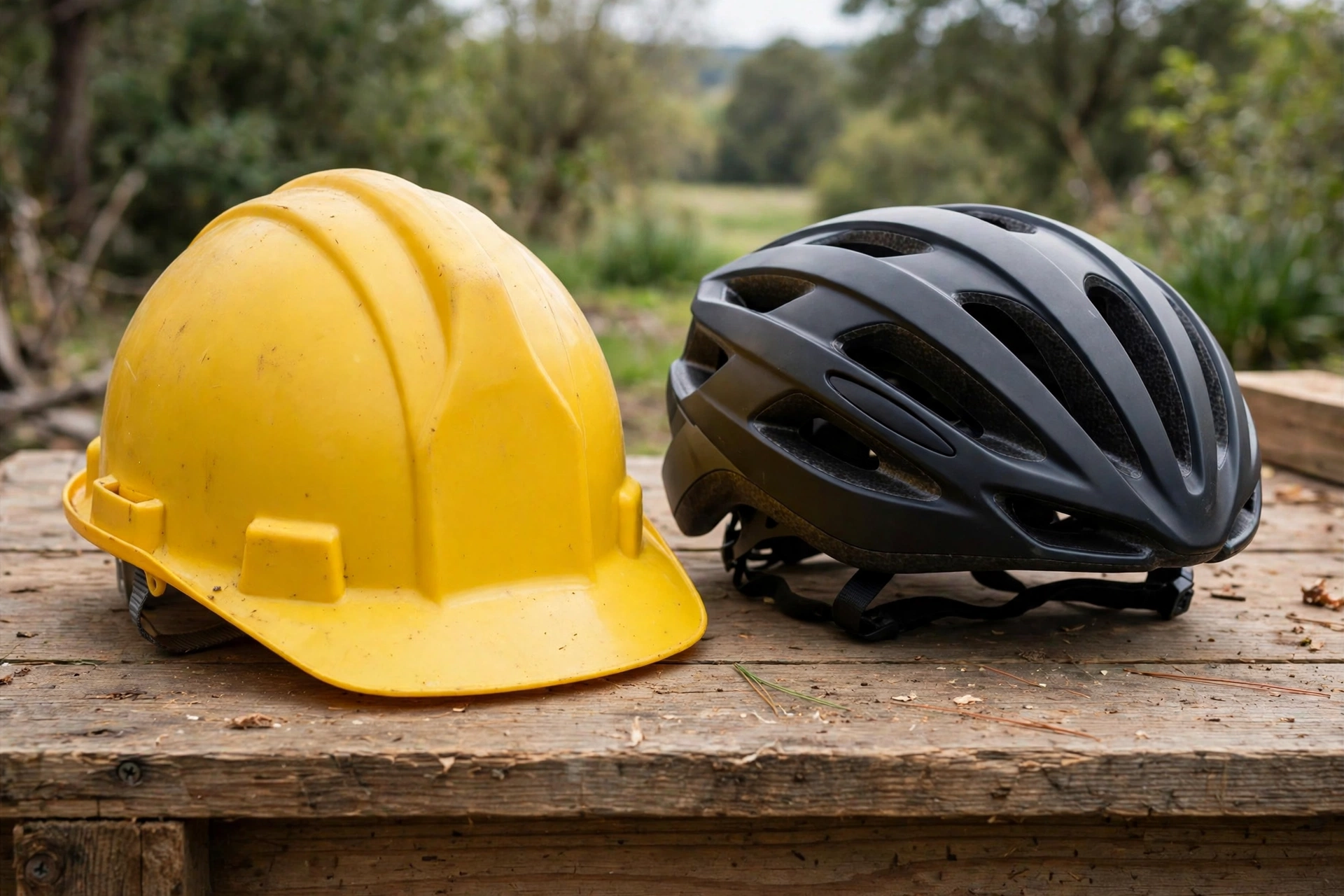
Work helmets and sports helmets are different in construction because they deal with different kinds of impact. A work helmet uses a hard shell held away from the head by a suspension system, and the gap between the shell and the head is what absorbs the blow from a falling object. A sports helmet uses a foam liner that sits close to the head, and the foam crushes to absorb the energy of a fall.
The materials and the shape also differ. A work helmet often has a small ridge along the top of the shell, which helps to strengthen it and to deflect falling objects, and it may have a short brim all round. A sports helmet is usually smooth and rounded, with vents for airflow, and it is shaped to fit close to the head so that it does not snag during a fall. In general terms, the construction of each helmet follows the job it was made to do.
Can you use a work helmet for sport, or a sports helmet for work?
You should not use a work helmet for sport, or a sports helmet for work, because each one is tested for a different kind of impact and meets a different standard. A work helmet is not tested for a fall at speed, so it may not protect you well in a cycling or motorcycle crash, and it may come off or break in a way a sports helmet would not. In both cases, using the wrong helmet can leave you with less protection than you think you have.
There are also legal and workplace rules to consider. On many work sites, the employer must provide a work helmet that meets the standard for that workplace, and workers are expected to wear it. In sport, the rules of the event or the club will usually say which type of helmet is needed, and a work helmet would not be accepted. The safest choice is always to use the helmet that was made and tested for the activity you are doing.
How do I choose the right helmet for my activity?
To choose the right helmet for your activity, start by working out what you need it for, and then look for a helmet that was made for that activity and meets the standard that applies to it. For work, ask your employer or check the site rules to find out which standard the helmet must meet, and choose a work helmet with the features you need, such as slots for ear protection or a lamp. For sport, choose a helmet made for your sport, check that it meets the standard for that sport, and try it on to make sure it fits snugly and stays in place when you move your head.
Fit is important for both types of helmet, because a helmet that is too loose or too tight will not protect you properly. The helmet should sit level on your head, cover the forehead, and stay in place when you shake your head. When you are choosing a new helmet, it can help to learn about features that protect your head in a crash, including a system designed to reduce rotational forces, such as MIPS, which is found in some work and sports helmets. The right helmet is the one that fits the job, fits your head, and is worn every time.
Is a hard hat the same as a work helmet?
Yes, in general terms a hard hat is the common name for a work helmet worn on building sites and in industry. It is designed to protect against falling objects and bumps, and it is not the same as a sports helmet.
Can I wear a cycling helmet on a building site?
No, a cycling helmet should not be worn on a building site, because it is not designed or tested to protect against falling objects. A work helmet that meets the site standard is the right choice for that workplace.
Do sports helmets and work helmets expire?
In general terms, both should be replaced after a hard impact, and work helmets are often replaced on a schedule because sunlight and wear can weaken the shell. Always check the maker’s guidance.

Olivia
Writer at Helmet Today, covering helmet reviews, fit and riding safety.