A sensory-friendly helmet is a fully certified helmet with soft, covered straps, smooth padding without scratchy tags or seams, an easy buckle that does not pinch, and a fit you introduce gradually at home before any ride. The certification has to be the same as any other helmet — sensory comfort comes from the details of how it feels, not from weaker protection.
For a child who melts down the moment a helmet appears, the problem is rarely stubbornness. Helmets press, squeeze, itch, and touch the ears — all the things a sensory-sensitive child finds hardest. This guide shows how to choose a gentler helmet and, just as importantly, how to help your child accept wearing it.
What Makes a Helmet Hard for Sensory-Sensitive Kids?
Common complaints include a strap rubbing under the chin, a buckle pinching skin, rough hook-and-loop pads, the squeeze of the retention system, and the feeling of something covering the ears. Some kids are bothered by the chin cup or by hair getting caught in the adjustment dial.
Watch your child during a fitting and ask what feels wrong. Kids often cannot name the sensation, but pointing, pulling at one spot, or tolerating the helmet for exactly one minute before ripping it off all give clues. Solve one sensation at a time instead of forcing through all of them at once.
Also check size. A helmet that is too tight or too loose generates constant, shifting pressure, which is far more irritating than one even, gentle snugness.
Weight is another hidden factor. A heavy helmet drags on a small neck and turns a five-minute ride into a countdown. Among certified options in the right size, lighter models are often tolerated noticeably longer. Sound matters too: some kids object to the creak of a retention system or the snap of a loud buckle, sensations adults barely register.
What Features Should You Look For in a Sensory-Friendly Helmet?
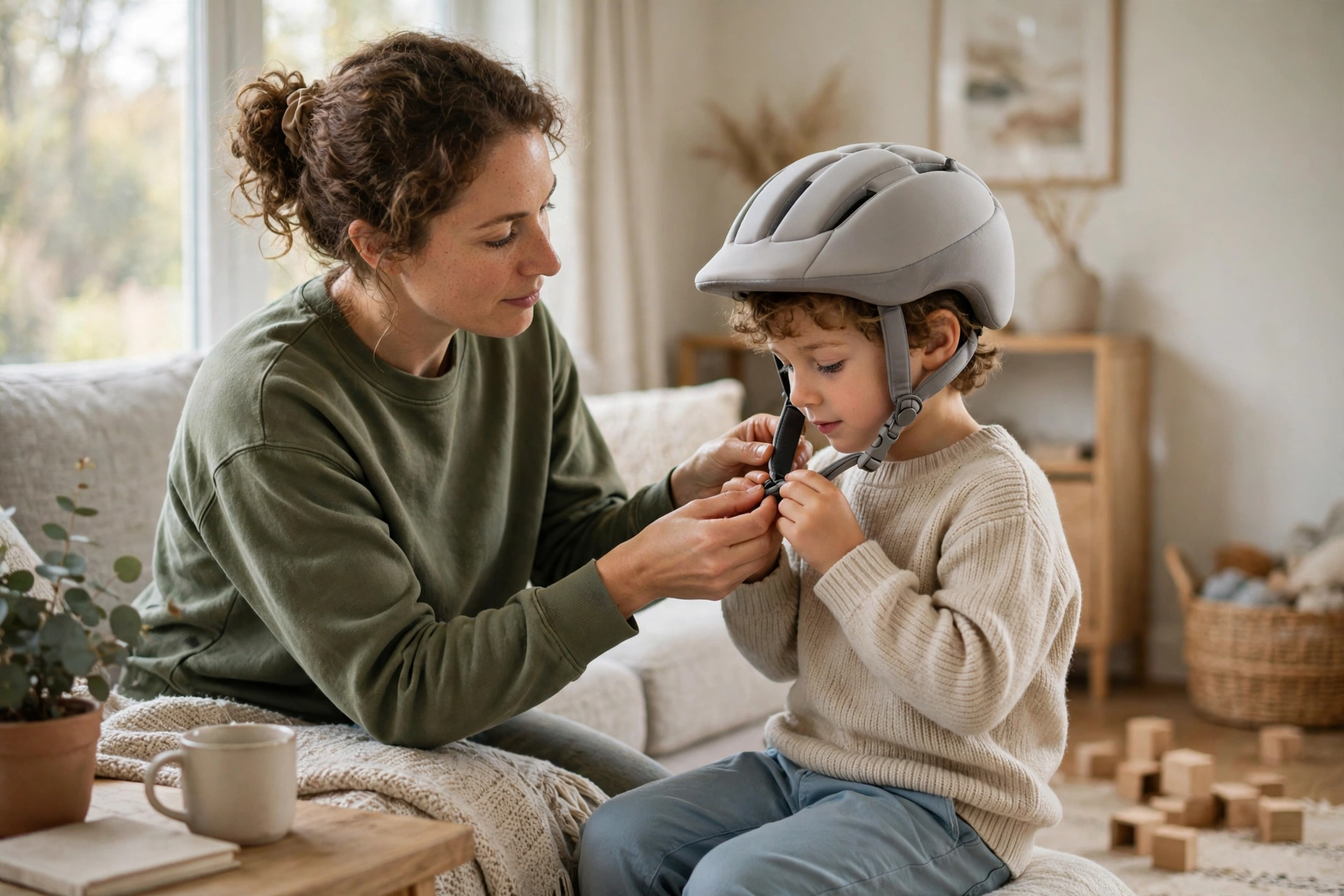
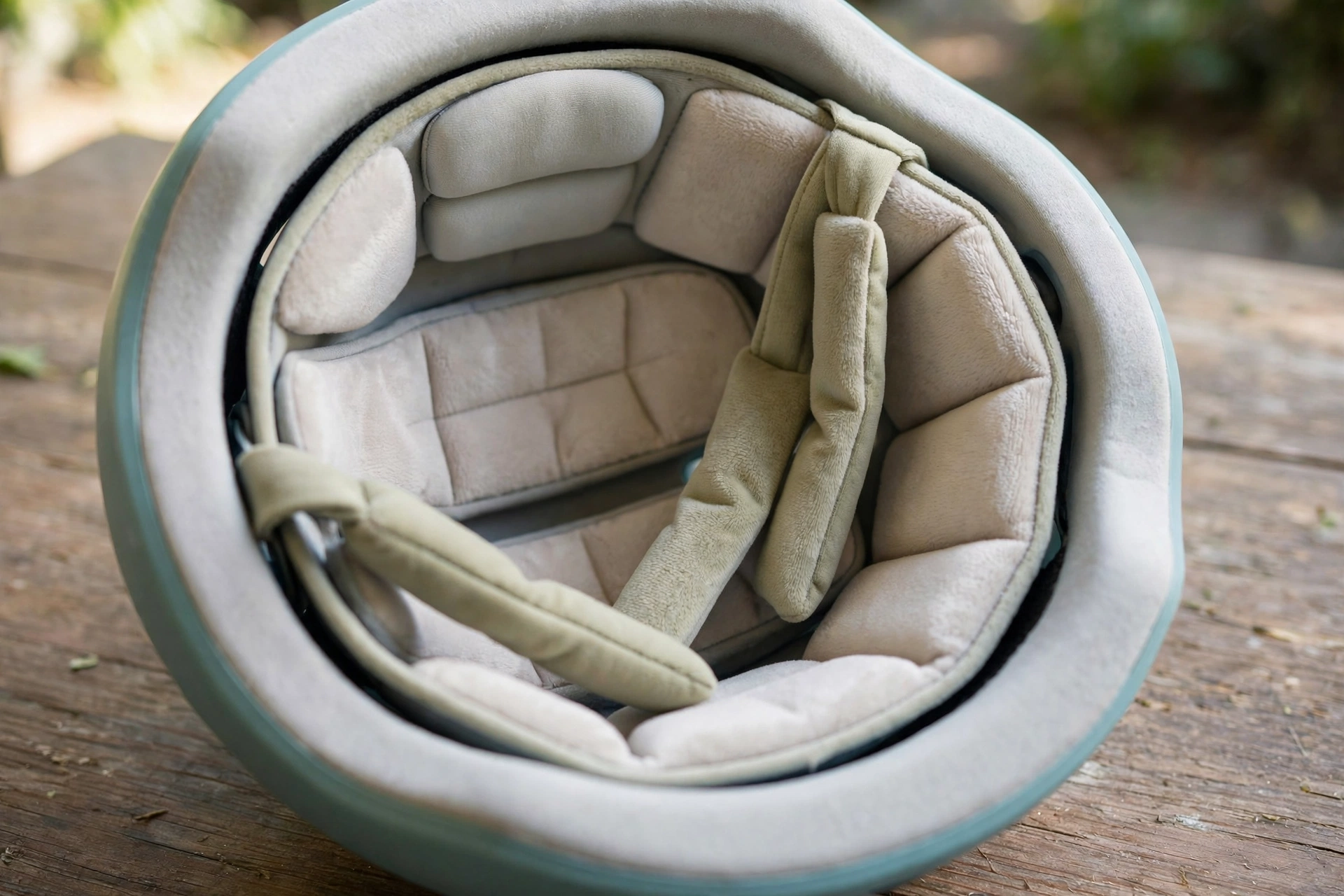
Start with straps. Look for soft, padded strap covers or a chin pad that puts fabric between the webbing and your child’s skin. Some helmets route the straps flatter or keep them away from the ears, which helps children bothered by anything touching their ears.
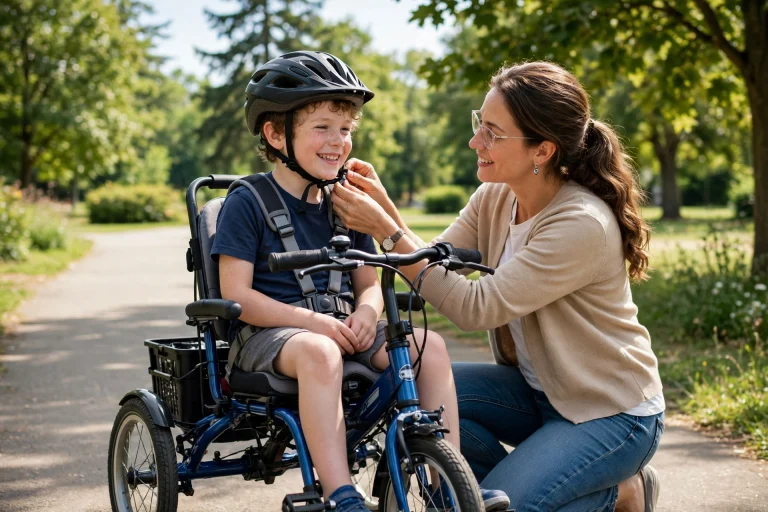
Next, the buckle. A pinch-free buckle guard lets the buckle close without catching skin, removing one of the most common reasons kids fear helmet time. Magnetic buckles that guide themselves closed can also help children who struggle with fine motor skills, though every child should still be checked by an adult.
Inside the helmet, look for smooth, seamless-feeling pads without tags, even padding with no hard ridges, and a retention dial that clicks quietly — some dials are surprisingly loud right next to the ear. Finally, check ventilation style: fewer, larger openings can feel less drafty on the scalp than many small vents. Some helmets also offer reduced-force liner technologies; our explainer on how MIPS works inside a helmet describes what these layers do, and many children’s models now include them.
How Do You Introduce the Helmet Gradually?
Desensitization works better than deadlines. Start by letting the helmet live in your home as a neutral object — on a shelf, or worn by a favorite stuffed animal. Then try ten seconds of wearing during a preferred activity, with lots of praise, and build up by small steps over days.
Let your child control what they can. Choosing the color, adding stickers, or picking which song plays during practice makes the helmet theirs. Practice at home, on the couch, unconnected to bikes, so the helmet itself becomes familiar before it is paired with the stress of riding.
Keep the ritual predictable. The same order every time — helmet on, strap clicked, mirror check, go — reduces uncertainty, and uncertainty is often what a sensory-sensitive child is really resisting.
What If Your Child Still Refuses to Wear It?
Without a helmet, the safest choice is to skip the ride. That rule, calmly and consistently kept, matters: children learn that helmet refusal ends the outing, while helmet wearing starts it. Avoid long battles; short, calm repetition beats one traumatic forcing.
If a particular sensation is the blocker, troubleshoot it. A thin, smooth cap or buff under the helmet smooths hair sensations and strap pressure for many kids. A different model with a different retention system can change everything — shops often allow exchanges, and a helmet that fits a child’s sensory profile is worth the swap.
If the struggle is severe, talk to your child’s occupational therapist. Therapists who work with sensory processing can suggest graded practice plans and notice fit issues parents miss.
Do Sensory-Friendly Helmets Still Meet Safety Standards?
They must. Any helmet you buy should carry the certification label for bicycle helmets sold in the US — the CPSC standard — inside the helmet. Soft fabrics, padding covers, and sticker decorations do not change the tested protection as long as they are part of the helmet as sold or applied to the outside shell only.
Be cautious with aftermarket changes. Never modify the foam, drill the shell, or replace straps with parts from another helmet. Comfort adjustments should use only the pads and strap covers the manufacturer provides or approves.
Beware of soft “comfort caps” marketed for sensory needs that are not certified helmets at all. If there is no certification label, it is not protective gear, however gentle it feels.
How Should the Helmet Fit Once Your Child Accepts It?
Fit standards do not change for sensitive kids: the helmet sits level, low on the forehead, snug without rocking, straps in a V around the ears, chin strap snug with about a finger of room. Use the pads the maker provides to fine-tune pressure points rather than loosening everything, because a sloppy helmet both protects less and moves around more — and movement itself can be a sensory trigger.
Recheck the fit every few months. Growing heads change pressure patterns quickly, and a helmet that was tolerated all spring can suddenly hurt in the fall simply because it has become too small.
Frequently Asked Questions
Q: Are there helmets made specifically for sensory-sensitive kids?
A: A few brands market softer straps and smoother liners, but any certified helmet with padded straps, a pinch-free buckle, and seamless-feeling pads can work. Features matter more than labels.
Q: Can my child wear a cap under the helmet?
A: A thin, smooth cap is commonly fine and often helps, as long as the helmet still sits level and snug. Avoid thick hats that lift the helmet or change the fit.
Q: How long does it take for a child to accept a helmet?
A: It varies widely. With short, calm practice sessions, many kids build tolerance over a few weeks. If progress stalls completely, an occupational therapist can help.

Olivia
Writer at Helmet Today, covering helmet reviews, fit and riding safety.