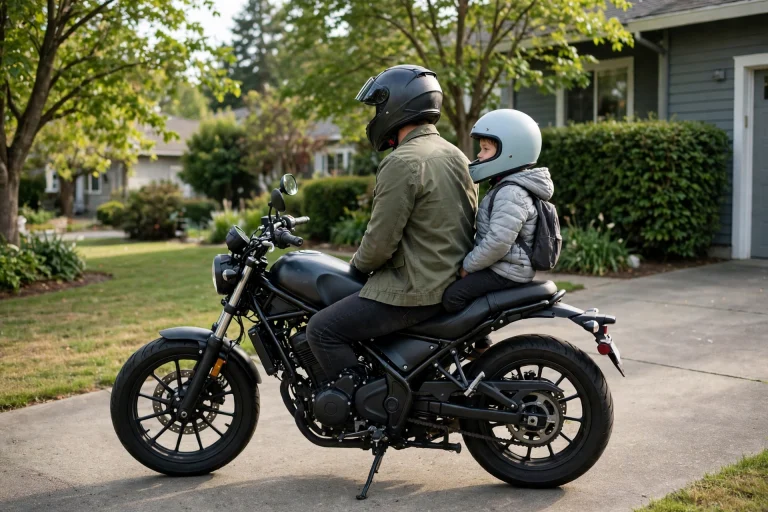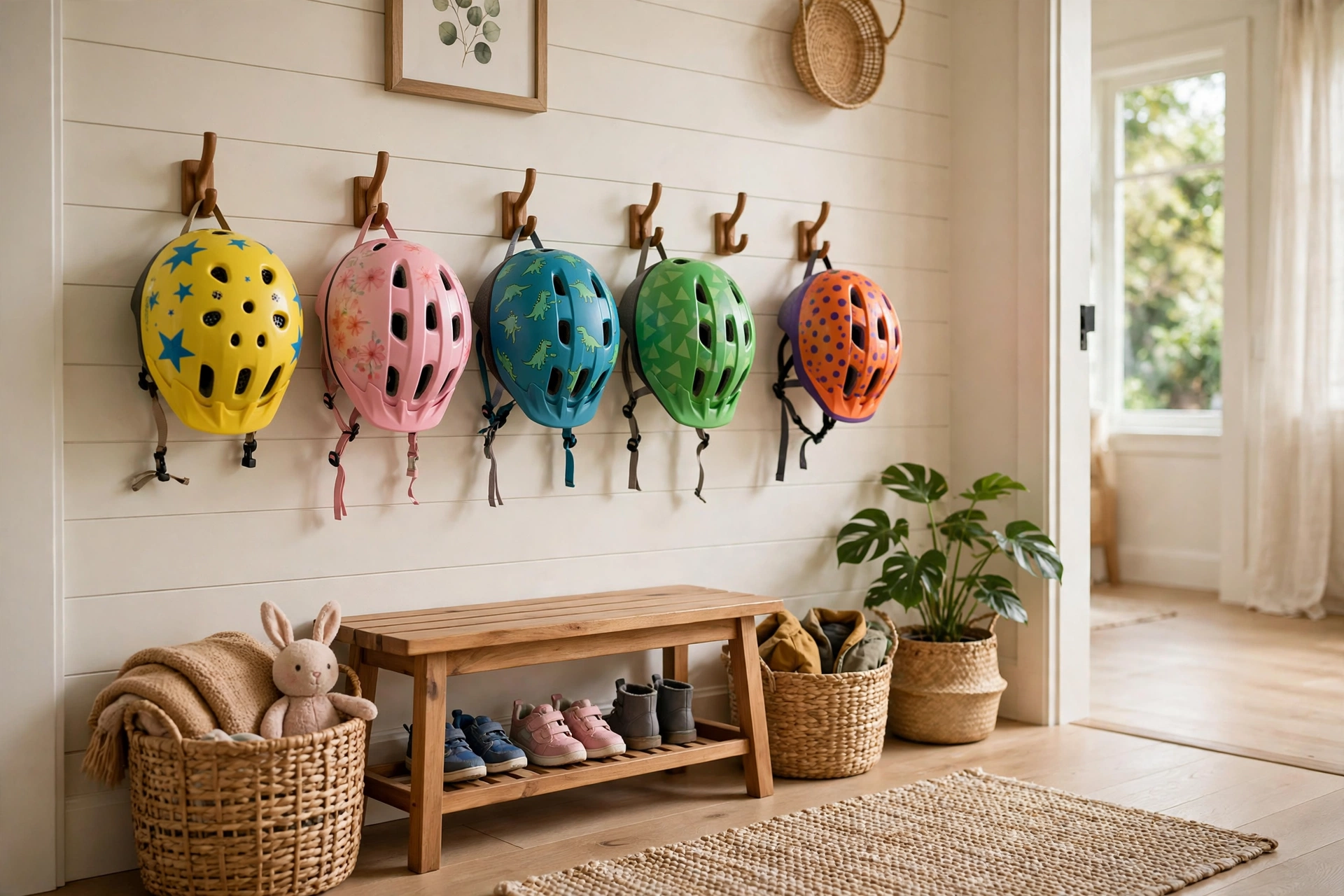
To store kids helmets so they last, keep them indoors in a cool, dry place away from direct sunlight, and hang them on a hook or rest them on a shelf instead of tossing them in a hot car, a damp garage corner, or the bottom of a toy bin. A helmet’s protective foam and straps quietly break down when they sit in heat, sun, and moisture, so where the helmet lives between rides matters almost as much as how it is worn.
Kids are not gentle with gear, and helmets often end up under beds, in mudrooms, or hanging off handlebars in the sun. A little storage routine takes only a minute, keeps the helmet comfortable and clean, and helps it stay protective until your child outgrows it. This guide covers the best spots at home, the habits that shorten a helmet’s life, and how to clean and store a helmet through the off-season.
Why Does the Way You Store a Helmet Matter?
Most kids bike helmets use an expanded polystyrene (EPS) foam liner that is designed to crush once in a crash and absorb the impact. That foam is tough against a single hard hit, but it is sensitive to everyday conditions. Long exposure to heat can age the foam, ultraviolet light from the sun degrades plastics and fades shells, and moisture trapped in pads and straps encourages mildew and odors. Heat and damp are also hard on pads, dial adjusters, and modern liner systems like the ones described in our explainer on what MIPS is and how it works.
Storage also affects fit and comfort. A helmet that spends the week crushed under heavy boots or hanging by one strap can come out misshapen, with stretched straps and flattened pads. An uncomfortable helmet is one a child will resist wearing, fuss with, or wear tilted wrong.
Finally, safe storage prevents hidden damage. Drops onto concrete, being sat on, or being squeezed in a closet can crack the foam in ways that are not always obvious. Storing the helmet in its own spot, out of traffic, keeps it out of harm’s way and makes it easy to spot damage during a quick check.
Where Is the Best Place to Store a Kids Helmet at Home?
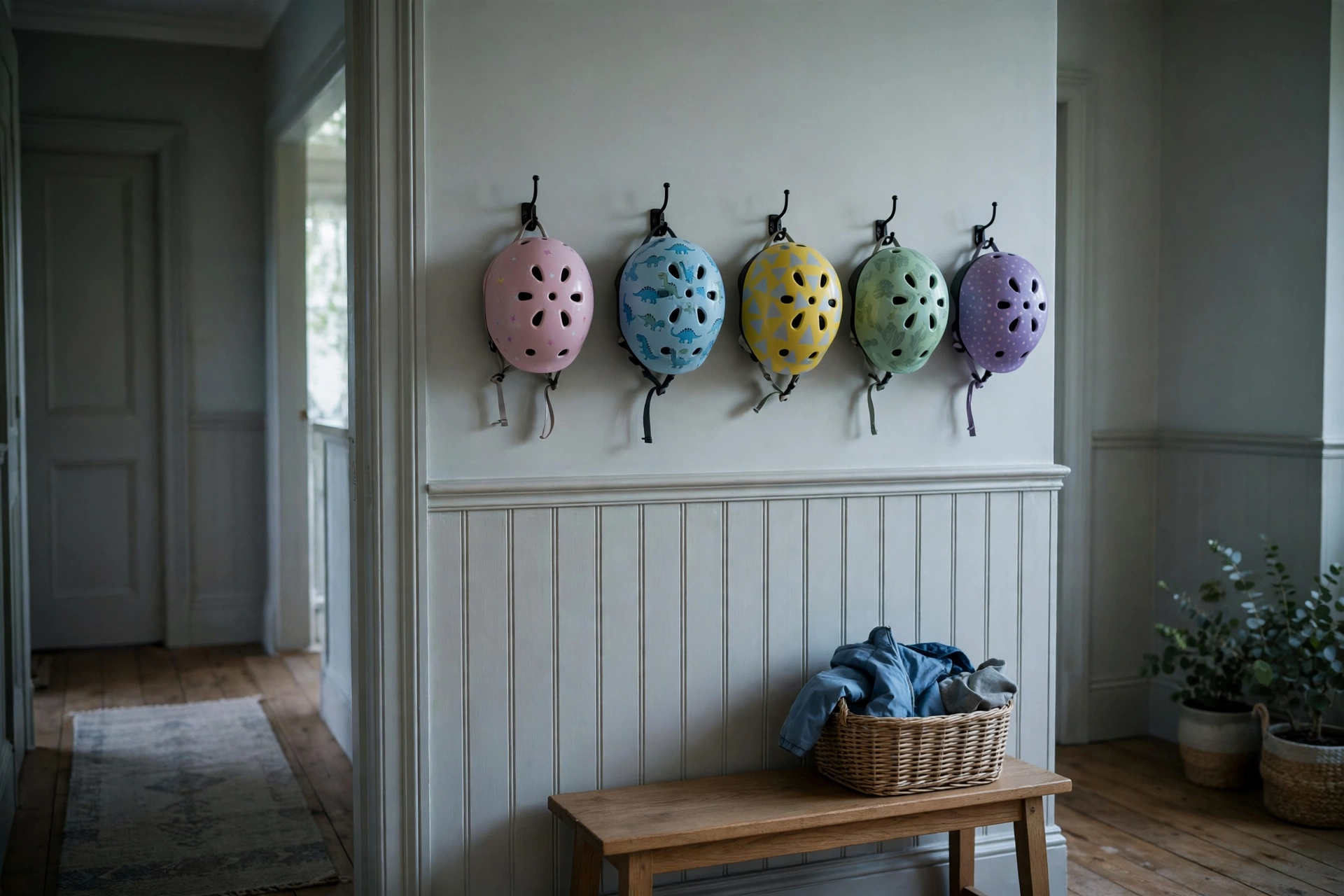
The ideal spot is indoors, at normal room temperature, out of direct sun, and off the floor. A wall hook or peg rail in a hallway or mudroom is one of the best options: the helmet hangs freely, air circulates around it, and kids can grab it themselves before a ride. A shelf or cubby by the door works just as well, as long as nothing heavy is stacked on top.
Keep the helmet away from heat sources such as radiators, furnaces, water heaters, and sunny windowsills. If a spot feels hot to the touch or bakes in afternoon sun, it is not a good helmet spot. The inside of a car on a warm day is one of the worst places of all, because temperatures climb quickly and stay high for hours.
Also keep helmets away from household chemicals. Gasoline, paint thinner, solvents, and strong cleaners can attack helmet foam and shell materials, sometimes without visible signs. A garage shelf next to fuel cans and paint is a poor choice even if it is shaded; a laundry room or entryway shelf is usually better.
What Storage Habits Can Damage a Helmet?
The most common mistake is hanging the helmet by its straps outdoors, where sun and rain reach it daily. Straps stretch and fade, pads stay wet, and the shell chalks and weakens over time. The second big mistake is the toy-bin toss: a helmet buried under cleats and other gear gets scratched, dented, and occasionally stepped on.
Dropping matters too. One short drop onto a soft surface is rarely a problem, but repeated drops onto concrete add up. Teach kids to set the helmet down gently, shell side down, rather than dropping it onto pavement, and inspect the foam for cracks or dents after any hard fall.
A few quieter habits also shorten helmet life:
- Storing the helmet while pads are still sweaty or wet, which breeds odor and mildew.
- Leaving it in a sealed plastic bag or airtight box, which traps moisture inside.
- Putting stickers with strong adhesives or solvent-based paints on the shell, which can damage some materials.
None of these habits ruins a helmet overnight, but together they explain why some helmets look and feel worn out long before they should.
How Should You Clean a Helmet Before Putting It Away?
A quick clean before storage keeps pads fresh and makes the helmet pleasant to wear next time. Most kids helmets have removable pads that can be hand-washed in cool water with a little mild soap, rinsed well, and air-dried completely. If the pads do not come out, wipe the inside with a damp cloth and mild soap, then let the helmet air-dry fully.
Wipe the shell with a soft cloth and plain water or mild soap. Avoid harsh cleaners, solvents, and abrasive pads, which can damage the shell finish and the foam underneath. Clean straps with the same mild soap solution, since straps collect sweat and sunscreen.
The golden rule is simple: never put a helmet away damp. Let every part dry fully before it goes on the hook or shelf. Storing a wet helmet seals in moisture, and within days it can smell musty and grow mildew in the pads. If your child rides in the rain, leave the helmet out overnight in a ventilated room.
How Do You Store a Helmet During the Off-Season?
When bikes are parked for winter or a long stretch between rides, a little extra care pays off. Clean and fully dry the helmet first, pads included. Then store it in a breathable helmet bag or a simple cotton bag if you have one; the bag keeps dust off while still letting air move and protecting the shell from scratches.
Store it in the same cool, dry indoor spot as always, and avoid compressing it under boxes or luggage. If you store helmets for several kids, keep each one in its own bag or cubby so sizes and owners do not get mixed up — a name label inside the bag helps.
When the season starts again, do a fresh fit check before the first ride. Kids grow over a winter, and a helmet that fit in October may sit too high or feel tight in April. Check the straps, buckle, and foam too, and replace the helmet if it no longer fits or shows damage. Storage keeps a helmet in good shape, but it cannot stretch one a growing child has outgrown.
Frequently Asked Questions
Q: Can I store my child’s helmet in the garage?
A: Only if the garage stays cool, dry, and shaded and the helmet is kept away from fuel, paint, and solvents. In many homes a hallway hook or closet shelf indoors is a safer choice, because garage temperatures swing a lot with the weather.
Q: Is it okay to hang a helmet by its straps?
A: Hanging a helmet briefly by the shell rim on a wide hook is fine, but avoid leaving it dangling by one strap for days, which can stretch the strap. A wall hook that supports the helmet itself, or a shelf, is better.
Q: How long can a stored kids helmet last?
A: In general terms, manufacturers often suggest replacing a helmet after several years even without a crash, as materials age. Good storage slows that aging, but most kids outgrow a helmet first — check fit and the maker’s guidance each season.

Olivia
Writer at Helmet Today, covering helmet reviews, fit and riding safety.