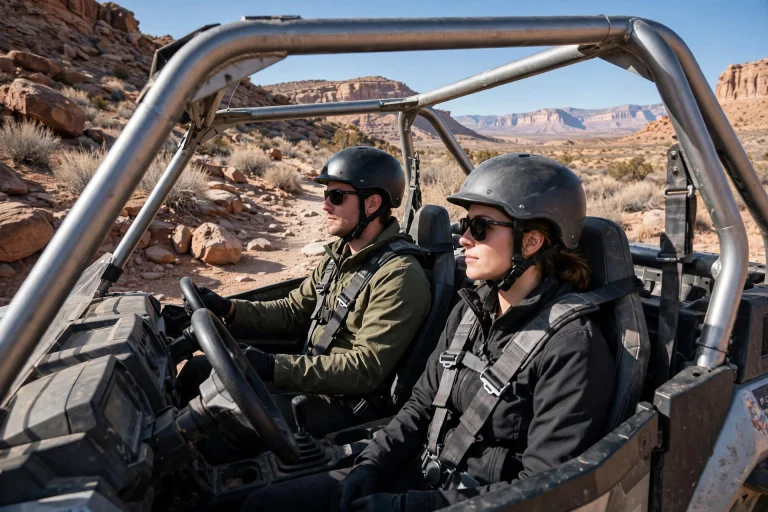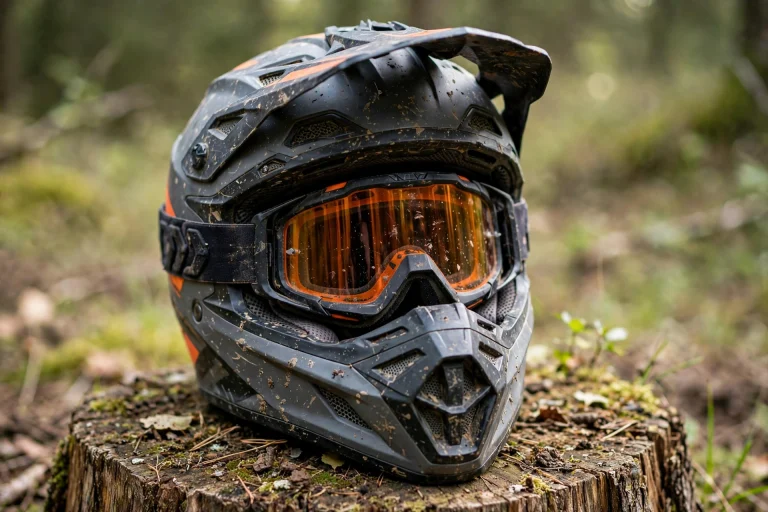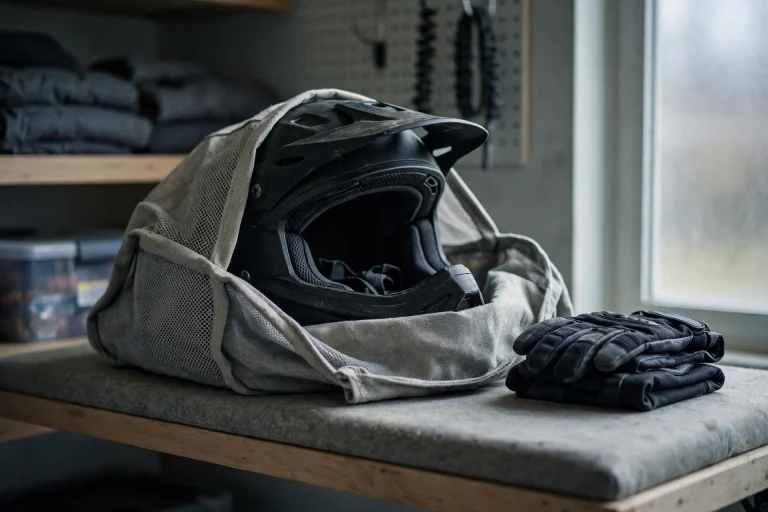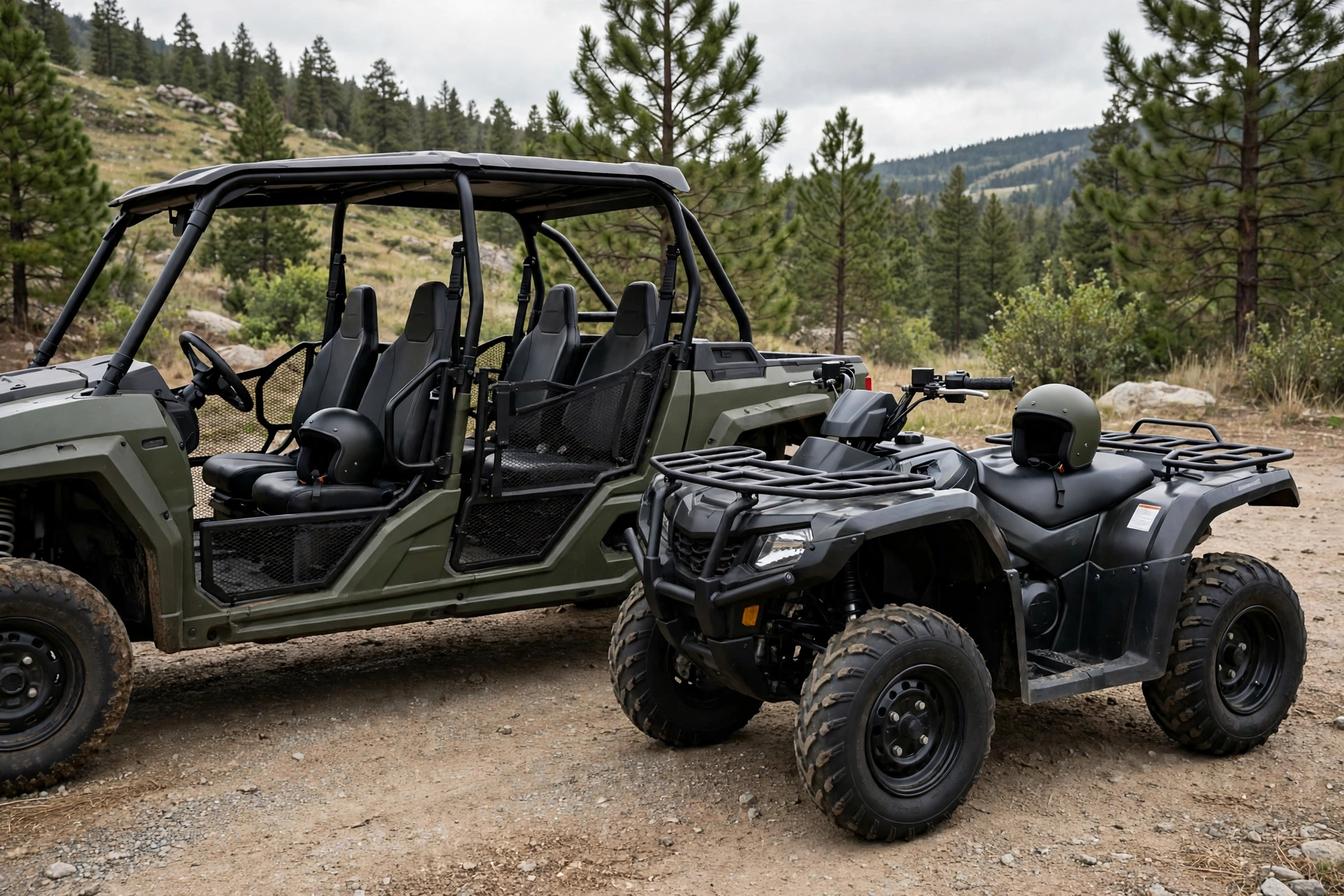
There is no separate category of “UTV helmet” with its own standard — but UTV and ATV riding do push helmet choice in different directions. ATV riders straddle the machine and wear classic peaked off-road helmets with goggles, while UTV drivers and passengers sit inside a roll cage and often choose smoother, peakless or short-peak helmets, sometimes with headsets fitted inside. The helmet itself can be the same certified off-road helmet in both cases; the differences are in shape, features, and how it works with the vehicle around you.
Shops and riders talk as if the two machines need different helmets, so it is worth separating the real differences from the marketing. Here is how the choice actually changes between the two seats.
How Do the Riding Positions Change What You Need?
An ATV rider sits on top of the machine, exposed to the full environment: wind, dust, roost from other riders, brush, and weather, moving their body weight around constantly. The classic off-road helmet — peak, big eyeport, goggles — evolved for exactly that exposure, shading the sun, deflecting debris, and sealing the eyes.
A UTV occupant sits inside the machine, behind a cage, often behind a windshield or half-shield, with a seat and harness doing part of the environment’s job. The sun and roost are partly handled by the vehicle itself, and the rider is stationary enough that communication, comfort over long distances, and working around the cage become the bigger considerations.
Same head, same physics in a crash — but a different daily environment, which is why the helmets riders pick tend to differ in the details rather than in their protective core.
Speed profiles differ too. ATVs on trails are constantly slowing, standing, and working the machine at lower average speeds, while UTVs often cover longer distances at a steadier pace — one more reason comfort, noise, and communication weigh heavier in the UTV choice than on the ATV.
Why Do UTV Riders Often Skip the Peak?
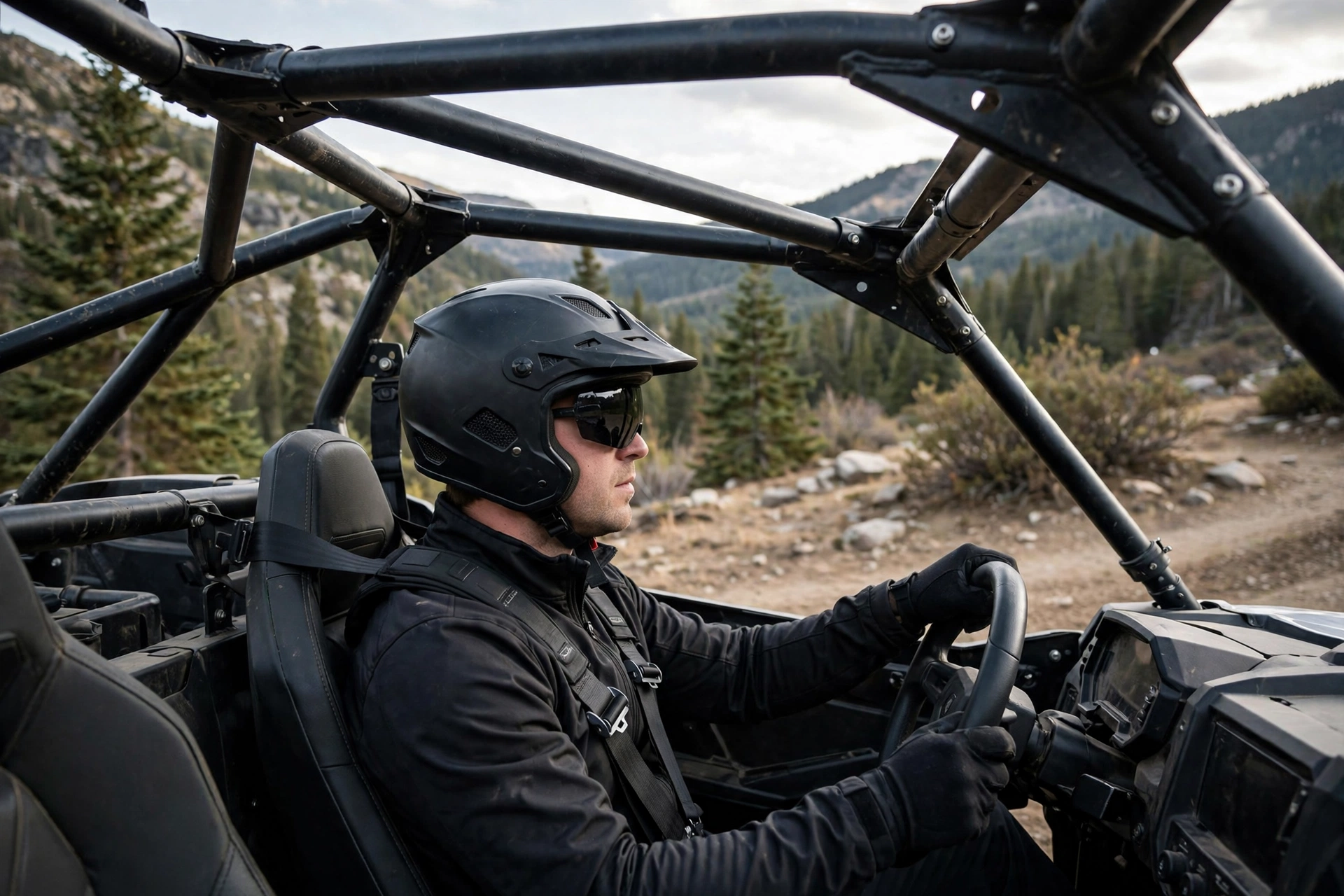
The most visible difference is the peak. On an ATV it earns its keep; in a UTV it can get in the way. A long motocross peak can catch on the roll cage getting in and out, rattle against a windshield in some seating positions, and offers less benefit when the cage and windshield already block sun and debris.
Many UTV riders therefore choose helmets with a short peak, no peak, or a smooth rounded shell — including helmets designed for off-road motorsport use in caged vehicles, which are built round and snag-free precisely so nothing catches on the cage structure in a roll.
If you ride both machines with one helmet, a removable peak is the neat compromise: on for the ATV, off for the UTV. Many off-road helmets allow exactly that.
What About Eye Protection and Headsets in a UTV?
Goggles still make sense in an open UTV — dust finds its way into a cab quickly, and many drivers and passengers wear goggles or a shield for the same reasons ATV riders do. A half windshield cuts the direct blast but not the swirling dust behind it, so eye protection remains part of the kit rather than something the vehicle replaces.
Communication is where UTV helmets diverge most. Because occupants sit side by side at speed in a noisy machine, intercoms and headsets are common, and many UTV riders choose helmets with space for speakers and a microphone, or open-face and headset-style arrangements for slower, utility use. On an ATV, where the rider is alone on the machine and exposed, helmet-mounted communicators exist but headsets-under-helmet are far less central.
Either way, the rule is that the headset fits within a proper helmet — communication gear is an accessory to protection, not a substitute for it, a distinction worth keeping when shopping.
There is one more in-cage consideration ATV riders never face: headroom and contact points. In a UTV you sit close under cage tubes, and your helmet will occasionally tap them on rough ground. A taller, more angular helmet — designed to stand proud on an exposed rider — has more edges to catch and less clearance, while the compact, rounded profiles favored in cages skim past. Measure the combination if you are tall in the seat: helmet on, seated and belted, you should be able to move your head naturally without the shell constantly striking the cage, because contact you barely notice at the start of a ride becomes a genuine neck strain by the end of it.
Can One Helmet Honestly Work for Both an ATV and a UTV?
Yes. A certified full-face off-road helmet that fits you well is a sound choice on both machines, and that is what most riders who own both actually do. The certification, the liner, and the fit do the protecting in either seat; the UTV cage does not downgrade what your head needs, and the ATV’s exposure does not change the standard.
The adjustments are practical ones: remove or shorten the peak if it fouls the cage, choose goggles you can wear in both, and accept a helmet that is slightly more featured than the ATV alone requires. If headsets matter for UTV trips, pick a helmet whose liner accommodates speakers comfortably from the start.
Where riders eventually split into two helmets, it is usually for comfort and convenience — a dedicated smooth helmet living with the UTV, a peaked one with the ATV — not because one machine demands a different level of protection. And on both machines, the same modern thinking applies: a snug, certified helmet, increasingly with rotational-impact liners like MIPS to manage the twisting forces of a fall or roll, is the core purchase. The vehicle around you changes the trim, not the principle.
Frequently Asked Questions
Q: Do I need a different certification for a UTV helmet?
A: In general terms, no separate UTV helmet standard exists — UTV occupants wear helmets certified to the same recognized standards as ATV and off-road helmets. Motorsport helmets for caged vehicles follow racing standards where events require them, but for trail riding the same certified off-road helmet serves both machines.
Q: Why are UTV helmets often round with no peak?
A: So nothing snags on the roll cage in a roll or when climbing in and out, and because the cage and windshield already do the peak’s sun and debris jobs. A smooth shell is a practical, not cosmetic, choice in a caged vehicle.
Q: Can I wear my peaked ATV helmet in the UTV?
A: Yes, many riders do. Just check the peak clears the cage and any windshield through your full range of head movement, and remove it if it catches — most off-road peaks unclip or unscrew.

Olivia
Writer at Helmet Today, covering helmet reviews, fit and riding safety.