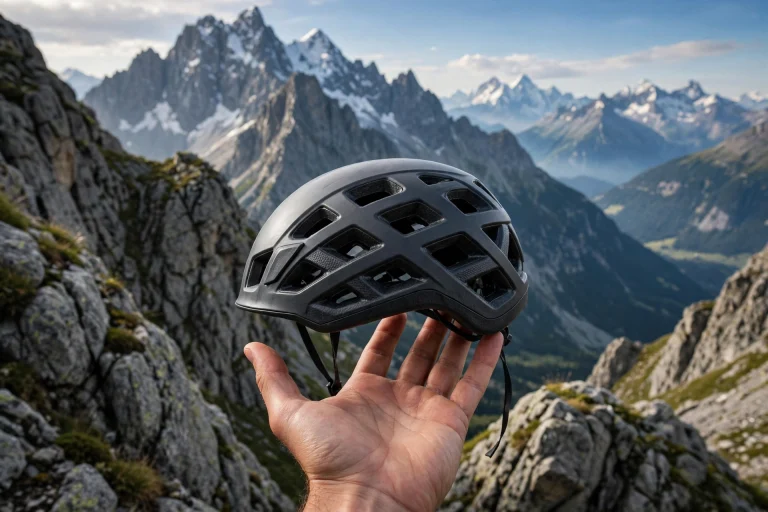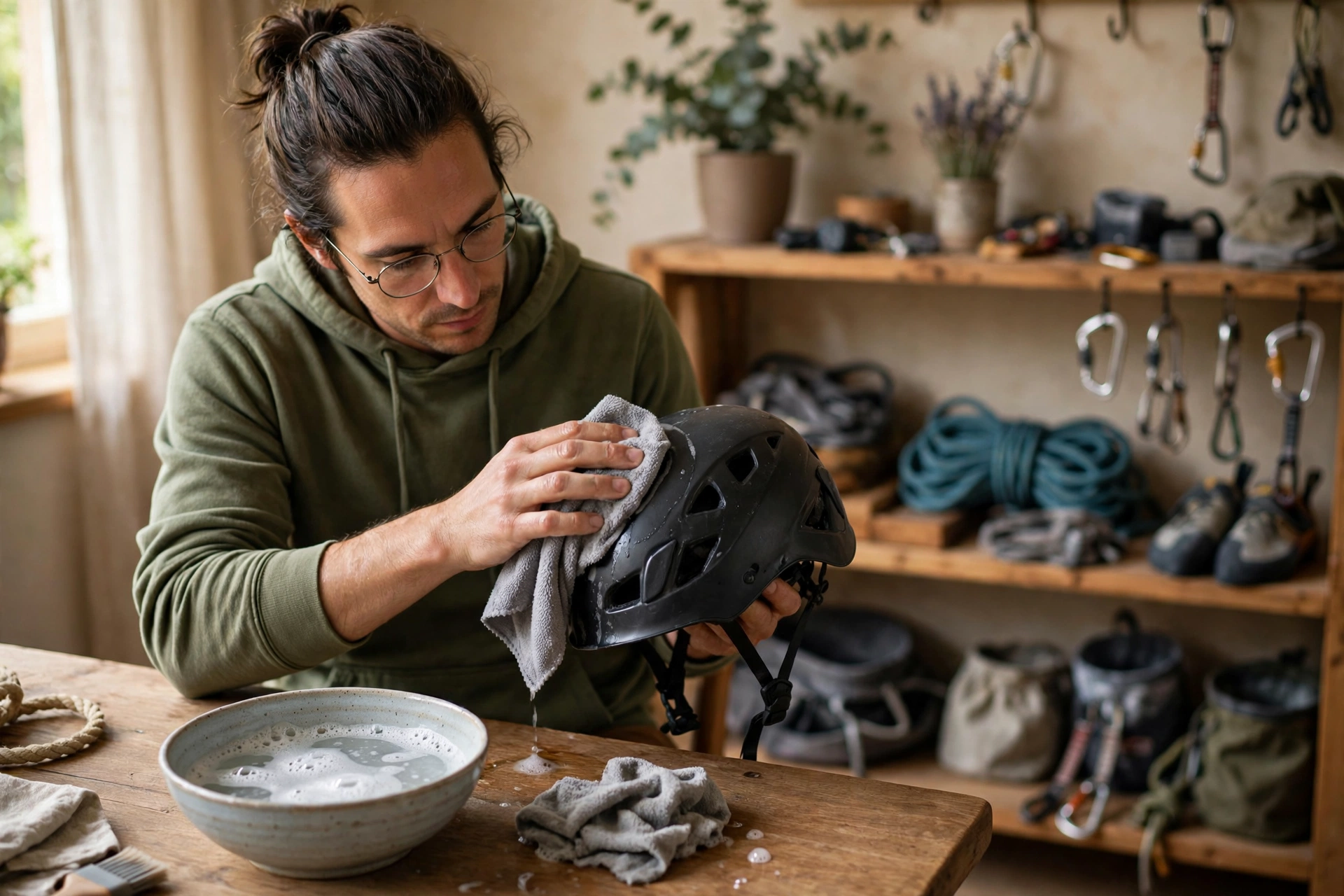
Clean a climbing helmet with lukewarm water, a soft cloth, and a little mild soap — never solvents, pressure washers, or harsh chemicals — then let it air-dry out of direct sun. Store it in a cool, dark, dry place, unclipped and uncompressed, away from heat, fuel, and heavy gear stacked on top. That simple routine keeps the foam, shell, and straps in protective condition for the helmet’s full working life.
This guide covers washing the shell, straps, and padding properly, the cleaning products that quietly damage helmets, and storage habits that age a helmet years before its time.
How Do You Clean a Climbing Helmet Without Damaging It?
Start with plain lukewarm water and a soft cloth or sponge. Wipe the shell inside and out to remove dust, grit, and dried sweat, working a small amount of mild soap — ordinary hand soap or a gentle detergent — into any stubborn marks. Rinse with clean water so no soap film is left behind, because residue attracts dirt and can irritate skin on the next wear.
Be gentle around the foam. On helmets where the foam is exposed, do not scrub it, squeeze water through it, or pick at it; just wipe and rinse. Grit ground into foam weakens the surface that is meant to crush cleanly in an impact. If mud has dried on, soak it off with a wet cloth rather than scraping.
Dry the helmet naturally in a shaded, ventilated spot. Never use a hairdryer, radiator, or direct strong sun to speed things up — heat is one of the things that ages helmet materials fastest. Let it dry completely before storing, which can take overnight for the padding.
How Do You Clean the Straps and Padding?
The straps and comfort pads hold most of the sweat, and they are usually the smelliest part of the helmet. If the padding is removable — much of it unclips or is held by hook-and-loop tabs — take it out and hand-wash it in lukewarm water with mild soap, rinse thoroughly, and air-dry. Washing removable pads separately is far more effective than sloshing water around the whole helmet.
For the webbing straps, which usually stay attached, wash them in place with the same soapy water and a soft brush for ground-in dirt, then rinse carefully. Pay attention to the adjustment sliders and buckle, where grit collects and can make straps slip. Work the buckle a few times while rinsing so it clicks cleanly again.
Let everything dry fully before reassembling. Putting a helmet away with damp straps and padding invites mildew, and a musty helmet stored damp for a season can come out with its fabrics genuinely degraded, not just smelly.
What Cleaning Products Damage a Helmet?
Solvents are the big danger. Petrol, white spirit, paint thinner, strong degreasers, and many adhesive removers can attack the shell plastic and dissolve or weaken the foam underneath — the layer that crushes to absorb impact energy, sometimes working alongside rotational systems like those explained in our guide to what MIPS is for helmets — sometimes without any visible sign until the helmet underperforms in an impact. Keep all of them away from your helmet, and never use them to remove stickers or marks.
Everyday chemicals deserve respect too. Insect repellents containing strong solvents, some sunscreens, and marker pens can all damage shell finishes and plastics on contact. Apply repellent to your skin, let it dry, and wipe your hands before handling the helmet; if sunscreen gets on the shell or straps, wash it off with soapy water afterwards.
Heat-based cleaning is the other trap: boiling water, steam cleaners, dishwashers, and tumble dryers can warp shells and age foam and glue rapidly. Lukewarm water and patience clean everything a helmet legitimately picks up. If a mark will not come off with mild soap, it is a cosmetic issue — live with it rather than escalating to chemicals.
How Should You Store a Climbing Helmet?
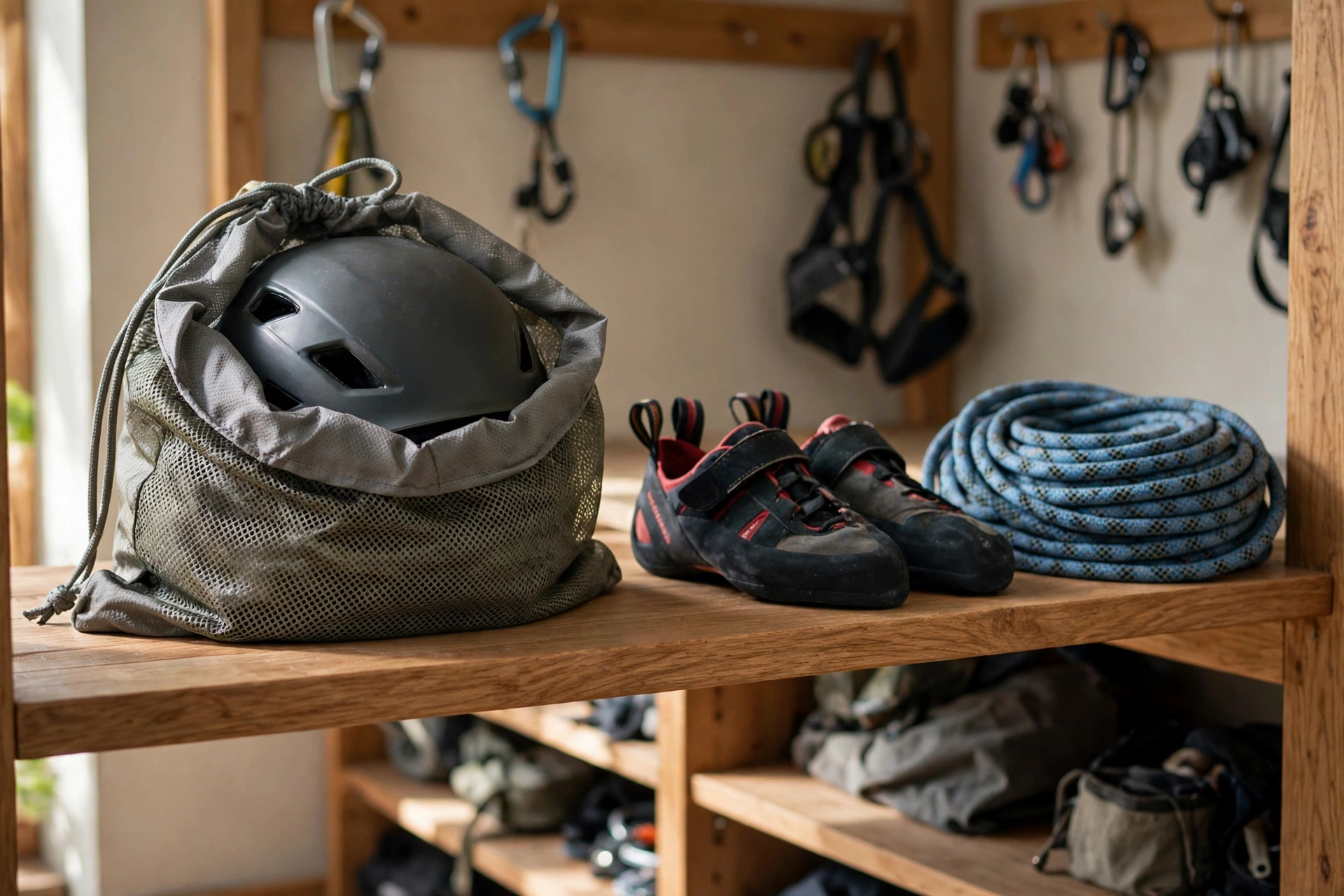
Think cool, dark, dry, and unstressed. A shelf or gear cupboard indoors is ideal: out of sunlight, away from radiators and boilers, and somewhere the helmet will not be buried under ropes, hardware, and boots. Store it with the straps unclipped and the cradle loosened a little, resting on its crown or in a helmet bag — not hanging by its chin strap, which stretches the webbing over time.
Transport deserves the same care. Clip the helmet to the outside of your pack or use a helmet carrier rather than crushing it at the bottom under a rope. In the car, keep it out of the boot on hot days if you can, and never leave it on a dashboard or rear shelf baking in the sun — a parked car in summer is one of the harshest storage environments a helmet ever meets.
Keep storage away from fuel, solvents, and paints, including their fumes. A garage shelf next to the petrol can and the white spirit is a bad home for a helmet even if nothing ever spills; a clean indoor cupboard is better in every way.
How Often Should You Clean and Inspect Your Helmet?
A quick wipe-down after sweaty or dusty days, and a proper wash whenever the straps start to hold a smell, is plenty for most climbers. Build the inspection into the cleaning: while the helmet is in your hands and clean, check the shell for cracks and dents, the foam for crumbling or delamination, and the straps and buckle for wear and positive function.
Do a fuller inspection at the start of each season and after any impact, however minor it seemed. Cleaning reveals damage that dirt hides — a crack under a layer of crag dust is easy to miss until the helmet is washed and in good light.
Looked after this way, a climbing helmet should give you its full intended service life. And when the inspection starts turning up tired foam, frayed straps, or a history you are no longer sure about, that is the helmet telling you its storage days are over.
Frequently Asked Questions
Q: Can I put my climbing helmet in the washing machine?
A: No. Machine washing can damage the foam, shell, and straps, and the detergents and heat involved are not good for helmet materials. Hand-wash with lukewarm water and mild soap instead — removable padding can be washed separately by hand.
Q: What soap is safe for cleaning a climbing helmet?
A: Ordinary mild soap or a gentle detergent in lukewarm water is the standard recommendation. Avoid anything solvent-based, strong degreasers, bleach, and adhesive removers, all of which can weaken the shell or foam, sometimes invisibly.
Q: Is it OK to store a helmet in the car?
A: It is best avoided, especially in warm weather. Parked cars get very hot, and heat plus sunlight through glass ages foam, glue, and webbing quickly. Bring the helmet indoors and store it somewhere cool, dark, and dry instead.

Olivia
Writer at Helmet Today, covering helmet reviews, fit and riding safety.