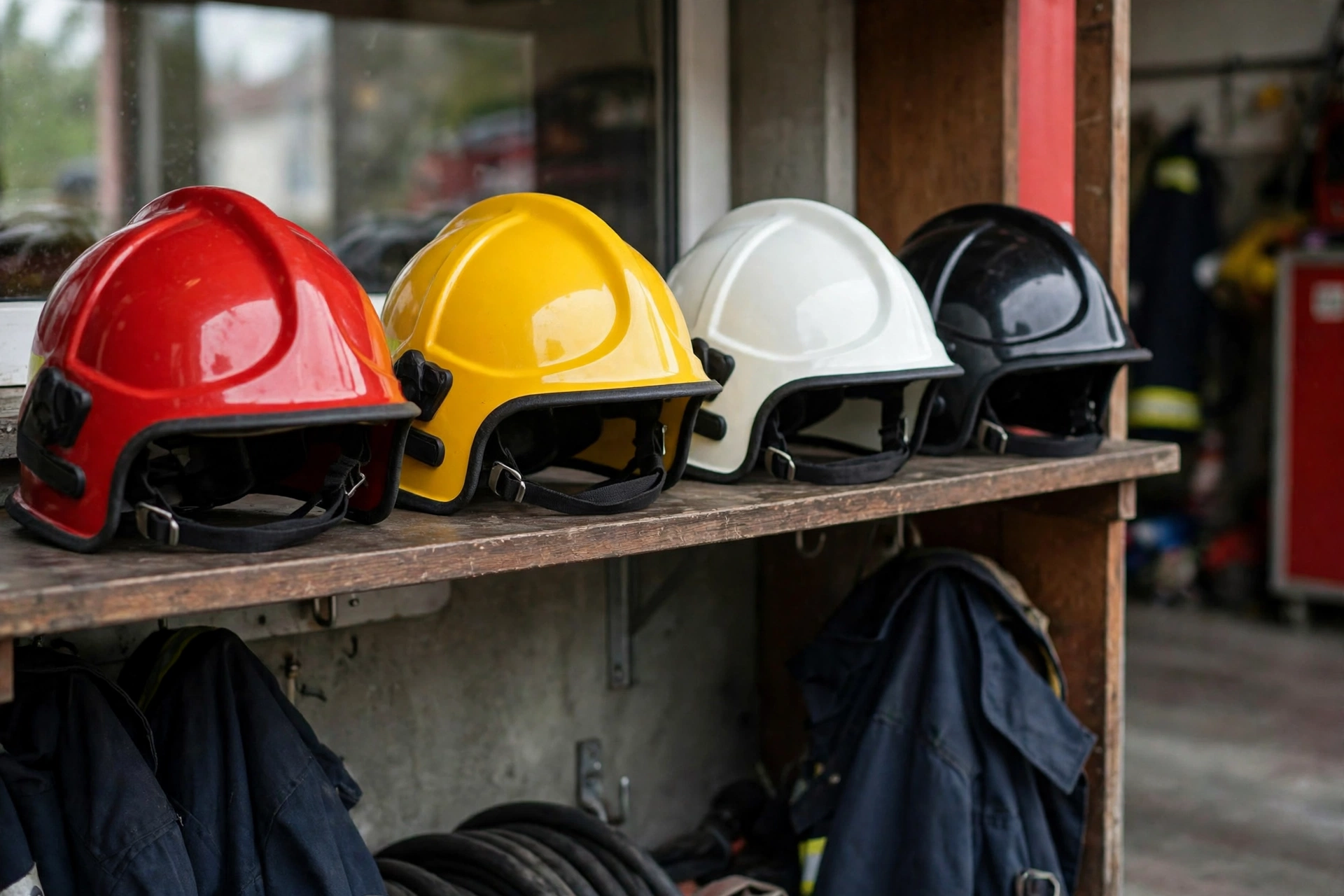
In general terms, fire helmet colours usually signal a firefighter’s role, rank, or assignment, but there is no single universal system, so the same colour can mean different things in different departments and countries. In many services, a particular colour marks an officer, a probationary firefighter, or a specialist role, while in others, colour simply distinguishes one crew or station from another.
That variation is the most important thing to understand about helmet colours. If you visit a fire station in one city and learn that a red helmet means a captain, you cannot assume the same rule holds in the next city. Always check the local department’s system before drawing conclusions, and never use helmet colour alone to judge who is in charge at an incident.
What Do the Most Common Fire Helmet Colours Mean?
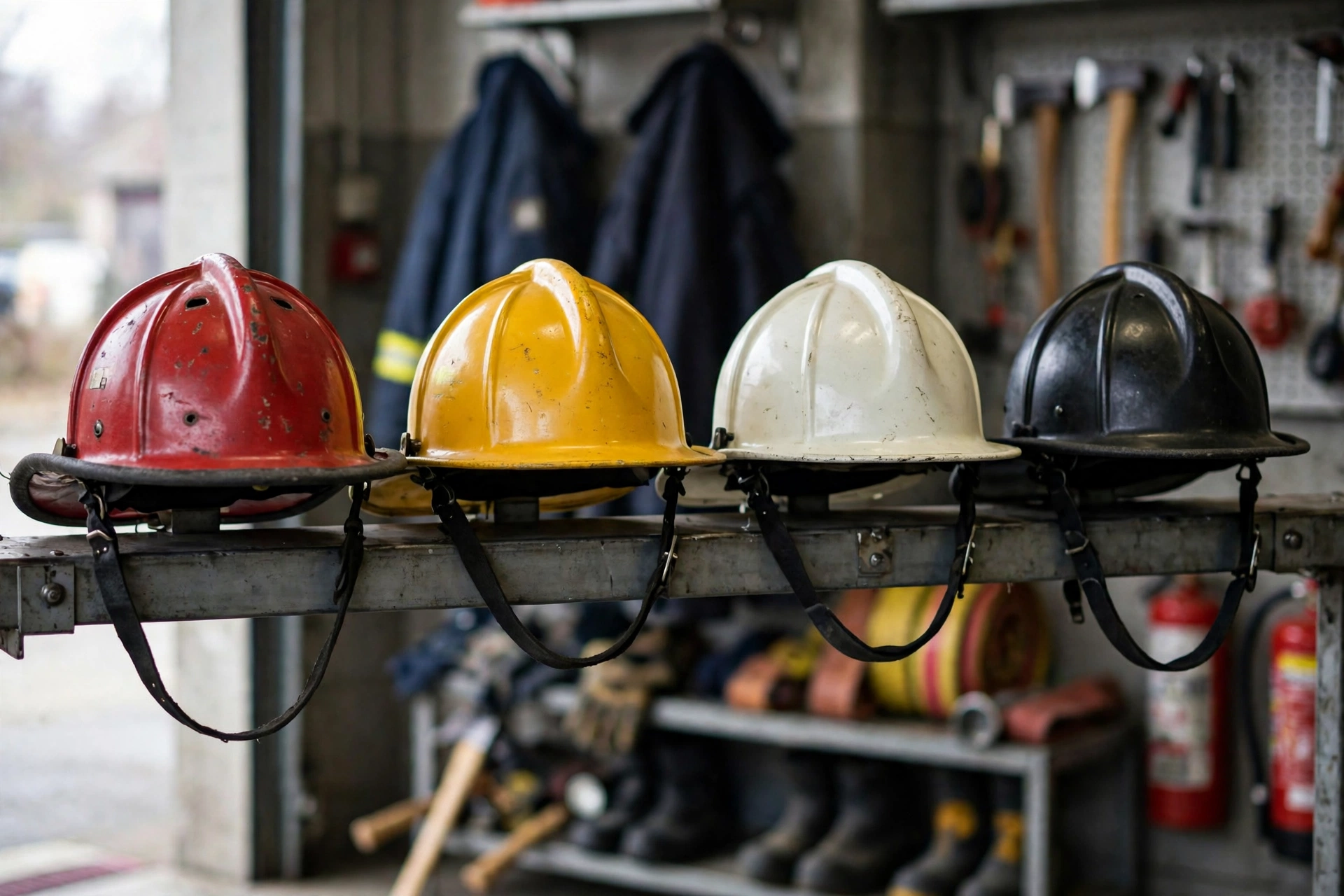
In many North American departments, the traditional pattern is that black or yellow helmets are worn by firefighters, red helmets by company officers such as captains and lieutenants, and white helmets by chief officers. This pattern is widely recognised, but it is a convention, not a law, and plenty of departments vary it. Some use yellow for all firefighters and reserve other colours for officers, while others use different colours altogether.
In other countries, the pattern can be quite different. Some European services use colours to mark functions rather than rank, for example distinguishing breathing apparatus wearers, incident commanders, or medical responders. Some services use a single colour for the whole department and rely on other markings, such as helmet shields, stripes, or labels, to show rank and role.
Probationary or trainee firefighters are sometimes given a distinct colour, such as a bright or unusual shade, so that experienced crew can spot them easily and offer extra guidance. This practice helps with supervision and safety, since a new firefighter may need closer monitoring on their first incidents. Once probation ends, the firefighter usually switches to the standard colour for their role.
Do Helmet Colours Show Rank at an Incident?
At a large incident, being able to spot the incident commander or a sector officer quickly is genuinely useful. Helmet colour can help with that, especially when combined with high-visibility tabards or vests that many services now use for command roles. A white helmet in a sea of black or yellow helmets stands out, and that visibility can save time when someone needs to find the officer in charge.
However, colour is only one part of incident identification, and it is not reliable on its own. At a multi-agency incident, different services may use different colour systems, so a red helmet from one department may not mean the same as a red helmet from another. Incident command systems therefore rely on tabards, role cards, and radio call signs as well as helmet markings, so that roles are clear regardless of colour conventions.
For members of the public watching an incident, helmet colour is best treated as interesting background rather than a reliable guide. The people in charge are usually the ones coordinating, communicating on radios, and standing slightly back from the immediate firefighting work, whatever colour helmet they wear.
Are There Colours for Specialist Roles?
Yes, in some services. Specialist teams such as hazardous materials, technical rescue, or wildland firefighting may wear distinct helmet colours or markings to identify their specialism. This helps incident commanders assemble the right teams quickly and helps other responders know who has particular training or equipment.
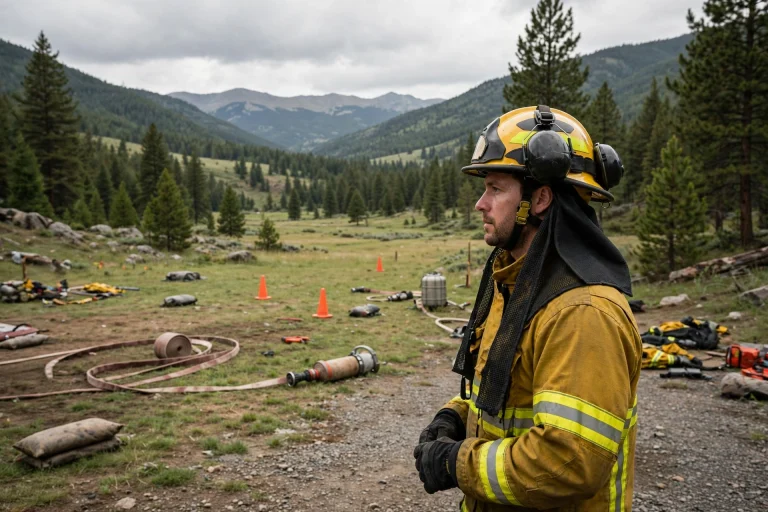
Wildland firefighters, for example, often wear helmets in colours that suit their environment and work, and their helmets may differ in style as well as colour from structural fire helmets. The colour choice there may be about visibility in smoke and brush as much as about role identification, since a bright helmet is easier to spot in a smoky landscape.
Some departments also use helmet colours or markings to show qualifications, such as breathing apparatus, driving, or first aid. These systems vary widely, and they are usually explained in the department’s own guidance. If you are joining a service, learning its colour system is part of learning its culture and its operating procedures.
Does Helmet Colour Affect Safety or Visibility?
Colour can affect visibility, and that is a safety consideration. Bright colours such as yellow, lime, or white stand out in smoke, darkness, and busy road scenes, which helps crews keep track of each other and helps drivers spot firefighters at a road incident. Darker colours, while traditional, can be harder to see in low light, which is one reason many modern helmets include reflective markings regardless of their base colour.
Reflective trim, often called tetrahedrals or reflective panels, is now common on fire helmets of all colours. These markings catch light from torches, vehicle headlights, and scene lighting, making the wearer visible from several angles. They are a practical addition that improves safety without changing the colour system a department already uses.
Colour does not, in general terms, affect the helmet’s protective performance. A red helmet and a black helmet of the same model offer the same impact and heat protection, because protection comes from the shell and liner, not the pigment. When choosing a helmet, protection, fit, and standards matter far more than colour, and colour should be chosen to match department policy rather than personal preference. The same focus on fit and function applies to every helmet type, including the impact systems described in this guide to what MIPS means for helmets.
Can a Firefighter Choose Any Helmet Colour?
In general terms, no. Most departments set the helmet colour for each role, and firefighters wear the colour assigned to them. This keeps the system consistent and avoids confusion at incidents, where a non-standard colour could be misread as a different role. Some departments allow limited personalisation, such as a name label or a shield design, but the base colour usually stays standard.
Volunteer departments may be more flexible, especially if members buy their own helmets, but even there, a consistent system is worth maintaining. If your department does not have a written colour policy, it is worth raising the question, since a clear system helps both new members and mutual-aid crews who attend incidents alongside your department.
If you are buying a helmet for display, collection, or training, colour choice is up to you, and traditional colours such as black, red, yellow, and white are all widely available. For operational use, though, always match your department’s system, and check before ordering, since a helmet in the wrong colour may not be accepted for service.
Frequently Asked Questions
Q: What does a white fire helmet mean?
A: In many departments, white marks a chief officer, but this is a convention, not a universal rule. Some services use white differently, or not at all, so always check the local department’s system.
Q: What does a red fire helmet mean?
A: In many North American departments, red marks a company officer such as a captain or lieutenant. In other services, red may mean something else, or may simply be the standard colour for all firefighters.
Q: Do all fire departments use the same helmet colours?
A: No. Helmet colour systems vary by department and country, and some services use markings, shields, or tabards rather than colour to show rank and role. Never assume one department’s system applies elsewhere.

Olivia
Writer at Helmet Today, covering helmet reviews, fit and riding safety.