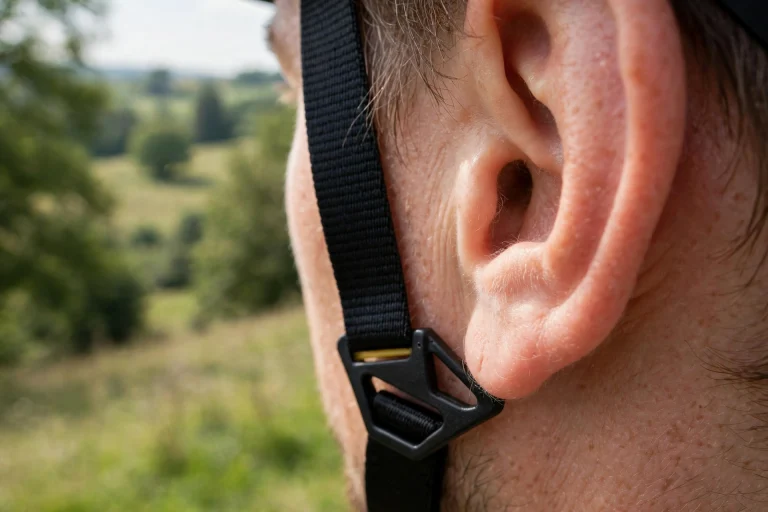
Yes — in general terms, a helmet can fit well with behind-the-ear hearing aids, as long as you choose a helmet with enough room around the ears and check the fit with your aids in place. Behind-the-ear (BTE) hearing aids sit in a small case behind the ear, with a thin tube or wire running into the ear canal. A helmet that presses hard on that case can cause discomfort, whistling feedback, or an aid that shifts out of place. A helmet with ear-friendly space avoids most of those problems.
The trick is not to buy the smallest helmet that fits your head, but the helmet that fits your head and your aids. This guide explains what to look for, how to test the fit, and what to do if your current helmet presses on your hearing aids.
Why Do Helmets and Behind-the-Ear Hearing Aids Clash?
A behind-the-ear hearing aid occupies the space just behind the top of your ear — the very place where a helmet’s shell edge and padding often sit. When you pull a helmet down, the padding can press the aid against your head, push it forward, or trap it against the shell. That pressure can be uncomfortable on a short ride and painful on a long one.
Pressure can also cause feedback. If the aid is squeezed or its microphone is covered by padding, it may whistle or squeal. In general terms, feedback happens when amplified sound leaks back into the microphone, and a helmet pressing on the aid makes that more likely. An aid that shifts position can also change how it sounds, so a ride that starts fine can become annoying after a few miles. Hearing aids are also small and easy to lose, so remove the helmet slowly, with one hand steadying the aids.
What Should You Look for in a Helmet as a BTE Hearing Aid Wearer?
Start with the space around the ears. Some helmets have deeper ear cut-outs or thinner padding in the ear area, which leaves more room for an aid. Helmets marketed with ear pockets or a roomy fit around the ears are worth trying first. A helmet with removable ear pads is also useful, because you can take the pads out or swap them for thinner ones.
The retention system matters as well. A dial at the back of the helmet lets you fine-tune the fit without tightening the whole shell, which helps you get a snug fit on the head without squeezing the ears. Helmets with a wide range of adjustment are often easier to fit around aids than helmets with a single fixed fit.
Weight and ventilation play a part too, though they are secondary. A lighter helmet puts less downward pressure on the ears over a long ride, and good airflow keeps sweat away from the aids.
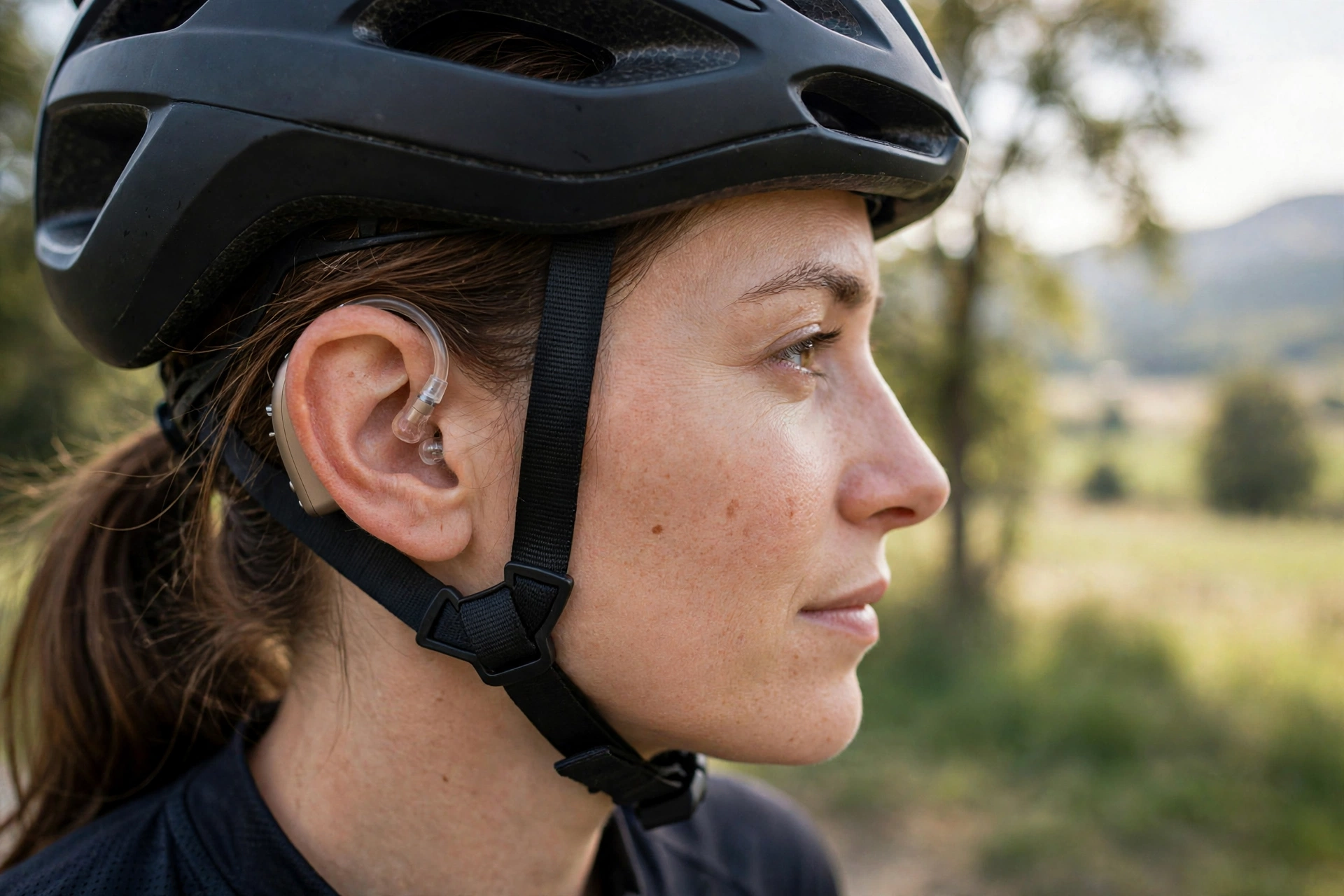
How Do You Fit a Helmet Around Behind-the-Ear Hearing Aids?
Always try a helmet on with your hearing aids in place, switched on, and in their normal position. A fit test without the aids tells you nothing useful. Put the aids in first, then lower the helmet straight down, rather than sliding it forward or back, which can drag the aids out of place.
Once the helmet is on, check three things. First, does the shell or padding press on the aid itself? Run a finger between the helmet and the aid — there should be a little give. Second, does the aid whistle? Turn your head, nod, and listen. Third, can you still hear normally? A helmet that covers the aid’s microphone can muffle sound, so check that speech and traffic noise still come through clearly.
Then check the straps. The straps should pass in front of and behind the ear without crossing over the aid. If a strap sits on top of the aid, adjust the strap divider so the strap runs clear of it. The chin strap should be snug but not so tight that it pulls the helmet down onto the aids. Shake your head gently: the helmet should stay put without rocking, and the aids should stay where you put them.
What If Your Helmet Still Presses on Your Hearing Aids?
If a helmet you already own presses on your aids, a few small changes may help. Try thinner ear pads, or remove the ear pads entirely if the helmet allows it. Some riders find that a different pad thickness on one side only — the side where the aid sits — solves the problem. Never cut or carve the helmet’s impact liner to make room, because that liner is part of the helmet’s protection.
Consider the shell shape as well. Helmets vary in shape, and a rounder or deeper shell may suit you better than a long, narrow one, even in the same size. If you are comparing helmets, reading about what MIPS is for helmets can help you understand one of the liner systems you may see listed, since some of those liners change how the helmet sits against the head.
If nothing works, talk to your hearing care professional before buying a different style of aid. Some wearers switch to a receiver-in-canal model with a smaller behind-the-ear case, or to an in-the-ear aid, specifically to make helmet wearing easier. That is a hearing decision first and a helmet decision second, so get advice from the person who fitted your aids.
How Can You Protect Your Hearing Aids While Riding?
Sweat, rain, and wind are the main threats to hearing aids on a ride. A helmet with good ventilation helps sweat evaporate instead of pooling around the aids, and a cycling cap or thin skull cap under the helmet can catch sweat before it reaches them — as long as the cap does not change the helmet’s fit. In rain, a helmet cover can keep water off the aids, and a quick wipe after the ride helps too.
Wind noise is another issue. At speed, wind rushing past the aid’s microphone can drown out useful sound. Some hearing aids have a wind-noise setting, and some riders wear a thin ear cover or a helmet with ear flaps in cold weather to cut the rush. If your aids have a wind programme, ask your audiologist how to switch it on before a ride.
Finally, build a routine for taking the helmet off. Hold the aids in place with one hand while you lift the helmet with the other, and check both aids are still seated before you ride off or walk away. A small case in your pocket or bag is worth carrying, so a loose aid has somewhere safe to go instead of a jersey pocket.
Frequently Asked Questions
Q: Can I wear a helmet with behind-the-ear hearing aids?
A: Yes, in general terms. Choose a helmet with room around the ears, try it on with your aids in place, and check for pressure, whistling, and muffled sound before you buy.
Q: Will a helmet damage my hearing aids?
A: A helmet should not damage them if it fits well. The risks are pressure, moisture from sweat or rain, and losing an aid when the helmet is removed — all of which a good fit and a careful routine can reduce.
Q: Should I take my hearing aids out to ride?
A: Most riders prefer to keep them in, because hearing traffic and other riders matters for safety. If your aids cause feedback under a helmet, try a different helmet fit or ask your hearing care professional about settings before riding without them.

Olivia
Writer at Helmet Today, covering helmet reviews, fit and riding safety.