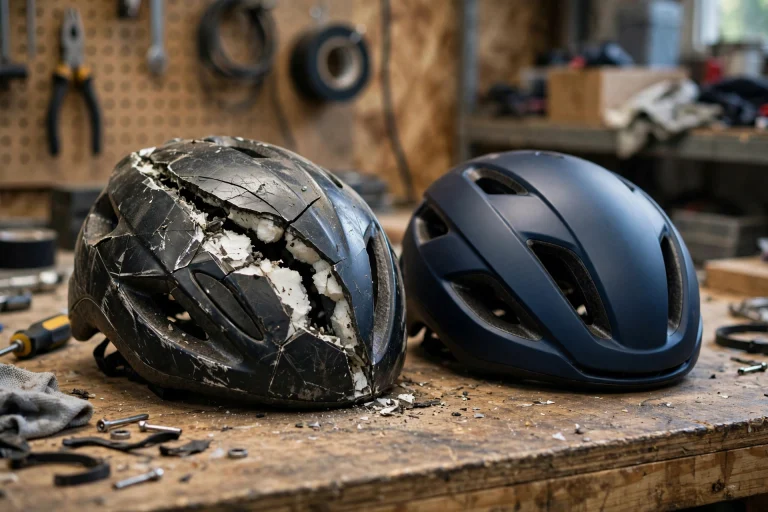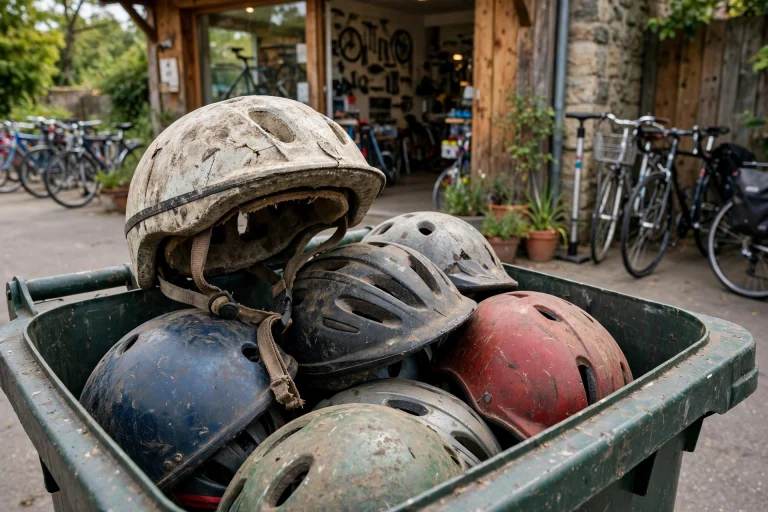
Recycled materials in new helmets include recycled shell plastics, recycled polyester straps and liners, and in some cases recycled foam content — and in general terms they are used to cut the need for new raw materials without changing how the helmet protects you. A helmet made with recycled content must still pass the same safety certification as any other helmet, so the recycled material is a sustainability choice, not a safety compromise.
This guide explains which parts of a helmet can be made from recycled materials, how makers handle quality, and what to look for on the label. Recycled content is becoming common, but the claims vary widely — and the detail behind the claim is what matters.
Which Parts of a Helmet Use Recycled Materials?
The shell is the most common place for recycled content. Some makers use recycled polycarbonate or recycled ABS for part or all of the outer shell. The shell’s job is to spread an impact and resist cracking, and recycled plastic that is properly sorted and processed can do that job. Makers usually blend recycled and new plastic to keep the quality consistent.
Straps and comfort liners are another common source. Recycled polyester, made from used plastic bottles, is widely used for straps, padding covers, and helmet bags. It feels much like new polyester, and it is one of the easiest recycled materials to use well, because the recycling process for polyester is well established.
The foam liner is the hardest part to make from recycled material. EPS foam is difficult to recycle into new foam of the same quality, so recycled content in the liner is rare. Some makers use a small share of recycled foam, or use foam made from recycled feedstock through chemical recycling, but this is still uncommon. If a helmet claims recycled foam, look for the percentage and for what it actually covers.
How Do Makers Keep Recycled Materials Safe?
The main concern with recycled plastic is consistency. Different batches of recycled material can vary in strength, colour, and purity, depending on where the waste plastic came from and how it was sorted. A helmet shell made from inconsistent plastic could be weaker in places, which is why makers test recycled shells carefully.
In general terms, makers handle this in three ways. First, they source recycled plastic from a single, controlled stream — for example, offcuts from their own factory — rather than from mixed household waste. Second, they blend recycled and new material, which smooths out variation. Third, they test the finished helmet to the same certification standard as any other helmet, so a weak batch would fail the test before it reaches a shop.
The certification label is your check on all of this. Whatever the materials, a helmet sold for your sport must meet the relevant standard, and the label inside the helmet confirms it. If a helmet’s recycled content worries you, the label is more reassuring than any marketing claim.
What Do the Percentages on the Label Mean?
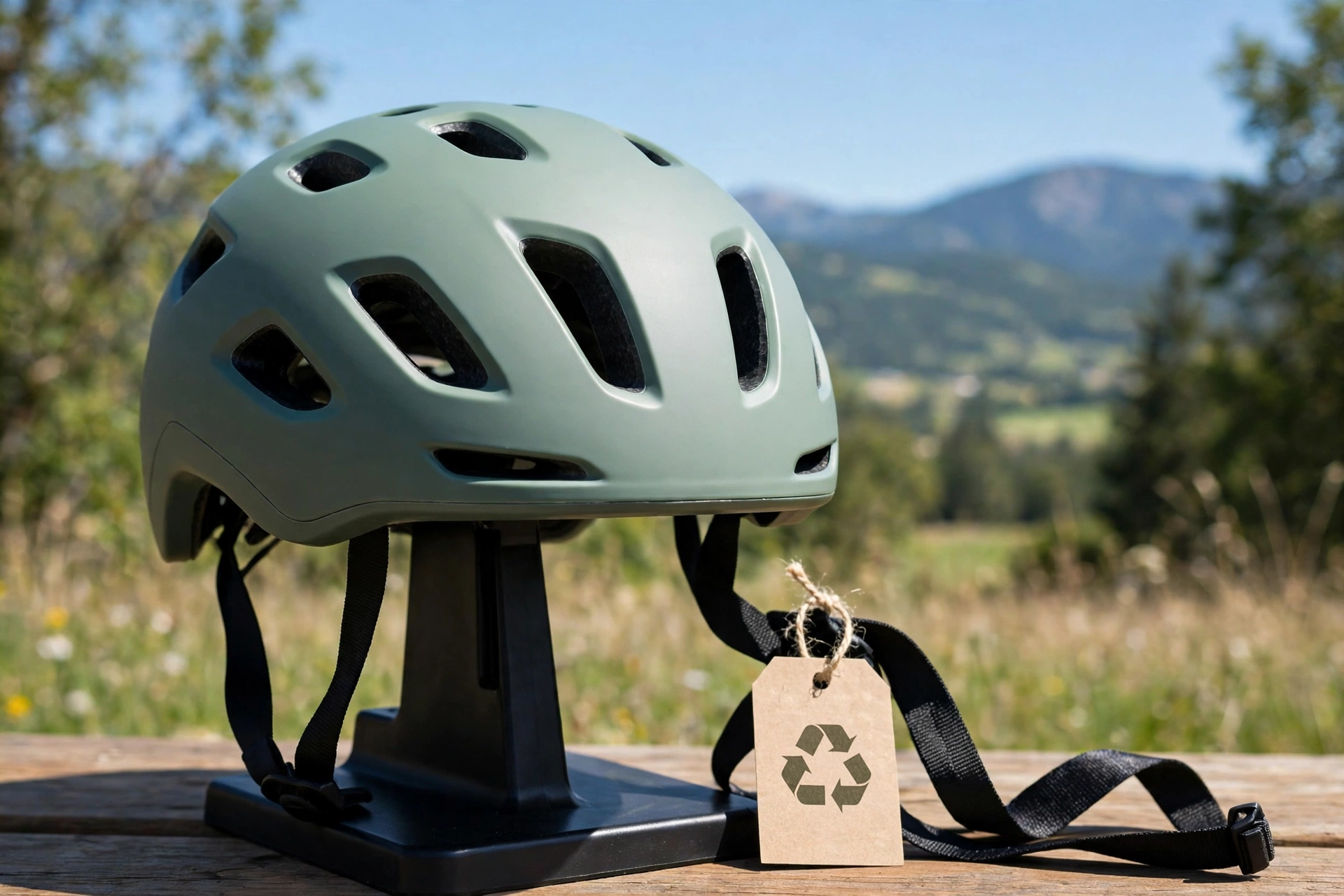
When a maker says a helmet contains recycled material, the percentage tells you how much of the helmet — or of a specific part — is recycled. A shell that is 50 percent recycled polycarbonate is a meaningful change. A helmet that is 5 percent recycled overall, because only the straps use recycled polyester, is a smaller one. Both claims may be honest, but they are not equal.
Watch for what the percentage covers. Some makers quote the recycled share of the shell alone; others quote the whole helmet. Some quote by weight, others by volume. Without knowing what the number refers to, it is hard to compare two helmets. Makers that explain the number clearly are giving you useful information; makers that do not are asking you to trust a headline.
It is also worth checking whether the recycled content is pre-consumer or post-consumer. Pre-consumer recycled material comes from factory offcuts — plastic that never reached a customer. Post-consumer recycled material comes from products that were used and thrown away, such as bottles. Post-consumer content is generally seen as the stronger environmental claim, because it keeps waste out of landfill rather than just reusing factory scrap.
Are Helmets with Recycled Materials More Expensive?
In general terms, recycled materials do not always cost more — and when they do, the difference is usually small. Recycled polyester is widely available and often costs about the same as new polyester. Recycled polycarbonate can cost more, because sorting and cleaning the waste plastic adds expense, but the difference is rarely large enough to change the helmet’s price on its own.
What can raise the price is the testing and quality control needed to use recycled material safely. A maker that invests in sorting, blending, and testing will have higher costs than one that simply uses new plastic. But that investment is also what makes the recycled helmet trustworthy, so it is money well spent.
Do not assume a higher price means more recycled content, or that a lower price means none. The price of a helmet reflects its design, its features, and its brand at least as much as its materials. If recycled content matters to you, read the label and the maker’s description rather than guessing from the price.
What Should You Check Before Buying?
Check the certification label first. A helmet’s safety is confirmed by the standard it meets, not by its materials. A recycled-content helmet without the right certification for your sport is not a safe choice, however good its environmental claims sound.
Next, read the recycled-content claim carefully. Look for the percentage, which part of the helmet it covers, and whether the material is pre-consumer or post-consumer recycled. If the maker publishes those details, you can compare helmets honestly. If it does not, treat the claim as a general direction rather than a precise fact.
Finally, try the helmet on and check the fit, ventilation, and comfort. A helmet made with recycled materials that you wear every ride is a far better choice than one made with new materials that stays in a cupboard. If you want to understand the safety features inside the helmet, reading about what MIPS is for helmets can help you judge the whole package, not just the materials.
Frequently Asked Questions
Q: Is a helmet with recycled materials as strong as one made from new plastic?
A: In general terms, yes, if it carries the same certification. Makers blend and test recycled plastic to meet the same standard, so the label inside the helmet is the check that matters.
Q: Can the foam liner be made from recycled material?
A: Rarely. EPS foam is hard to recycle into new foam of the same quality, so recycled content usually appears in the shell, straps, and liners rather than the impact foam itself.
Q: Does recycled content make a helmet heavier?
A: In general terms, no. Recycled polycarbonate and recycled polyester weigh much the same as new materials, so a helmet with recycled content should feel the same to wear as a conventional one.

Olivia
Writer at Helmet Today, covering helmet reviews, fit and riding safety.