When buying a second-hand ski helmet, check that it has never been in a crash, that the certification label is readable, that the shell and liner are undamaged, and that it fits you snugly with your goggles. A ski helmet takes hard knocks from falls, lift queues, and icy surfaces, so its history matters more than its appearance. A helmet that looks fine can still have crushed foam inside.
Ski helmets are also exposed to cold, moisture, and UV light, all of which age the materials over time. This guide explains the checks that matter for a used ski helmet, the features to test before you pay, and when a new helmet is the better choice.
Has the Ski Helmet Been in a Crash?
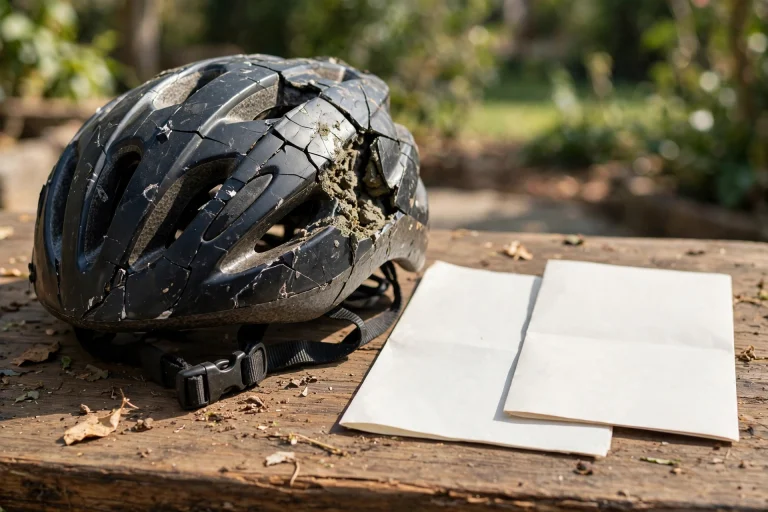
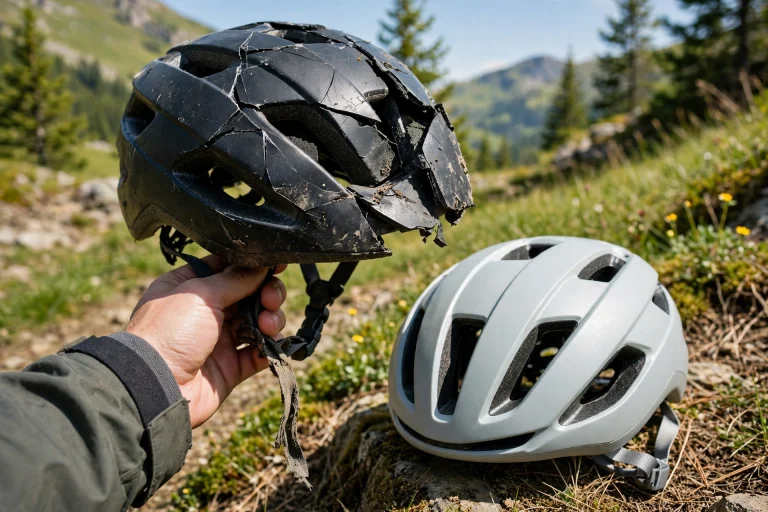
Ask the seller directly whether the helmet has been in a crash or a hard fall, and listen carefully to the answer. Skiers fall often, and a helmet that has hit hard snow or ice may have absorbed an impact without showing it. A seller who says “only small falls” may not realise that even a modest fall can crush the foam.
Ask about the helmet’s use more broadly. Was it worn every weekend for several seasons, or a handful of times on holiday? Heavy use means more exposure to cold, moisture, and sweat, all of which age the liner. A helmet worn hard for three seasons is a different purchase from one worn twice.
If you are buying online, you cannot verify the answer, so weigh it against the price and the seller’s other details. A seller who gives a clear, specific history — when it was bought, how often it was used, why it is being sold — is more trustworthy than one who offers only “good condition, barely used”.
How Do You Check the Shell and Liner?
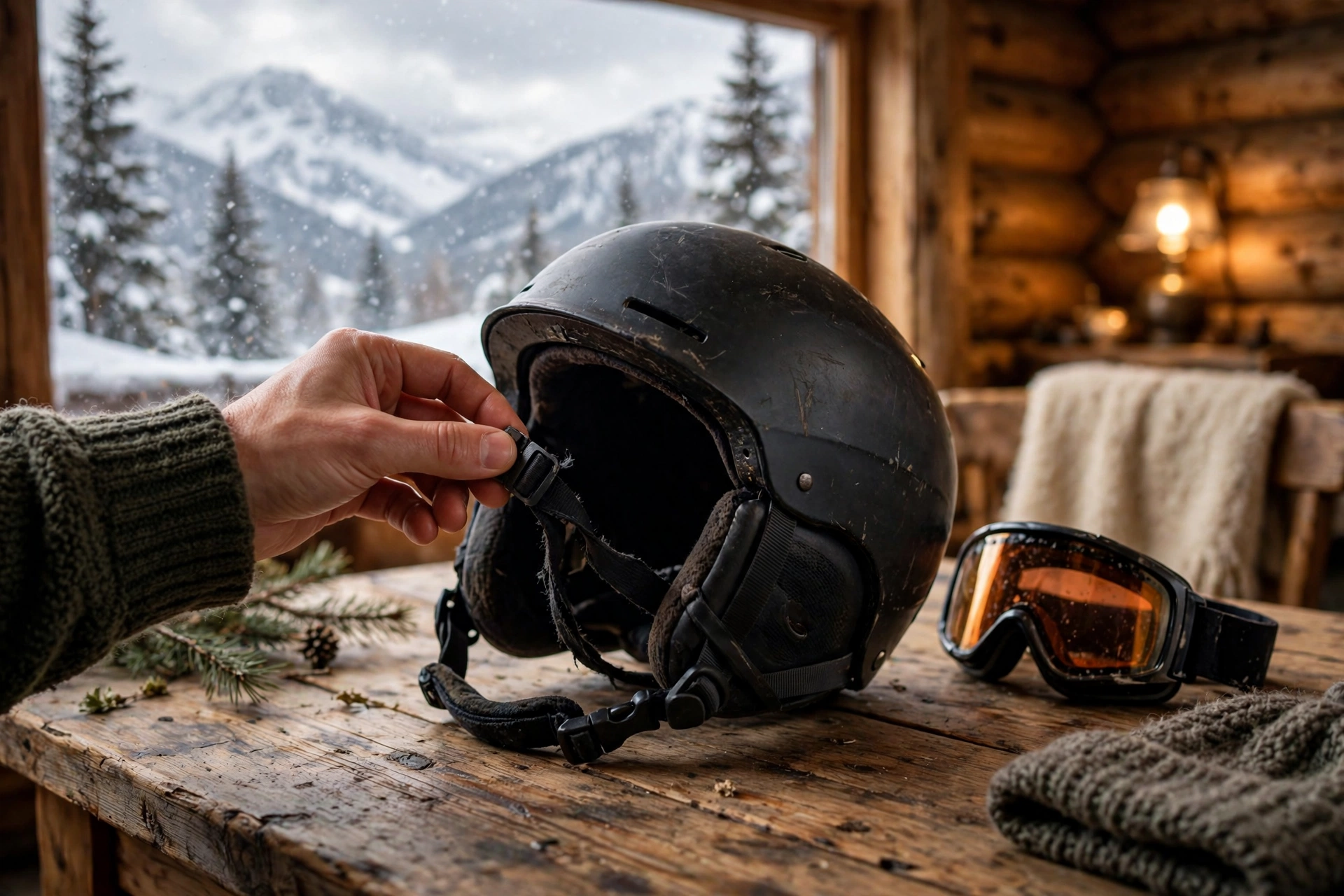
Look at the shell in good light. Ski helmets often pick up scuffs from lift bars, branches, and icy surfaces, and surface scuffs are normal. What matters is cracks, dents, or areas where the shell has separated from the liner. Press around the shell and feel for anything uneven or soft.
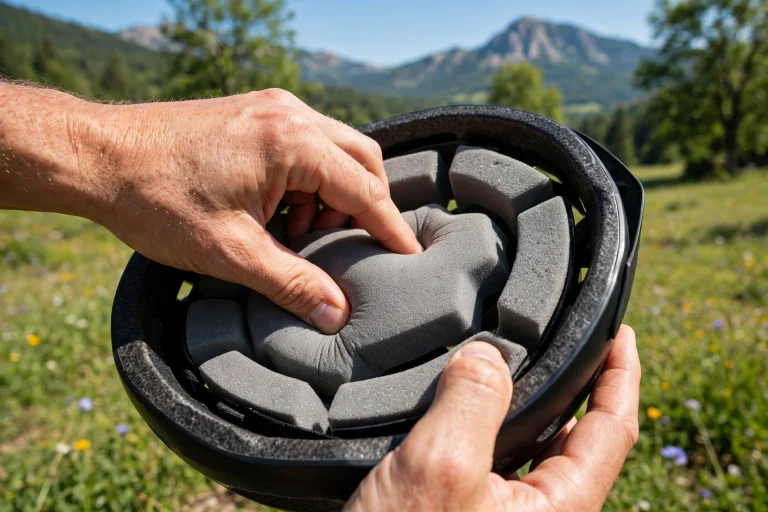
Remove the ear pads and the inner liner if they come out, and look at the foam underneath. It should feel firm and even, with no cracks, dents, or crumbling edges. Pay attention to the front and sides, where most ski impacts happen. A dent that does not spring back is a sign the foam has crushed.
Check the vents. Ski helmet vents can clog with snow and ice, and a vent that is stuck open or closed is a sign the helmet has been roughly handled. Open and close each vent and make sure it moves smoothly. Also check the goggle clip at the back — a broken clip is a small problem on its own, but it can signal rough treatment.
Does the Helmet Fit with Your Goggles?
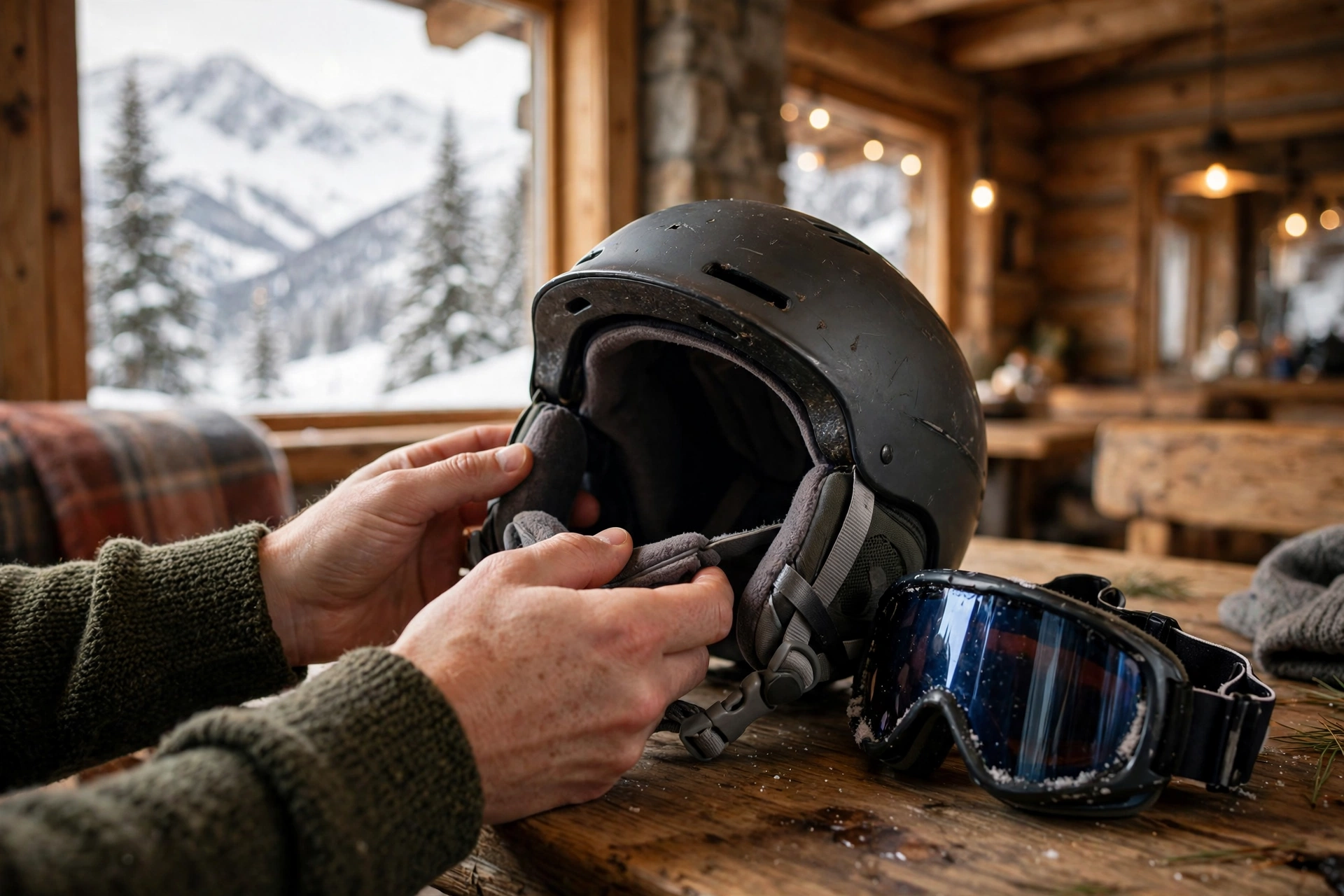
A ski helmet must fit with your goggles, not just on its own. Bring your goggles when you try the helmet on, or buy the helmet and goggles together. There should be no gap between the top of the goggles and the front of the helmet — a gap lets in cold air and snow, and it is a sign the two do not match.
Try the helmet on with the goggles and a thin balaclava or beanie if you normally wear one. The helmet should sit level, cover your forehead, and feel snug without pressure points. Shake your head gently: the helmet should stay put, not rock or slide. If it moves, it is the wrong size or shape for you.
Check the ear pads. They should sit comfortably over your ears without pressing hard, and they should not muffle sound so much that you cannot hear other skiers. Some ski helmets have removable ear pads for warmer days, and it is worth checking that they come off and go back on cleanly.
What About the Certification Label and Age?
Find the certification label inside the helmet and check that it is readable and names a standard for snowsports. A ski helmet certified only for cycling, or with no label at all, is not a safe choice for the slopes. If the label is missing, do not buy the helmet.
Check the helmet’s age. Look for a date of manufacture on the label or stamped inside the shell, and compare it with what the seller told you. A ski helmet that is several seasons old may be near the end of its service life, even if it looks fine, because cold, moisture, and UV light age the foam.
Be wary of helmets sold without any history at all. A ski helmet bought from a rental fleet, for example, will have had very heavy use, and its history is usually unknown. If you want to understand what the liner inside is doing when it absorbs an impact, reading about what MIPS is for helmets can help you judge whether the helmet you are considering is worth the price.
When Should You Buy New Instead?
Buy new if the used helmet’s history is uncertain, if it shows any damage, or if the label is missing. Buy new if the helmet is near the end of its service life, or if it does not fit you properly with your goggles. A new ski helmet comes with a known history, a warranty, and a full service life ahead of it.
Buy new for a child. Children outgrow helmets quickly, and a second-hand helmet that is the wrong size or has an unknown history is a poor choice for a young skier. A new helmet in the right size, bought when the child needs it, is safer and usually not much more expensive than a good used one.
Finally, consider the cost honestly. A used ski helmet at half the price of a new one, with only a year or two of life left, is not a bargain. A new helmet, worn for its full service life, often works out cheaper per season — and it comes with the certainty that it has never been crashed.
Frequently Asked Questions
Q: How many seasons should a ski helmet last?
A: In general terms, most makers suggest several seasons of regular use, but the exact guidance varies. Check the maker’s advice for your model, and replace the helmet sooner if it has been in a crash or shows damage.
Q: Can I use a bike helmet for skiing?
A: In general terms, no. Ski helmets are tested for cold conditions and for the kinds of impact that happen on snow, and they are designed to work with goggles and to keep your ears warm. A bike helmet is not a substitute.
Q: Is a scratched ski helmet still safe?
A: Surface scratches from normal use are usually cosmetic. But deep scratches, cracks, or dents in the shell are signs of damage, and a helmet with those should be replaced rather than bought second-hand.

Olivia
Writer at Helmet Today, covering helmet reviews, fit and riding safety.