You can often spot a repaired helmet being sold as new by checking for mismatched paint, uneven stickers, glue marks around the liner, non-original parts, and a certification label that does not match the helmet’s model or age. A repaired helmet may look convincing at a glance, but the signs of repair are usually there if you know where to look. A helmet that has been repaired after damage should never be sold as new — or worn at all, if the damage was to the shell or foam.
This guide explains the checks that reveal a repaired helmet, why repairs to protective parts are never safe, and what to do if you think you have been sold one. The few minutes these checks take can save you from trusting a helmet that cannot protect you.
What Does a Repaired Shell Look Like?
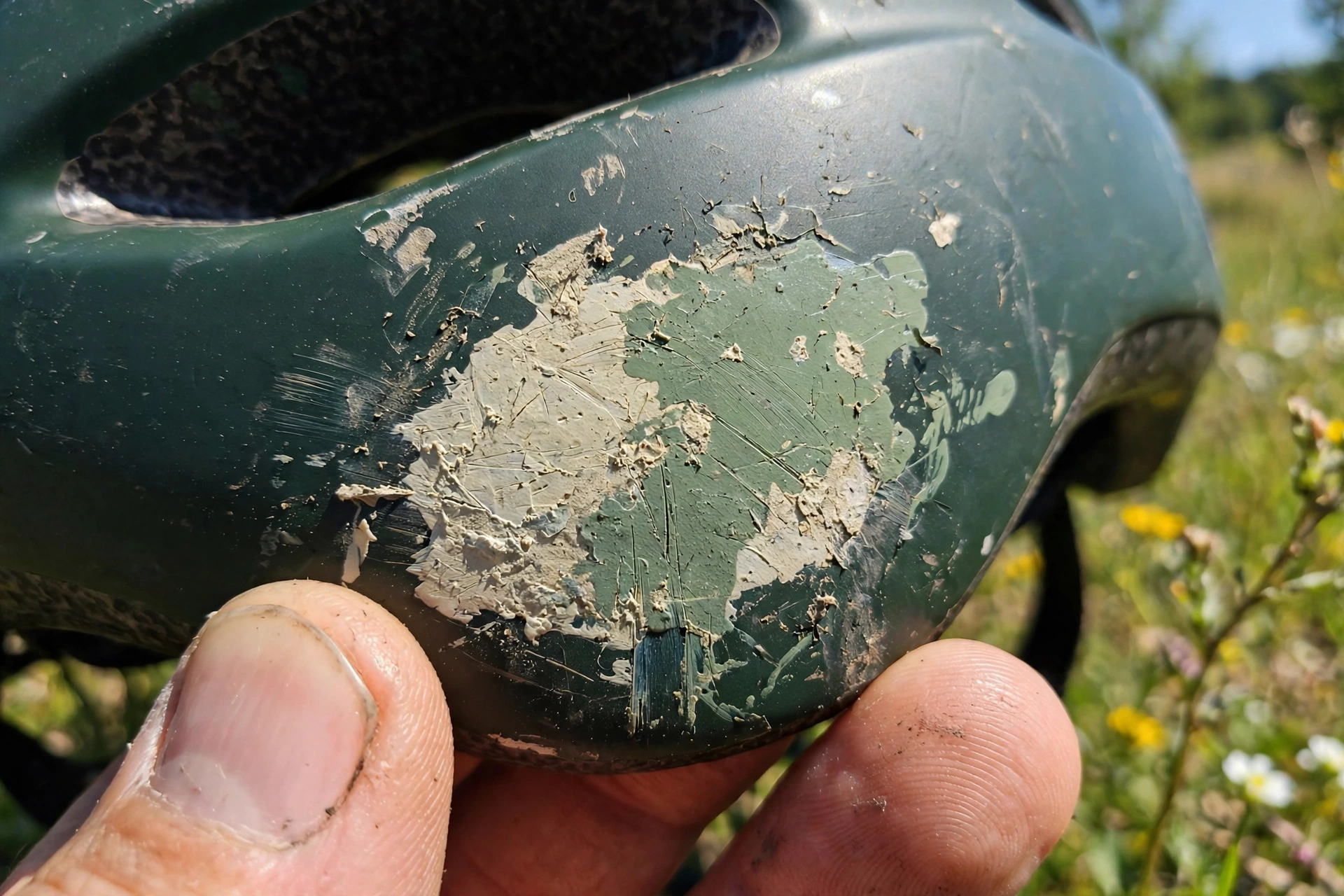
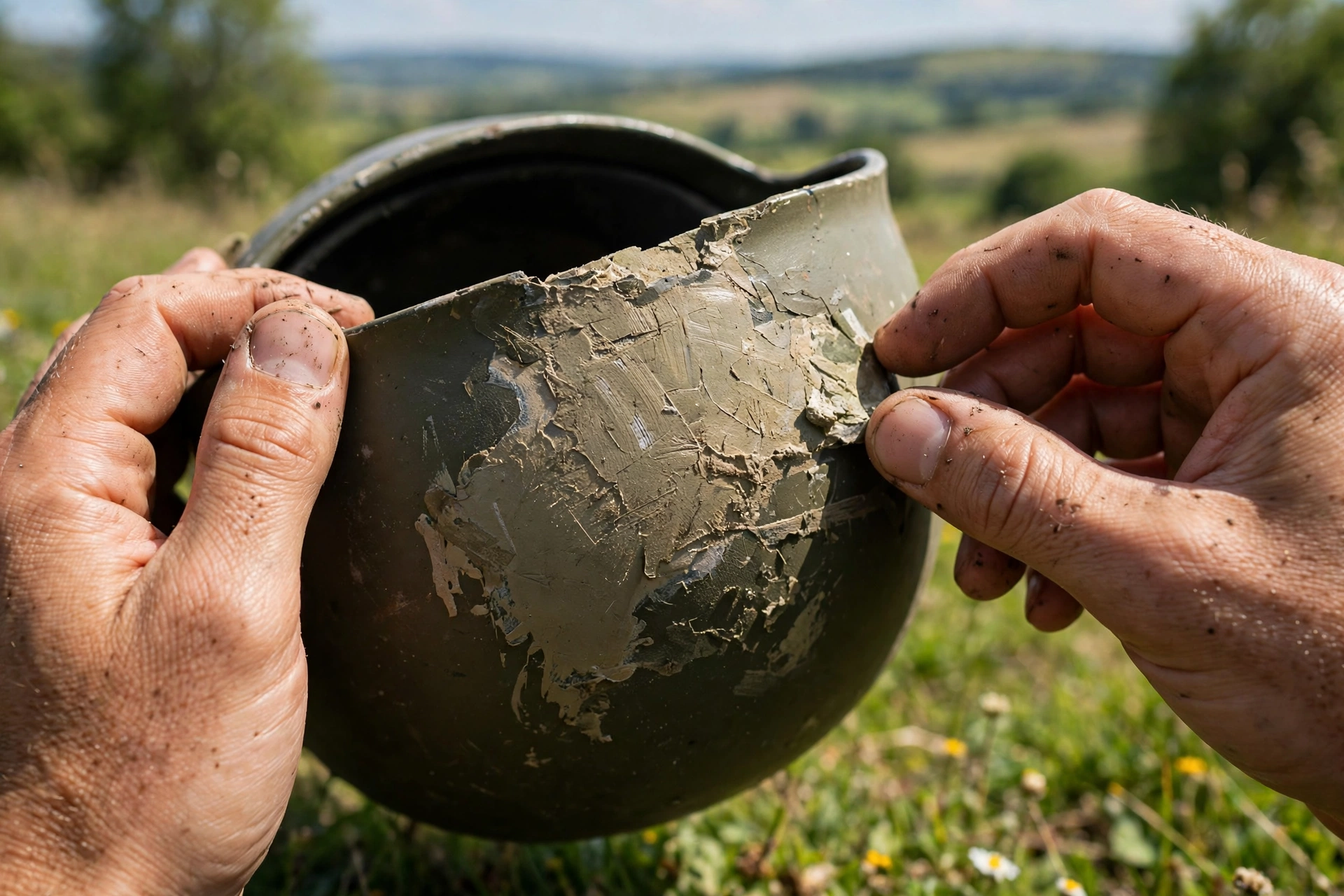
Look at the paint closely. A repaired shell often has paint that does not quite match — a slightly different shade, a dull patch, or a texture that feels different under your fingers. Run your hand over the whole shell and feel for bumps, ridges, or areas where filler has been sanded smooth. A genuine factory finish is even and consistent; a repair rarely is.
Check the stickers and decals. A repaired helmet may have stickers that are slightly crooked, peeling at the edges, or placed in a position that does not match the maker’s photos. A certification sticker that looks new on an otherwise worn helmet, or a model sticker that does not match the helmet’s shape, is a warning sign.
Look at the vents and edges. Filler or glue around a vent, a vent cover that does not sit flush, or an edge where the shell meets the liner that looks uneven can all suggest a repair. In good light, hold the helmet at an angle and look for differences in how the surface reflects — a repaired area often catches the light differently from the rest of the shell.
What Signs Appear Inside the Helmet?
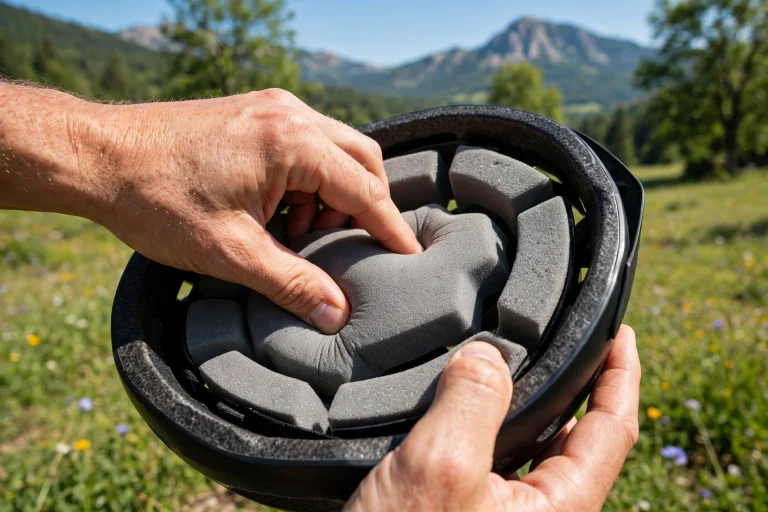
Remove the pads and look at the foam liner. A liner that has been glued, filled, or patched will show it: look for glue marks, filler material, or areas where the foam’s texture changes. The foam should be even and consistent throughout, with no patches, seams, or discoloured areas.
Check how the liner sits in the shell. It should fit snugly all the way round, with no gaps or movement. A liner that has been removed and refitted — for example, after a repair — may sit unevenly or feel loose in places. Press the liner gently and feel for soft spots that do not match the rest.
Look at the straps and their fixings. Straps that have been re-stitched will show uneven stitching or thread that does not match the original. A buckle that is a different colour or style from the rest of the helmet, or a rivet that looks replaced, suggests parts have been swapped. None of these on their own proves a repair, but together they build a picture.
How Do You Check the Label and Documentation?
Check the certification label inside the helmet. It should be cleanly printed, firmly attached, and consistent with the helmet’s model and age. A label that is peeling, blurry, or printed on a different kind of material from the rest of the helmet may have been added after a repair to make the helmet look genuine.
Compare the helmet with the maker’s own photos and description. Search for the model name online and check the colour, the shape, the vent layout, and the sticker positions. A repaired helmet may have the right model name but the wrong details — a vent that does not match, a colour the maker never sold, or a feature that belongs to a different year.
Ask for the box, the receipt, and the instruction leaflet. A genuine new helmet should come with these, and a seller who cannot provide any of them is worth questioning. If the box is for a different model, or the receipt is for a different date, the helmet’s story does not add up.
Why Is a Repaired Helmet Dangerous?
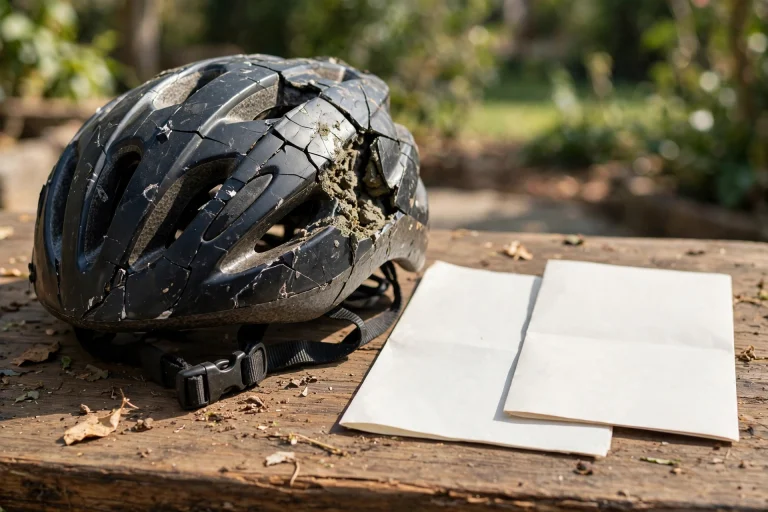
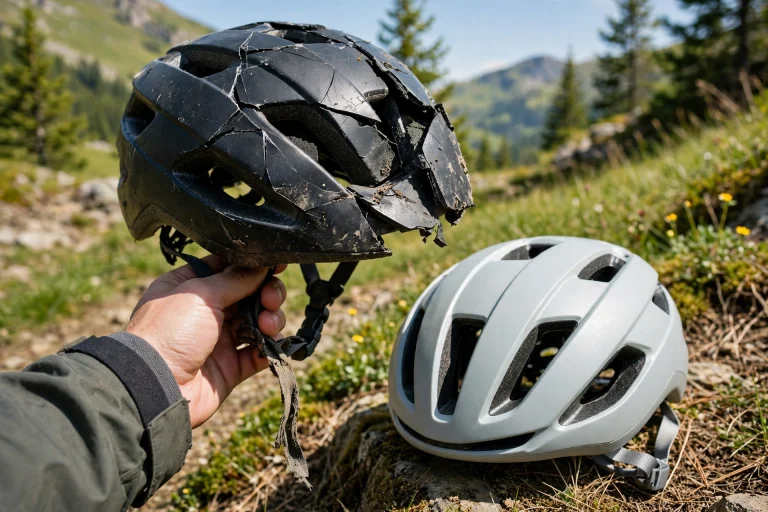
A helmet’s shell and foam work together to absorb an impact once. A crack in the shell, however well filled, cannot spread an impact the way an intact shell can. Foam that has been crushed and then glued or filled cannot absorb energy again. A repaired helmet may look safe while offering far less protection than a genuine one.
The danger is that a repaired helmet gives false confidence. A rider who believes they are wearing a new, certified helmet may take risks they would not take if they knew the helmet was damaged. That is why selling a repaired helmet as new is not just dishonest — it is dangerous.
If you want to understand what is at stake inside the helmet, reading about what MIPS is for helmets can help you see how the liner and shell are meant to work together — and why a repair that disrupts that system cannot be trusted.
What Should You Do If You Have Bought a Repaired Helmet?
Stop wearing it immediately. Do not wait for proof — if you have good reason to think the helmet was repaired and sold as new, retire it. Cut the straps and damage the foam liner so it cannot be worn by anyone else, and dispose of it properly.
Contact the seller and explain what you found. A reputable seller should offer a refund or a replacement, especially if the helmet was sold as new. Keep photos of the signs of repair, the label, and any documentation, because they support your case.
If the seller will not help, report the sale to the marketplace or platform where you bought it, and to your local consumer protection body if one exists. Repaired helmets sold as new are a safety issue, not just a shopping complaint, and reporting them can protect other riders. When you buy the replacement, buy from a reputable source — a shop or the maker’s own store — where the helmet’s history is certain.
Frequently Asked Questions
Q: Can a helmet be repaired professionally and safely?
A: In general terms, no. No reputable repairer will fix a damaged shell or foam liner, because there is no way to test whether the repair has restored the helmet’s protection. Only comfort parts such as pads and visors can be safely replaced.
Q: Is a repainted helmet always a repaired helmet?
A: Not always — some riders repaint helmets for style. But a repaint can hide cracks and filler, so a repainted helmet sold as new should be treated with suspicion. Ask the seller why it was repainted.
Q: How can I be sure a helmet I buy online is genuine?
A: Buy from a reputable retailer or the maker’s own store when you can. Check the label, compare the helmet with the maker’s photos, and be wary of prices far below the normal range.

Olivia
Writer at Helmet Today, covering helmet reviews, fit and riding safety.