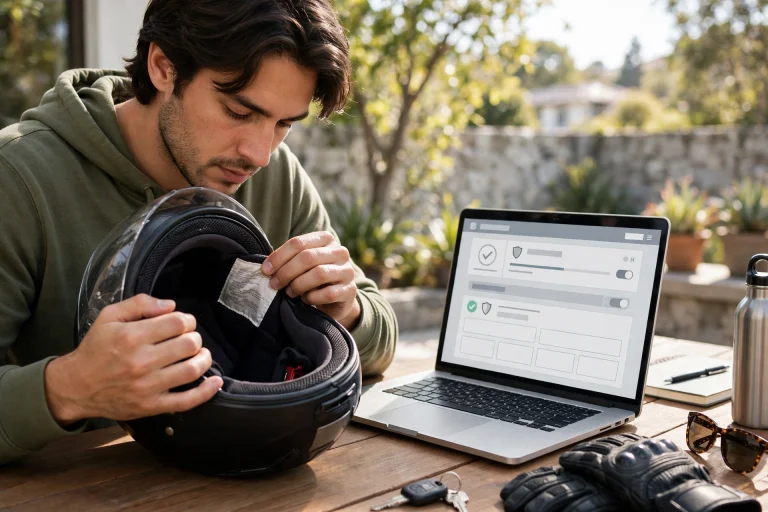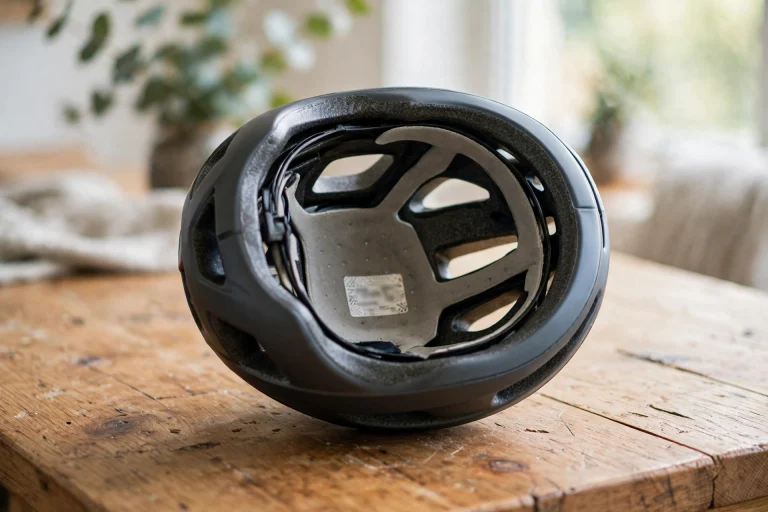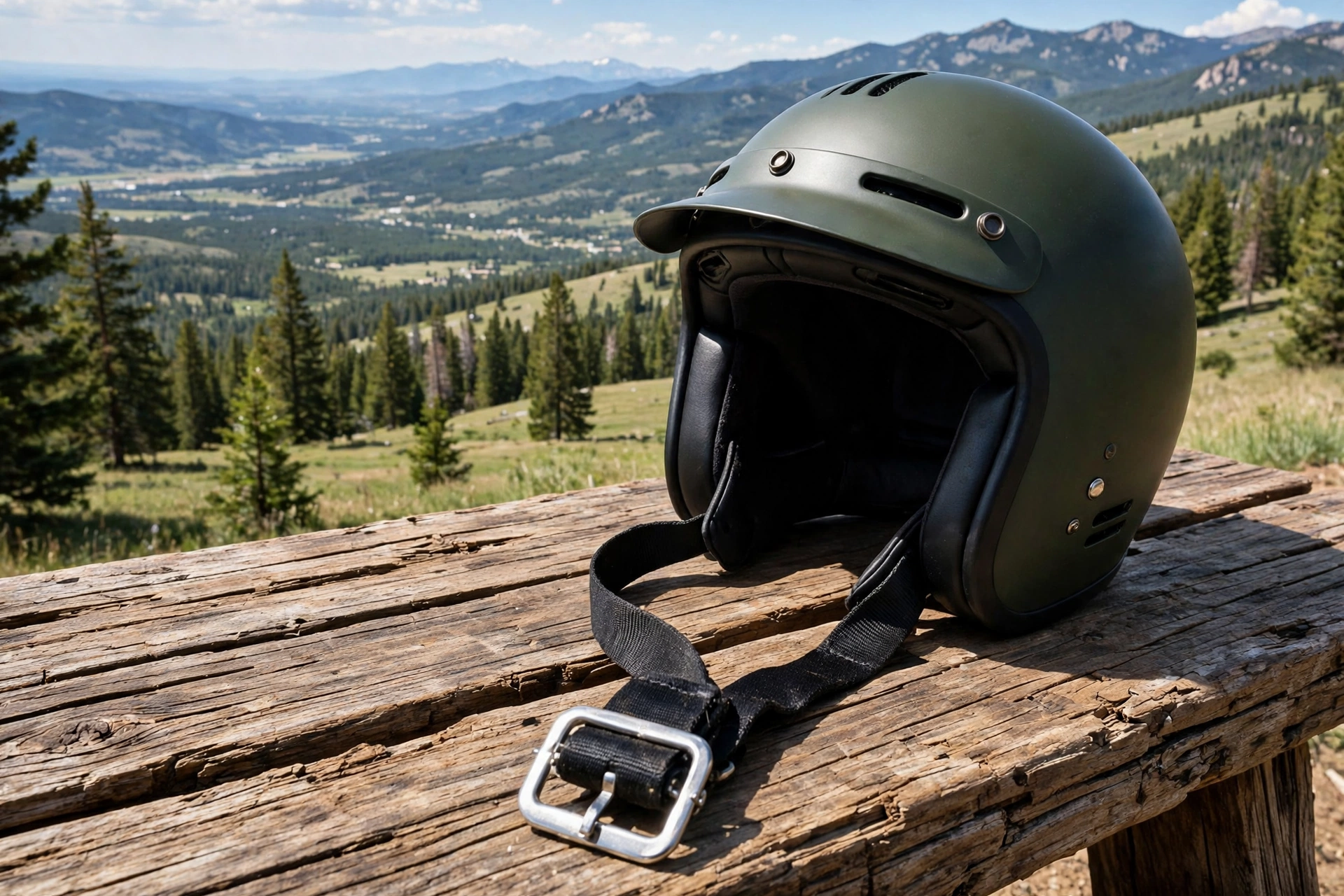
Yes, in general terms helmet standards do cover chin straps and buckles — most major standards test the retention system, including the strap, the buckle, and the points where the strap joins the shell. A helmet that stays on your head in a crash is only useful if the strap holds, so standards check that the strap does not stretch too far, slip, or break under a set load. The exact tests differ between standards, but the principle is the same across bike, motorcycle, ski, and industrial helmets.
Many riders focus on the shell and the liner and forget the strap, yet the strap is what keeps the helmet in place when it matters most. A helmet that flies off in a crash cannot protect you, however strong its shell may be. This guide explains what standards test, how strap and buckle tests work, and what to check on your own helmet.
What Do Helmet Standards Test on a Chin Strap?
Helmet standards usually test the chin strap in two ways: how much it stretches under load, and whether it stays attached to the helmet. In a typical test, a weight is applied to the strap and the amount it extends is measured. If the strap stretches too far, the helmet could come off or move too much in a real crash. The test also checks that the strap does not break or pull away from its anchor points.
The strap material matters too. Most straps are made from woven webbing, and the stitching that joins the strap to the shell is part of the test. If the stitching fails, the strap fails with it, so standards look at the whole retention system rather than the strap alone. A strong strap attached with weak stitching would not pass.
Are Buckles Tested as Part of the Standard?
Yes, buckles are usually tested as part of the retention system, because a buckle that opens under load is as dangerous as a strap that breaks. Tests check that the buckle stays closed when a load is applied, and that it can be opened and closed repeatedly without wearing out. Some standards also check that the buckle does not release accidentally when it is knocked or pressed from the side.
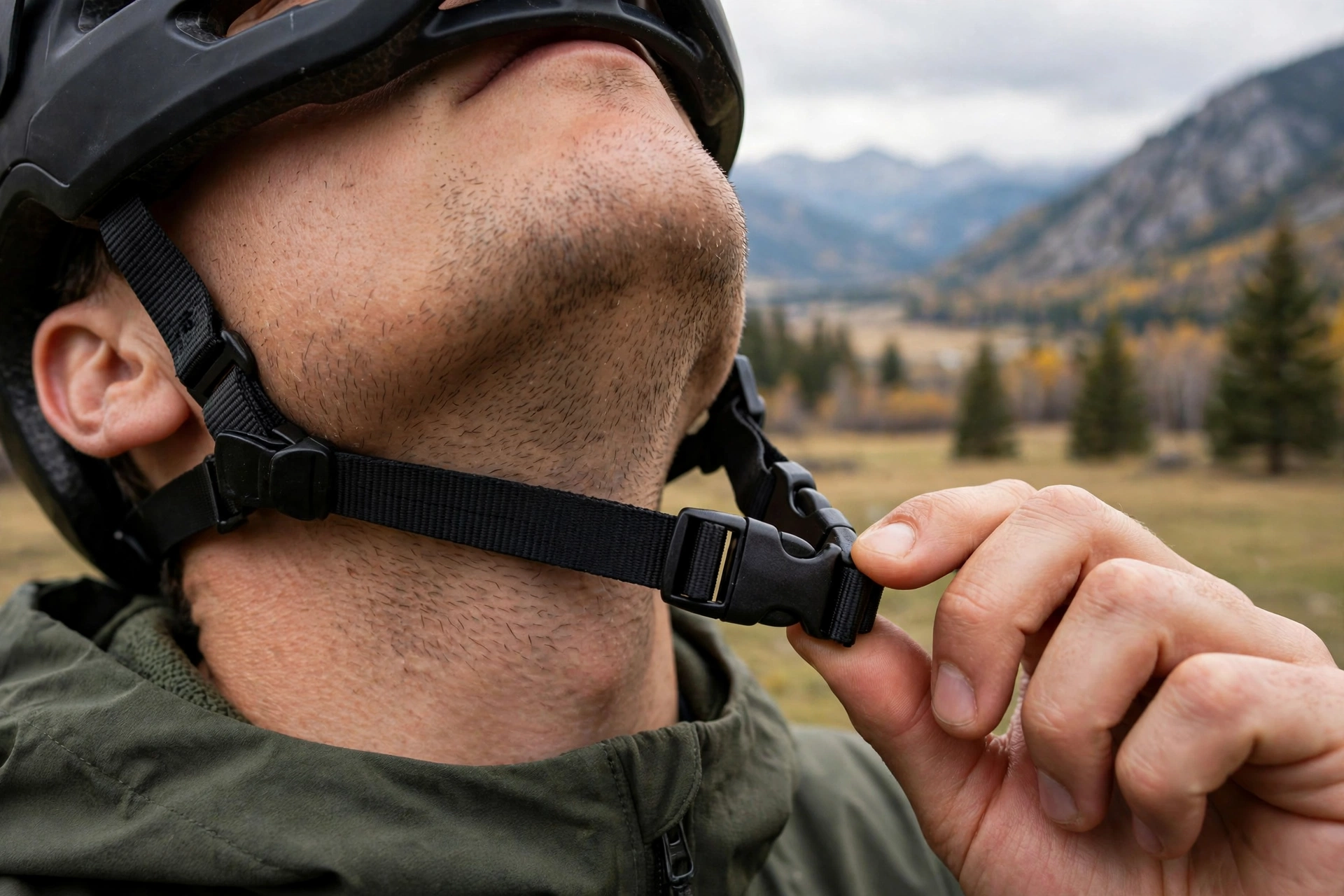
Different helmets use different buckles, from simple side-release clips on bike helmets to double D-rings on motorcycle helmets. Each type is tested in the way it is meant to be used, with the strap fastened as the rider would fasten it. A buckle that is hard to fasten correctly is a problem in itself, because a rider who finds it awkward may leave the strap loose.
Buckle design also affects safety in another way: a buckle that sits under the chin should not have sharp edges or parts that could cause injury. Standards often include checks for sharp edges and for parts that could press into the skin. If you are learning how helmets manage different kinds of impact, reading about what MIPS is for helmets can help you understand another part of modern helmet design.
Do All Standards Cover Straps in the Same Way?
No, the details differ between standards, even though the aim is the same. Some standards set a maximum amount of strap stretch, while others focus on the load the strap must survive without breaking. Motorcycle standards often have stricter retention tests than bike standards, because motorcycle crashes can involve higher speeds and stronger forces. Industrial helmet standards also test the chin strap, but the loads and the way the helmet is worn are different again.
These differences mean that a strap that passes one standard might not pass another, so it is worth knowing which standard your helmet was tested against. The label inside the helmet names the standard, and the manufacturer’s information should explain what that standard covers. If you ride in a country or a competition with its own rules, check which standard is required there.
In general terms, a helmet that meets a recognised standard has had its strap and buckle tested, but the test is a minimum bar, not a guarantee that every strap will last forever. Straps wear out with use, sunlight, and sweat, so regular checks matter even for a certified helmet.
How Can You Check Your Own Chin Strap and Buckle?
Start by fastening the strap as you would for a ride and pulling gently on the helmet. It should stay in place and feel snug, with no more than a small amount of movement. If the helmet slides forward over your eyes or backwards off your forehead when you pull, the strap may be too loose or stretched. Adjust it so that it sits flat under your chin without pressing painfully.
Next, look closely at the strap and the buckle. Check the webbing for fraying, thinning, or faded areas, and look at the stitching where the strap meets the shell. If stitches are coming loose or the webbing feels soft and worn, the strap may need replacing. Check the buckle for cracks, bent parts, or a catch that no longer clicks firmly into place.
Test the buckle by fastening and unfastening it several times. It should click shut clearly and open only when you press the release as intended. If it opens too easily, sticks, or feels loose, do not rely on it. Many manufacturers sell replacement straps and buckles, but if the anchor points are damaged, the helmet itself may need to be replaced.
When Should You Replace a Chin Strap or Buckle?
Replace a strap or buckle as soon as you find damage, rather than waiting for it to fail. Frayed webbing, loose stitching, a cracked buckle, or a buckle that no longer clicks shut are all signs that the retention system is no longer reliable. A helmet with a faulty strap should not be used until the part is fixed or the helmet is replaced.
Also consider replacing the strap if it has stretched noticeably over time. Straps can stretch gradually with regular use, and a strap that once fitted snugly may now allow too much movement. If you find yourself tightening the strap further than you used to, that may be a sign of stretch rather than a change in your head size.
If your helmet has been in a crash, check the strap and buckle carefully even if the shell looks fine. A hard impact can damage the strap, the buckle, or the anchor points in ways that are hard to see. In general terms, a helmet that has taken a hard impact should be checked by the manufacturer and usually replaced, including its retention system.
Frequently Asked Questions
Q: Do helmet standards test chin straps and buckles?
A: Yes, in general terms most major standards test the whole retention system, including the strap, the buckle, and the anchor points, checking stretch, strength, and whether the buckle stays closed under load.
Q: Can I replace a worn chin strap myself?
A: In general terms, yes, if the manufacturer sells a replacement strap or buckle made for your model and the anchor points are undamaged. Follow the manufacturer’s instructions, and replace the helmet if the anchors are damaged.
Q: How tight should a chin strap be?
A: It should be snug enough that the helmet stays put when you shake your head, with room for about two fingers between the strap and your chin. It should feel firm, not painful, and the helmet should not slide over your eyes.

Olivia
Writer at Helmet Today, covering helmet reviews, fit and riding safety.