For riders with arthritis, a comfortable helmet is one that is light, easy to fasten with stiff or sore hands, and soft inside — because a helmet that hurts to put on or take off is one you will avoid wearing. Arthritis affects the hands, wrists, and sometimes the neck, and all of those matter when you wear a helmet. A heavy helmet can strain a sore neck, a fiddly buckle can be painful to fasten, and tight padding can press on tender spots.
This guide explains what to look for in a helmet if you have arthritis, from weight and fastenings to padding, fit, and the small features that make a helmet easier to live with. It is written in general terms, because arthritis affects everyone differently, but the checks here will help you find a helmet that works for your hands and your head.
Why Does Helmet Weight Matter with Arthritis?
A helmet’s weight is carried by your neck, and over a ride that weight adds up. If arthritis affects your neck, a heavy helmet can make it sore or stiff, and that can cut a ride short. A lighter helmet reduces that strain and helps you stay comfortable for longer.
In general terms, a lighter helmet is not automatically a safer one, so weight is only one part of the choice. Look for a helmet that is light for its type, meets the standard you need, and feels balanced on your head. A helmet that pulls forward or back will feel heavier than one that sits evenly, even at the same weight.
Try helmets on and wear each one for several minutes in the shop. Turn your head, look over your shoulder, and notice how the weight feels. If a helmet makes your neck work hard just standing still, it will feel worse after an hour on the road or trail.
What Fastening Is Easiest for Arthritic Hands?
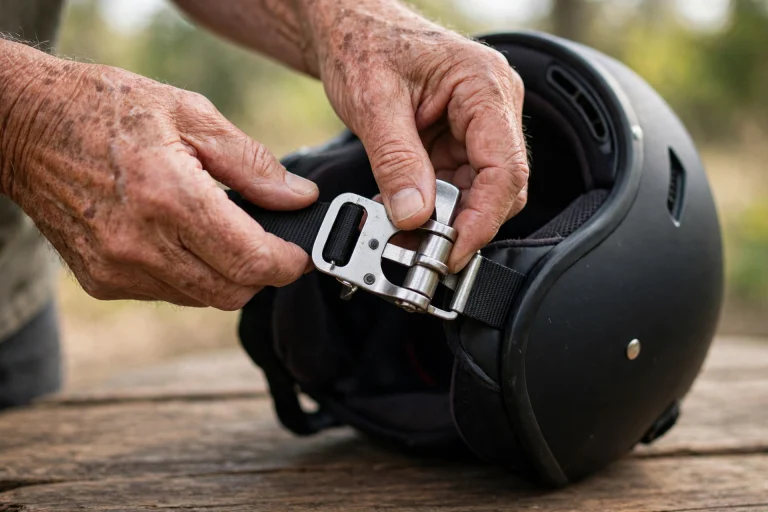
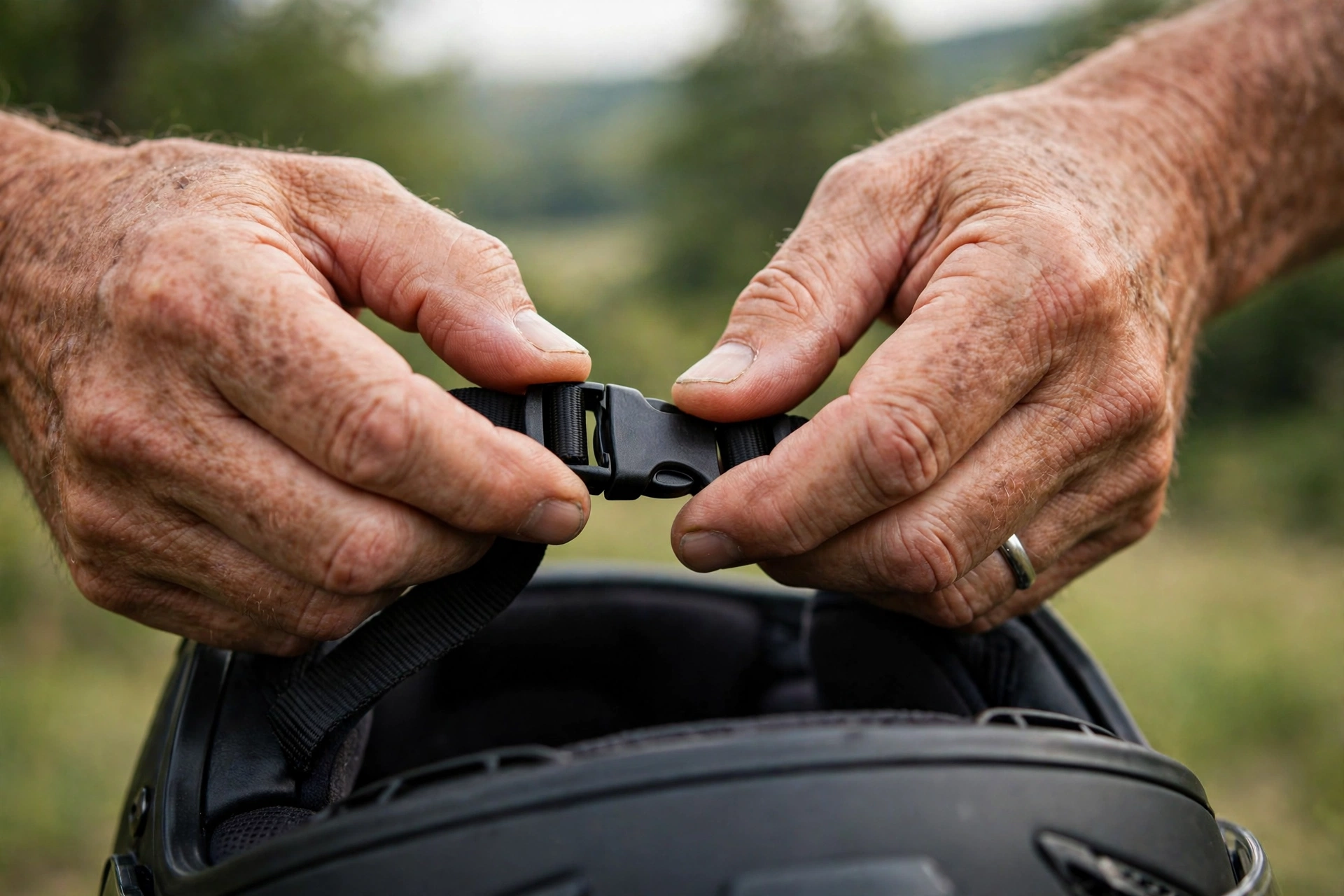
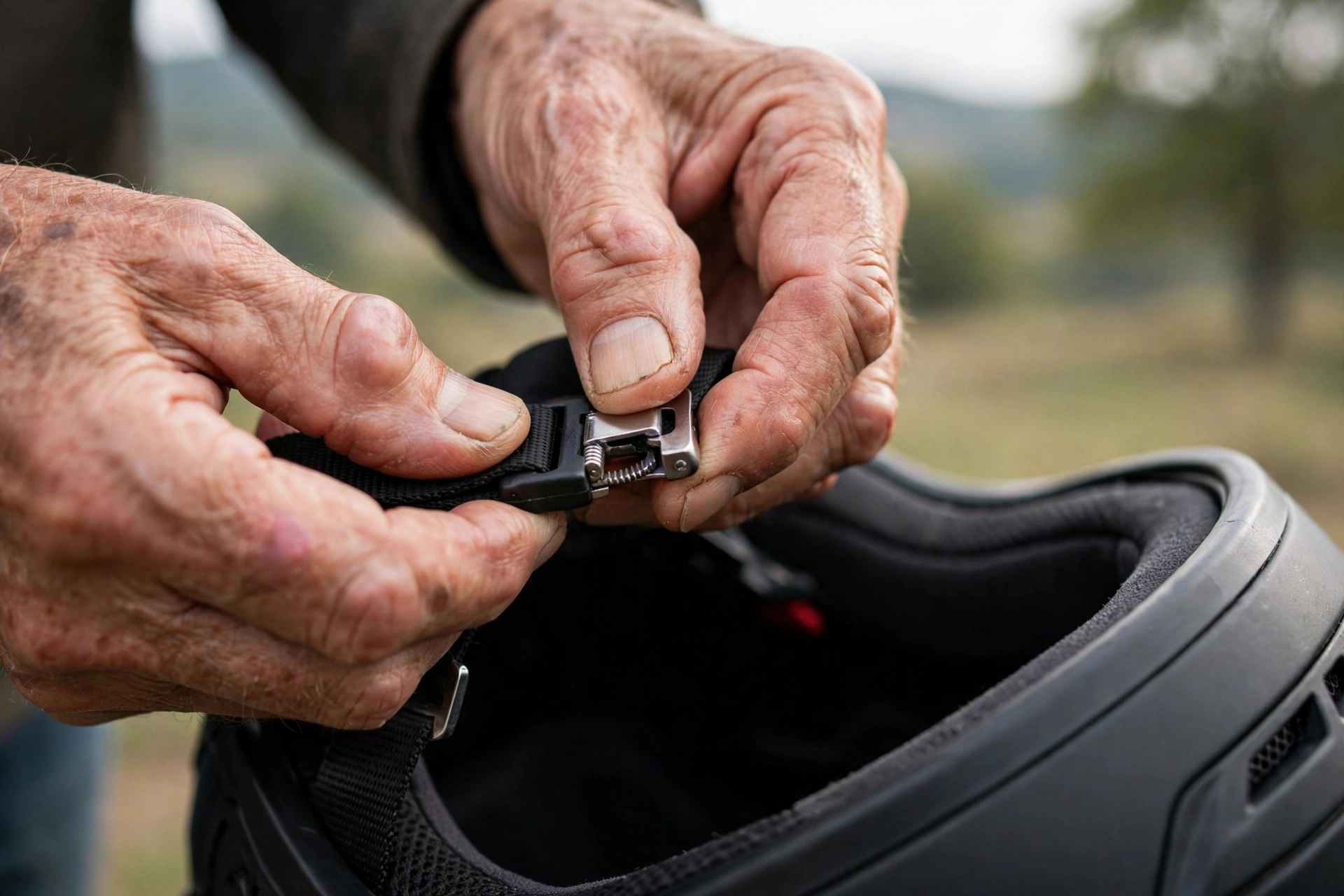
The fastening is often the hardest part of a helmet for someone with arthritis. A micrometric buckle is usually the easiest, because you can fasten it with one hand and adjust it by pulling a small strap, without needing much finger strength. Some riders find it far easier than a double D-ring, which needs both hands and a firm grip.
Magnetic buckles are another option on some helmets. They snap together with very little effort and can be released with a simple pull. If your helmet has one, try it several times in the shop to make sure you can work it comfortably with cold or stiff hands.
Also check the fit system at the back of the helmet. A large, easy-to-turn dial is much simpler to adjust than a small one, and some helmets have a dial you can work with gloves on. Avoid helmets where the adjustment needs a strong pinch grip or a fiddly pull.
What Padding and Fit Should You Look for?
Soft, even padding makes a helmet more comfortable for a tender head. Look for padding that feels smooth and plush, without hard seams or edges that press into one spot. Removable padding is useful too, because you can wash it, and you can sometimes swap it for thinner or thicker pads to fine-tune the fit.
Fit matters as much as padding. The helmet should sit level, feel snug all round without pressing hard, and stay put when you shake your head. A pressure point on the forehead or temples will only get worse over a long ride, so try the helmet on for at least ten minutes before you decide.
If you wear glasses, try the helmet on with them in place. Look for a model with a little extra room around the temples, so the arms of your glasses do not press into your head. A helmet that is comfortable with glasses is far easier to wear every day.
How Can Ventilation and Visors Help?
Good ventilation keeps you cool and helps stop the visor fogging up. Look for vents that open and close with a simple slide or push, rather than a stiff lever that needs a strong thumb. Large vent controls are easier to work with gloves on, and they are kinder to sore hands.
The visor should be easy to open and close too. A large, easy-to-find visor tab helps, and a visor that clicks firmly into place is easier to trust than one that feels vague. Some helmets let you change the visor without tools, which makes cleaning simpler.
If you are learning about how helmets handle different kinds of impact, reading about what MIPS is for helmets can help you understand one of the technologies used in modern helmet design.
What About Putting the Helmet On and Taking It Off?
Putting a helmet on and taking it off can be the hardest part for someone with arthritis, especially with a snug-fitting full face helmet. A flip-up helmet can help, because the chin bar lifts up and the opening is wider, which makes it easier to slide the helmet on without forcing it past your ears or nose.
Look for a helmet with a wide opening and flexible cheek pads, which make it easier to get on and off. Some helmets have cheek pads that pull out or fold back, which can help too. Try the helmet on and off several times in the shop to see how it feels.
Also think about where you keep your helmet. A helmet that is easy to carry and easy to clip to your bike is one you will use more. A light helmet with a simple fastening is easier to handle at every stage, from picking it up to putting it away.
If you find a helmet you like, try it on more than once before you buy, and ask the shop to show you how the buckle and vents work while your hands are cold.
Frequently Asked Questions
Q: What is the easiest helmet buckle for arthritic hands?
A: In general terms, a micrometric buckle is the easiest for most people, because it fastens with one hand and needs little finger strength. Magnetic buckles are another option worth trying.
Q: Should riders with arthritis choose a lighter helmet?
A: Yes, in general terms. A lighter helmet puts less strain on the neck, which matters if arthritis affects your neck as well as your hands. Compare models in the same style and choose the lightest that fits well.
Q: Is a flip-up helmet easier for someone with arthritis?
A: In general terms, yes. The chin bar lifts up, so the helmet is easier to put on and take off, and it is simpler to talk or drink when stopped, which many riders with arthritis find helpful.

Olivia
Writer at Helmet Today, covering helmet reviews, fit and riding safety.