For older scooter riders, the right helmet is a light, comfortable one that fits well, fastens easily, gives a clear view, and ventilates properly — because a helmet that is easy to wear is one you will wear on every ride, not just the long ones. Scooters are often used for short, everyday trips, and that makes comfort and convenience matter even more. A helmet that is heavy, hard to fasten, or fogs up quickly can turn a simple trip to the shops into a chore.
This guide explains what to check when choosing a scooter helmet as an older rider, from fit and weight to visors, ventilation, and fastenings. It is written in general terms, because every rider is different, but the checks here will help you find a helmet that suits how you ride now.
What Fit Should an Older Scooter Rider Look for?
Fit is the most important thing about any helmet. It should sit level on your head, feel snug all round without pressing hard in one spot, and stay put when you shake your head gently. The cheek pads should touch your face firmly, and the helmet should not rock from side to side.
As we age, the shape of the head and face can change, and a helmet that fitted well years ago may not fit the same way now. If your old helmet feels loose or presses in new places, it is worth trying on new models rather than assuming the same size will still suit you.
Wear the helmet in the shop for at least ten minutes before you decide. A helmet can feel fine for a minute and then start to press on your forehead or temples. That kind of pressure usually means the shape does not match your head, and a different model will fit better.
Why Does Helmet Weight Matter?
A helmet’s weight is carried by your neck, and over a ride that weight adds up. As riders get older, neck muscles and joints may not cope as well with a heavy helmet, and a helmet that once felt fine can start to cause tiredness or a sore neck. A lighter helmet reduces that strain and helps you stay comfortable and alert.
In general terms, a lighter helmet is not automatically a safer one, so weight is only one part of the choice. Look for a helmet that is light for its type, meets the standard you need, and feels balanced on your head. A helmet that pulls forward or back will feel heavier than one that sits evenly.
Open face helmets are usually lighter than full face ones, because they have less material. That can be tempting for older riders, but a full face helmet gives more protection for your chin and jaw. Weigh the comfort against the coverage, and choose the style that suits the riding you do most.
What Makes a Scooter Helmet Easy to Use?
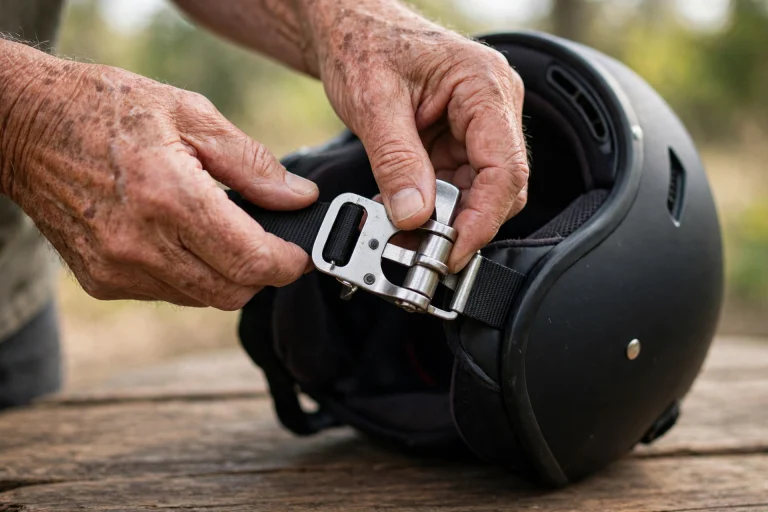
Easy fastening is a real benefit for older hands. A micrometric buckle can be fastened and adjusted with one hand, even while wearing gloves, while a double D-ring takes more finger strength and practice. If stiff fingers make small buckles hard to manage, a micrometric buckle is worth looking for.
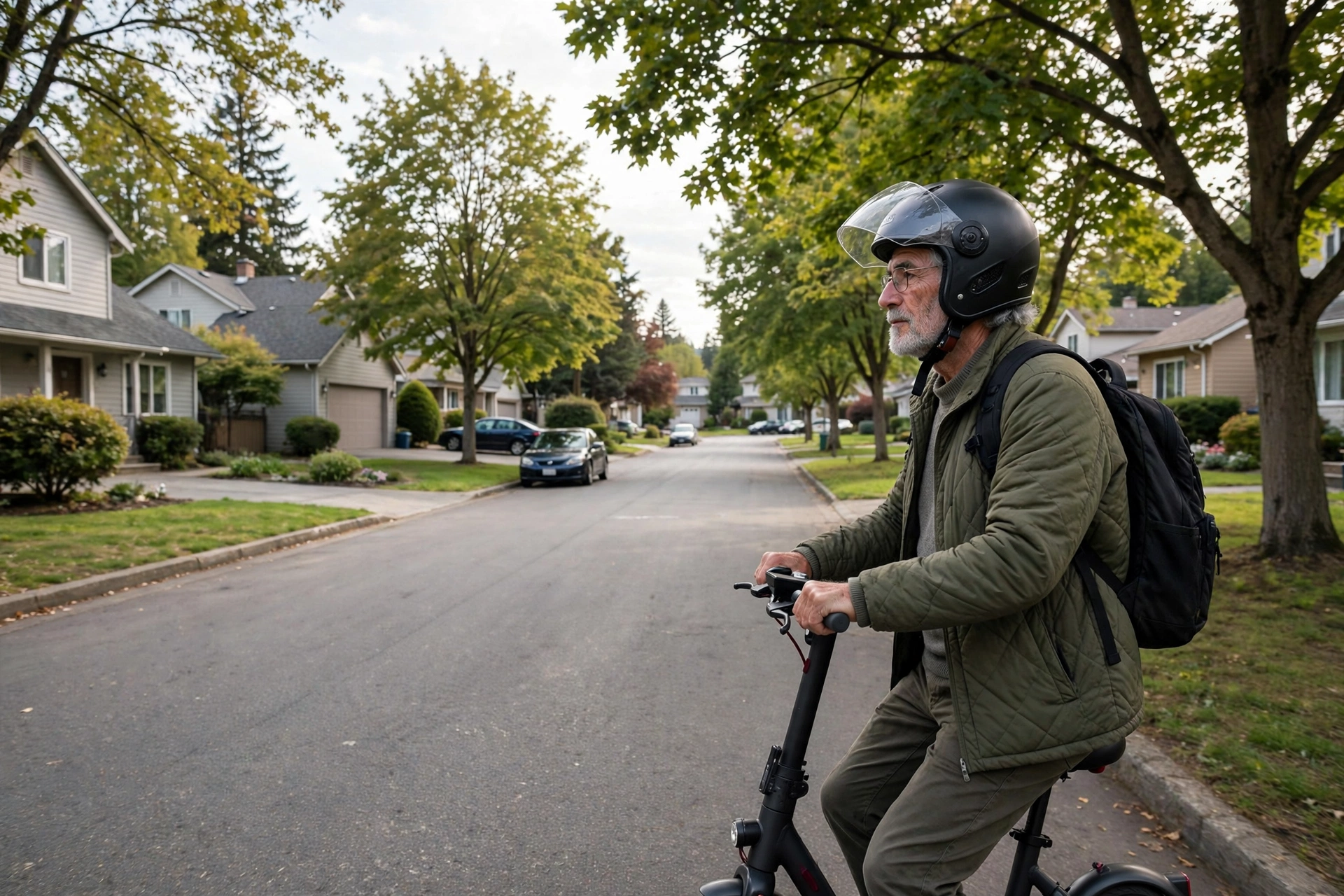
The visor should be easy to open and close with gloves on. A large, easy-to-find visor tab helps, and a visor that clicks firmly into place is easier to trust than one that feels vague. Some helmets also let you change the visor without tools, which makes cleaning simpler.
Removable, washable padding is another practical feature. It keeps the helmet fresh, and it lets you replace worn padding rather than the whole helmet. Check that the padding comes out easily and goes back in without a struggle.
How Important Are the Visor and Ventilation?
The visor should give a clear view and seal well against the helmet when closed. A visor that fogs up easily is a common frustration, especially on cool mornings or in rain. Look for one with an anti-fog treatment or a pinlock-ready design, and check that it opens smoothly to let in fresh air when you need it.
Good ventilation keeps you cool and helps stop the visor fogging. Look for vents you can open and close easily with gloves, and check that air flows through the helmet when you are moving. A helmet that feels stuffy in the shop will feel worse on a warm day in traffic.
If you wear glasses, try the helmet on with them in place. Look for a model with glasses-friendly padding, and check that the visor does not press your glasses into your face. If you are learning about how helmets handle different kinds of impact, reading about what MIPS is for helmets can help you understand one of the technologies used in modern helmet design.
Open Face or Full Face: Which Is Better for Older Riders?
A full face helmet gives the most coverage, protecting your chin and jaw as well as the top of your head, and it also gives the best protection from wind, rain, and insects. For most older scooter riders, a full face helmet is the practical choice for everyday riding.
A flip-up helmet can be a good middle ground. It gives full face protection on the road, but the chin bar lifts up, which makes it easier to talk, drink, or get some air when you stop. It is also easier to put on and take off, especially if you wear glasses.
An open face helmet feels lighter and gives a wide view, but it leaves your face exposed. Some riders prefer it for short, slow trips in warm weather, but for most riding, the extra coverage of a full face or flip-up helmet is worth having.
Frequently Asked Questions
Q: How light should a scooter helmet be for an older rider?
A: There is no single number that suits everyone, but in general terms, lighter is easier on the neck. Compare models in the same style, and choose the lightest one that fits well and meets the standard you need.
Q: Is a flip-up helmet a good choice for older scooter riders?
A: In general terms, yes. A flip-up helmet gives full face protection while riding and is easier to put on, take off, and talk through when stopped, which many older riders find helpful.
Q: Should I replace my scooter helmet if it still looks fine?
A: Replace it after any hard impact, when the fit loosens, or when the padding, straps, or visor are worn. In general terms, a helmet used regularly for several years is worth checking carefully, even if it looks fine.

Olivia
Writer at Helmet Today, covering helmet reviews, fit and riding safety.