For older riders with neck weakness, the best helmet is a light, well-balanced one that fits properly and does not pull your head forward or back — because even a small amount of extra weight can tire a weak neck quickly. Neck weakness can come from age, injury, or a health condition, and it changes what matters in a helmet. A heavy helmet, a poor fit, or a design that catches the wind can all add strain that a stronger neck would barely notice.
This guide explains what to look for in a helmet if your neck is weak, from weight and balance to fit, aerodynamics, and the features that reduce strain. It is written in general terms, because every rider’s neck is different, but the checks here will help you find a helmet that works for you. If you have concerns about riding with a weak neck, it is worth talking to your doctor as well.
Why Is Helmet Weight So Important with a Weak Neck?
Your neck carries the full weight of your helmet for the whole ride, and a weak neck tires faster. A heavy helmet can cause aching, stiffness, or a feeling that your head is being pulled forward, especially on longer rides or at higher speeds. A lighter helmet reduces that load and helps you stay comfortable and in control.
In general terms, a lighter helmet is not automatically a safer one, so weight is only one part of the choice. Look for a helmet that is light for its type, meets the standard you need, and feels balanced on your head. A helmet that sits evenly will feel lighter than one that pulls in one direction, even at the same weight.
Try helmets on and wear each one for several minutes before you decide. Turn your head, look over your shoulder, and notice how the weight feels. If a helmet makes your neck ache just standing still, it will feel worse after an hour on the road.
How Does Helmet Balance Affect Neck Strain?
Balance matters as much as weight. A helmet with a large peak, a heavy visor, or a bulky rear spoiler can pull your head forward or back, and your neck has to work to hold it steady. A helmet with a smooth, balanced shape puts less strain on your neck, especially at speed when wind adds to the load.
Wind is a real factor. At riding speed, the wind pushes against the helmet, and a shape that catches the wind will pull at your neck. A helmet with a smooth shell and a shape that lets air flow over it will feel calmer and easier to hold steady. Try to test a helmet at riding speed if you can, or ask other riders about the model you are considering.
Also think about your riding position. An upright position puts less strain on the neck than a leaned-forward one, because the weight of the helmet sits more directly over your spine. If your bike lets you sit upright, that can help as much as a lighter helmet.

What Fit Should You Look for?
Fit is the most important thing about any helmet. It should sit level on your head, feel snug all round without pressing hard in one spot, and stay put when you shake your head gently. A helmet that rocks or slides will make your neck work harder to keep it steady, which adds strain over a ride.
The cheek pads should touch your face firmly, and the helmet should not move when you turn your head. If it shifts, your neck has to correct for it, and that adds up over time. A snug, stable fit is kinder to a weak neck than a loose one.
Wear the helmet for at least ten minutes in the shop before you decide. A helmet can feel fine for a minute and then start to press on your forehead or temples, and that kind of pressure can add to neck discomfort. A different model or shape may fit better.
What Features Reduce Strain on the Neck?
Good ventilation helps, because a cool head is a more comfortable head, and a helmet that feels stuffy can make you tense your neck without realising it. Look for vents that open and close easily, and check that air flows through the helmet when you are moving.
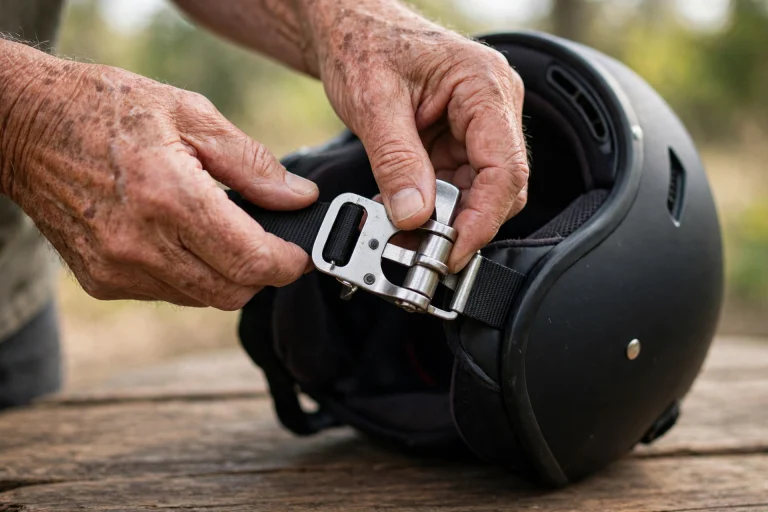
Easy fastenings matter too. A micrometric buckle can be fastened with one hand and needs little finger strength, which helps if your hands are also weak or stiff. A visor that opens and closes smoothly, with a large tab you can find easily with gloves, is another small feature that makes riding easier.
If you are learning about how helmets handle different kinds of impact, reading about what MIPS is for helmets can help you understand one of the technologies used in modern helmet design.
When Should You Stop and Rest?
Even with the lightest helmet, a weak neck will tire on a long ride. Plan shorter rides with regular breaks, and stop if your neck starts to ache or feel heavy. A short rest, a stretch, and a drink can make the rest of the ride far more comfortable.
It is also worth thinking about the kind of riding you do. Shorter, gentler rides on smooth roads put less strain on your neck than long, fast rides or rough tracks. Choosing rides that suit your neck is just as important as choosing the right helmet.
In general terms, listen to your body. If riding regularly leaves your neck sore for a day or more afterwards, it may be worth talking to your doctor, and it may be time to look at an even lighter helmet or a different style of riding.
Frequently Asked Questions
Q: How light should a helmet be for a rider with neck weakness?
A: There is no single number that suits everyone, but in general terms, lighter is better. Compare models in the same style, and choose the lightest one that fits well and meets the standard you need.
Q: Does a helmet’s shape affect neck strain?
A: Yes. A smooth, balanced shape that lets air flow over it puts less strain on your neck than a shape that catches the wind or pulls your head forward or back.
Q: Should riders with neck weakness avoid full face helmets?
A: In general terms, no. A full face helmet gives the most protection, and many light full face models are available. Choose the lightest full face helmet that fits well, rather than giving up the extra coverage.

Olivia
Writer at Helmet Today, covering helmet reviews, fit and riding safety.