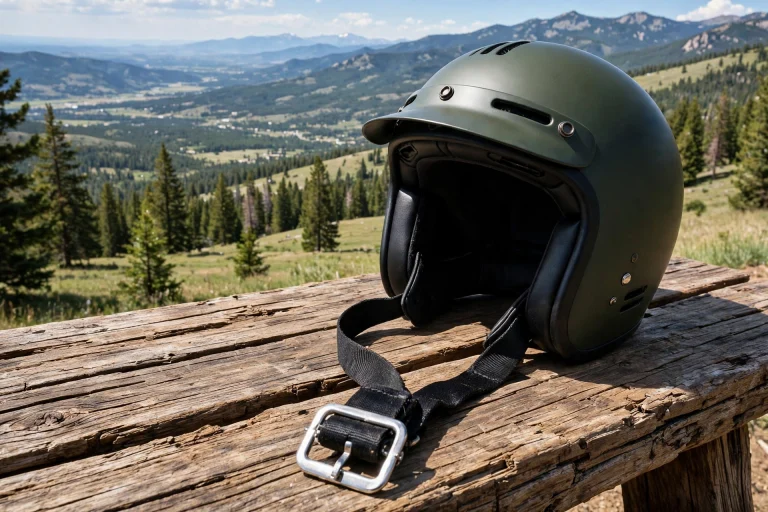
The CE mark on a helmet is a mark showing that the helmet meets the European rules that apply to it, and that the manufacturer has followed the process required to place it on the market in Europe. In general terms, it is a declaration of conformity with European law, rather than a safety test result on its own. A helmet that carries the CE mark should also name the standard it meets, such as EN 1078 for a bicycle helmet, and that standard is what sets out the safety tests.
For buyers, the CE mark is a useful first check, but it is not the whole story. Knowing what the mark means, and what it does not mean, helps you check a helmet properly instead of assuming the mark alone proves the helmet is safe. This guide explains the mark in plain terms.
What Does CE Stand For?
CE stands for Conformité Européenne, which is French for European conformity. In general terms, the mark shows that a product meets the European rules that apply to that kind of product, and that the manufacturer has carried out the checks those rules require. The mark is used on many kinds of product sold in Europe, from toys to electrical goods, and helmets are one of them.
Helmets are treated as personal protective equipment under European rules, which means the rules for them are about safety. A helmet maker must make the helmet to the relevant standard, have it tested where the rules require it, and keep records showing that the helmet meets the standard. Only then can the CE mark be placed on the helmet.
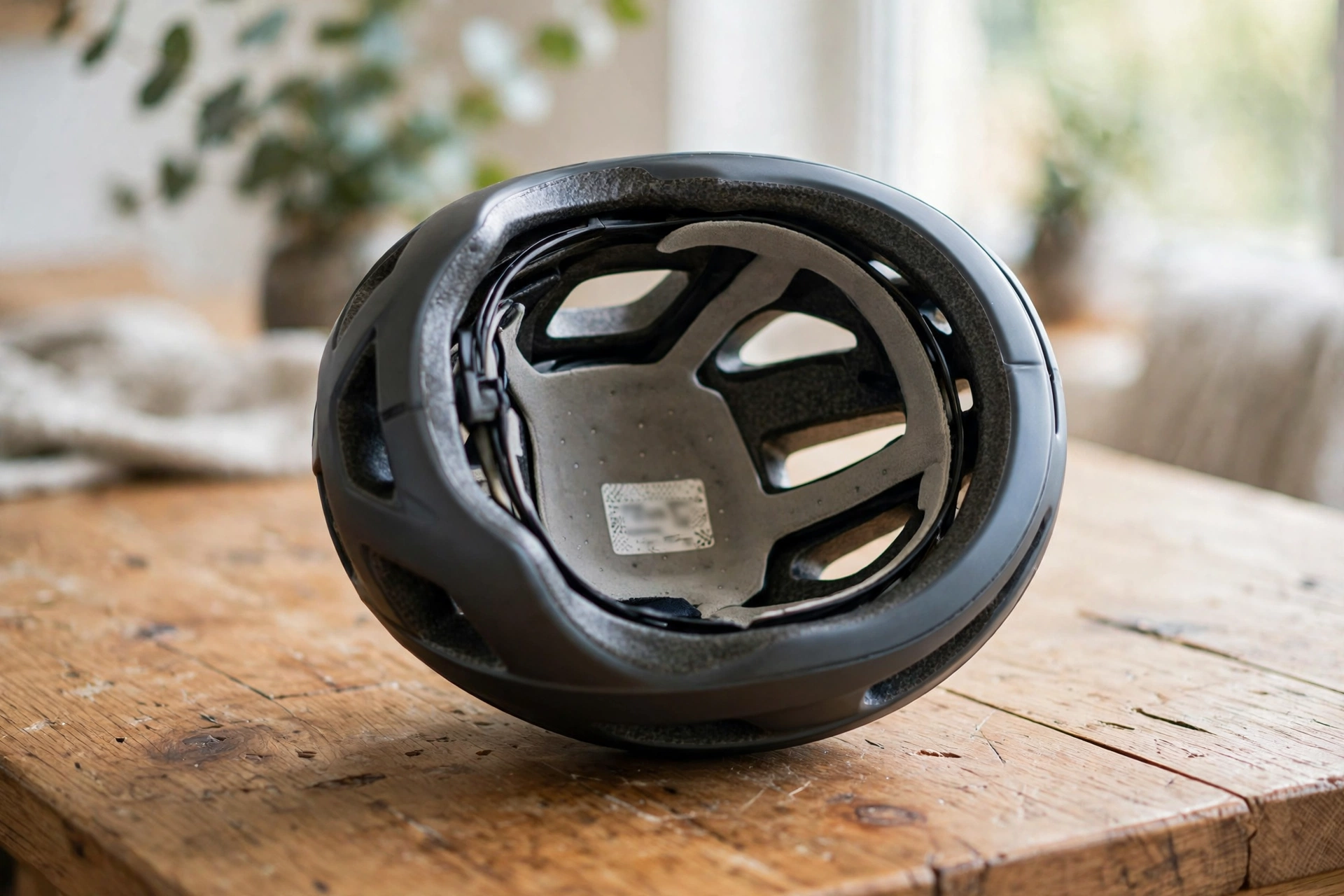
The mark itself is a simple pair of letters, and it is usually found on a label inside the helmet, sometimes alongside the standard number. It should be clear and permanent, not a loose sticker that could have been added later.
Does the CE Mark Mean a Helmet Has Been Tested?
In general terms, yes, but the testing depends on the kind of helmet and the rules that apply to it. For most helmets, the manufacturer must have the helmet tested by an independent body, known as a notified body, before the CE mark can be used. That body checks that the helmet meets the relevant standard, and the manufacturer must keep records of the testing.
The CE mark on its own does not tell you which tests were done, or how well the helmet performed. That information is in the standard the helmet meets, which should be named on the label next to the CE mark. A bicycle helmet, for example, should name EN 1078, while a ski helmet should name EN 1077. If a helmet carries a CE mark but names no standard, that is a reason to ask questions.
It is also worth knowing that the CE mark is a self-declaration in some cases, backed by testing where the rules require it. That is why the mark should be checked together with the rest of the helmet: the label, the build quality, and the seller. A mark on its own does not turn a poor helmet into a good one.
How Do You Check a CE Mark on a Helmet?
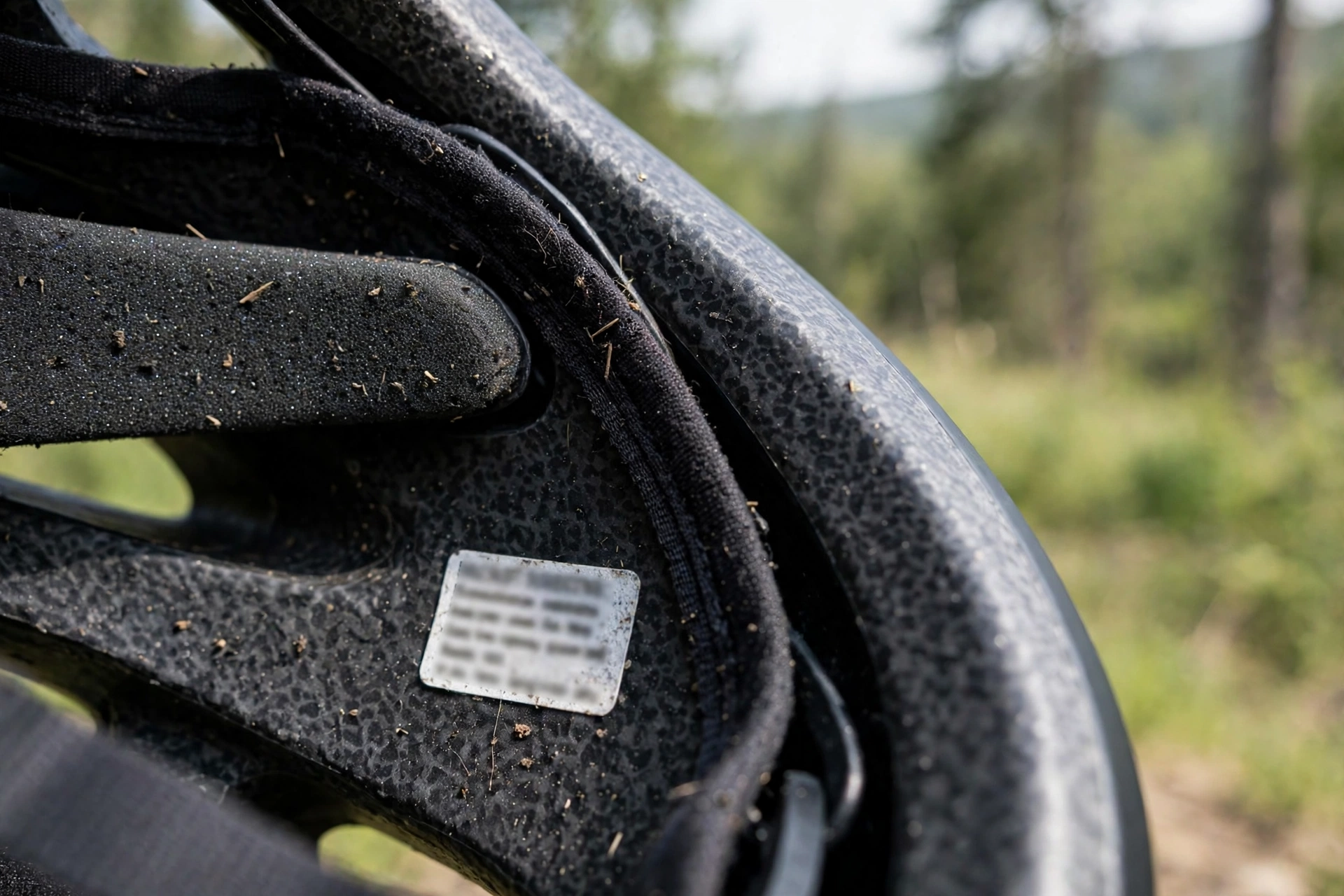
Start by finding the label inside the helmet. In general terms, the CE mark should be printed clearly, with the standard number next to it, along with the manufacturer and model details. Check that those details match the helmet you are holding, and that the standard named is the right one for the kind of helmet it is.
Next, look at the quality of the mark itself. A genuine CE mark is usually printed neatly, with clear letters that are evenly spaced. A mark that is blurry, uneven, or looks like it was added with a cheap sticker is a warning sign. Some fake helmets carry a mark that looks like CE but is not, so look closely rather than glancing at the label.
Finally, check the seller. A helmet bought from a reputable shop or a known brand, with a receipt and proper packaging, is much more likely to carry a genuine CE mark than a very cheap helmet from a seller with no clear contact details. If you are unsure, ask the seller for more information about the helmet and its certification.
Is the CE Mark the Same as a Safety Certification?
No, the CE mark is not the same as a safety certification, although the two are closely linked. In general terms, a safety certification, such as ECE 22.06 for a motorcycle helmet, is the approval that shows a helmet has passed a specific set of safety tests. The CE mark is the mark that shows the helmet meets the European rules that apply to it, which include meeting the relevant standard.
In practice, the two often appear together. A motorcycle helmet sold in Europe, for example, may carry both the CE mark and the ECE 22.06 label, because the ECE standard is the one that sets out the safety tests, and the CE mark shows the helmet meets the European rules. A bicycle helmet may carry the CE mark and a reference to EN 1078 in the same way.
If you are learning about the technologies that can sit inside a certified helmet, reading about what MIPS is for helmets can help you understand one of the features some modern helmets include in addition to their CE marking and standard certification.
What Should You Do If a Helmet Has No CE Mark?
If you are buying a helmet in Europe and it has no CE mark, do not assume it is safe to use. In general terms, a helmet sold for use in Europe should carry the mark, and a helmet without it may not have been made to the European rules, or it may have been made for a different market. Ask the seller to explain, and if they cannot, choose a different helmet.
If you are buying a helmet outside Europe, the CE mark may not be relevant, because other countries use their own marks, such as the CPSC label in the United States or the AS/NZS mark in Australia and New Zealand. In that case, look for the mark that applies where you will use the helmet, rather than expecting a CE mark.
Whatever mark you look for, the same checks apply: the mark should be clear and permanent, the standard should be named, the details should match the helmet, and the helmet should fit well and be in good condition. A mark is only the starting point; fit, condition, and proper use are what turn a marked helmet into real protection.
Frequently Asked Questions
Q: Does a CE mark mean a helmet is safe?
A: In general terms, it means the helmet meets the European rules that apply to it, including the relevant safety standard. It is a useful check, but you should also check the standard named, the fit, and the condition of the helmet.
Q: Can a helmet carry a CE mark and another standard mark?
A: Yes. Many helmets carry the CE mark alongside a standard mark such as ECE 22.06 or EN 1078, because the CE mark shows conformity with European rules and the standard mark shows the safety tests the helmet meets.
Q: Is a CE mark required on helmets sold outside Europe?
A: No. Outside Europe, other marks apply, such as CPSC in the United States. Look for the mark that is recognised where you will use the helmet.

Olivia
Writer at Helmet Today, covering helmet reviews, fit and riding safety.