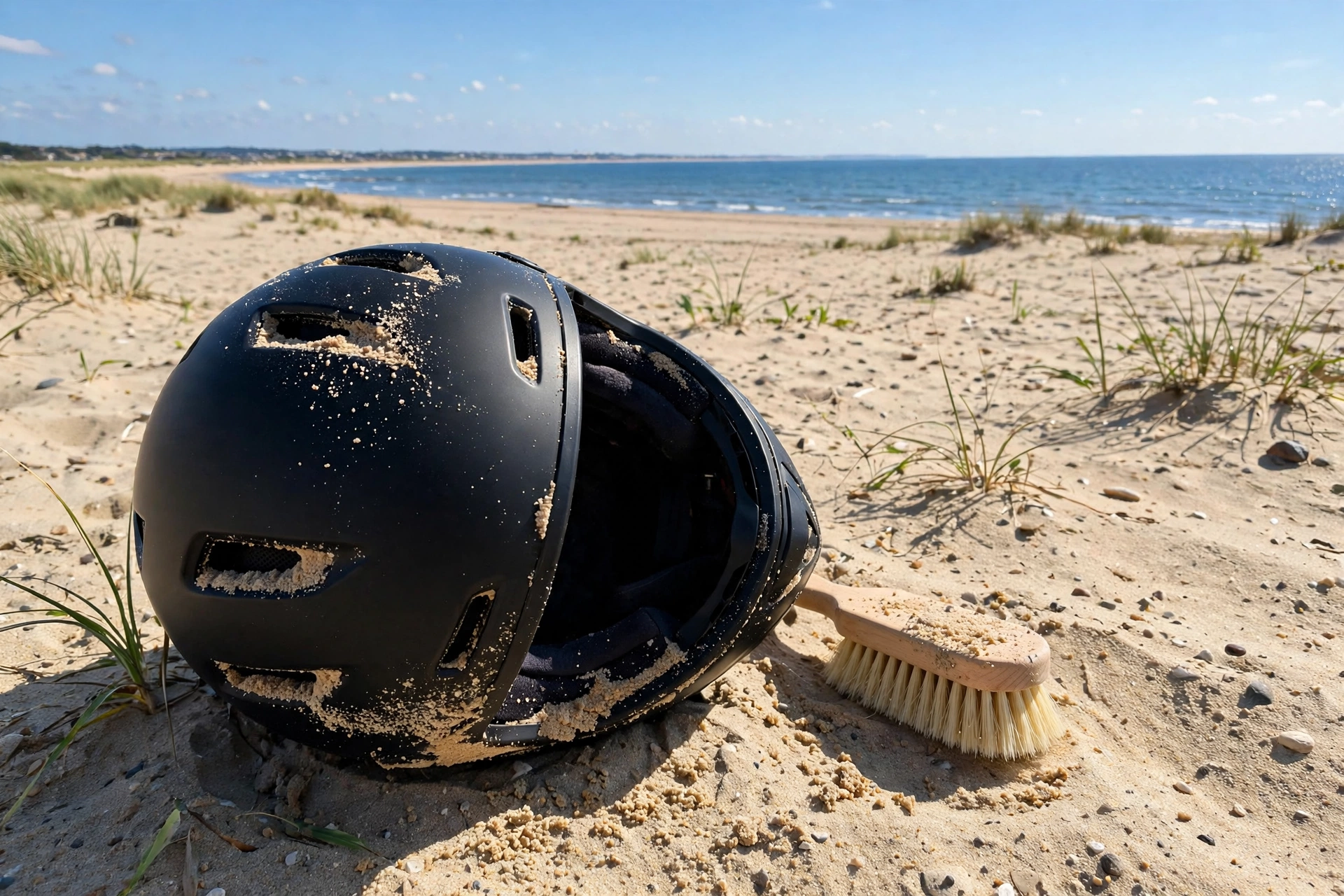
To remove sand from helmet vents after beach riding, shake the helmet upside down first, then brush the vents gently with a soft brush and rinse with fresh water — never wipe dry sand across the shell or visor, because the grains can scratch them. Beach sand gets everywhere: it hides in vents, under padding, around buckles, and in the small gaps of a visor fitting. A patient clean after each beach ride keeps the helmet comfortable and protects its finish.
Sand is more than a nuisance. Left in place, it can block airflow through the vents, make the padding feel gritty, and wear away at fabric and coatings every time the helmet moves. This guide explains how to get sand out of vents and other awkward places, how to clean the rest of the helmet, and how to keep sand out next time.
Why Is Sand a Problem for Helmet Vents?
Vents are narrow by design, and sand grains are just the right size to lodge inside them. Once sand settles in a vent channel, it can block airflow, so the helmet feels hotter and less comfortable on the next ride. Sand can also hold moisture, which encourages smells and mould in the padding if the helmet is stored damp.
Sand is abrasive, which means it can scratch surfaces when it is rubbed. Wiping a sandy visor with a dry cloth drags the grains across the surface and leaves fine scratches. The same thing happens inside the helmet, where sand trapped under padding can wear the fabric each time the helmet is put on or taken off. In general terms, sand does its damage slowly, through repeated rubbing rather than a single event.
Beach sand is often mixed with salt, which adds a second problem. Salt left on metal parts can cause corrosion, and salt in the padding can stiffen fabric and hold moisture. A helmet that has been to the beach therefore needs both a sand clean and a fresh-water rinse, not just a quick shake.
How Do You Get Sand Out of Helmet Vents?
Start by taking the helmet outside and shaking it gently upside down, so loose sand falls out of the vents and the opening. Tap the shell lightly with your hand to loosen sand that is sitting in the vent channels. Do this before you use any water, because wet sand sticks more firmly than dry sand.
Next, use a soft brush, such as a clean paintbrush or a soft toothbrush, to sweep sand out of each vent. Work from the outside in, and brush away from the helmet rather than pushing sand deeper into the channels. A can of compressed air, held at a distance and used in short bursts, can help blow out sand from narrow vents, but check the manufacturer’s guidance first and do not use a high-pressure jet.
If the vents have removable covers or mesh, take them off if the manufacturer allows it and clean them separately. Rinse the vent area with fresh water after brushing, letting the water carry the remaining grains away. Let the helmet dry with the vents open so air can move through the channels.
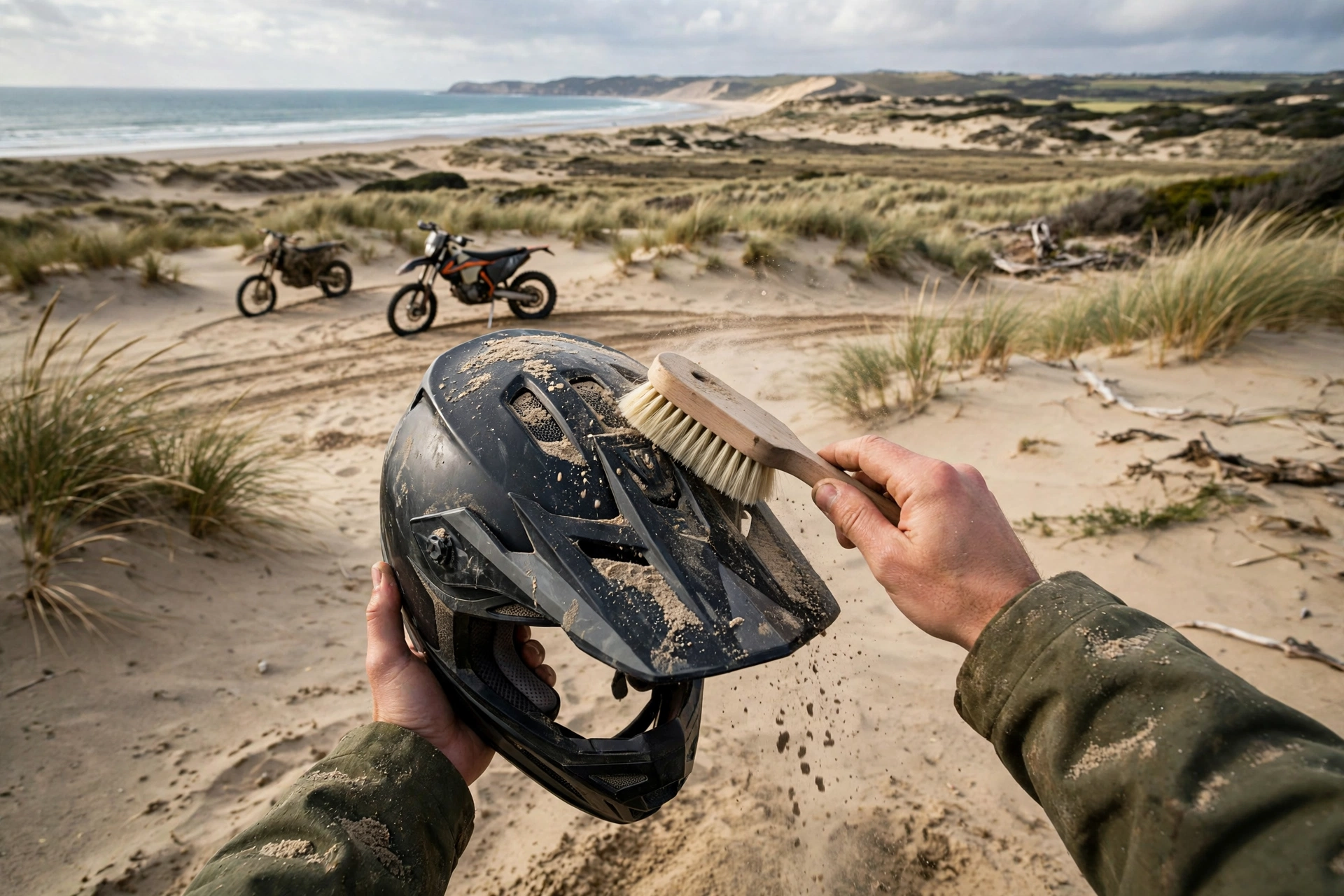
How Do You Clean the Rest of a Sandy Helmet?
After the vents are clear, clean the shell with fresh water and a soft cloth. Rinse the helmet first to wash away loose sand, then wash it gently with lukewarm water and mild soap. Rinse again until no soap remains, and dry the helmet in moving air. This order matters: rinsing first removes the grains that would otherwise scratch the shell during washing.
For the visor, rinse it with fresh water before you touch it with a cloth, so any sand is washed away rather than dragged across the surface. Then wash it gently with mild soap and a soft cloth, and rinse again. If the visor still has marks, do not scrub harder, because scrubbing a sandy visor is how scratches happen.
Remove the padding if you can and shake it out outdoors, then wash it by hand in mild soapy water and let it dry fully. Check the strap and buckle for sand as well, and rinse them with fresh water, working the buckle open and closed a few times to flush out any grains. If you want to understand the layers under the padding, reading about what MIPS is for helmets can help you see how the liner fits into the helmet.
What Should You Avoid When Cleaning Sand Out?
Do not wipe a sandy helmet with a dry cloth, and do not use a stiff brush or a scouring pad, because both can scratch the shell and the visor. Do not use a pressure washer, which can force sand and water into the liner and the fittings. Do not use harsh solvents or strong detergents, which can damage coatings and foam.
Also avoid shaking the helmet violently or hitting it hard to dislodge sand. A gentle shake and a soft brush are enough, and rough handling can damage the helmet. If sand is stuck in a place you cannot reach, a rinse with fresh water and a soft brush will usually move it, and a second rinse after drying can catch anything that remains.
Be patient with the drying stage. A helmet that is put away while still damp and sandy will smell, and the sand will stay stuck in the padding. Let the helmet dry fully in moving air, with the vents open, before you store it or use it again.
How Can You Keep Sand Out on the Next Beach Ride?
You cannot keep all sand out on a beach ride, but you can reduce how much gets in. Keep the helmet in a closed bag or a helmet carry case when you are not riding, rather than leaving it open on the sand. When you stop for a break, set the helmet on a towel or a bag instead of directly on the beach.
Close the vents when you are walking on soft sand in a strong wind, and open them again when you ride. This simple habit keeps wind-blown sand out of the channels. If you ride on the beach often, consider a helmet with vent covers or a design that is easy to clean, and carry a small soft brush in your kit for a quick clean before you head home.
After the ride, do the shake and brush routine as soon as you can, rather than leaving the helmet in the car for hours. Sand that sits in a hot car can become harder to remove, and salt in the sand can start to affect metal parts. A quick clean at the beach car park is often enough to remove most of the sand.
Frequently Asked Questions
Q: How do I remove sand from helmet vents after beach riding?
A: Shake the helmet upside down, brush each vent gently with a soft brush, then rinse with fresh water and let the helmet dry with the vents open. Never wipe dry sand across the shell or visor.
Q: Can sand damage a helmet?
A: In general terms, yes. Sand can block vents, scratch the shell and visor if it is wiped while dry, and wear padding fabric over time. Salt mixed with beach sand can also corrode metal parts.
Q: Should I rinse a beach helmet with fresh water?
A: Yes. A fresh-water rinse washes away sand and salt together, and it should be done after every beach ride, before the helmet is dried and stored.

Olivia
Writer at Helmet Today, covering helmet reviews, fit and riding safety.