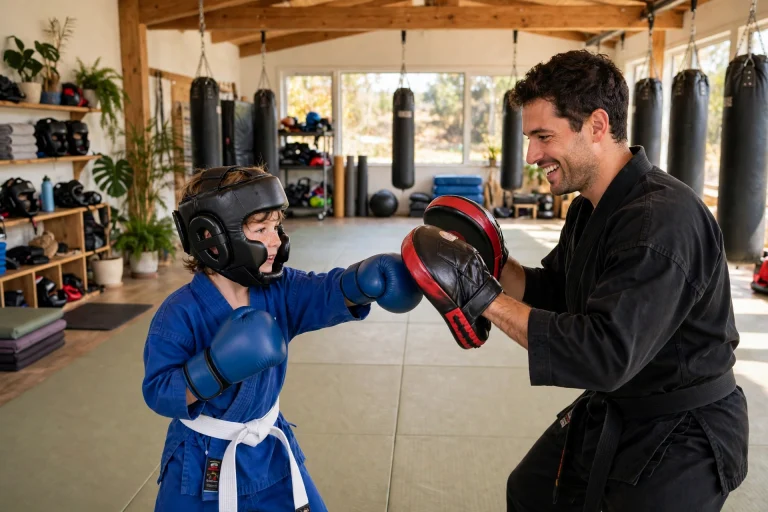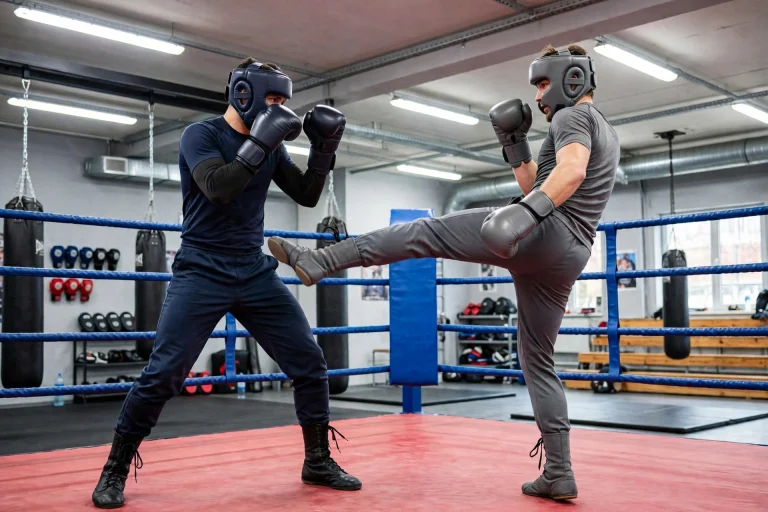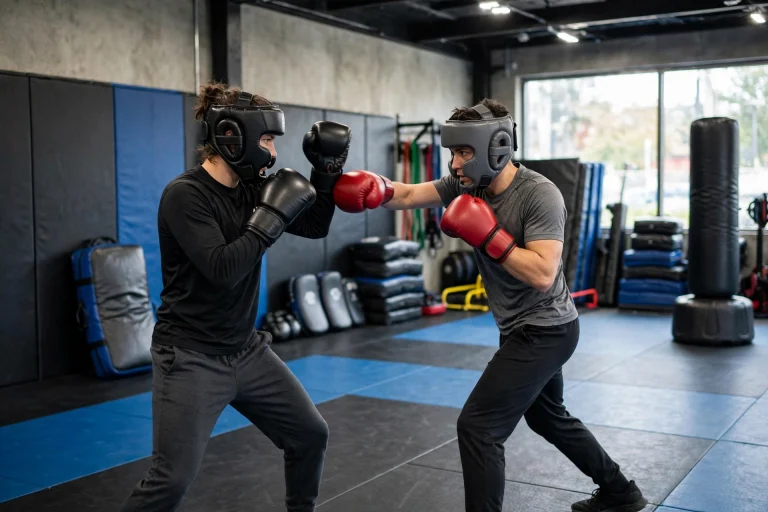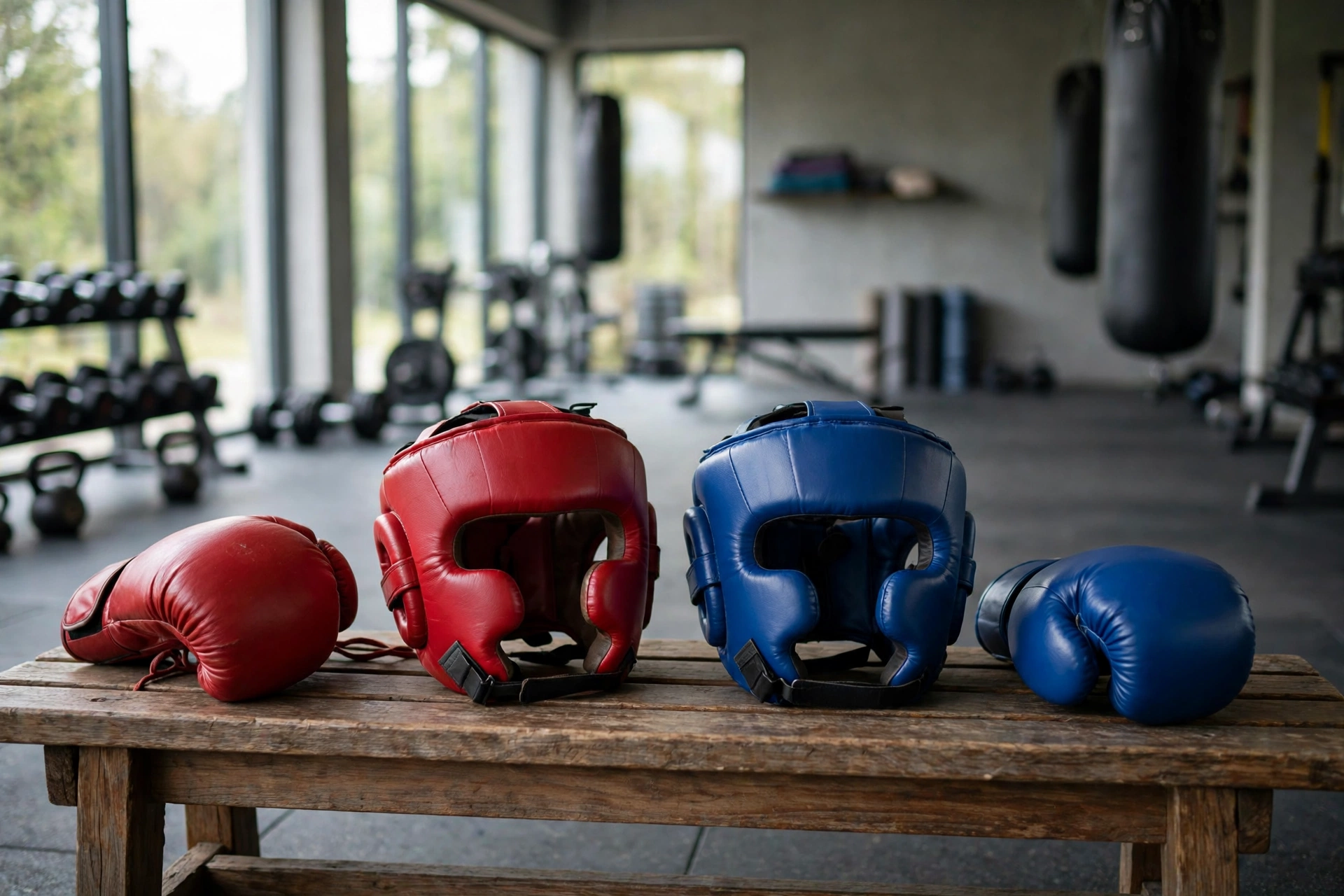
The main difference between boxing headgear and Muay Thai headgear is the coverage: Muay Thai headgear has more padding around the temples, the top, and the back of the head, because Muay Thai includes kicks, knees, and elbows as well as punches. Boxing headgear is built for a sport where the head is hit only by gloved fists, so its padding is concentrated on the forehead and cheeks. Muay Thai headgear has to cope with a wider range of strikes, including roundhouse kicks and clinch knees, so it protects more of the head. In practice the two look similar, but the differences matter once you start sparring.
Both are soft padded guards, not hard-shell helmets, and both are worn for training and amateur competition rather than professional bouts. This guide compares them side by side — coverage, padding, fit, and weight — so you can decide which one suits the sport you actually train in, and whether one guard can safely cover both.
What Is the Main Difference Between Boxing and Muay Thai Headgear?
The main difference is what each sport throws at the head. In boxing, every strike to the head is a gloved punch, arriving from the front or the side at roughly shoulder height. Boxing headgear is designed around that: thick padding across the forehead and cheeks, strong ear protection, and a shape that blocks hooks and straight punches. The top and back of the head get less padding, because they are rarely hit in a boxing match.
In Muay Thai, the head is a target for punches, kicks, knees, and elbows. A roundhouse kick can land on the temple or the top of the head, a knee in the clinch can strike the forehead or the side of the head, and an elbow can cut the skin above the eye. Muay Thai headgear is therefore padded more evenly all round, with extra foam over the temples, the crown, and the back of the head. The design assumes the head can be hit from more angles, and it protects accordingly.
How Does the Coverage Differ?
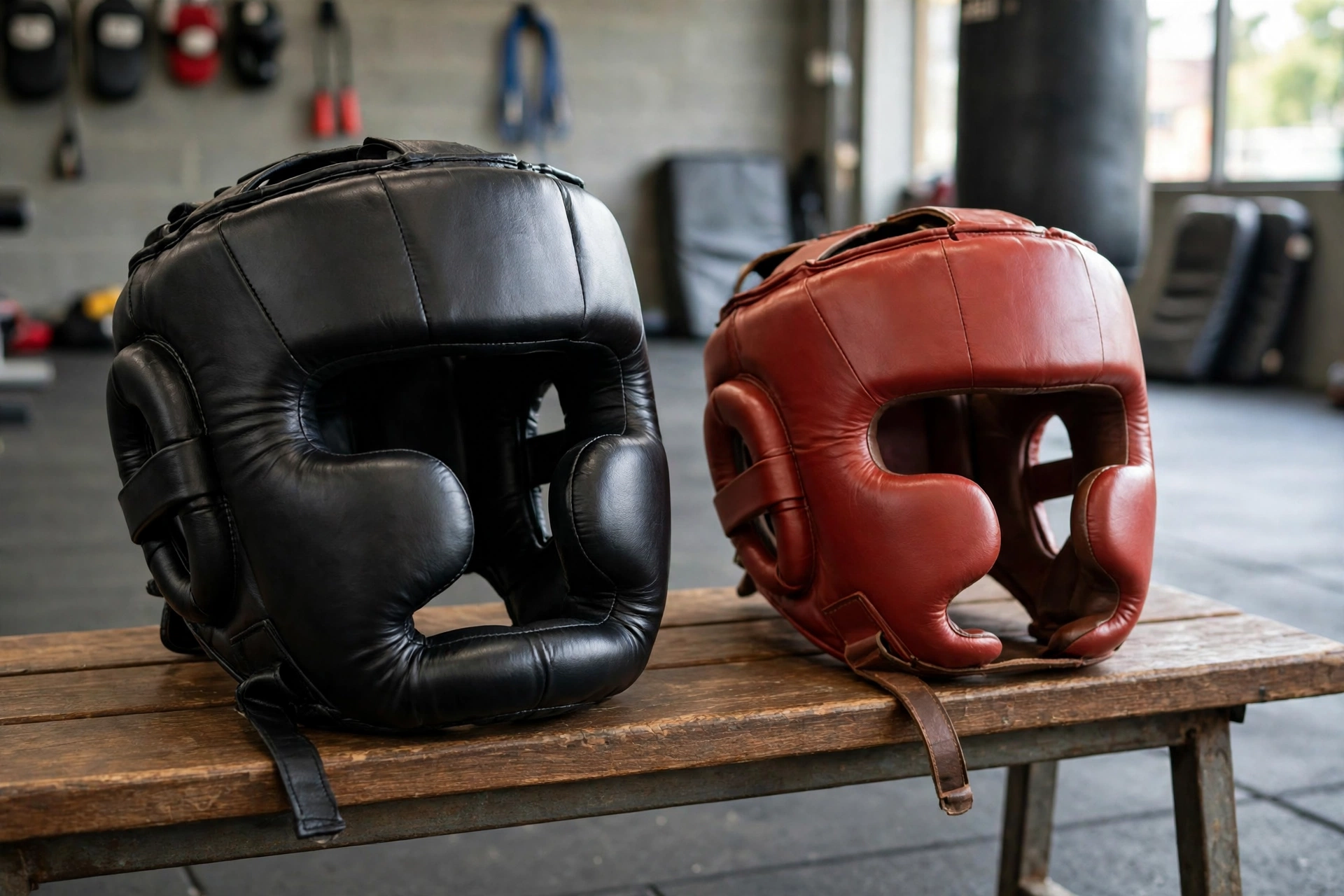
Boxing headgear covers the forehead, temples, cheeks, ears, and the back of the head, with the thickest padding over the forehead and cheekbones. Many boxing designs add a padded bar across the forehead or large cheek protectors, which block hooks and reduce the chance of a cut above the eye. The crown of the head, the very top, is usually covered by a thinner layer of padding, because it is not a common target in boxing.
Muay Thai headgear covers the same areas, but the padding is distributed differently. The temples get thicker foam, because roundhouse kicks land there. The crown gets more padding too, because a high kick or a knee can strike the top of the head. The back of the head is also better padded, because the clinch can push the head forward and expose the back to a knee or an elbow. The cheek protection is similar, but the overall shape is rounder and more enclosed, with fewer gaps in the coverage.
How Does the Padding Differ?
Boxing headgear padding is usually thick, soft foam, designed to absorb the repeated impact of gloved punches. The foam is layered so that it compresses gradually, spreading the force of a punch over a wide area. Because boxing involves many punches in a single round, the padding is built to recover quickly between impacts, so it keeps protecting through a long sparring session. The foam is thickest where punches land most often: the forehead and the cheeks.
Muay Thai headgear padding is often firmer and more evenly spread. The firmer foam suits the sharper, harder impacts of kicks and knees, which carry more force in a smaller area than a gloved punch. A soft, thick pad that works well against a glove can bottom out against a shin or a knee, so Muay Thai guards use denser foam that holds its shape under a harder blow. The padding is also more uniform in thickness, because the head can be struck from many angles and no single area can be left thin.
Which Headgear Should You Choose?
Choose the headgear that matches the sport you train in. If you box, a boxing guard is the right choice: it is lighter, it gives the best protection against punches, and it leaves the top and back of the head freer, which suits the movement of boxing. If you train Muay Thai, a Muay Thai guard is the right choice: it protects the temples, the crown, and the back of the head against kicks and knees, and it is built for the clinch as well as for striking at range.
Fit matters just as much as the type. Whichever guard you choose, it should sit level, stay in place when you move, and leave your vision clear. Try it on with your mouthguard in and your hands wrapped, and check that you can hear your coach. A well-fitting guard of the right type is far better than a poorly fitting guard of any type. If you are learning about how helmets handle different kinds of impact, reading about what MIPS is for helmets can help you understand one of the technologies used in modern helmet design.
Can You Use Boxing Headgear for Muay Thai?
In general terms, you can use boxing headgear for light Muay Thai training, such as pad work with a partner or very light technical sparring, where the contact is minimal and the kicks are controlled. For those sessions, the difference in coverage is less important, because the strikes are not landing with force. A boxing guard will still protect the forehead and cheeks, which are the areas most likely to be touched in light drills.
For full Muay Thai sparring, a boxing guard is not the best choice. The temples, crown, and back of the head are live targets in Muay Thai, and a boxing guard leaves those areas thinner than a Muay Thai guard does. A roundhouse kick to the temple or a knee in the clinch can land with real force, and the padding needs to be there to spread it. Using a boxing guard for hard Muay Thai sparring is a compromise that leaves real gaps in protection.
The same logic applies in reverse: a Muay Thai guard can be used for boxing sparring without any safety concern, because it covers everything a boxing guard covers. It will be slightly heavier, and some boxers find the extra bulk around the top of the head distracting, but it will not leave you under-protected. If you can only buy one guard and you train both sports, buy the Muay Thai guard — it is the safer all-rounder.
Frequently Asked Questions
Q: What is the main difference between boxing and Muay Thai headgear?
A: Muay Thai headgear has more padding around the temples, the top, and the back of the head, because Muay Thai includes kicks, knees, and elbows, while boxing headgear is built mainly for gloved punches.
Q: Can I use one head guard for both boxing and Muay Thai?
A: In general terms, yes — a Muay Thai guard covers both sports safely, while a boxing guard leaves the top and back of the head thinner for Muay Thai sparring, so choose the Muay Thai design if you train both.
Q: Is Muay Thai headgear heavier than boxing headgear?
A: In general terms, yes, slightly. The extra padding around the temples, crown, and back of the head adds weight, though most athletes adjust to it within a few training sessions.

Olivia
Writer at Helmet Today, covering helmet reviews, fit and riding safety.