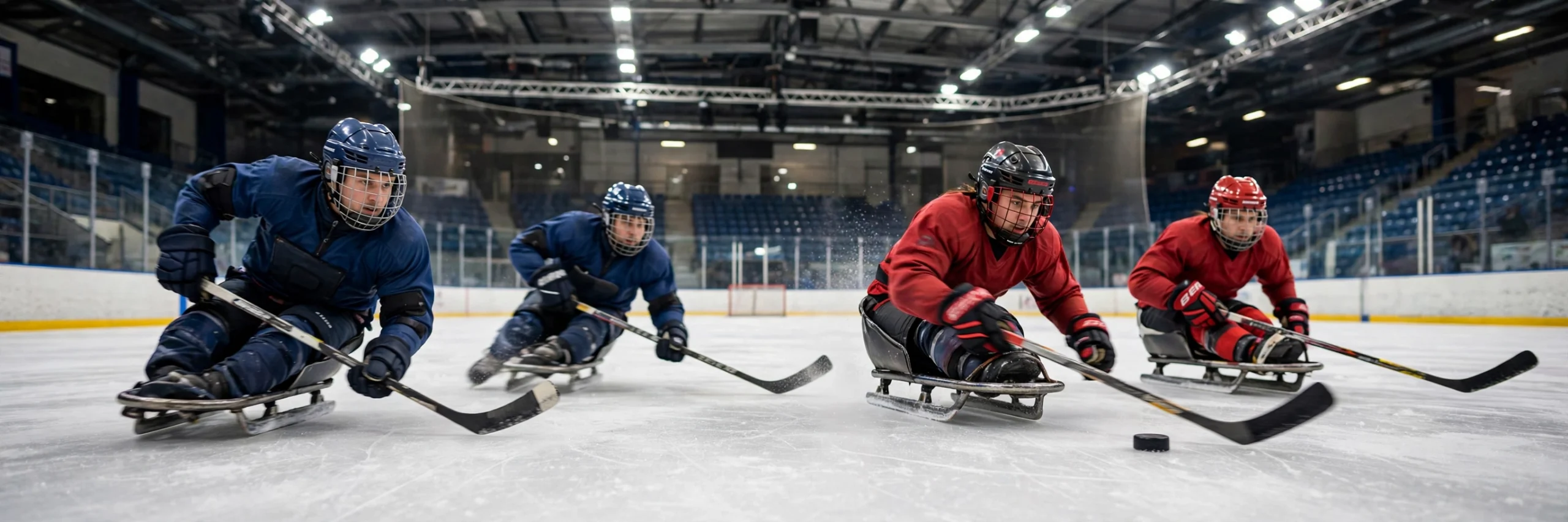
Para ice hockey players wear a full face ice hockey helmet with a cage or a clear visor, the same type of helmet used in standard ice hockey, chosen to suit the seated position and the fast, physical nature of the sport. Para ice hockey, also known as sledge hockey, is played by athletes seated on sledges, using two short sticks to propel themselves and handle the puck. The helmet protects the head from falls, collisions, and the puck, and it is required equipment for every player on the ice.
The game is fast and full-contact: players collide, fall from their sledges, and block shots, so the helmet has to cope with impacts from the ice, the boards, and other players. The seated position changes the angle of the head relative to the ice, which makes a well-fitting, full-coverage helmet especially important. This guide explains what helmet para ice hockey players wear, how it differs from a standard hockey helmet, and what to look for when choosing one.
What Helmet Do Para Ice Hockey Players Wear?
Para ice hockey players wear a certified ice hockey helmet with full face protection — either a metal cage or a clear visor that covers the whole face. The helmet has a hard outer shell, foam or padded lining inside, and an adjustable fit system, usually with ear loops and a chin strap. The cage or visor is fixed to the helmet and protects the eyes, nose, and teeth from the puck and from sticks.
The helmet is the same type of equipment used in standard ice hockey, and it must meet the safety standard required by the competition. That usually means a helmet certified to a recognised ice hockey standard, with the certification label visible inside the shell. The face protection must also meet the relevant standard, because the cage or visor is part of the protection system, not an optional extra. In general terms, a helmet that is good enough for standard ice hockey is the starting point for para ice hockey too.
How Is a Para Ice Hockey Helmet Different from a Standard Ice Hockey Helmet?
In most respects, it is not different at all. The shell, the lining, the cage, and the certification are the same as for a standard ice hockey helmet, because the risks are the same: falls onto the ice, collisions with other players, and impacts from the puck and sticks. The sport’s governing bodies require the same level of protection, and players use the same helmets, cages, and visors as their standing counterparts.
The differences are in how the helmet is fitted and used, not in the helmet itself. A para ice hockey player sits low on a sledge, close to the ice, so the head is nearer the playing surface than in standing hockey. That means a fall from the sledge can bring the head into contact with the ice more quickly, and the helmet’s coverage of the back and sides of the head matters a great deal. The fit must be snug enough that the helmet does not shift when the player falls or is checked.
Why Is a Full Face Helmet Used in Para Ice Hockey?
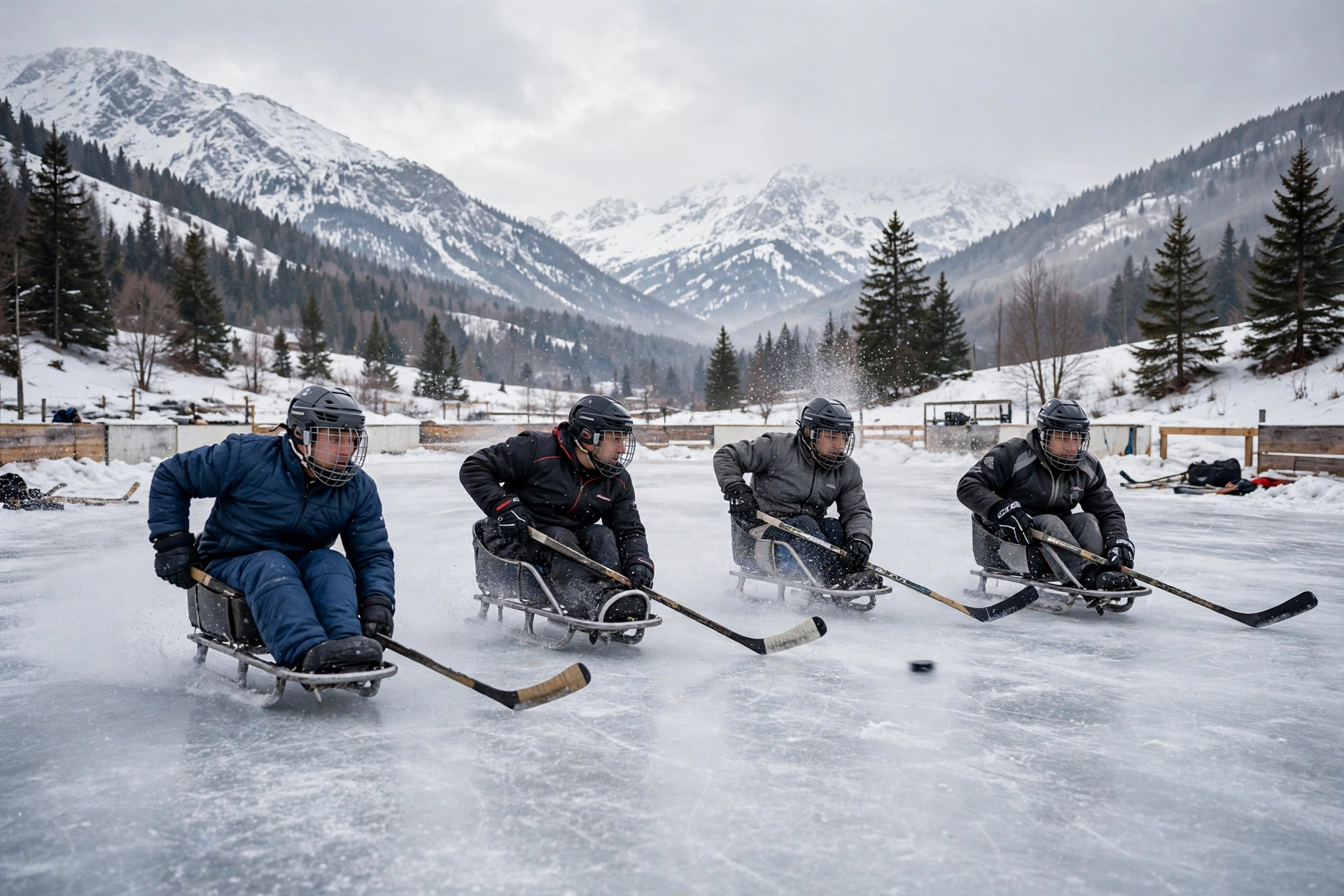
A full face helmet is used because the face is exposed to the puck, sticks, and collisions in every game. The puck travels fast and hard, and a shot that hits an unprotected face can cause serious injury to the eyes, nose, or teeth. A cage or a full visor stops the puck before it reaches the face, while still letting the player see the play. In a sport where blocking shots is part of the game, that protection is essential.
The seated position adds to the risk. A player on a sledge is low to the ice, so the puck and the sticks of other players are at face height more of the time than in standing hockey. A fall from the sledge can also bring the face into contact with the ice or the boards. The cage or visor protects against those impacts, and the hard shell protects the skull. Together, they cover the whole head in a way that an open-face helmet cannot.
What Should You Look for in a Para Ice Hockey Helmet?
Fit comes first. The helmet should sit level on the head, feel snug all round, and stay put when you shake your head or lean forward into the playing position. It should not press hard on the forehead or temples, and the ear loops should sit comfortably without squeezing. Try the helmet on while seated, in the position you play in, because the fit can feel different when you lean forward from a sledge. If the helmet shifts when you move, try a different size or adjust the fit system.
Finally, check the certification. The helmet should carry the label of a recognised ice hockey standard, and it should be the right size for your head — a helmet that is too big will not protect properly, no matter how good the standard is. Check the chin strap and the buckle too: they should fasten securely and hold the helmet firmly in place. If you are learning about how helmets handle different kinds of impact, reading about what MIPS is for helmets can help you understand one of the technologies used in modern helmet design.
How Do You Care for a Para Ice Hockey Helmet?
After each game or training session, wipe the shell and the cage with a damp cloth to remove sweat and ice, and let the helmet air-dry in a well-ventilated place. Do not leave it in a kit bag while it is still wet, because the lining will stay damp and can develop a smell, and the metal cage can rust if it is left wet for long. Remove the lining if it can be taken out, and wash it according to the maker’s instructions.
Check the helmet regularly for damage. Look for cracks in the shell, bent or loose cage bars, and worn straps or buckles. A helmet that has taken a hard impact — a fall onto the ice or a heavy collision — should be checked carefully, and in general terms it should be replaced if the shell is cracked or the lining is compressed. The foam inside can be damaged in ways you cannot see, so do not rely on a helmet that has already done its job in a hard impact.
Frequently Asked Questions
Q: Do para ice hockey players have to wear a full face helmet?
A: In general terms, yes. Full face protection with a cage or a visor is required equipment in para ice hockey, because the puck and sticks are at face height for seated players.
Q: Is a para ice hockey helmet the same as a standard hockey helmet?
A: In general terms, yes. Players use the same certified ice hockey helmets, cages, and visors as standing players — the difference is in the fit for the seated position, not in the helmet itself.
Q: How often should a para ice hockey helmet be replaced?
A: In general terms, replace it after a hard impact that cracks the shell or compresses the lining, or when the straps, cage, or fit system wear out — and always follow the maker’s guidance.

Olivia
Writer at Helmet Today, covering helmet reviews, fit and riding safety.