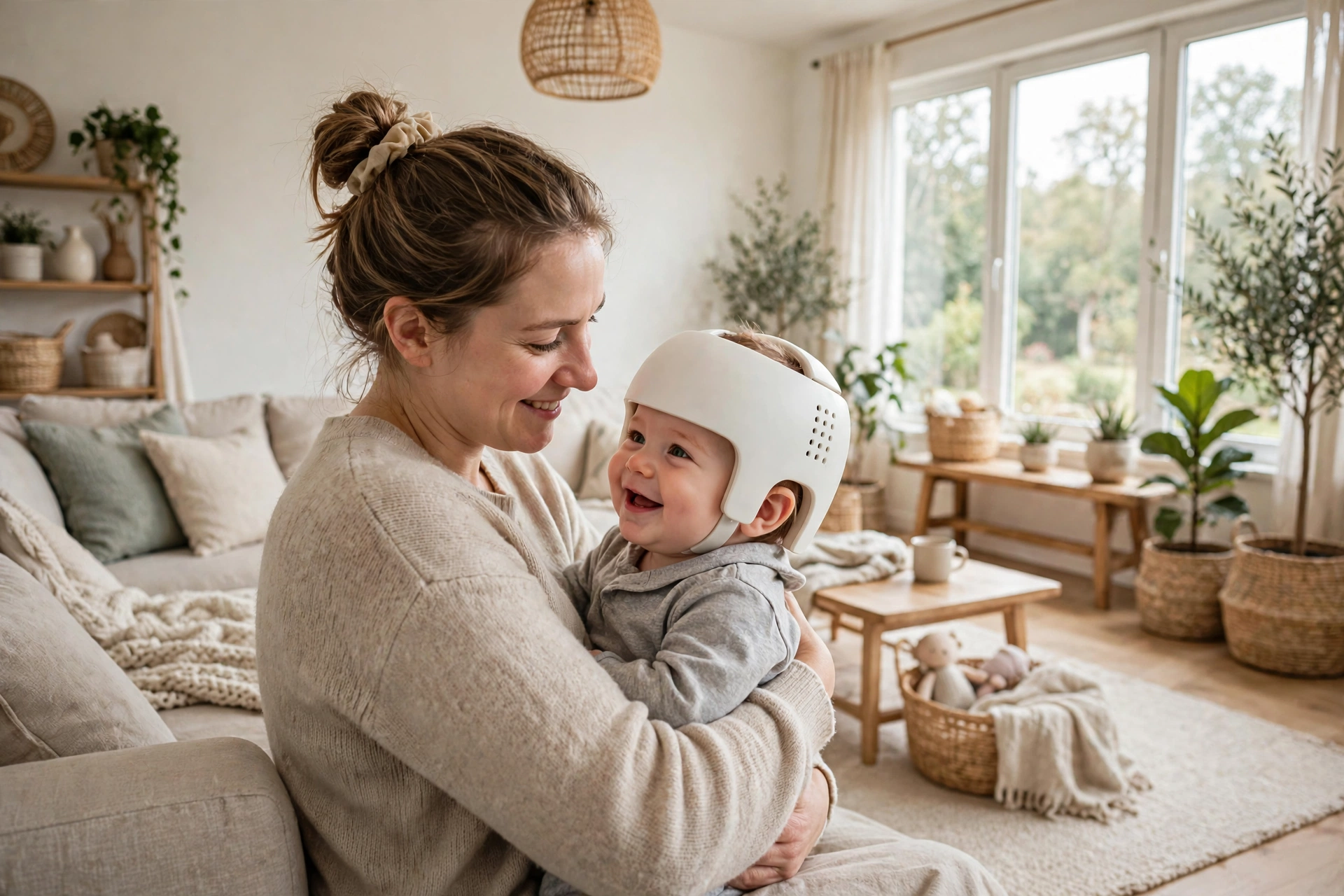
In general terms, keeping a baby comfortable in a cranial helmet comes down to a good fit checked by the clinician, clean and dry skin, light clothing, and a calm daily routine — and parents should always follow their own clinician’s guidance for their child. A cranial helmet, sometimes called a cranial remoulding helmet, is a custom-made helmet that some babies wear for a period of time under medical supervision. For parents, the early days can feel worrying, especially when a baby seems unsettled by something new on their head. Most babies adjust over time, and small, practical steps can make the adjustment easier.
This guide offers general comfort ideas only. It is not medical advice, and it does not replace the guidance of the clinician or team looking after your child. If you have any concern about fit, skin, feeding, sleep, or your baby’s health, speak to your clinician first. Every baby is different, and what suits one child may not suit another.
How Can Parents Help a Baby Adjust to a Cranial Helmet?
Adjustment usually takes time, and a gradual start can help. Many clinicians suggest a short wearing period at first, building up slowly over days as the baby gets used to the feeling. Follow the wearing schedule your clinician gives you, rather than rushing to full-time wear, and give your baby time to settle into the new routine.
Comfort and distraction help during the early days. Holding, talking, singing, and gentle play can take a baby’s attention away from the helmet, and a familiar routine around feeding and sleep can help them feel settled. Some parents find that putting the helmet on during a calm, happy moment — rather than when the baby is already tired or upset — makes the first few days easier.
How Do I Keep My Baby’s Skin Comfortable Under the Helmet?
Skin care is one of the most important parts of daily comfort. In general terms, the skin under the helmet should be clean and dry before the helmet goes on. Gently wash the area with lukewarm water and a mild, fragrance-free cleanser if your clinician recommends it, then pat the skin dry rather than rubbing it. Let the skin air for a short time before refitting the helmet, if your clinician says that is suitable.
Check the skin each time the helmet comes off. Look for redness, soreness, or spots that do not fade, and note where they appear. A little temporary redness that fades quickly is common when a baby first starts wearing a helmet, but marks that linger, broken skin, or a rash should be raised with your clinician promptly. Take a photo if it helps you describe what you are seeing.
Avoid creams, powders, and lotions under the helmet unless your clinician has suggested them. Products applied under a helmet can trap moisture, irritate the skin, or affect how the helmet sits. If the skin feels damp with sweat, a gentle wipe and a short airing, as advised by your clinician, is usually a safer step than adding a product. If you are learning about how helmets work in general, reading about what MIPS is for helmets can help you understand one of the technologies used in ordinary helmet design, though cranial helmets are a separate medical device.
What Should My Baby Wear With a Cranial Helmet?
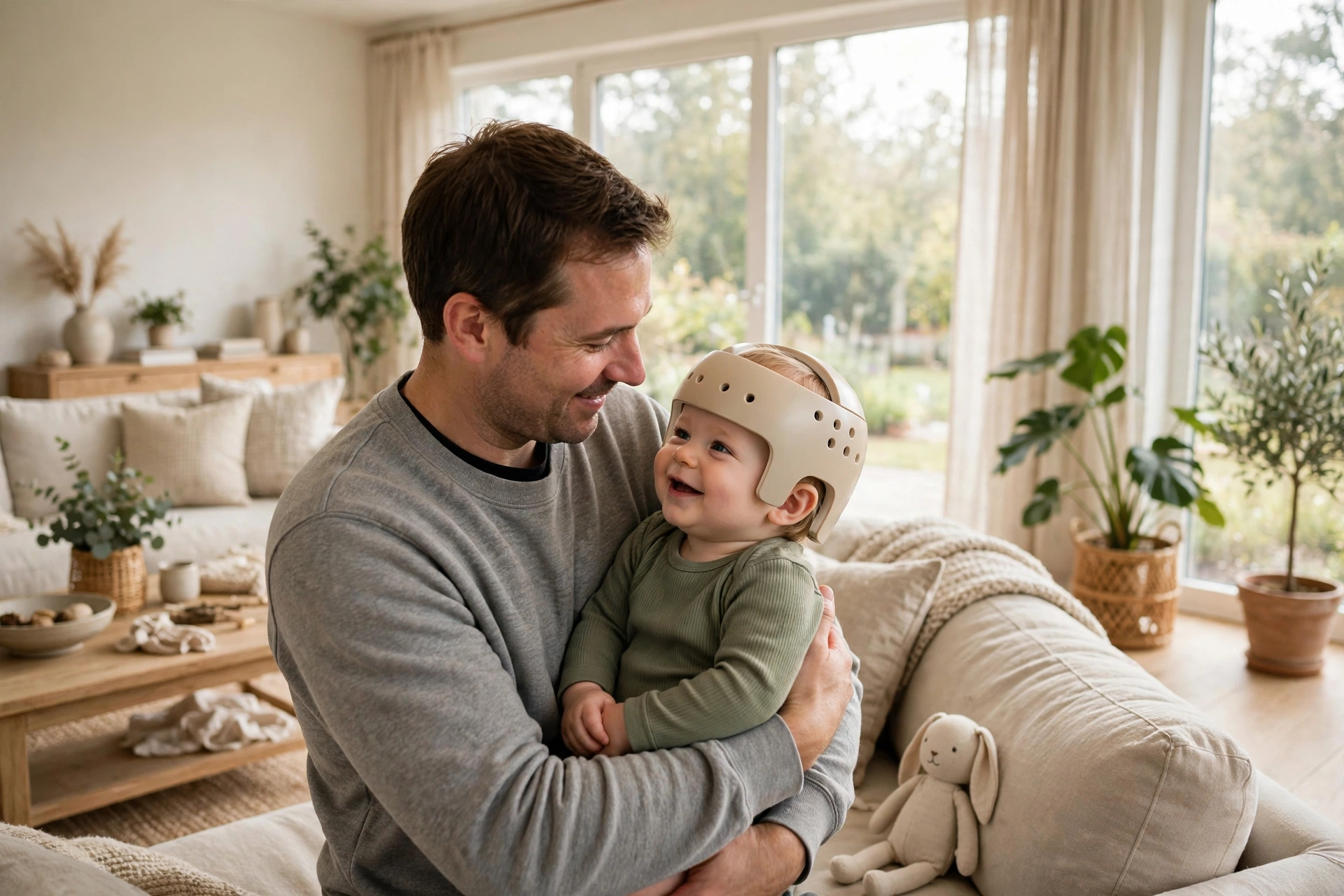
Light, breathable clothing usually works best with a cranial helmet, because babies can get warm under a helmet, especially in summer or in a heated room. Choose soft cotton layers that can be added or removed easily, and avoid thick hats or hoods under or over the helmet. The helmet itself should be the only head covering, unless your clinician advises otherwise.
In cooler weather, a warm layer on the body is usually enough, without adding anything to the head. A hat over a cranial helmet is generally not recommended, because it can change the fit and trap heat, so check with your clinician if you are unsure about cold-weather outings. Dressing the body warmly and keeping the head covering to the helmet alone is the usual approach.
How Do I Clean a Cranial Helmet and Keep It Fresh?
Regular cleaning helps comfort, because sweat and skin oils build up inside the helmet over the day. In general terms, most cranial helmets can be wiped inside with a clean, damp cloth and a mild soap, if your clinician or the helmet provider has advised that method. Always follow the cleaning instructions you were given, because different helmets may need different care.
Clean the helmet at a time when it is off anyway, such as during a bath or a scheduled break, so you are not rushing. Wipe the inside gently, rinse the cloth, and wipe again to remove soap, then let the helmet dry fully before putting it back on. A helmet that is still damp inside can feel cold and uncomfortable, and dampness can irritate the skin.
Let the helmet air out between wears when you can, and store it somewhere clean and dry, away from direct sunlight and heat. Do not use strong cleaners, disinfectants, or scented sprays inside the helmet unless your clinician has told you to, because these can irritate a baby’s skin and may damage the helmet material. If the helmet develops a smell even after cleaning, raise it with your clinician.
What Helps With Sleep, Feeding, and Daily Life in a Helmet?
Daily life with a cranial helmet is mostly about keeping routines steady. Feeding, cuddling, and play can all continue as usual, and the helmet should not stop a baby from being held, carried, or comforted. Some parents find that a soft blanket or a favourite toy helps a baby settle when the helmet goes on, and a calm voice and a gentle touch go a long way.
Sleep can take a little adjustment. Follow your clinician’s guidance on whether the helmet should be worn during sleep, because that varies from child to child. If the helmet is worn at night, keep the sleeping area cool, use light bedding, and follow safe sleep guidance from your clinician or health visitor. If your baby seems uncomfortable at night, note what you see and raise it at your next appointment, or sooner if you are worried.
Frequently Asked Questions
Q: How long does it take for a baby to get used to a cranial helmet?
A: In general terms, many babies adjust over a few days as wearing time builds up gradually, but every baby is different. Follow the wearing schedule your clinician gives you, and contact them if your baby seems very distressed or does not settle.
Q: Can I adjust the helmet myself if it seems tight?
A: No. Do not pad, cut, or alter a cranial helmet at home. If the fit seems wrong, or if marks do not fade, contact your clinician, who can check the fit and make any changes needed.
Q: How do I clean my baby’s cranial helmet?
A: In general terms, wipe the inside gently with a clean, damp cloth and mild soap, following the cleaning instructions your clinician or helmet provider gave you. Let it dry fully before refitting, and avoid strong cleaners or scented sprays unless your clinician advises them.

Olivia
Writer at Helmet Today, covering helmet reviews, fit and riding safety.