A sportbike helmet and a touring helmet are built for different kinds of riding, so the main difference is focus: a sportbike helmet is shaped for speed and a tucked riding position, while a touring helmet is shaped for comfort and long hours in the saddle. Both are full-face helmets in general terms, and both are made to protect your head, but they sit differently, ventilate differently, and feel different after a few hours on the road. Choosing between them comes down to how you actually ride, not which one looks faster.
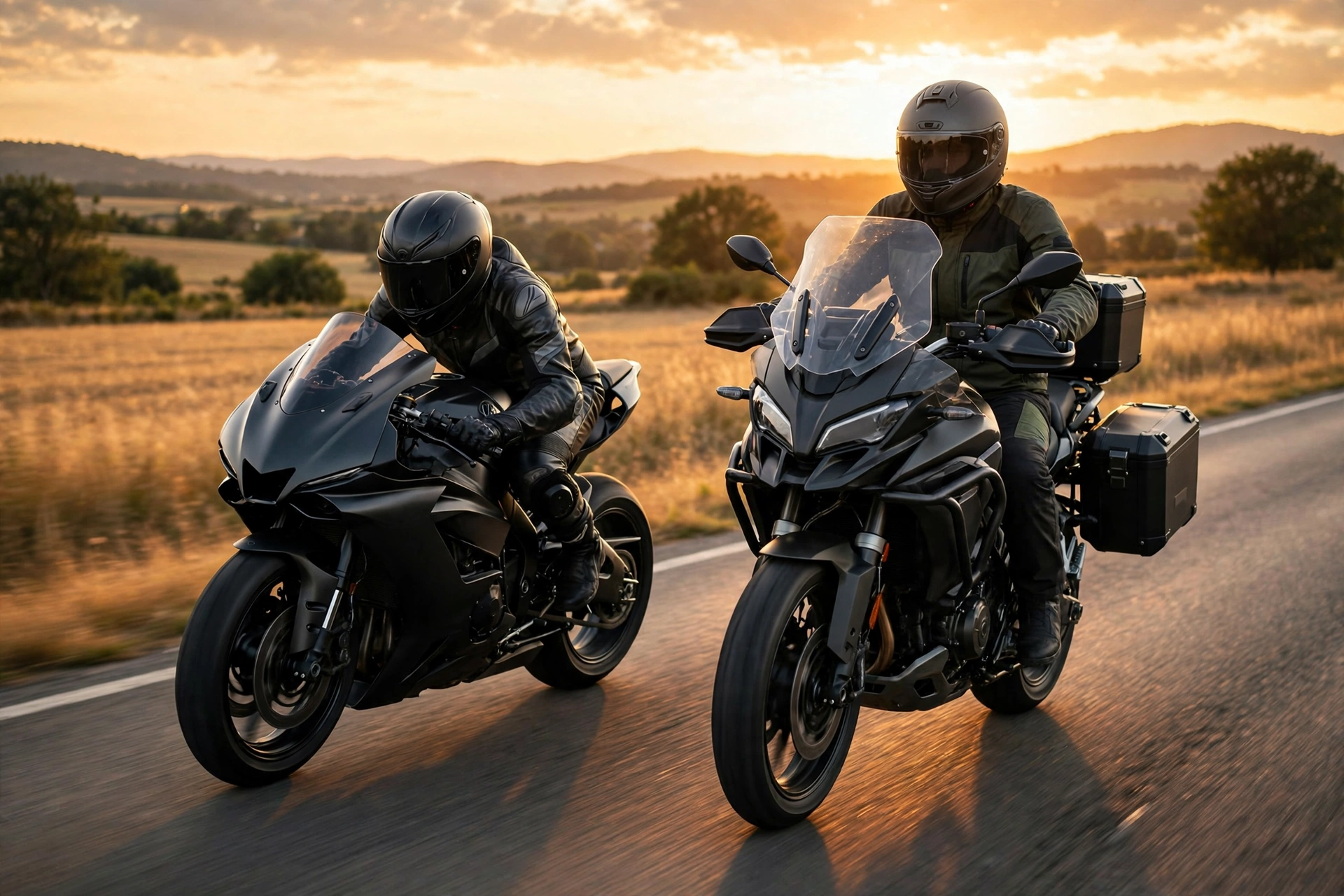
Sportbike helmets are designed around the leaned-forward posture of a sports motorcycle. The rider is low over the tank, the head is tilted back to see ahead, and the helmet needs to cut through the air cleanly at higher speeds. Touring helmets are designed around a more upright posture, with a wider field of view, quieter airflow, and padding that stays comfortable over a whole day. Neither type is better in every situation. This guide explains the differences in shape, fit, ventilation, noise, and weight, so you can pick the helmet that matches your riding.
How Do Sportbike and Touring Helmets Differ in Shape?
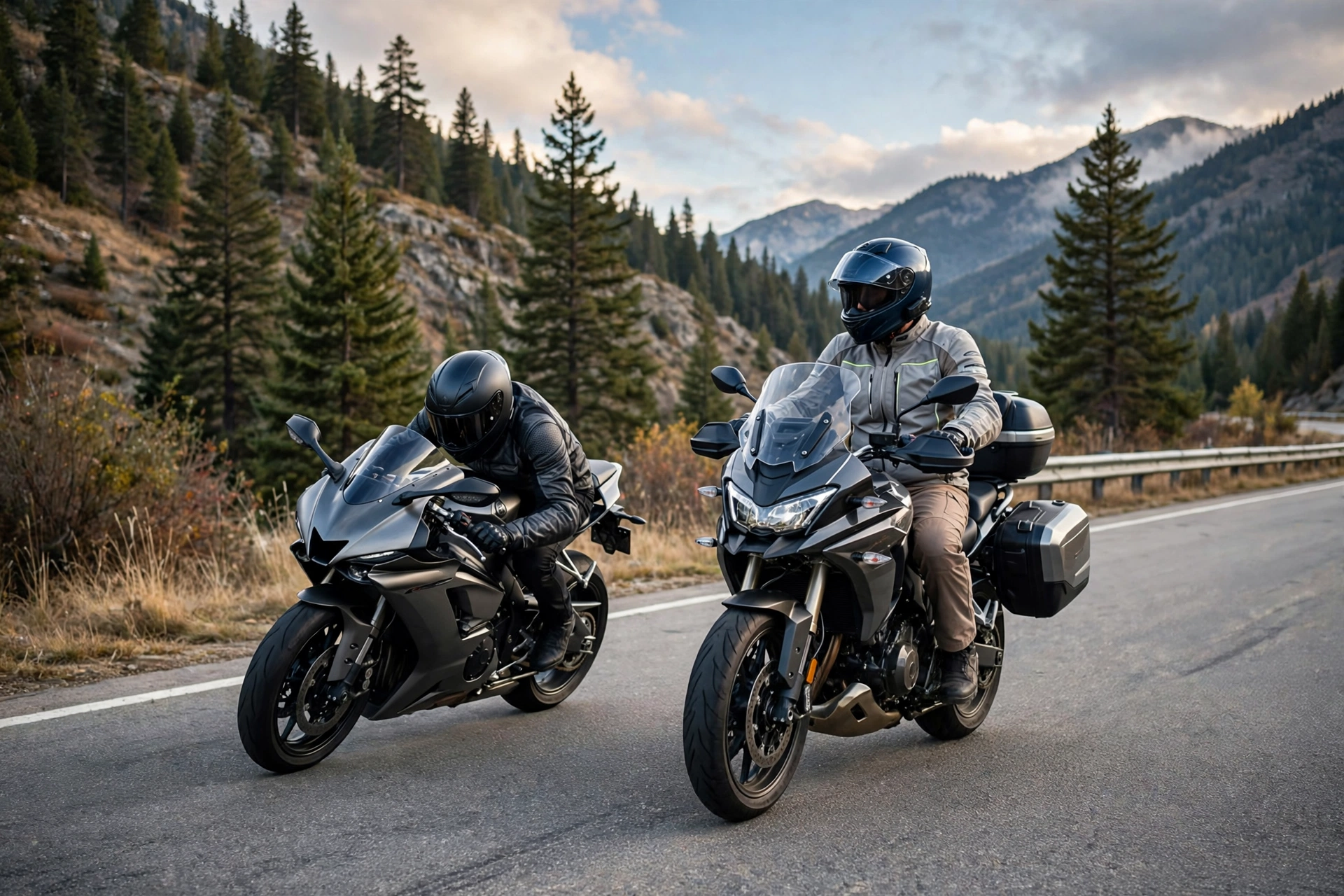
The shape of the shell is the easiest difference to see. A sportbike helmet usually has a longer, more pointed rear spoiler and a shell that is shaped to work when the rider is tucked low behind a small screen. The visor opening is set higher, so the rider can see the road ahead while their head is tilted back. This shape helps the helmet stay stable at speed, because the air flows over it smoothly when the rider is in a racing-style crouch.
A touring helmet has a rounder, more neutral shell shape. It is made to work well when the rider is sitting upright, looking straight ahead, with a taller windscreen in front of them. The visor opening is wider and set lower, giving a broader view of the road, mirrors, and instruments. In general terms, a touring shell is less aggressive in its styling, because its job is to be comfortable and quiet over long distances rather than to slice through the air at top speed.
Which Helmet Is More Comfortable on Long Rides?
For long days in the saddle, comfort usually matters more than anything else, and this is where touring helmets tend to pull ahead. They are designed with thicker, softer padding around the cheeks and crown, and the padding is often shaped to spread pressure evenly rather than gripping the head tightly. The lining is usually made to feel soft against the skin, and many touring helmets have room for glasses or a communication headset without pressing on the ears.
Sportbike helmets are built for a snug, secure fit that keeps the helmet from moving at speed. That snug fit is a good thing on a short, fast ride, but it can turn into a pressure point after two or three hours. The padding is often firmer, and the helmet is shaped to hold the head firmly in one position. Some riders find this supportive, while others find it tiring, especially if the helmet does not match the shape of their head.
How Does Ventilation Compare Between the Two?
Ventilation is another area where the two types take different approaches. A sportbike helmet usually has large intake vents on the chin and crown that are designed to push a lot of air through the helmet when the rider is moving fast and tucked low. The airflow is aimed at cooling the head and clearing the visor, and it works best at higher speeds, where the air is forced in strongly.
A touring helmet also has vents, but they are tuned for a wider range of speeds. The intakes are often placed to catch air when the rider is upright and moving at steady cruising speed, and the exhaust vents at the back are designed to draw warm, moist air out without creating a draught. In general terms, a touring helmet aims for steady, even airflow that keeps the rider comfortable for hours, rather than a strong blast of air that works only at high speed.
What About Noise and Wind Protection?
Noise is a real concern on long rides, and touring helmets are usually the quieter of the two. Their shells are shaped to reduce turbulence around the base of the helmet, and the neck roll and chin curtain are designed to block wind from rushing up underneath. The visor seal is also made to close tightly, so there is less whistling around the edges. A quieter helmet means less fatigue, and less fatigue means safer riding at the end of a long day.
Sportbike helmets can be noisier, especially when the rider sits upright, because the shell shape is tuned for a tucked position. When the rider lifts their head, air can catch the spoiler and the vents, creating noise and buffeting. That does not make a sportbike helmet bad, but it does mean it is happiest in the position it was designed for. If you spend most of your time upright, a touring helmet will usually give you a calmer, quieter ride.
Which Helmet Should You Choose for Your Riding?
The right choice depends on your bike and your riding habits. If you ride a sports motorcycle, spend most of your time on twisty roads or track days, and ride in a tucked position, a sportbike helmet will match your posture and give you the field of view and stability you need. It is the helmet that was designed for exactly that kind of riding, and it will feel natural on that kind of bike.
If you ride a touring bike, an adventure bike, or a comfortable road bike, and your rides stretch over several hours, a touring helmet is usually the better match. It will be more comfortable, quieter, and easier to live with, and its wider view helps when you are checking mirrors, reading road signs, and watching traffic around you. Many riders who own one bike for everything choose a touring helmet for this reason.
If you are still unsure, think about your longest regular ride rather than your fastest one. A helmet that is comfortable for five hours is more useful than one that is perfect for twenty minutes. Try helmets on with your usual riding gear, check the fit around your forehead and cheeks, and make sure the visor gives you a clear view in your normal riding position. If you want to understand more about how modern helmets handle angled impacts, reading about what MIPS is for helmets can help you compare the safety features inside different helmets.
Frequently Asked Questions
Q: Can I use a sportbike helmet for touring?
A: Yes, you can, and many riders do. It will protect you just as well in general terms, but it may feel less comfortable and noisier on long, upright rides than a touring helmet designed for that posture.
Q: Is a touring helmet safe at high speeds?
A: Yes, a good touring helmet is designed to be stable and protective at normal road speeds. It may not be as finely tuned for a full racing tuck as a sportbike helmet, but for road riding it offers strong protection and comfort.
Q: Do sportbike and touring helmets use the same safety standards?
A: In general terms, yes. Helmets sold for road use must meet the safety standards that apply where they are sold, whatever their style. Always check that the helmet carries the correct certification for your area before you buy it.

Olivia
Writer at Helmet Today, covering helmet reviews, fit and riding safety.