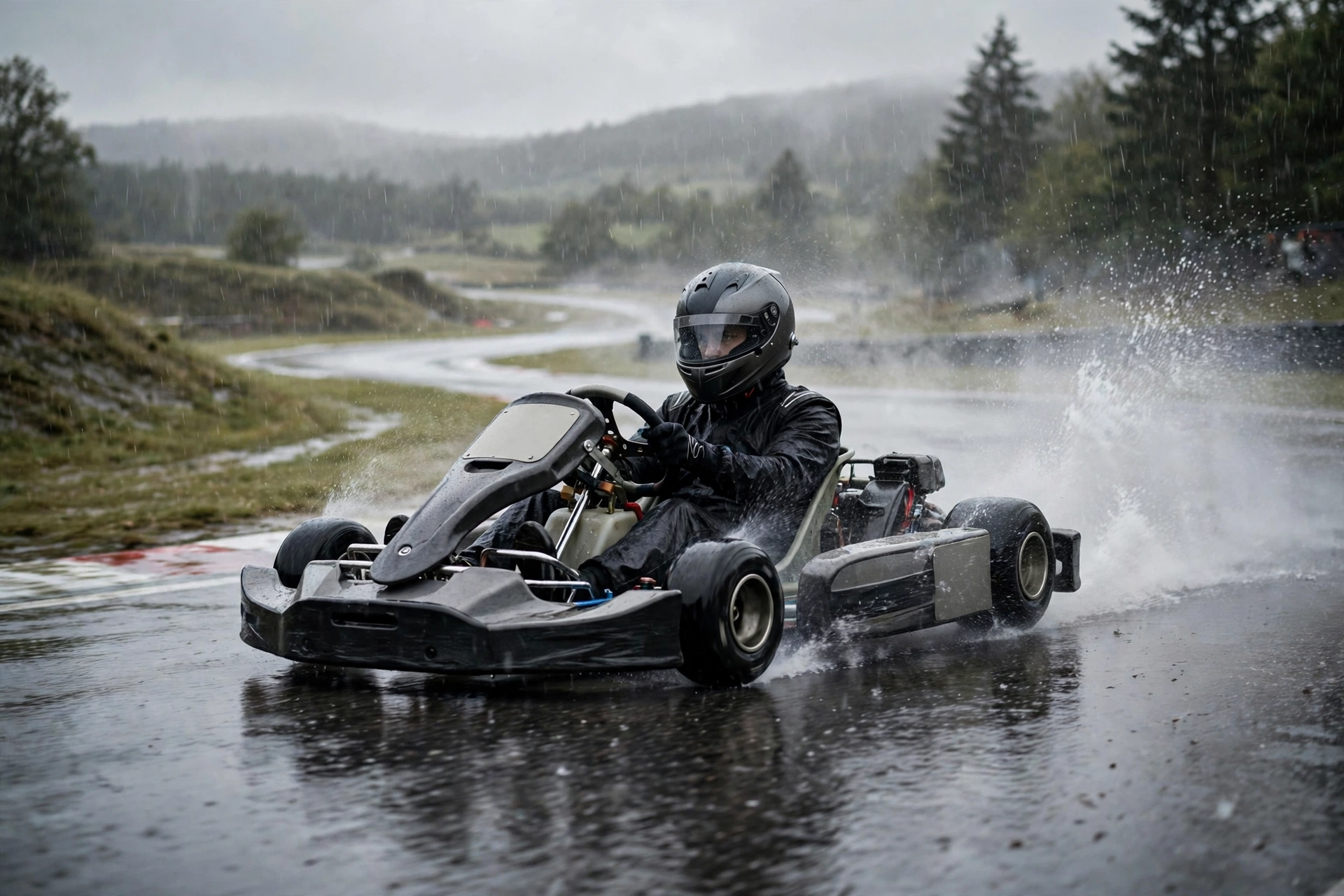
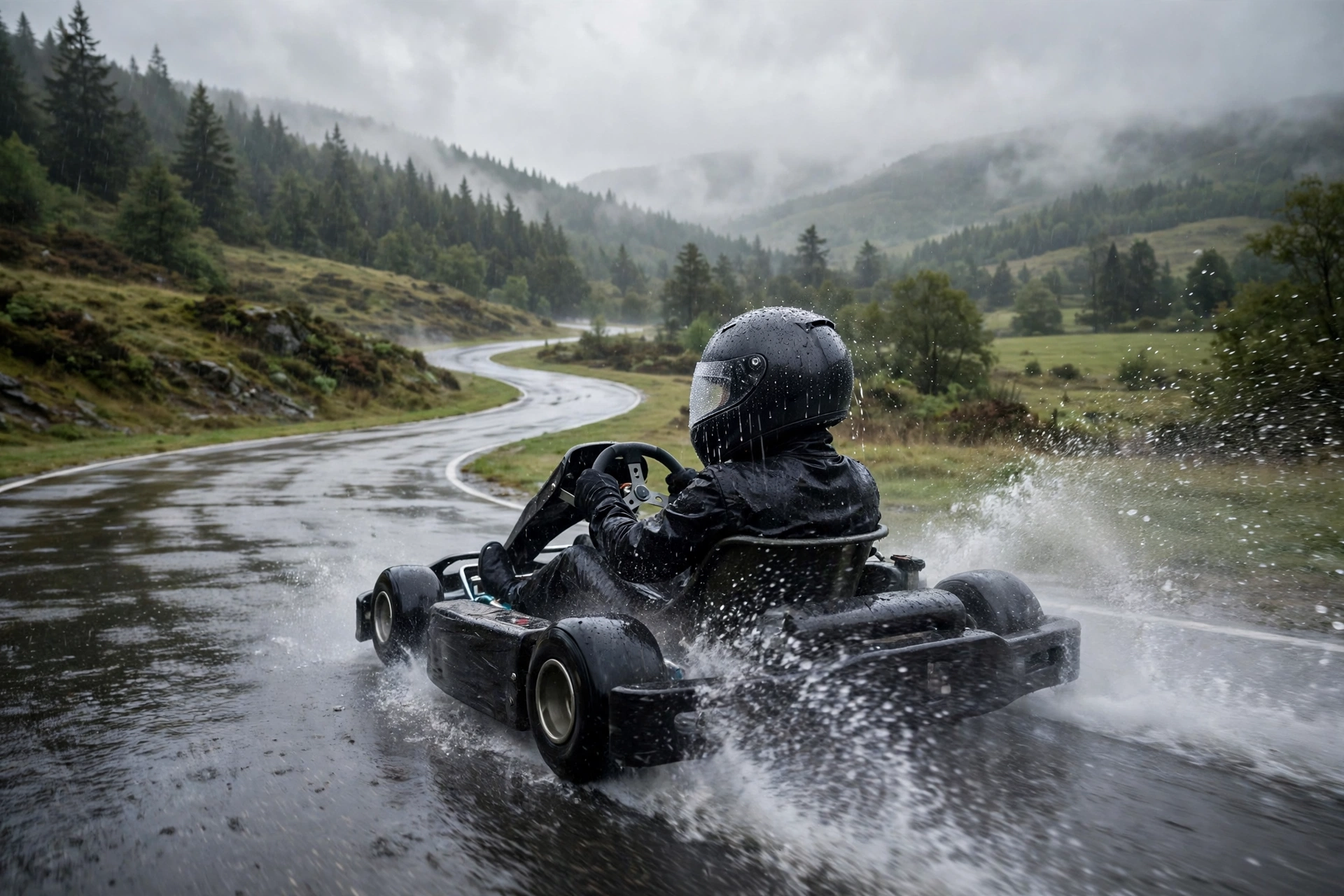
A karting helmet for wet races is a full-face motorsport helmet that keeps the driver’s vision clear in rain and spray — a helmet with a well-sealed visor, strong anti-fog ventilation, and a fit that stays secure when the track is slippery and the racing is unpredictable. Wet karting changes everything about a race. The track becomes slippery, grip comes and goes, and every kart ahead throws up a curtain of spray. The driver’s biggest problem is often not speed but seeing where they are going. In general terms, the helmet for a wet race needs to keep water out, keep the visor clear of mist and rain, and stay comfortable when the driver is cold, wet, and working hard to keep the kart on the track.
This guide explains what a wet-race karting helmet is, how it differs from a helmet used in the dry, and what to look for when choosing one. It covers visors and anti-fog measures, ventilation in the rain, fit and comfort in wet conditions, and how to look after a helmet that has been out in the rain. Whether you are racing karts in the rain for the first time or you are a regular wet-weather racer, the right helmet helps you see clearly and stay focused when the track is at its trickiest.
What Changes When It Rains in Karting?
Rain changes the grip, the visibility, and the feel of a kart. A wet track is slippery, and the grip can change from one corner to the next, so the driver has to be gentle with the throttle and the brakes. Spray from the karts ahead makes it hard to see, and the driver’s visor is constantly hit by water. The kart itself throws up spray from its own wheels, and the driver’s suit and gloves get wet, which makes everything colder and less comfortable.
The helmet has to cope with all of this. It needs to keep water out of the driver’s face and eyes, and it needs to keep the visor clear so the driver can see the track. In general terms, a wet-race helmet is a full-face karting helmet with a visor that seals tightly, vents that can be closed or managed, and a lining that stays comfortable when it gets damp.
How Do You Keep the Visor Clear in the Rain?
A clear visor is the most important thing in a wet race. The visor has to deal with rain on the outside and mist on the inside at the same time. On the outside, rain hits the visor constantly, and the driver needs to see through it. Some visors have a coating that helps water run off, and some drivers use a rain-specific visor or a visor with a hydrophobic treatment. Tear-off strips are useful in the wet too, because they let the driver clear a dirty or water-covered visor without stopping.
On the inside, the problem is mist. The driver’s breath is warm and moist, and when it hits a cold visor, it condenses into fog. Good ventilation helps, by moving air across the inside of the visor, and some visors have an anti-fog coating or a double layer that reduces misting. A balaclava that directs the driver’s breath downward, away from the visor, also helps. If you are learning about how helmets handle different kinds of impact, reading about what MIPS is for helmets can help you understand one of the technologies used in modern helmet design.
What About Ventilation and Water Getting In?
Ventilation in a wet race is a balancing act. The driver needs airflow to keep the visor clear and to stay cool, but open vents let rain in. Most karting helmets have vents at the front and back, and some can be opened or closed. In the rain, many drivers close the top vents and keep a small amount of airflow through the lower vents, which brings in fresh air without letting in too much water. It is worth trying different vent settings in practice, so you know what works before the race.
Water can also get in through the gaps around the visor and the chin bar. A visor that seals tightly against the shell is essential, and the chin bar should sit close enough to the driver’s face to keep spray out without pressing uncomfortably. A balaclava helps here too, by covering the gaps around the neck and chin and keeping the driver warm.
How Should a Wet-Race Helmet Fit?
Fit follows the same rules as any karting helmet, but wet conditions add a few details. The helmet should be snug all round, with even pressure and no loose spots, and it should not move when you shake your head. It should sit low enough to protect your forehead, with the visor opening giving you a wide view of the track ahead and to the sides. Try it on with your balaclava and, if you wear one, your neck support, because those change how the helmet sits.
Pay attention to how the helmet feels when it is wet. A lining that absorbs water can become heavy and uncomfortable, and a helmet that fits well when dry can feel different when the padding is damp. Some linings are made from materials that dry quickly and resist absorbing water, which is worth looking for if you race in the rain often.
What Should You Check Before and After a Wet Race?
Before a wet race, check the helmet the way you would check any safety gear. Look for cracks or damage to the shell, check the visor for scratches, and make sure the visor mechanism opens and closes smoothly. Check that the visor seals well, and test the vents to make sure they open and close as they should. If the helmet has been involved in a crash or a heavy impact, it should be replaced, even if it looks fine, because the damage that matters may be inside the shell.
After the race, dry the helmet properly. Wipe the shell and the visor with a soft cloth, and let the helmet air out in a warm, dry place. Remove the lining if it comes out and dry it separately, or air it out well if it does not. Clean the visor with a proper visor cleaner rather than a dry rag, which can scratch it. Store the helmet in a cool, dry place, away from fuel and chemicals, and keep it in its bag when you are not using it. A well-kept helmet lasts longer and performs better, and it is one less thing to worry about when the rain starts.
Frequently Asked Questions
Q: Do I need a different helmet for wet karting races?
A: In general terms, no. A good full-face karting helmet works in the wet as well as the dry, as long as the visor seals well and the ventilation can be managed.
Q: How do I stop my visor fogging in the rain?
A: Make sure your helmet vents are open enough for air to flow across the visor, and use a visor with an anti-fog coating if you can. A balaclava that directs your breath downward also helps, and keeping the visor clean makes misting less likely.
Q: Should I close the vents in a wet race?
A: Many drivers close the top vents to keep rain out and leave a small amount of airflow through the lower vents. Try different settings in practice to find what keeps your visor clear without letting in too much water.

Olivia
Writer at Helmet Today, covering helmet reviews, fit and riding safety.