
For a first riding lesson, a beginner needs a properly fitted riding helmet that meets a recognised safety standard, fastened with a snug chin strap — and, in general terms, that helmet matters more than any other piece of riding kit. Most riding schools provide helmets for first lessons, so a beginner often does not need to buy one before the first ride, but knowing what a good helmet looks like and how it should fit helps a new rider start safely and with confidence.
A first riding lesson is usually a gentle introduction: meeting the horse, learning to mount, sitting in the saddle at a walk, and perhaps trying a short trot on a lead rein. Even at those slow speeds, a fall is possible, and a new rider who is still learning balance is more likely to slip or slide off. A helmet protects the head in exactly that situation. This guide explains what beginners need, how a helmet should fit, and what to check before the first lesson.
What Does a Beginner Need for a First Riding Lesson?
The essentials for a first lesson are simple: a riding helmet, boots with a small heel, and comfortable clothes that allow free movement. Long trousers protect the legs from rubbing against the saddle, and a boot with a heel stops the foot from sliding too far through the stirrup. Gloves are helpful too, since they protect the hands from the reins and give a better grip.
Most riding schools lend helmets to beginners, and that is often the best option for a first lesson. The school will have a range of sizes and will help the new rider find one that fits. Borrowing also makes sense because a beginner does not yet know whether riding will become a regular hobby, and a good helmet is an investment worth making only once they are sure.
If the school does not provide helmets, or if the beginner prefers their own, a basic riding helmet that meets a recognised safety standard is all that is needed. There is no need for the most expensive model for a first lesson. What matters is fit, a working chin strap, and a safety standard — not brand or appearance.
How Should a Riding Helmet Fit a Beginner?
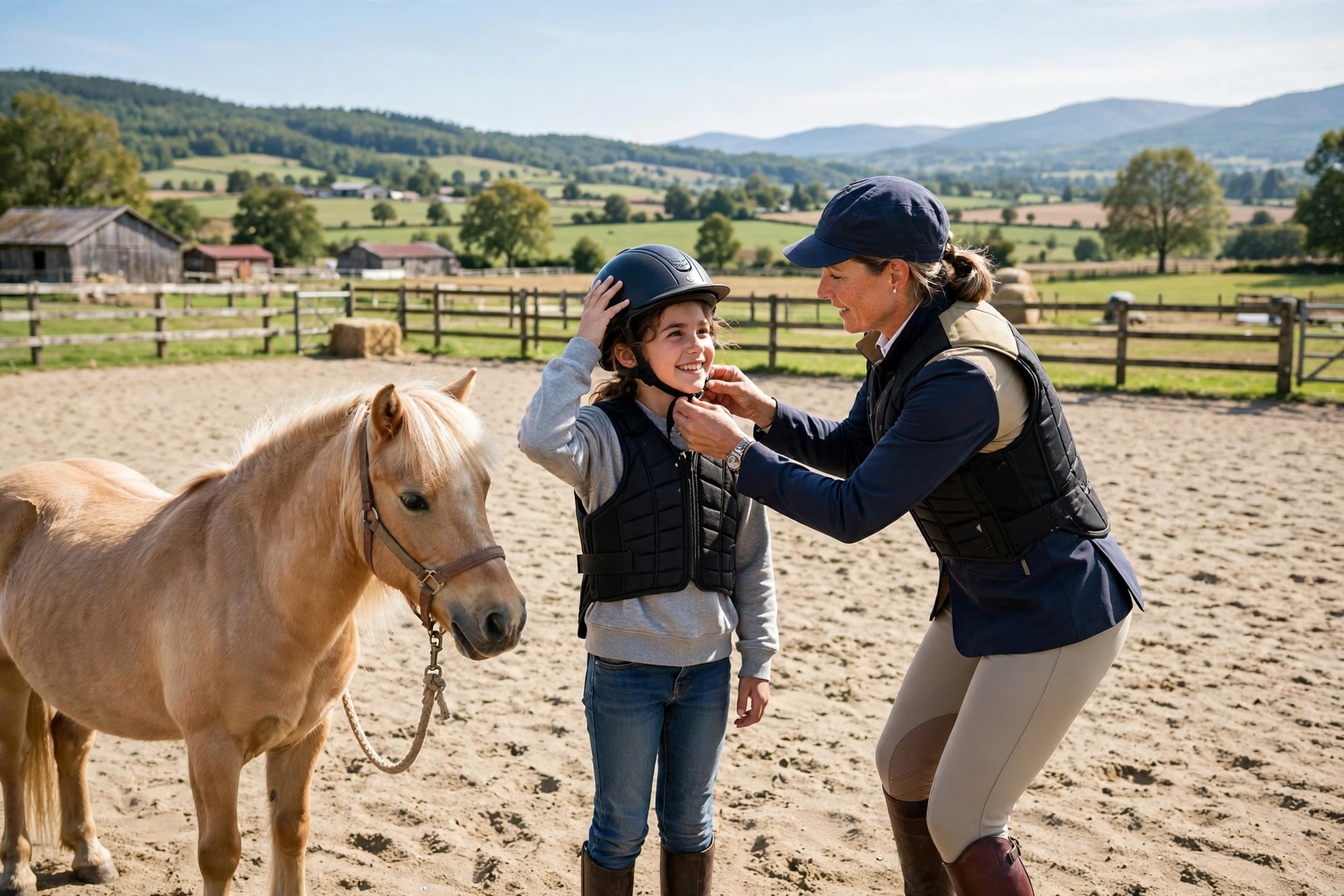
A riding helmet should sit level on the head, with the front edge about two fingers above the eyebrows. It should feel snug all the way around, without pressing hard in one spot or leaving a gap at the back. When the rider shakes their head gently, the helmet should stay put rather than rocking from side to side or sliding forward over the eyes.
The chin strap is part of the fit, not an afterthought. It should be fastened so that two fingers fit between the strap and the chin, and the straps should form a neat V under each ear. A simple check is to open the mouth wide: the helmet should pull down slightly, which shows the strap is holding it in place. If the helmet moves freely when the strap is fastened, it is too big or the wrong shape.
What Should a Beginner Check Before the First Lesson?
Before the lesson, check that the helmet is in good condition. Look at the shell for cracks, dents, or deep scratches, and check that the straps and buckle work smoothly. If the helmet is borrowed from the school, the staff will have checked it, but it never hurts to give it a quick look yourself. If anything looks damaged or the strap does not fasten properly, ask for a different helmet.
Ask the instructor how the helmet should feel and how the strap should be fastened. A good instructor will check the fit before the rider mounts and will adjust the straps if needed. Beginners should also tell the instructor if the helmet feels uncomfortable, too tight, or too loose — a few seconds of adjustment before mounting is far better than discovering a problem in the saddle.
It is also worth asking whether the school has any rules about helmets. Some schools ask riders to wear a helmet at all times when mounted, and some also ask for one when handling horses on the ground. Those rules are there for safety, and following them is part of learning to ride responsibly from the very first lesson.
What Happens During a First Riding Lesson?
A first lesson usually starts on the ground, not in the saddle. The instructor introduces the horse, shows the beginner how to approach it safely, and explains the basic controls. The beginner learns how to mount, how to sit in the saddle, and how to hold the reins. Much of the first lesson is spent at a walk, learning to balance and to move with the horse.
After the lesson, the beginner should return the borrowed helmet to the school and let the staff know if anything felt wrong with the fit. If riding becomes a regular activity, that is the time to buy a personal helmet, fitted properly in a shop, and to learn how to look after it.
When Should a Beginner Buy Their Own Helmet?
There is no rush to buy a helmet after one lesson. Many riders borrow a school helmet for their first few lessons while they decide whether riding is for them. Once they are riding regularly, owning a helmet makes sense: it guarantees a good fit, it is always available, and the rider knows its history and condition.
When buying, go to a shop that fits helmets properly and try several models. Choose a helmet that meets a recognised safety standard, fits snugly, and feels comfortable to wear for an hour or more. If you are curious about how helmets handle different kinds of impact, reading about what MIPS is for helmets can help you understand one of the technologies used in modern helmet design.
A beginner’s helmet does not need to be expensive, but it does need to be new and undamaged. Never buy a second-hand helmet of unknown history, since it may have taken a knock that is not visible. A new helmet with a proper fit is a straightforward investment in safety, and it will last through many lessons if it is looked after well.
Frequently Asked Questions
Q: Do I need to buy a helmet before my first riding lesson?
A: In general terms, no. Most riding schools provide helmets for beginners, and borrowing one for the first lesson is a sensible way to start. Buy your own once you are riding regularly and know your size.
Q: How do I know if a riding helmet fits me properly?
A: It should sit level, about two fingers above your eyebrows, feel snug all around without pressing hard in one spot, and stay put when you shake your head. The chin strap should be fastened so two fingers fit between the strap and your chin.
Q: Can I wear a bike helmet or a second-hand helmet for my first lesson?
A: A bike helmet is not a substitute for a riding helmet, since it is designed for different kinds of falls. A second-hand helmet of unknown history is also best avoided, since it may have hidden damage. Use a proper riding helmet provided by the school or buy a new one.

Olivia
Writer at Helmet Today, covering helmet reviews, fit and riding safety.