Vinyl nitrile foam is a soft, flexible foam used inside some helmets as a comfort or impact-absorbing layer, made by blending vinyl and nitrile rubber into a closed-cell foam that resists water and springs back after being pressed. It sits between the hard outer shell and the head, often as part of the liner, and it helps cushion the head and manage the fit of the helmet. It is found in some motorcycle, sports, and work helmets, though it is less common than the expanded polystyrene foam used in most modern helmets.
What Is Vinyl Nitrile Foam Made Of?
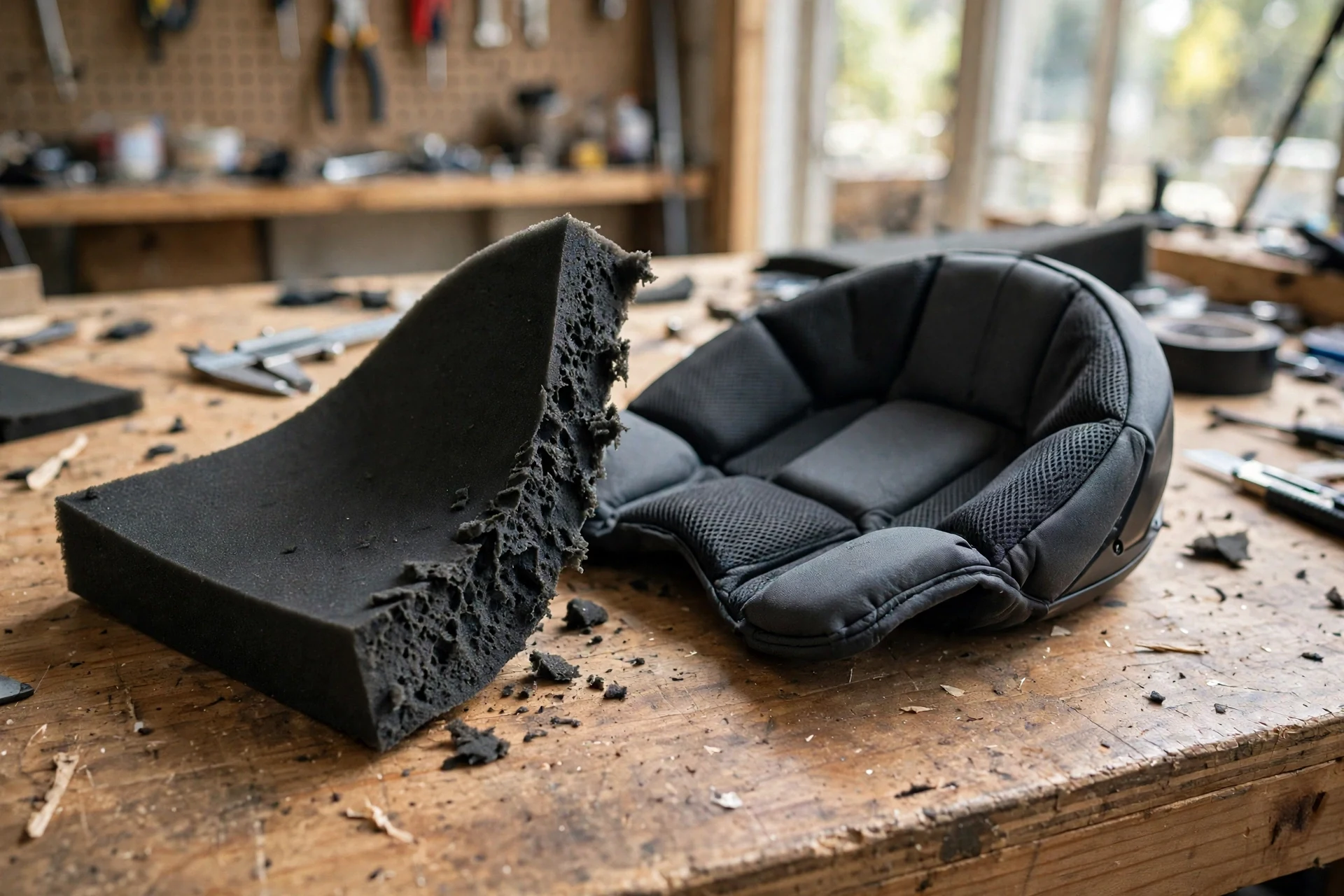
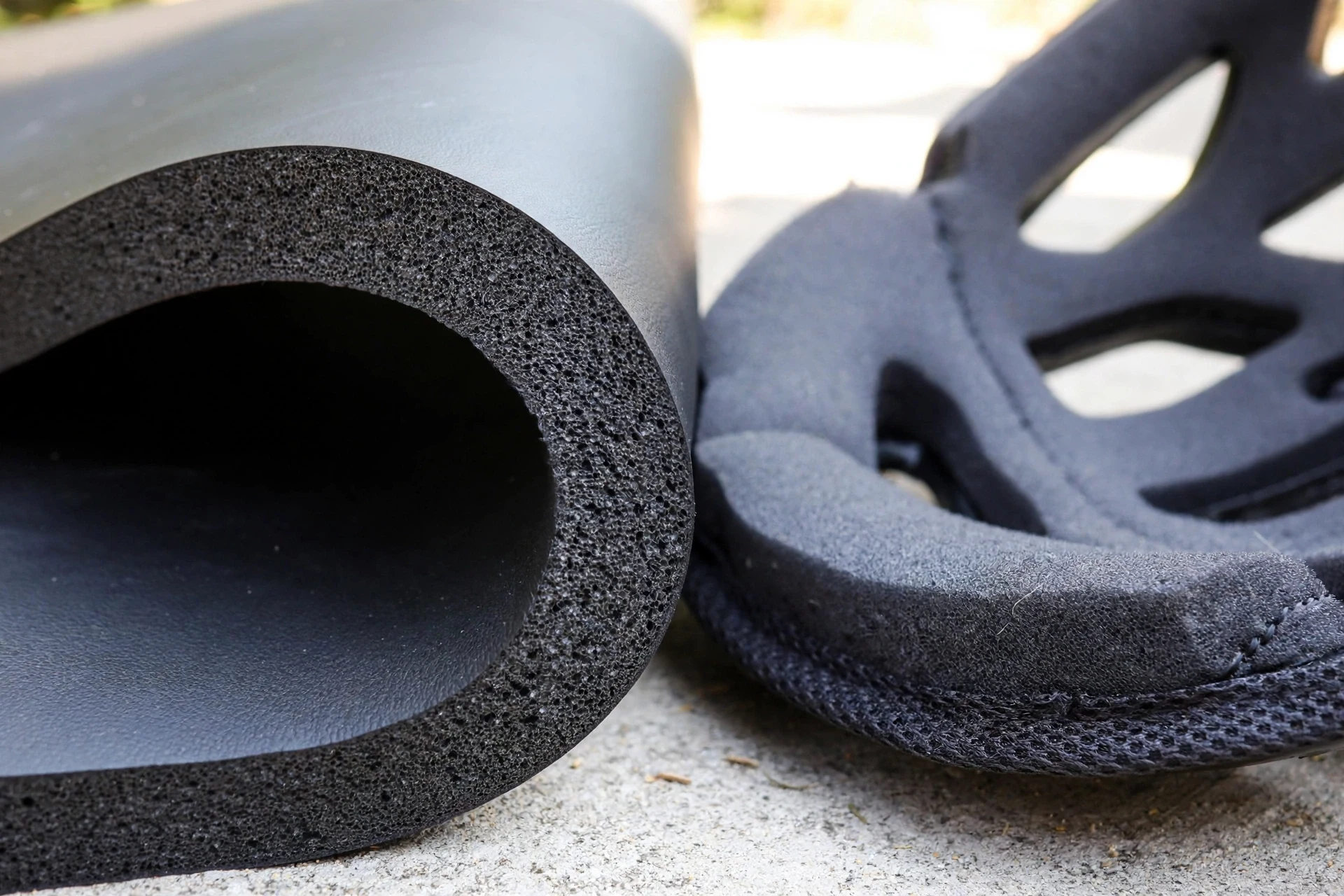
Vinyl nitrile foam, often shortened to VN foam, is made by combining polyvinyl chloride, known as vinyl, with nitrile rubber, which is a synthetic rubber. The two materials are mixed and formed into a foam with many tiny, sealed cells, which means the foam does not soak up water the way an open-cell foam does. The result is a soft, springy material that feels a little like dense sponge rubber.
The foam is usually made in sheets or blocks, which are then cut into shapes to fit inside a helmet. It can be made in different thicknesses and densities, so helmet makers can choose a softer grade for comfort padding and a firmer grade for parts of the liner that need to hold their shape. Its closed-cell structure is one of its most useful features, since it keeps sweat and rain from soaking into the foam.
How Does Vinyl Nitrile Foam Work in a Helmet?
Vinyl nitrile foam works in a helmet by compressing when pressure is applied and then springing back to its original shape when the pressure is removed. This springiness helps the liner mould itself gently to the shape of the head, spreading pressure evenly so the helmet feels comfortable and stays in place. It also helps the helmet absorb small, everyday knocks, such as bumps against a door frame or a low branch.
For larger impacts, the foam can compress further and absorb some of the energy, though it is not usually the main impact-absorbing material in a helmet. That job is normally done by a stiffer foam, such as expanded polystyrene, which crushes permanently to slow the head down. If you want to understand one of the safety technologies used in modern helmets, reading about what MIPS is for helmets is a good place to start, though the foam liner and the safety system are separate parts of the helmet’s design.
What Are the Benefits of Vinyl Nitrile Foam?
One of the main benefits of vinyl nitrile foam is its resistance to water. Because its cells are sealed, the foam does not absorb sweat or rain, so it stays light and dries quickly, and it is less likely to develop a damp smell than an open-cell foam. This makes it a good choice for helmets used in wet conditions, such as water sports or rainy-weather riding.
The foam is also durable and springy. It can be pressed and released many times without losing its shape, which means the liner keeps fitting well over a long period. It is flexible too, so it can be cut into curved shapes that follow the inside of a helmet shell. In general terms, vinyl nitrile foam is valued for comfort, durability, and water resistance rather than for heavy impact protection.
Are There Any Downsides to Vinyl Nitrile Foam?
Vinyl nitrile foam has some downsides to consider. One is that it is heavier than the expanded polystyrene foam used in most modern helmets, so a helmet that uses a lot of it may weigh more. It is also less effective at absorbing the energy of a hard impact, because it springs back instead of crushing permanently, which is why it is usually a comfort layer rather than the main impact foam.
The foam can also feel warm, since its closed cells do not let air pass through easily, and a thick layer of it may reduce ventilation inside the helmet. Over a long period, exposure to heat and sunlight can make the foam harder and less springy in general terms. These are trade-offs to weigh against the foam’s comfort and water resistance.
How Is Vinyl Nitrile Foam Different From EPS Foam?
Vinyl nitrile foam and EPS foam, which stands for expanded polystyrene, play different roles in a helmet. EPS is a stiff, lightweight foam made of tiny beads fused together, and it is designed to crush permanently in a hard impact, absorbing a large amount of energy in the process. It is the main impact-absorbing material in most modern helmets, and it is replaced rather than reused after a serious crash.
Vinyl nitrile foam, by contrast, is soft and springy, and it returns to its shape after being pressed. It is better suited to comfort padding, fit adjustment, and small knocks than to absorbing the energy of a major impact. In many helmets the two foams are used together: EPS handles the serious impacts, while vinyl nitrile foam provides the soft layer that touches the head.
How Do You Look After a Helmet With Vinyl Nitrile Foam?
Looking after a helmet with vinyl nitrile foam is straightforward, because the foam resists water and is easy to wipe clean. A damp cloth with a little mild soap will remove sweat and dirt from the liner, and the foam should be left to air dry in a ventilated place. Because the foam does not soak up water, it usually dries quickly after cleaning or after a ride in the rain.
It is best to keep the helmet away from strong heat and sunlight, since these can make the foam harder over time, and to avoid strong solvents, which can damage the foam surface. The liner should be checked regularly for cracks, hardening, or areas that have gone flat and no longer spring back. If the foam has lost its springiness or the helmet no longer fits well, it may be time to replace the liner or the helmet itself.
Is vinyl nitrile foam used for impact protection?
It can absorb some energy from small knocks, but it is mainly a comfort layer. The main impact protection in most helmets comes from a stiffer foam such as expanded polystyrene, which crushes to slow the head down in a hard impact.
Does vinyl nitrile foam absorb water?
No, in general terms it does not. Its cells are sealed, so sweat and rain stay on the surface rather than soaking in, which helps the foam dry quickly and resist damp smells.
Can vinyl nitrile foam be replaced if it wears out?
In many helmets the liner can be removed and replaced with a new one made for that model. If the liner is fixed in place, the whole helmet may need to be replaced when the foam wears out.

Olivia
Writer at Helmet Today, covering helmet reviews, fit and riding safety.