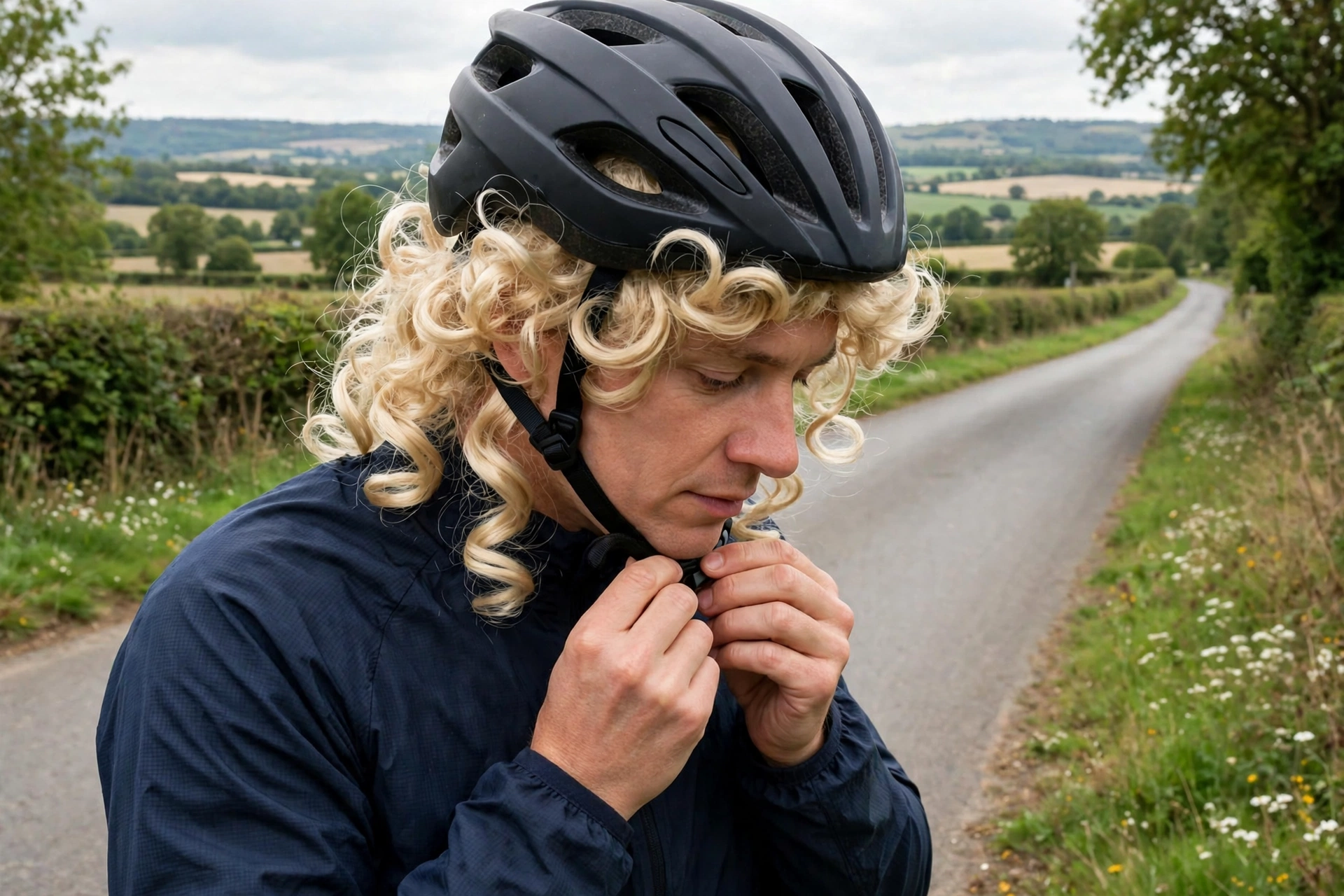
Helmet fit for riders with a wig means fitting a helmet over a wig so that it sits level, feels snug without pressing painfully, and stays in place, and in general terms the key is to try the helmet on with the wig in place rather than fitting it to bare hair. A wig changes the shape and the volume of the head, so a helmet that fits well without a wig may feel tight, sit too high, or slide around once a wig is underneath it.
This matters for cycling, horse riding, motorcycling, and other sports where a helmet is worn, because a helmet only protects well when it sits in the right place. If the wig pushes the helmet up, the forehead can be left exposed, and if the helmet is squeezed on over a bulky wig, pressure points can make it uncomfortable to wear for long. The good news is that, with a little care over wig style, helmet size, and adjustment, most riders can find a fit that is both comfortable and secure. In general terms, the aim is the same as for any rider: a helmet that covers the head properly, stays put, and feels comfortable enough to wear every time.
Why does a wig change how a helmet fits?
A wig adds a layer between the head and the helmet, and that layer changes both the size and the shape of what the helmet has to sit on. A full wig, especially one with thick or long hair, can add noticeable bulk around the crown and the sides of the head, which can make a helmet feel a size smaller than it really is. A wig cap can also be smooth or slippery, which can let the helmet shift more easily than it would on natural hair.
How should a helmet fit over a wig?
In general terms, a helmet worn over a wig should sit level on the head, low enough at the front to cover the forehead, and snug all round without pressing painfully on the temples or the top of the head. It should not tip forward over the eyes or slide back when you nod, and it should stay in place when you shake your head gently from side to side. The chin strap should be snug enough that you can fit only a finger or two between the strap and your chin.
The most important step is to try the helmet on while wearing the exact wig you plan to ride in, with the wig arranged as it will be worn. Put the wig on first, smooth it down, and secure it in the usual way, then put the helmet on over it and check the fit. If the helmet sits high on the head or rocks from side to side, it may be too small for the wig, or the wig may need to be flattened or pinned more neatly underneath. Check the fit again after a short ride or walk, because a wig can settle and shift as you move, and a fit that feels fine while standing still can feel different once you are warm and active.
What wig styles work best under a helmet?
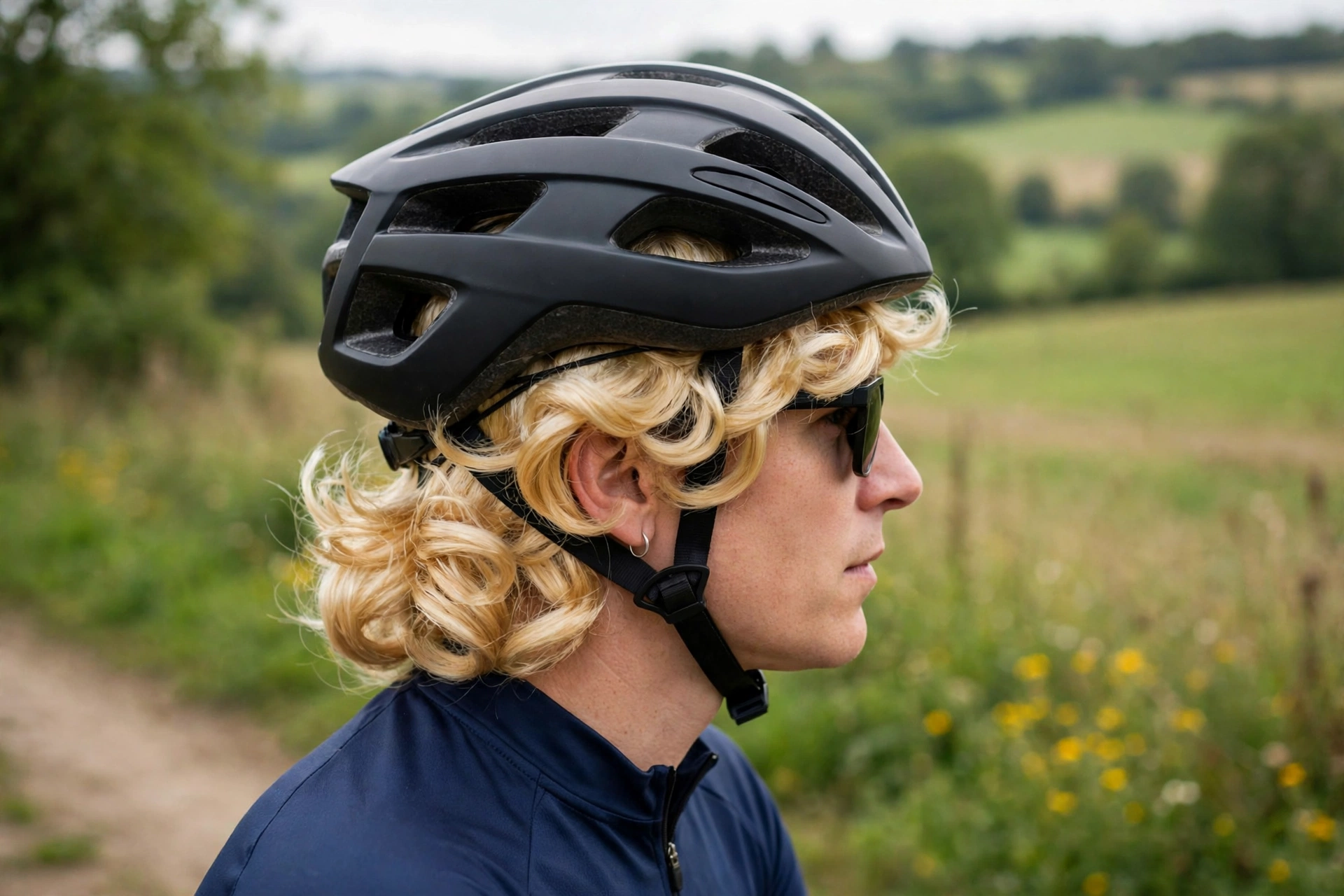
In general terms, shorter wigs, or long wigs worn flat and gathered low, tend to work best under a helmet. A low ponytail or a braid that sits at the nape of the neck usually fits more neatly than hair piled high at the back of the head, because a high bulk can push the helmet forward or lift it off the crown. Some riders plait long hair and tuck it flat, while others choose a shorter wig for riding and save a longer style for off the bike or off the horse.
Should you buy a bigger helmet to fit over a wig?
In general terms, you may need a larger helmet size than you would wear without a wig, but the answer depends on the wig and the helmet. The right approach is to measure and try on the helmet with the wig in place, rather than simply guessing a size up. A helmet that is too big can be just as much of a problem as one that is too small, because a loose helmet can slide around or come off in a fall, and it may not sit low enough to protect the forehead.
What else should riders with a wig check before riding?
Check the chin strap and the way it sits around the wig. The strap should pass under the chin and fasten securely without catching on the wig or pulling it out of place. If the strap rubs the wig or the skin at the jaw, it may need adjusting, or a strap cover may help. Also check that the helmet does not press the wig’s front edge down onto the forehead in a way that causes discomfort, and that the wig itself is secure enough that it will not slip if the helmet is adjusted during a ride.
Ventilation is worth thinking about too, because a wig adds warmth under a helmet, and a long ride can become uncomfortable if air cannot flow through. A helmet with good vents, and a wig style that does not block them, can make a real difference to comfort. Some helmets include a system designed to reduce rotational forces in a fall, such as MIPS, and it is worth asking about when you choose. Finally, remember that comfort affects safety: a helmet that hurts, slips, or distracts you is one you may be tempted to leave off, so it is worth taking the time to get the fit right.
How do you look after a helmet worn over a wig?
After a ride, wipe the shell clean and let the helmet dry naturally, away from direct heat. Do not leave it in a hot car or next to a radiator, as heat can damage the materials inside over time. Hair products, oils, and styling sprays from a wig can build up on the lining, so if the lining is removable, take it out and wash it following the maker’s instructions, and let it dry fully before putting it back. A quick wipe of the inside after a ride can also help keep it fresh.
Can you wear a helmet over a wig?
Yes, in general terms you can wear a helmet over a wig. Try the helmet on with the wig in place, choose a wig style that sits flat, and use the helmet’s adjustment to get a level, snug fit.
Should you size up a helmet to fit a wig?
You may need a larger size, but try the helmet on with the wig first. Use the adjustable fit system to fine-tune it, and only go up a size if the helmet still sits high or feels tight with the adjustment fully open.
What if a helmet slips over a wig?
Check that the wig is smooth and secure underneath, tighten the fit system, and fasten the chin strap snugly. If the helmet still slides, try a different wig style or a different helmet shape, as some shapes grip better than others.

Olivia
Writer at Helmet Today, covering helmet reviews, fit and riding safety.