The history of the bicycle helmet is the story of a simple idea that took a long time to catch on: from leather caps worn by early racers, through hard shells and foam, to the light, ventilated helmets riders wear today. For much of cycling’s history, riders wore no head protection at all, and the helmet only became common once materials, racing rules, and safety ideas caught up with each other. Understanding that history helps explain why modern helmets look and work the way they do.
The bicycle itself is older than the helmet by many decades. Early cyclists rode high, heavy machines on rough roads, and falls were common, but head protection was not part of the kit. It took the rise of competitive racing, faster bikes, and better materials before a purpose-made cycling helmet appeared, and longer still before everyday riders started wearing one. The change was gradual, and it came in steps rather than all at once.
What did the first bicycle helmets look like?
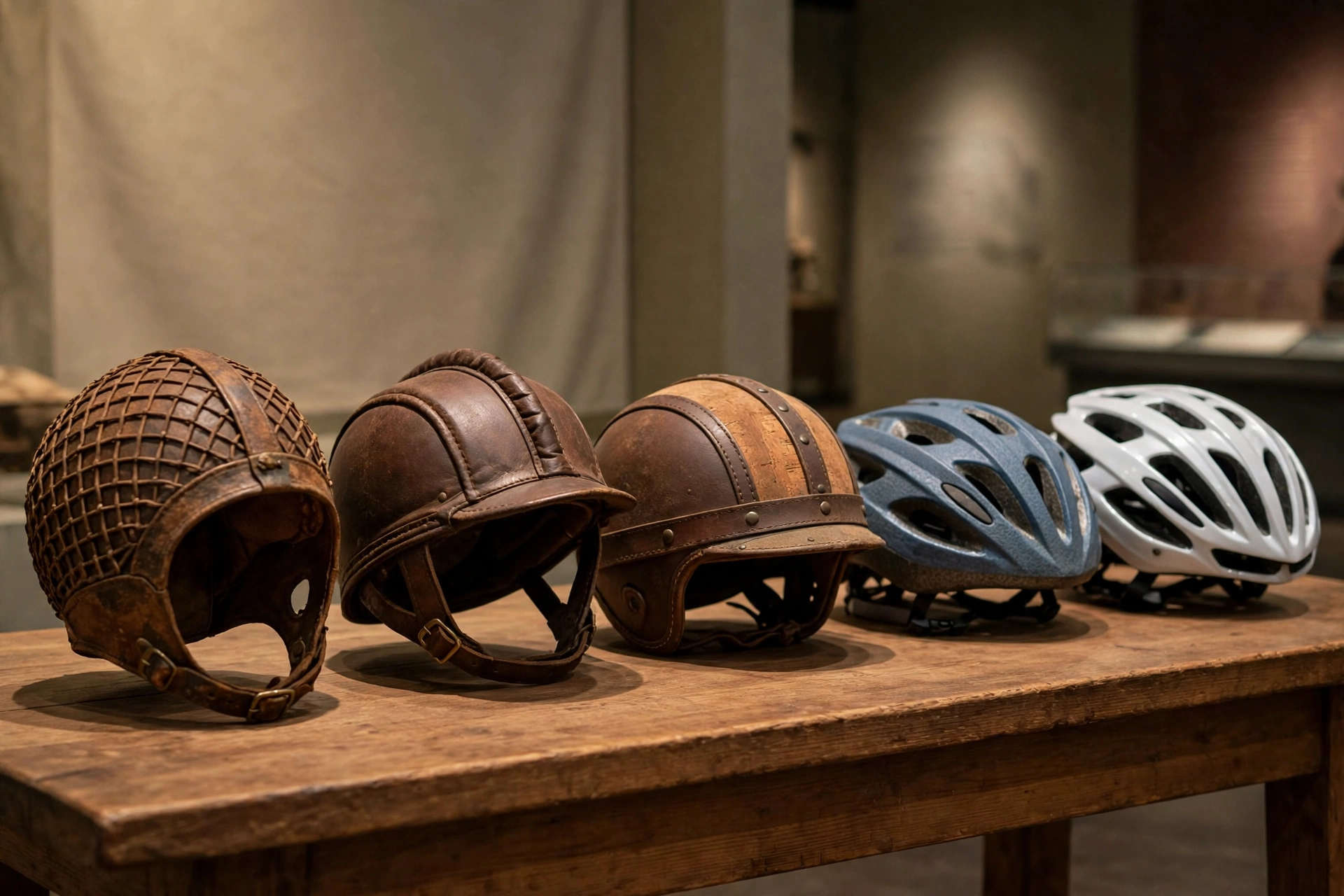
The first bicycle helmets were not helmets in the modern sense at all. In the early years of the twentieth century, some racing cyclists wore padded leather caps, sometimes called hairnets, made from strips of leather stitched together with padding underneath. They covered the top of the head and offered some protection against grazes and minor knocks, but they were soft, offered little against a hard impact, and were worn mainly by racers rather than ordinary riders.
These leather caps were light and cool enough to race in, which mattered to riders who were already working hard in the heat. They were also a sign of a serious racer, and many everyday cyclists saw no need for one. In general terms, the leather hairnet was the best that the materials of the time allowed, but it was a long way from a safety device as we would understand one today, and most people cycling to work or to school wore an ordinary cap or nothing at all.
How did hard-shell helmets change cycling?
As plastics and moulding improved in the middle of the twentieth century, makers began to produce helmets with a hard outer shell. These were heavier than leather caps, but the shell spread the force of a knock over a wider area, which was a clear step forward. Early hard-shell helmets were used in racing and in some organised rides, and they began to look recognisably like a modern helmet, with a rounded shape and a strap under the chin.
Hard shells also changed how people thought about helmets. A leather cap had felt like clothing, but a hard shell felt like safety equipment, and that made the helmet easier to take seriously. The shells were still hot and heavy by modern standards, and ventilation was poor, so many riders still chose not to wear one. Even so, the hard shell set the pattern that later helmets followed: a firm outside to spread the force, and a softer inside to absorb it.

When did foam helmets become the norm?
The big change came with expanded foam, a light material that crushes on impact and soaks up energy. In the later decades of the twentieth century, makers began to build helmets from a foam inner with a thin plastic shell on the outside, and the result was far lighter and better ventilated than the hard shells that came before. Vents could be cut into the foam, air could flow through, and the helmet became something a rider could wear comfortably for hours.
Foam helmets also became cheaper to make, which put them within reach of everyday riders rather than just racers. As they spread, cycling clubs, schools, and families began to treat the helmet as normal kit, and makers competed on weight, ventilation, and fit. The basic idea has stayed the same ever since: a foam layer that absorbs the force of a knock, a shell that spreads it and resists grazes, and straps that keep the whole thing in place. Some modern helmets add a system designed to reduce rotational forces in a fall, such as MIPS, which is a recent layer on top of the same foam-and-shell idea.
How have helmet standards and rules developed?
As helmets became common, testing standards followed. Independent bodies began to test helmets by dropping them onto hard surfaces and measuring how much force reached the head inside, and helmets that passed could carry a recognised mark. These standards gave buyers a way to compare helmets and gave makers a target to design to, which pushed quality up across the whole market. In general terms, a helmet that meets a recognised standard is a safer bet than one that does not.
Rules followed more slowly, and they still differ widely from place to place. Some countries and regions made helmets compulsory for children, and a smaller number for all riders, while many places still leave the choice to the rider. Racing bodies brought in their own rules first, requiring helmets in competition, and that helped normalise them for everyone else. The pattern of the history is clear: racing led, standards followed, and everyday use came last.
What does a modern bicycle helmet look like?
A modern bicycle helmet is a light, sculpted piece of kit, with a foam body, a thin shell, large vents, and a dial or cradle at the back that adjusts the fit. Road helmets are shaped to cut through the air, mountain bike helmets often have a peak and extra cover at the back of the head, and commuter helmets may be rounder and plainer, but all of them work on the same principle as the foam helmets that came before them. Weight has fallen, ventilation has improved, and fit systems have made a good fit easier to get.
Modern helmets also come in a far wider range of styles and sizes, including helmets made for children, for women, and for riders with long hair or glasses. Colours and designs have become part of the appeal, and many riders now choose a helmet as much for comfort and looks as for safety. The journey from a leather hairnet to today’s helmet took most of a century, but the goal never changed: a light, comfortable helmet that a rider will actually wear, and that protects the head when a fall happens.
When was the first bicycle helmet made?
Padded leather caps for racing cyclists appeared in the early years of the twentieth century. Hard-shell helmets followed as plastics improved, and light foam helmets became the norm in the later decades of the century.
Why did cyclists resist wearing helmets for so long?
Early helmets were hot, heavy, and uncomfortable, and many riders felt they did not need one for everyday cycling. Helmets became popular once foam made them light and well ventilated, and once racing rules and safety standards made them normal.
Are old bicycle helmets still safe to wear?
In general terms, no — an old helmet may have foam that has aged, a shell that has weakened, or a design that would not pass a modern test. A helmet that has taken a hard knock should be replaced, and a very old helmet is best retired even if it looks fine.

Olivia
Writer at Helmet Today, covering helmet reviews, fit and riding safety.