A helmet outer shell is the hard outer layer of a helmet that forms its smooth outside surface, and in general terms it is the part that first meets the road, the ground, or an object in a knock, spreading the force and protecting the softer lining inside. It is the part you see and touch when you pick up a helmet, and it works together with the lining and the straps to protect your head.
When you look at a helmet, the outer shell is what gives it its shape and its colour. Underneath it sits a layer of softer material that absorbs energy, and inside that is the comfort lining that sits against your head. Each layer has a job to do, and the shell’s job is to take the first hit, spread the force over a wider area, and keep sharp objects from reaching the layers inside. Without a shell, the softer lining would be exposed to damage and would wear out quickly.
What does a helmet outer shell do?
A helmet outer shell protects the inside of the helmet and spreads the force of an impact. When a helmet hits a hard surface, the shell stops the force from concentrating on one small point. Instead, it spreads the load across a wider area, so the lining underneath can absorb the energy more evenly. The shell also resists punctures, so a sharp stone or a pointed edge is less likely to push through to the head.
The shell also protects the helmet from everyday wear. It keeps out rain, dust, and sunlight, and it stops the softer lining from being scratched, crushed, or damaged when the helmet is put down or carried. A smooth shell also slides more easily across a surface in a fall, which can help the helmet move rather than catching and twisting the head. That sliding action is one reason helmet shells are usually smooth and rounded, with few sharp edges or sticking-out parts.
What are helmet outer shells made of?
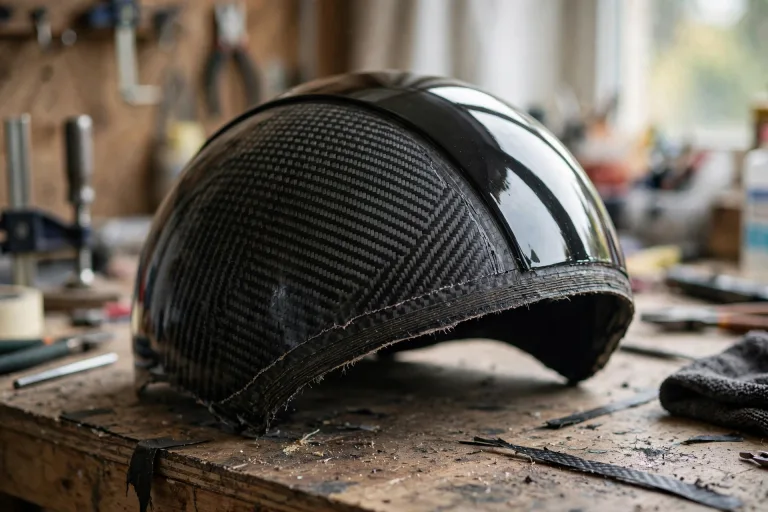
Helmet outer shells are made from a range of materials, and the choice depends on the type of helmet and how much it costs. In general terms, common materials include hard plastics such as polycarbonate and ABS, fibreglass, and composite materials that mix fibres such as carbon fibre, Kevlar, or fibreglass with a resin. Each material has its own strengths, and makers choose the one that suits the helmet’s purpose.
Polycarbonate and ABS shells are light, tough, and affordable, and they are common in cycle helmets and in many motorcycle helmets. Fibreglass shells are often used in motorcycle and motorsport helmets because they are strong and can be moulded into complex shapes. Carbon fibre shells are very light and strong, but they are more expensive, so they tend to appear in high-end helmets. Work helmets and climbing helmets often use a different kind of hard plastic that is made to resist falling objects and to keep its shape in hot or cold weather. Whatever the material, the shell should be free of cracks and damage to do its job.

How is a helmet outer shell made?
A helmet outer shell is usually made by moulding its material into the shape of a helmet, then finishing the surface so it is smooth and even. Plastic shells are often made by heating the material and pressing it into a mould, while fibreglass and composite shells are built up in layers of fibre and resin inside a mould, then heated and hardened until they hold their shape.
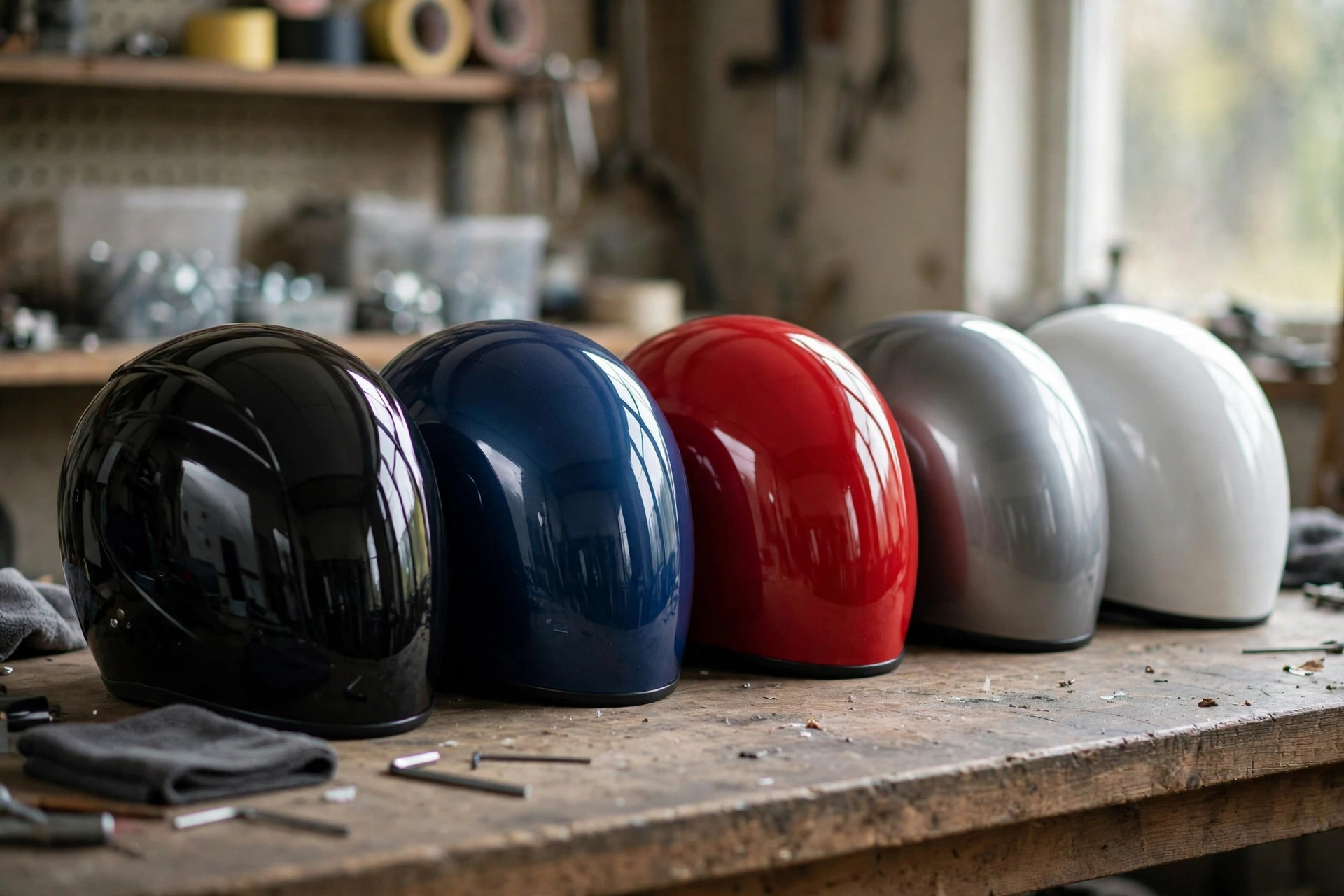
After moulding, the shell is trimmed, checked for defects, and then painted or coated. The paint and the clear coat on top protect the shell from sunlight and scratches, and they give the helmet its colour and graphics. Vents are cut or moulded into the shell to let air flow through the helmet, and holes or slots are added for the visor, the straps, and any other fittings. Each shell is checked for cracks, thin spots, or uneven areas before it is joined to the lining inside.
What is the difference between the shell and the lining?
The shell is the hard outside of the helmet, and the lining is the softer material inside it, and the two work as a team. The shell spreads the force of a knock and keeps sharp objects out, while the lining, usually a foam material, compresses and absorbs the energy of the impact. Without the lining, the shell alone would pass too much force to the head, and without the shell, the lining would be too soft and too easily damaged to protect you.
The comfort lining sits inside the foam lining and touches your head. It is usually made from soft fabric or foam pads, and it can often be removed and washed. It makes the helmet comfortable to wear and helps it fit well, but it is not the part that absorbs the main force of an impact. Some helmets also include a system designed to reduce rotational forces in a fall, such as MIPS, which sits between the lining and the head and lets the helmet move slightly in a fall. All of these parts work together, and damage to any one of them can affect how the helmet performs.
How do you look after a helmet outer shell?
Look after a helmet outer shell by cleaning it gently with clean water and a soft cloth, using mild soap if needed, and letting it dry naturally away from direct heat. Do not use strong solvents, petrol, or abrasive cleaners on the shell, because they can damage the paint and weaken the material underneath. Rinse off dust and grit before wiping, so the grit does not scratch the surface.
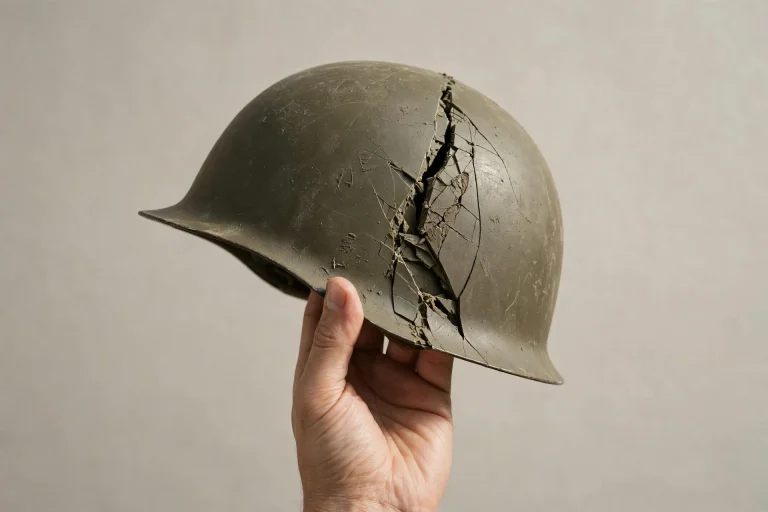
Store the helmet in a cool, dry place, away from sunlight and heat, and keep it in a soft bag or on a shelf where it will not be knocked about. Check the shell regularly for cracks, dents, or deep scratches, and pay attention to the areas around the vents and the visor fittings, where damage can be easy to miss. In general terms, a shell that is cracked or badly dented should not be relied on, and the helmet should be replaced.
When should a helmet outer shell be replaced?
A helmet outer shell should be replaced when the helmet itself is replaced, because the shell and the lining are made to work together and cannot be separated and reused. Replace the helmet if the shell is cracked, dented, or deeply scratched, if the helmet has taken a hard knock in a fall, or if the lining or straps are worn or damaged.
What is the outer shell of a helmet made of?
In general terms, helmet outer shells are made from hard plastics such as polycarbonate or ABS, fibreglass, or composite materials such as carbon fibre, depending on the type and price of the helmet.
Does the outer shell absorb impact?
The shell spreads the force of an impact over a wider area and resists punctures, while the foam lining inside does most of the absorbing. The two layers work together to protect your head.
Can a cracked outer shell be repaired?
In general terms, no, a cracked outer shell should not be repaired or relied on. A helmet with a cracked shell should be replaced, because the damage may have weakened the shell and the lining inside.

Olivia
Writer at Helmet Today, covering helmet reviews, fit and riding safety.