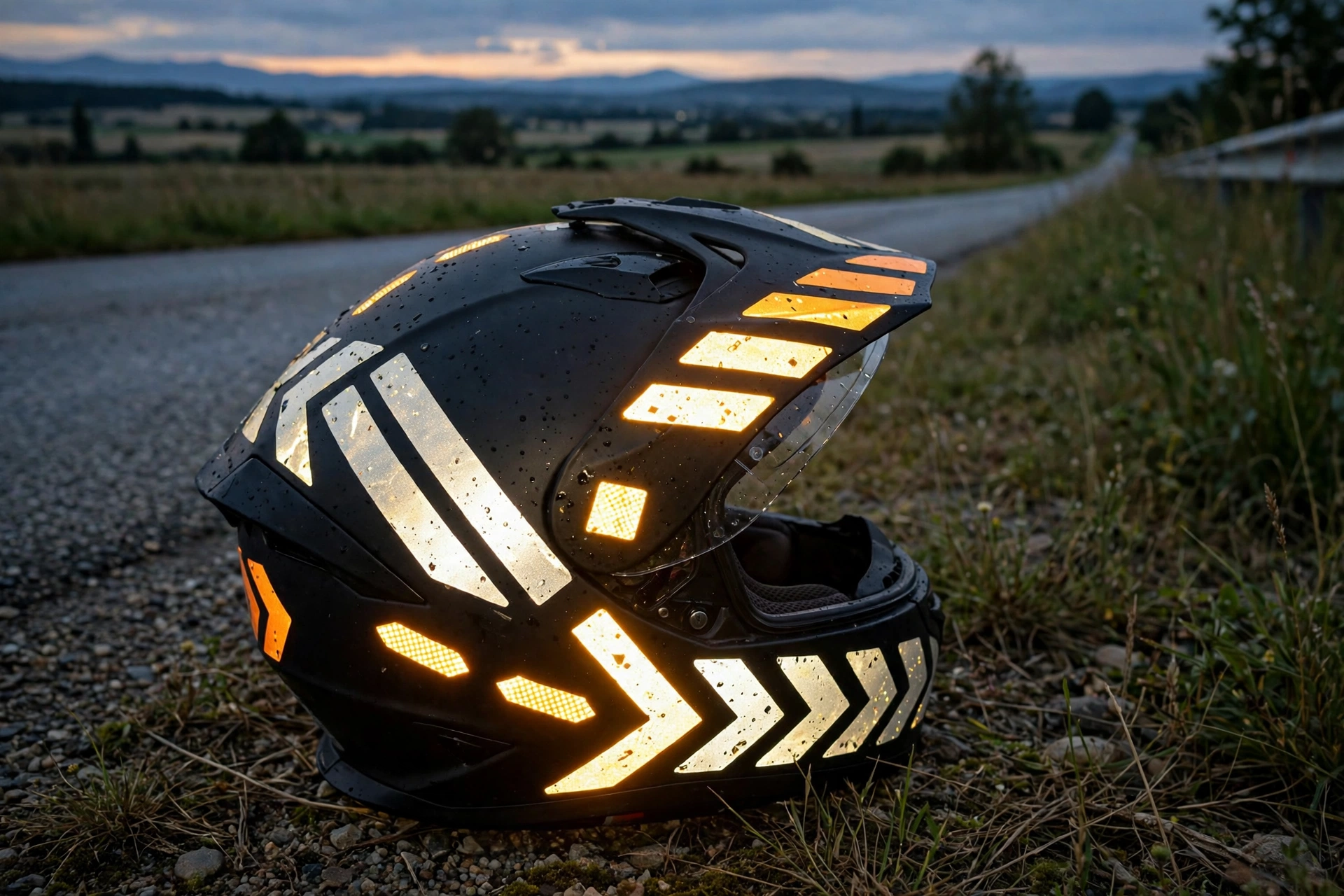
Helmet reflective stickers are bright, light-catching decals that you stick on a helmet to make it easier to see in low light and at night. In general terms, they are made from a material that bounces light back toward its source, so when a car’s headlights hit them, the helmet lights up and the rider becomes much easier to spot. They are a simple, cheap way to add visibility to a helmet you already own, without buying a new one.
Visibility is one of the biggest safety issues for riders after dark. A dark helmet on a dark road can be almost invisible to a driver until they are very close. Reflective stickers change that. They do not make the helmet brighter on their own, but they catch the light from headlights, street lamps, and torches, and they return it in a bright flash. That extra moment of being seen can give a driver time to slow down or move over.
How do reflective stickers work?
Reflective stickers work by bouncing light back in the direction it came from. The surface is covered in tiny glass beads or small prism shapes that catch incoming light and send it straight back toward the source. This is different from a normal bright colour, which scatters light in all directions. A reflective sticker looks dull grey or white in daylight, but it shines brightly when a light hits it in the dark.
That is why reflective stickers are most effective at night, when headlights are the main light source. A driver looking at the road sees the sticker light up as soon as their headlights reach it, even from a distance. The effect is strongest when the light is aimed directly at the sticker, which is what happens when a car approaches from behind or from the side. In daylight, the stickers do little, so they work best alongside bright colours and lights rather than instead of them.
Where should you put reflective stickers on a helmet?
The best places for reflective stickers are the back and sides of the helmet, because those are the areas drivers see most. A strip across the back of the shell, a patch on each side, and a small piece on the rear of the peak or visor will cover most angles. The front of the helmet matters less, because you are usually facing away from the traffic behind you, but a small sticker on the front can help oncoming drivers see you too.
Keep the stickers away from vents and moving parts, and do not cover the safety label or the certification marking inside the shell. Clean the shell before you stick them on, because dust and grease stop the adhesive from holding. Press each sticker down firmly and smooth out any air bubbles. A sticker that peels off at speed is no use to anyone, so check them before each ride and replace any that are lifting at the edges.
What kinds of reflective stickers can you buy?
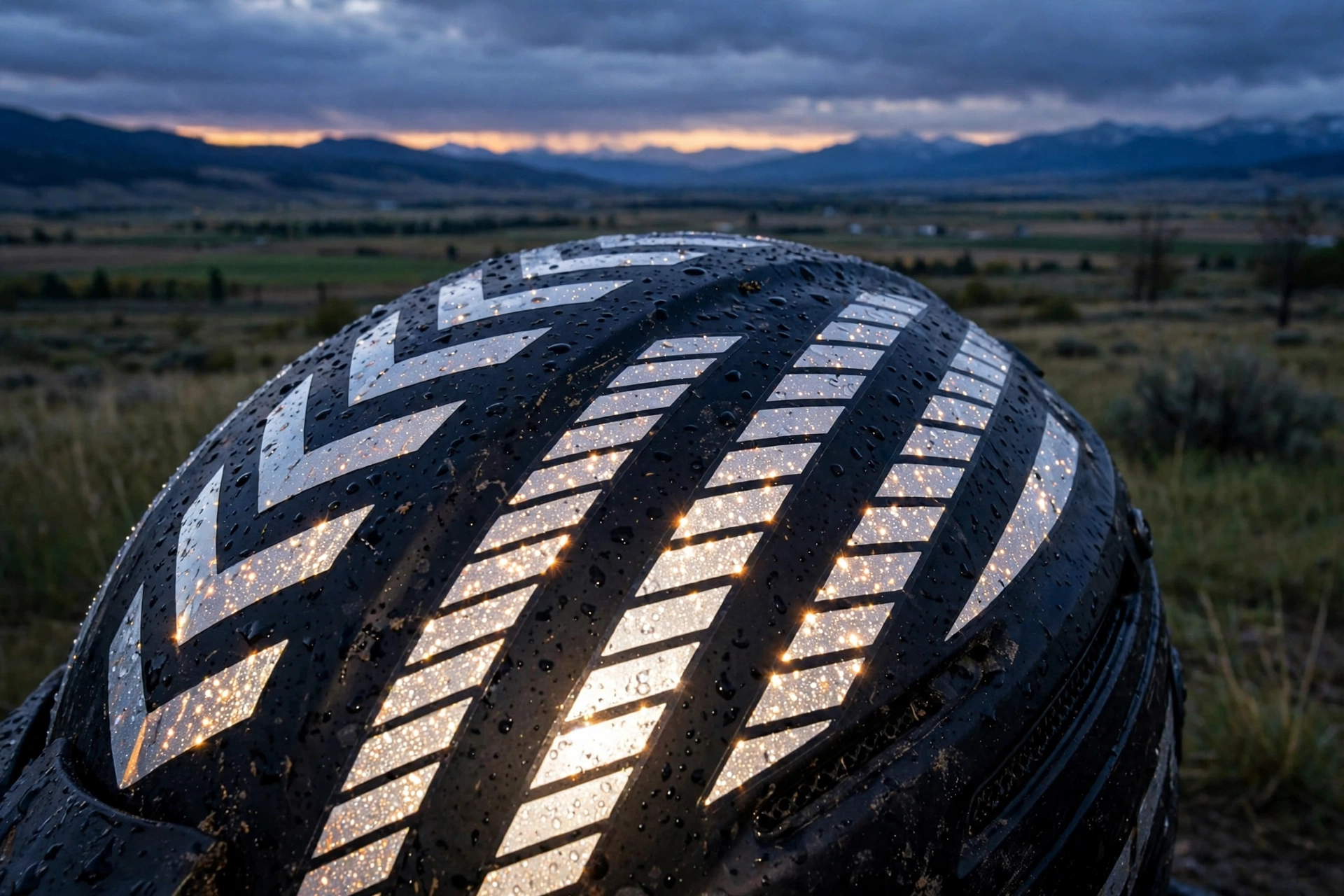
Reflective stickers come in many shapes and sizes. The simplest are plain strips and dots that you can cut to fit your helmet, and these are cheap and easy to use. You can also buy shaped sets made for helmets, with curved pieces that follow the shell, and packs that include arrows, chevrons, and shapes that match the helmet’s design. Some are made from a flexible vinyl that bends around curves, while others are stiffer and better for flat areas.
Colours vary too. Silver and white stickers reflect the most light, while red, yellow, and orange stickers reflect less but still show up well and can match your helmet or bike. Some stickers are made to glow in a particular colour when light hits them, and some are sold as “high visibility” rather than truly reflective, so check the pack before you buy. A genuinely reflective sticker will shine brightly when you shine a torch at it in a dark room.
Do reflective stickers replace lights and bright clothing?
No, reflective stickers are an extra layer of visibility, not a replacement for lights or bright clothing. A reflective sticker only works when light hits it, so it does nothing in a place with no light at all. A rear light on your bike, a headlight, and bright or fluorescent clothing are still the main ways to be seen, and they work in daylight as well as at night. Stickers add to that, and they are most useful when a driver’s headlights sweep across your helmet.
Think of visibility as layers. Bright clothing helps in the day, lights help at night, and reflective stickers help whenever a light is aimed at you. Together, they give a driver more chances to spot you from further away. Some modern helmets also use a slip layer that lets the shell move slightly in an angled impact, an idea similar to MIPS in other helmets, but that is about impact protection, not visibility, and it does not change the need for lights and reflective gear.
How do you look after reflective stickers?
Reflective stickers need little care, but they do wear out over time. Sun, rain, and washing can fade the reflective surface and weaken the adhesive, so check them every few months. A sticker that has gone dull, cracked, or cloudy will not reflect as well as a fresh one. Wipe them gently with a damp cloth when you clean your helmet, and do not scrub them hard or use strong solvents, because these can strip the reflective coating.
If a sticker starts to peel, pull it off and replace it rather than trying to glue it back down. Old adhesive leaves a sticky residue that can trap dirt and stop a new sticker from holding. Peel the old sticker off slowly, clean the area with warm soapy water, let it dry fully, and then apply the new sticker. A fresh set of stickers costs very little, and it is worth replacing them once a year or so to keep them working well.
Are reflective stickers legal to use on a helmet?
In general terms, yes. Reflective stickers are widely used and are legal in most places, and some countries even require reflective material on motorcycle helmets. Check the rules where you ride, and do not cover any required label or marking on the shell.
Will reflective stickers damage my helmet?
No, in general terms, a normal reflective sticker will not damage a helmet shell. Avoid stickers with very strong adhesive or solvent-based glue, and do not paint the shell or drill holes in it. If you are unsure, test a small sticker on a hidden area first.
Can I put reflective stickers on any type of helmet?
Yes, reflective stickers work on motorcycle, cycling, horse riding, and other helmets, as long as the shell is smooth and clean enough for the adhesive to hold. They are less useful on a helmet with a very rough or textured surface, because the stickers may not stick well.

Olivia
Writer at Helmet Today, covering helmet reviews, fit and riding safety.