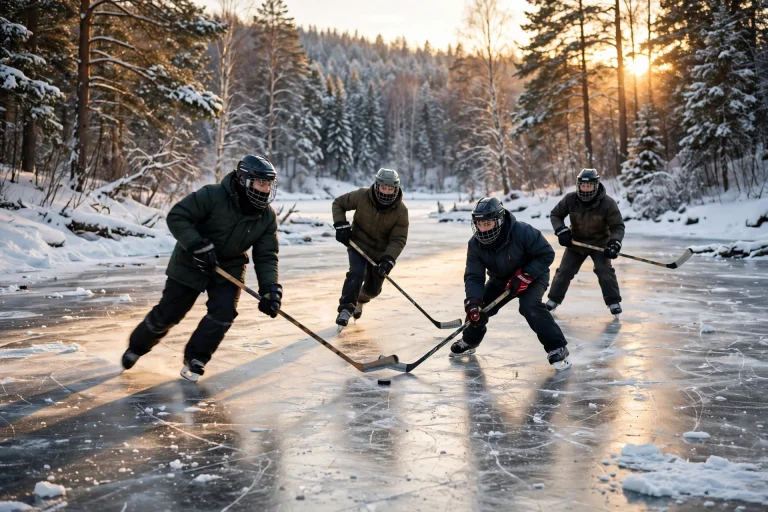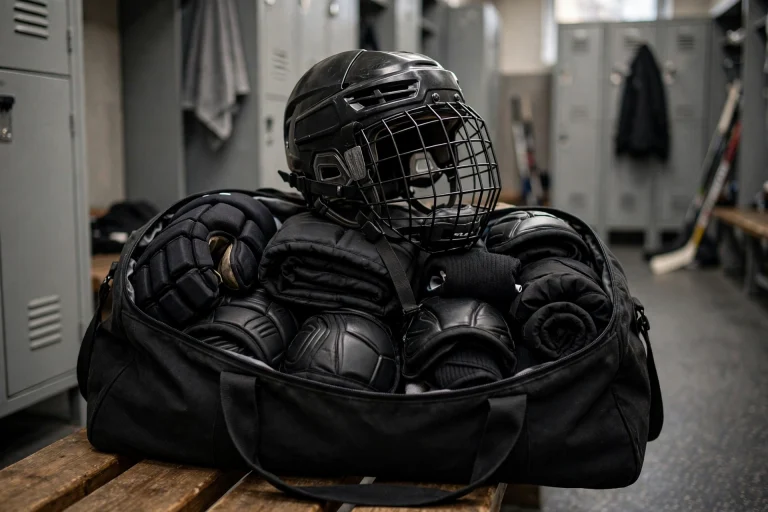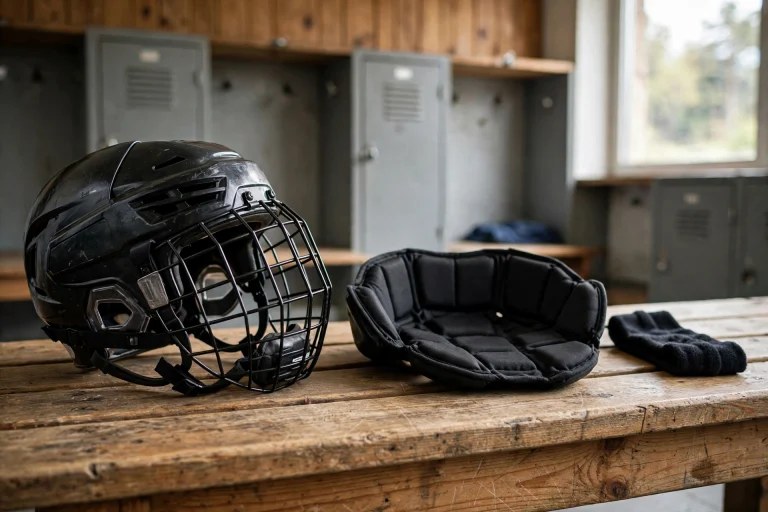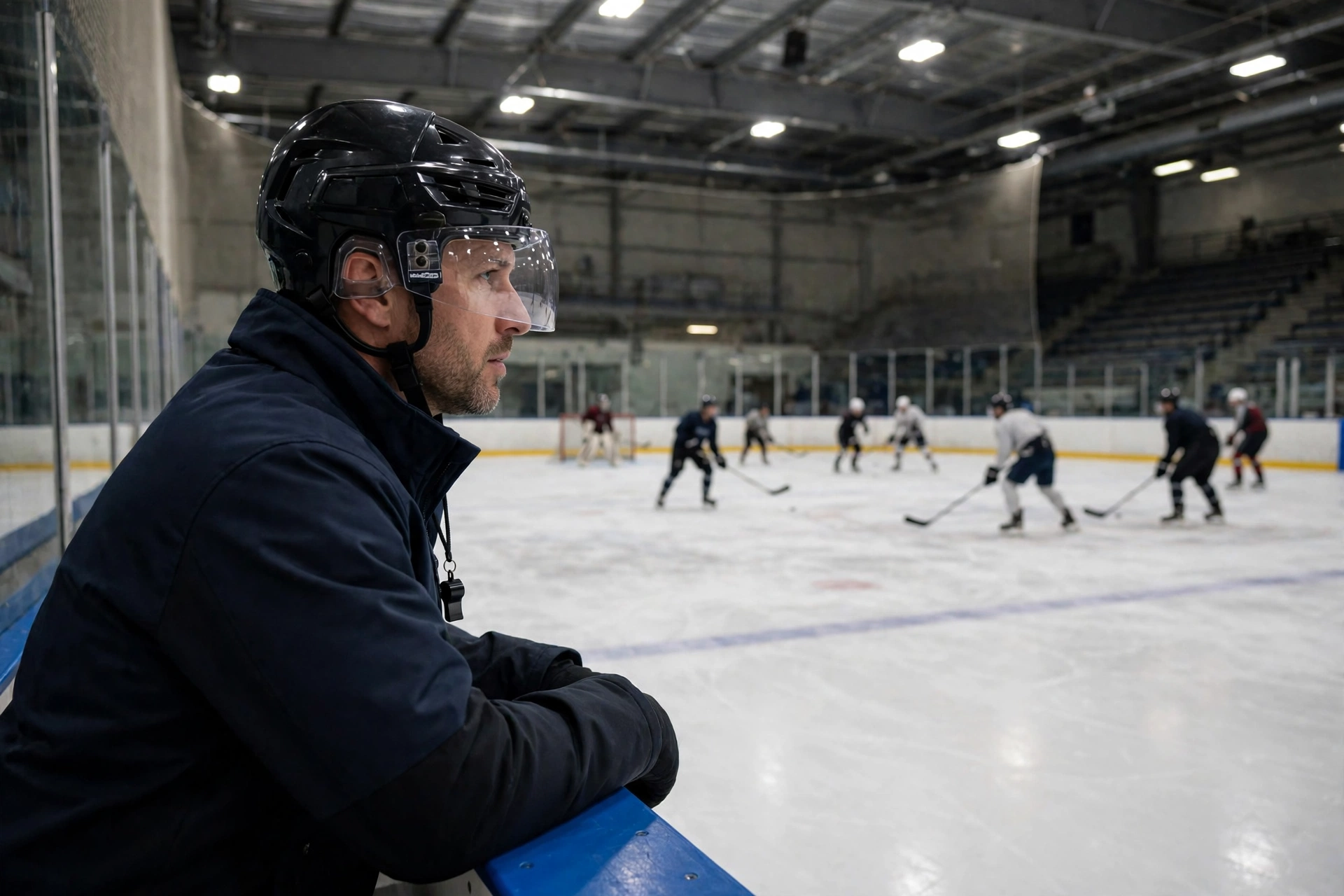
A helmet for ice hockey coaches is a protective hockey helmet worn by a coach while on the ice, and in general terms most coaches who step onto the rink should wear one. Coaches spend time close to the boards, among skaters, pucks, and sticks, and a fall or a stray puck can cause a head injury just as easily for a coach as for a player, so head protection is a sensible part of being on the ice.
Some leagues, rinks, and youth programmes require coaches to wear a helmet whenever they are on the ice, while others leave the choice to the coach. Even where it is not required, wearing one sets a good example for young players, who are far more likely to wear their own helmets without complaint when the adults on the ice do the same. In general terms, a coach’s helmet is the same kind of helmet a player wears, chosen for fit and comfort rather than for speed or style.
Do ice hockey coaches need to wear a helmet?
In general terms, yes, a coach on the ice needs a helmet for the same reasons a player does. A coach may not be skating at full speed or taking part in body contact, but the risks are still there. Pucks can deflect off the boards or a stick without warning, a player can lose an edge and slide into someone standing nearby, and a coach who slips on the ice can hit the back of their head just as hard as anyone else.
Many youth leagues now make helmets compulsory for coaches during practices and games, and some rinks apply the same rule to anyone who steps onto the ice, including parents helping out at a training session. If you coach at a rink with such a rule, you will need a helmet before you are allowed on the ice at all. Even without a rule, wearing one is a simple way to reduce the risk of a serious head injury.
What kind of helmet should a hockey coach wear?
A hockey coach should wear a certified ice hockey helmet, the same type players wear. These helmets are made to protect against impacts from pucks, sticks, boards, and falls on hard ice, and they are tested to standards set by hockey bodies. A bicycle helmet, a ski helmet, or a construction hard hat is not a substitute, because each of those is designed for a different kind of impact.
Look for a helmet that is certified for ice hockey and that fits your head properly, with an adjustable fit system so you can get it snug. Some hockey helmets include a slip-plane liner such as MIPS, which is designed to reduce rotational forces in certain impacts. A cage or visor is a matter of personal choice for a coach, since coaches are not usually in the path of play, but many prefer a clear visor for eye protection during shooting drills.
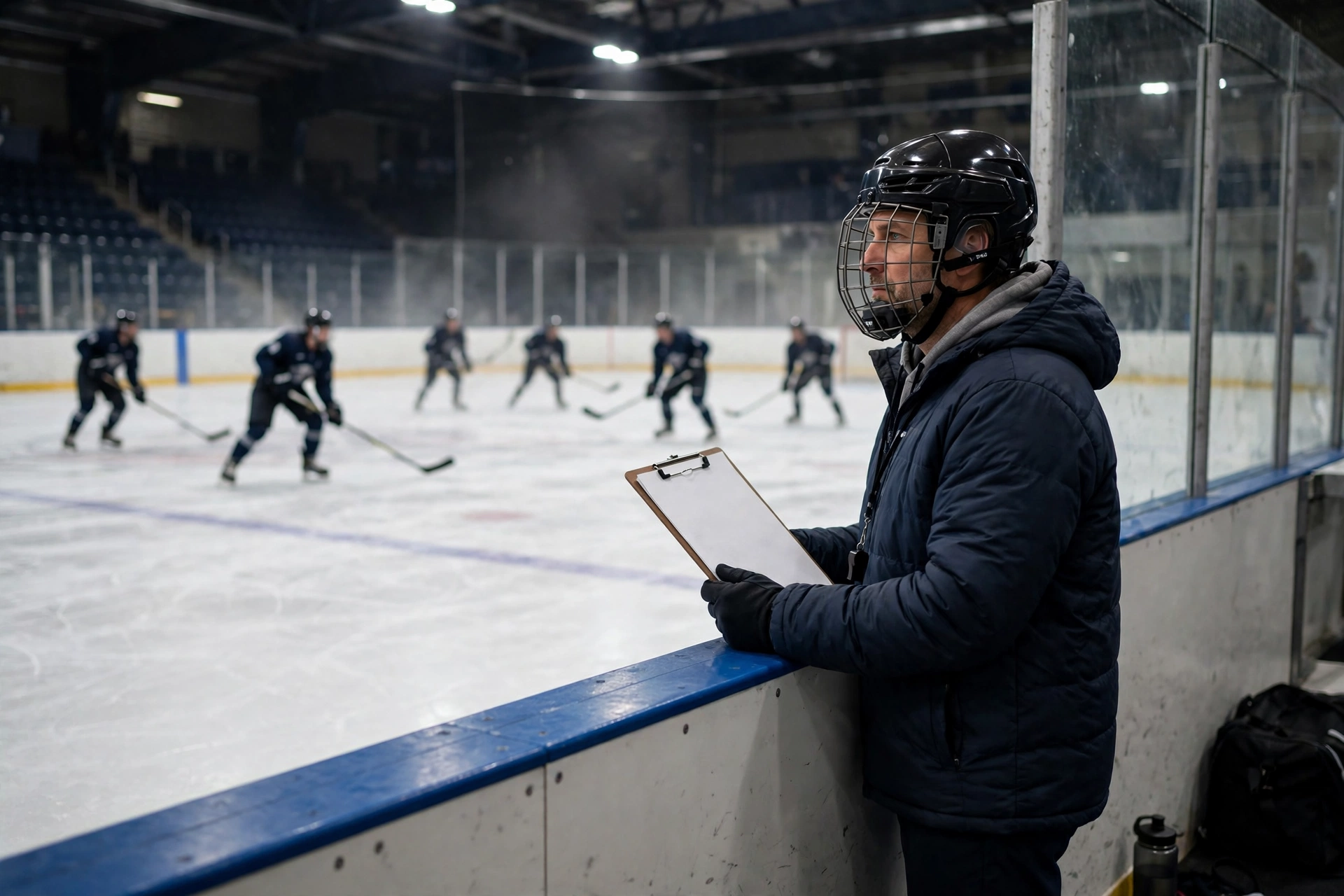
How should a coach’s hockey helmet fit?
A hockey helmet should sit level on your head, low enough at the front to cover your forehead, and snug all round without pressing painfully in any one spot. It should not slide forward over your eyes when you bend down, and it should not tip back and expose your forehead when you look up. The chin strap should be fastened snugly enough that the helmet stays in place when you shake your head.
Most hockey helmets come in sizes that cover a range of head measurements, with adjustable padding or a dial at the back to fine-tune the fit. Try the helmet on with any hat or headband you plan to wear under it, and wear it for a few minutes in the shop to check for pressure points. In general terms, a helmet that is uncomfortable on dry land will only feel worse after an hour on cold ice, so take the time to get the fit right.
What should coaches look for when buying a helmet?
When buying a coach’s hockey helmet, start with certification and fit, then think about comfort and practical details. Check that the helmet carries a recognised hockey certification mark, and check the size range against your own head measurement. A helmet that is too big will wobble, and one that is too small will squeeze, and neither will protect you as well as one that fits properly.
Comfort matters because a coach may wear the helmet for a whole practice session, sometimes for an hour or more. Look for good padding, a liner that can be removed and washed, and vents that let some air through without making your head cold. Ear loops and a chin cup that sit comfortably are worth checking too, and a helmet in a bright or distinctive colour can help players spot you quickly on a busy rink.
How do you look after a hockey coach’s helmet?
Looking after a hockey helmet is mostly a matter of keeping it clean and dry and checking it regularly. After a session, wipe the shell clean and leave the helmet out to dry in the open air, away from direct heat such as a radiator or a hot car. If the liner is removable, take it out and wash it following the maker’s instructions, and let it dry fully before you put it back.
Check the helmet before each use for cracks in the shell, loose screws, worn padding, or a frayed chin strap. In general terms, a helmet that has taken a hard knock, whether from a puck or a fall, should be replaced, even if it looks fine on the outside, because the lining inside may have been compressed. A coach’s helmet may see less hard use than a player’s, but it still needs the same care and the same replacement rule.
Do all hockey coaches have to wear a helmet?
Not everywhere, but many youth leagues and rinks require coaches to wear a helmet on the ice. Even where it is not a rule, wearing one is sensible protection and sets a good example for players.
Can a coach wear a player helmet?
Yes, a coach wears the same certified ice hockey helmet as a player. There is no separate coach-only design, so choose a player helmet that fits well and is comfortable for long sessions.
When should a coach replace a helmet?
Replace it after a hard impact, if the shell is cracked, or if the padding, screws, or chin strap are worn. A helmet that has protected you in a heavy knock should not be relied on again.

Olivia
Writer at Helmet Today, covering helmet reviews, fit and riding safety.