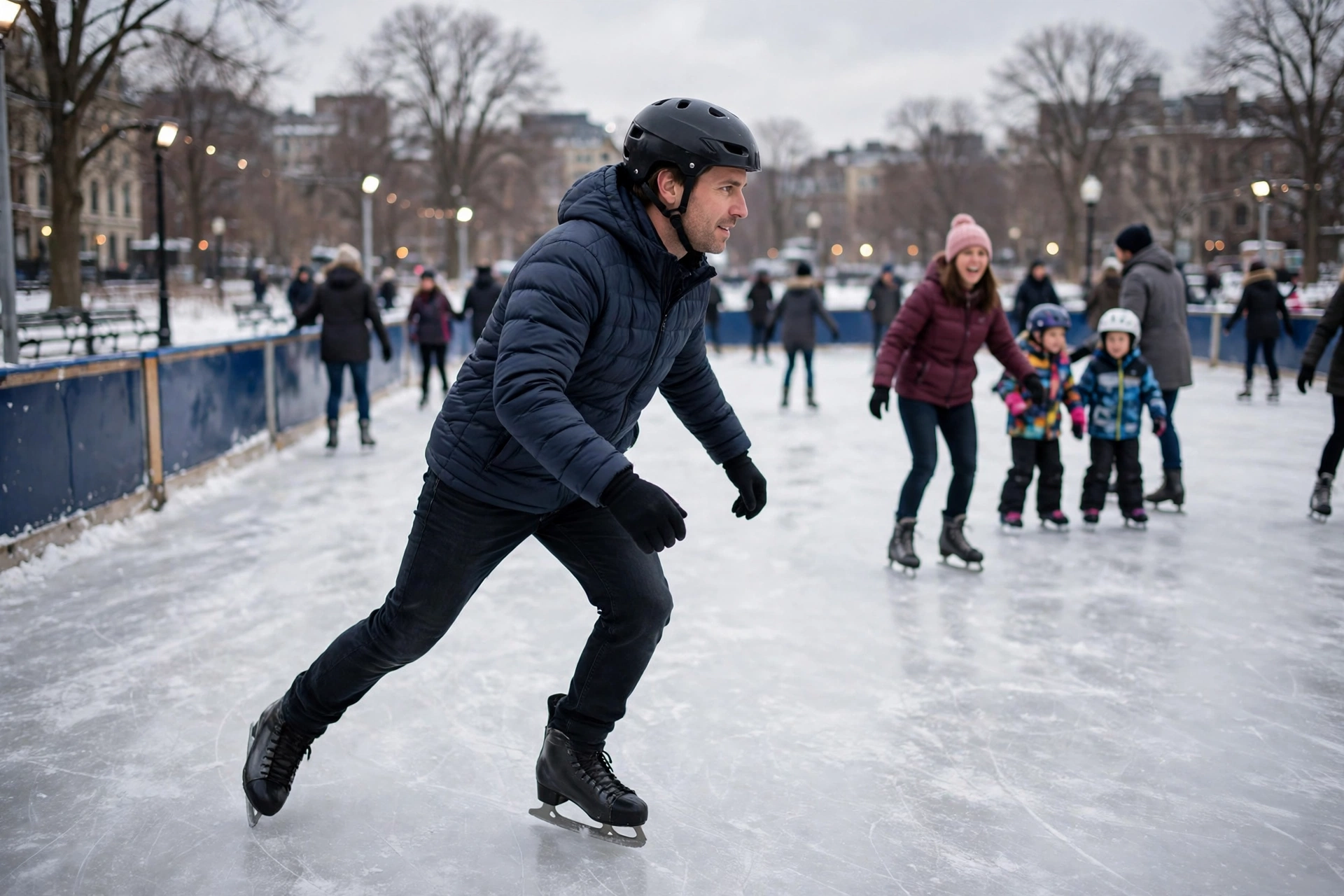
Adults do not always need a helmet for recreational ice skating, but in general terms, wearing one is a sensible choice — especially for beginners, for anyone skating on a busy public rink, or for anyone who is not yet confident on the ice. There is no universal law requiring adults to wear a helmet for a casual skate, but the ice is hard, falls are common, and a helmet is cheap protection against the most serious kind of skating injury.
This guide explains when a helmet matters most for recreational skating, what kind to choose, and how to think about the decision without overthinking a fun afternoon on the ice.
How Likely Is a Fall When Recreational Skating?
Falls are part of recreational skating, especially for beginners. Ice is slippery by design, and a beginner’s balance is still developing. Even experienced skaters fall: a rut in the ice, a collision with another skater, or a moment of lost concentration can send anyone down. Most falls are harmless — you land on your side or your backside and get up laughing — but some falls send you backwards, and a backwards fall is the one that can bring your head into contact with the ice.
Public rinks add another factor: other people. A crowded rink has skaters of all abilities moving in different directions at different speeds, and collisions happen. A child can cut across your path, or a faster skater can clip you from behind. You cannot control what everyone else does, which is part of why a helmet is worth considering even if you are a steady skater yourself.
Who Benefits Most from a Helmet?
Beginners benefit most. If you are learning to skate, you will fall, and you will fall more often than someone who has skated for years. A helmet protects you while your balance and your falling technique are still developing. Many rinks offer helmet hire for exactly this reason, and using one is nothing to be embarrassed about.
Older adults also benefit, because a fall that a younger person shrugs off can be more serious for someone older. Anyone skating with a medical condition that affects balance should consider a helmet too, and should talk to their doctor about skating in general before getting on the ice.
Parents skating with children often wear a helmet as well, partly for their own safety and partly to set an example. Children are usually required to wear helmets at rinks and lessons, and an adult wearing one too makes the rule feel normal rather than a punishment.
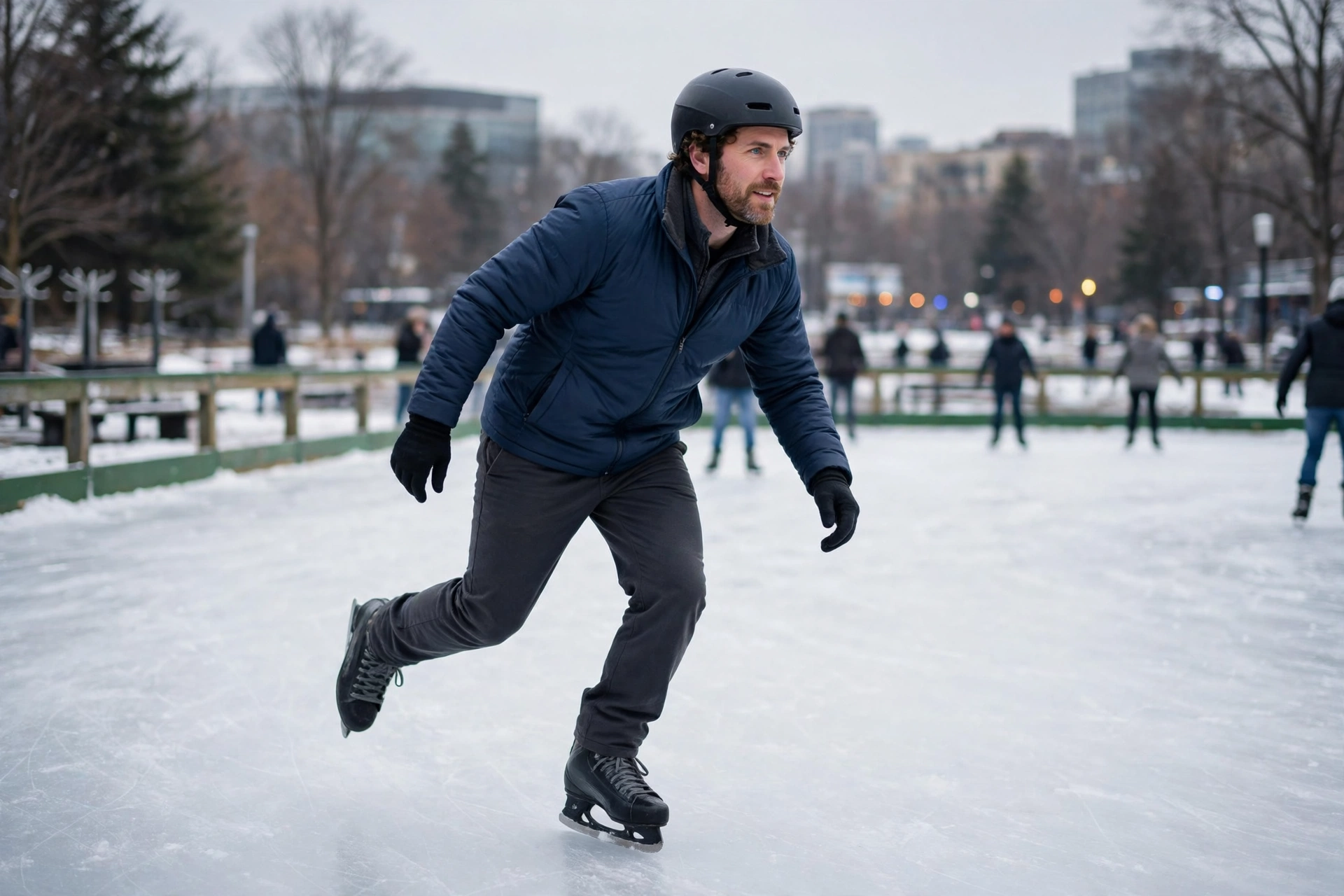
What Kind of Helmet Works for Recreational Skating?
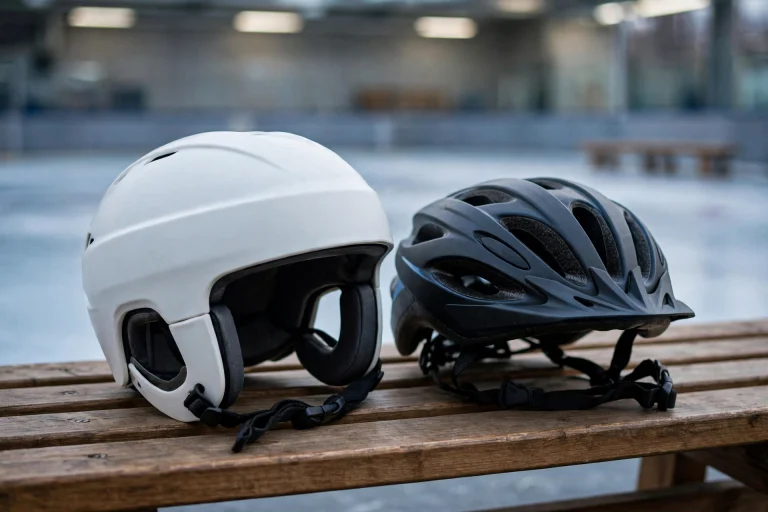
A well-fitting hard-shell helmet is the right choice. A ski helmet, a skate helmet, or a multi-sport helmet can all work for recreational skating, provided it fits properly and covers the head well. The key is fit: the helmet should sit level, feel snug, and stay put when you shake your head. It should cover your forehead without sliding down over your eyes.
A bike helmet can work in a pinch, but it is designed for a different kind of fall, and its ventilation means cold air reaches your head quickly on the ice. A ski helmet is often the most comfortable choice for a rink, because it is warm, it covers the ears, and it is designed for cold conditions. Whatever you choose, make sure the strap fastens securely under your chin.
If you are learning about helmet technology in general, reading about what MIPS is for helmets can help you understand one of the features found in modern helmets.
Do Rinks Require Helmets for Adults?
Most rinks do not require helmets for adults, though the rules vary. Some rinks require helmets for everyone during lessons or for children under a certain age, and some require them for all skaters during busy public sessions. Check the rules of the rink you plan to visit before you go.
Even where helmets are not required, many rinks hire them out cheaply or include one with a lesson. If you are unsure, hiring a helmet for your first few sessions is a low-cost way to find out whether you like skating with one on. In general terms, a rink that offers helmets is a rink that expects falls, and that is a healthy attitude.
How Do You Get Comfortable Skating in a Helmet?
Some adults feel self-conscious wearing a helmet on a public rink, as if it marks them out as a beginner. In practice, nobody notices, and plenty of experienced skaters wear one. The helmet quickly becomes part of the routine, like the skates themselves.
Comfort is mostly about fit. Try the helmet on with whatever hat or headband you wear underneath, and adjust the strap so it is snug but not tight. If the helmet is warm, that is a bonus on the ice, not a problem. After a session or two, you will stop noticing it — and you will have the reassurance of knowing that a fall is far less likely to ruin your day.
Another point worth making is that a helmet can actually help you learn faster. Beginners who feel safe tend to relax, and relaxed skaters learn balance more quickly than tense ones. If you are worried about falling, you will skate stiffly, grip the barrier too hard, and hesitate on every push — all of which make falling more likely, not less. A helmet removes one worry from the list, so you can focus on the skating itself: bending your knees, keeping your weight over your skates, and looking ahead rather than down at your feet. In that sense, the helmet is not just protection for the worst case; it is a learning aid that helps you enjoy the session and come back for another one.
Frequently Asked Questions
Q: Do I need a helmet if I can already skate well?
A: In general terms, no rule requires it, but even good skaters fall. A helmet is a small precaution against a head injury on hard ice, and many confident skaters wear one anyway.
Q: Can I hire a helmet at the rink?
A: Most rinks hire helmets, often for a small fee. Ask when you book, and arrive early enough to find one that fits before your session starts.
Q: Is a helmet enough, or should I wear other protection?
A: A helmet protects your head, which is the priority. Wrist guards and knee pads can help too, especially for beginners, but the helmet is the single most important piece of protection.

Olivia
Writer at Helmet Today, covering helmet reviews, fit and riding safety.