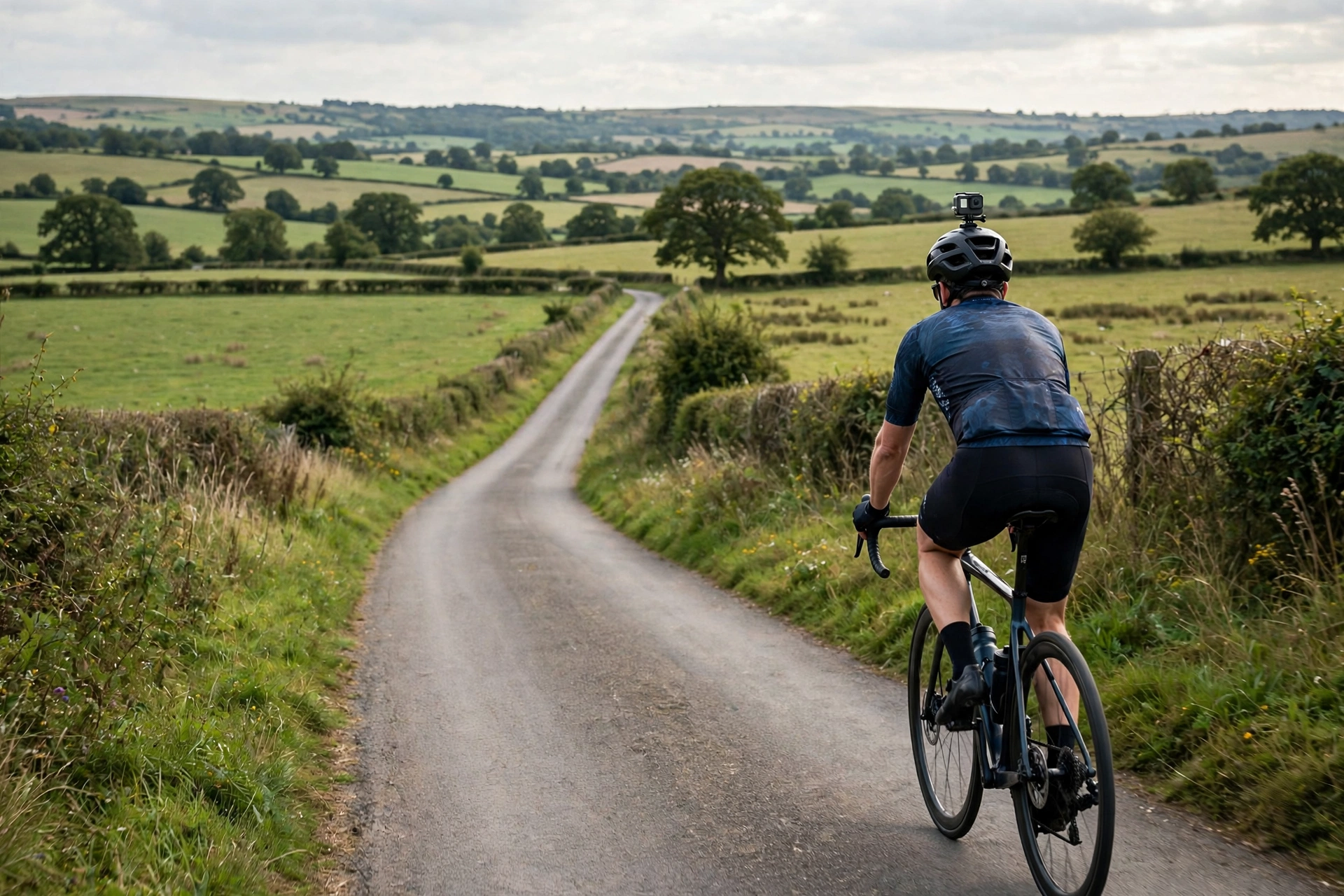
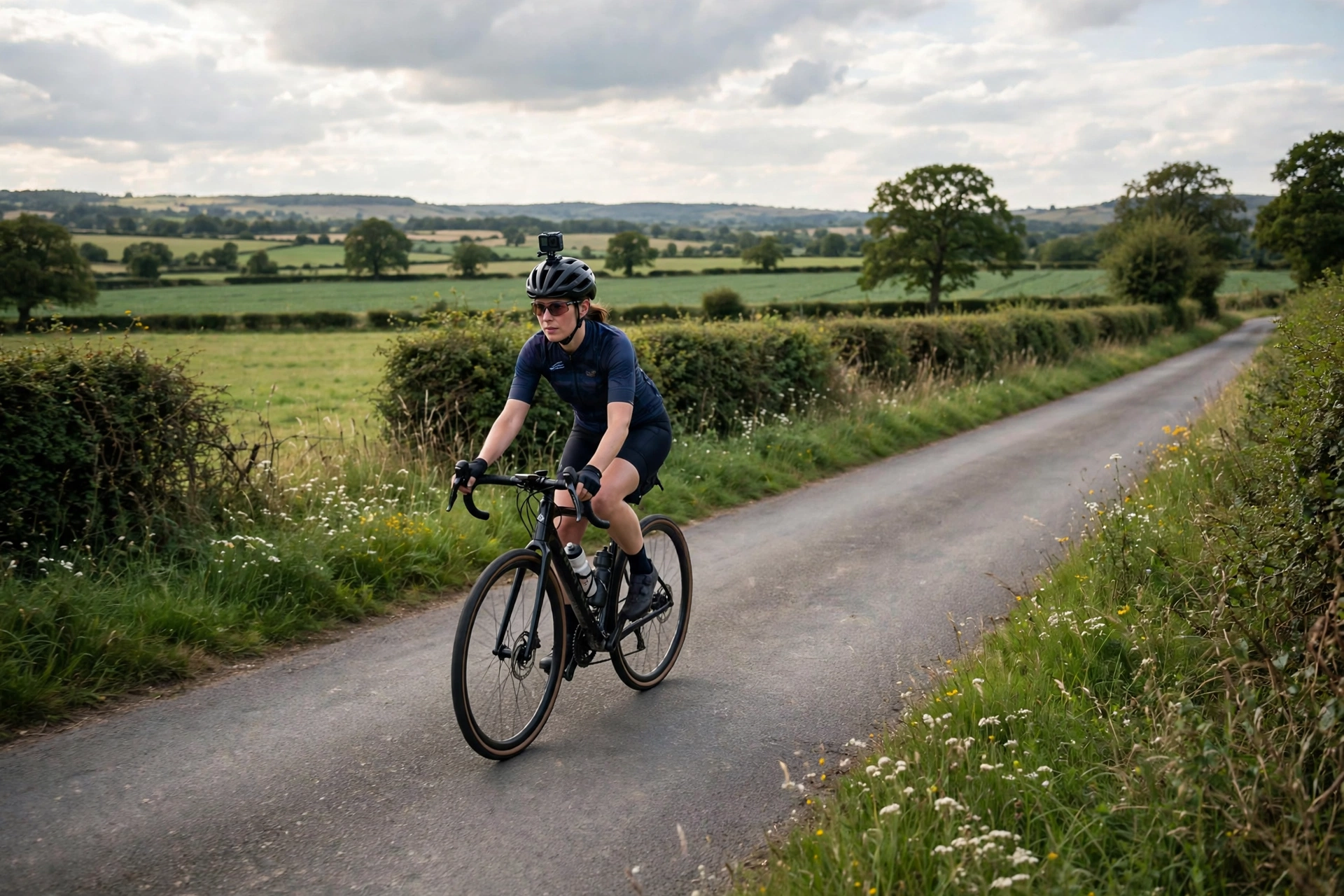
In general terms, a camera mount on a bike helmet is safe when it sits on a flat, central spot, uses a low-profile adhesive or strap mount made for helmets, and does not block vents, change the fit, or stick out far enough to snag. The top centre is usually the best place for a steady, level view of the road or trail ahead, while the front centre suits riders who want the camera low and close to the shell. Side mounts are possible, but they add uneven weight and a catching point, so they need extra care.
Cycling adds speed and vibration that climbing does not, and both matter for a camera mount. A mount that feels solid at a standstill can work loose over a bumpy descent, and a camera that sits high on a long arm can wobble, drag in the wind, and pull at your neck. This guide explains where to place a camera mount on a bike helmet, which mounts to trust, and how to check your setup before you ride.
Where Is the Safest Place for a Camera on a Bike Helmet?
The top centre of the helmet is the most popular safe choice, in general terms, because it keeps the camera balanced and gives a clear view over your handlebars.
The front centre is a good alternative, especially on helmets with a flatter forehead area. A front mount keeps the camera low, reduces wind drag, and makes it easy to check that the camera is recording with a quick glance down.
Side mounts are best used only when you need a particular angle, such as filming a riding partner beside you. A camera on one side pulls your head to that side, makes the helmet feel lopsided, and creates an edge that can catch on branches on a trail. If you do use one, keep the camera tight to the shell, keep the mount short, and test it on a quiet road or easy trail first.
Which Types of Camera Mount Suit a Bike Helmet?
Adhesive mounts made for curved helmet shells are the most common choice, and in general terms they work well on bike helmets when fitted properly. Clean the shell with mild soap and water, let it dry fully, press the mount on firmly, and leave it to bond for the time the maker recommends before attaching a camera. A mount fitted on a dusty, damp, or greasy shell is far more likely to peel off at speed.
Strap mounts that thread through the vents are another option, and they suit riders who want to move the camera between helmets.
Avoid mounts that need holes drilled in the shell, screws driven through it, or glue that is not made for helmet materials. Drilling a bike helmet can weaken the shell in ways you cannot see, and a mount that only fits by forcing it is the wrong mount. The same applies to clamps that grip the shell edge hard enough to deform it. If you are learning about helmet technology, reading about what MIPS is for helmets can help you understand one of the features you may see listed on the box.
Can a Camera Mount Affect How a Bike Helmet Protects You?
A low-profile mount fitted correctly does not normally change how a helmet works, but a badly chosen one can. The main concern is that a hard, protruding mount can concentrate force on one small spot in a fall, or catch on the ground and twist the helmet as you slide.
Weight and position matter too. A heavy camera on a long arm raises the helmet’s centre of gravity, which can make the helmet feel top-heavy and more likely to shift in a crash. Keeping the camera small, light, and close to the shell reduces that effect. If your camera setup feels like it is pulling your head around on descents, it is too heavy or too far out for that helmet.
Vents are another thing to protect.
How Do You Keep a Camera Secure on a Bike Helmet?
Check the mount before every ride, not just when you first fit it. Press it firmly, try to wiggle it side to side, and look for any edge that has started to lift. Heat, cold, rain, and sweat can all weaken an adhesive bond over time, so a mount that was solid last summer may not be solid now. If it moves at all, refit or replace it before you ride with a camera on it.
Use a short tether as a backup, in general terms, so a camera that comes loose does not bounce into the road or into traffic. A thin cord from the camera to a helmet vent is enough, and it should be short enough that the camera cannot swing far or dangle near your wheel.
Keep the camera light and the mount short. A small action camera is a far better match for a bike helmet than a larger camera on an extension arm, which will wobble, catch wind, and strain the mount. Tighten the camera’s fixing by hand until it is snug, and check it again after the first few minutes of riding, when vibration often reveals a loose fitting.
What Should You Check Before Riding with a Mounted Camera?
Fit the helmet first, exactly as you would without a camera: level on your head, low enough to cover your forehead, with the strap snug under your chin. Then attach the camera and shake your head gently. The helmet should not rock or slide, and the camera should not wobble. Look ahead, look down at your front wheel, and turn your head both ways to check the camera does not block your view of the road or trail.
Take a short test ride before a long one. Ride over a rough surface, brake firmly, and ride into a headwind if you can. Listen for rattling, watch for the camera tilting, and notice whether the extra weight bothers your neck. If anything feels wrong, stop and adjust the mount rather than hoping it settles on its own.
Finally, think about where you ride. On busy roads, a camera can be useful for recording your ride, but it should never distract you from traffic. Set the camera recording before you set off, and do not fiddle with it while riding. If you need to change a setting, pull over somewhere safe first.
Frequently Asked Questions
Q: Can I stick a camera mount on any bike helmet?
A: In general terms, yes, if the shell has a fairly flat area for the base and the mount is made for helmets. Helmets with heavily ridged shells or very large vents may not give an adhesive mount enough contact, so a strap mount may suit them better.
Q: Will a camera mount stop my helmet venting properly?
A: It can do if it covers several vents. Place the mount between vents where you can, keep it small, and leave as much airflow open as possible so the helmet stays comfortable on warm rides.
Q: Should I remove the camera for fast descents?
A: In general terms, it is sensible to remove a heavy or high-mounted camera before a fast, technical descent. A light, low-profile camera that is firmly fixed is usually fine, but the descent itself should always come first.

Olivia
Writer at Helmet Today, covering helmet reviews, fit and riding safety.