In North Carolina, e-bike riders and passengers under 16 must wear a helmet. For riders 16 and older, state law does not generally require a helmet on an e-bike — but wearing one is strongly recommended at any age, and some local rules and Class 3 provisions can differ.
North Carolina treats e-bikes much like regular bicycles, which keeps the rules simple for most adults. Still, parents, teen riders, and anyone on a faster Class 3 bike should know exactly where the requirements sit. This guide explains the under-16 rule, how e-bike classes work in the state, where local rules can add requirements, and how penalties work in general terms.
Who Must Wear a Helmet on an E-Bike in North Carolina?
The state’s bicycle helmet requirement applies to children: riders and passengers under the age of 16 must wear a properly fitted bicycle helmet on public roads and public bicycle paths, and that requirement carries over to e-bikes, which North Carolina law treats as bicycles when they meet the state’s e-bike definition.
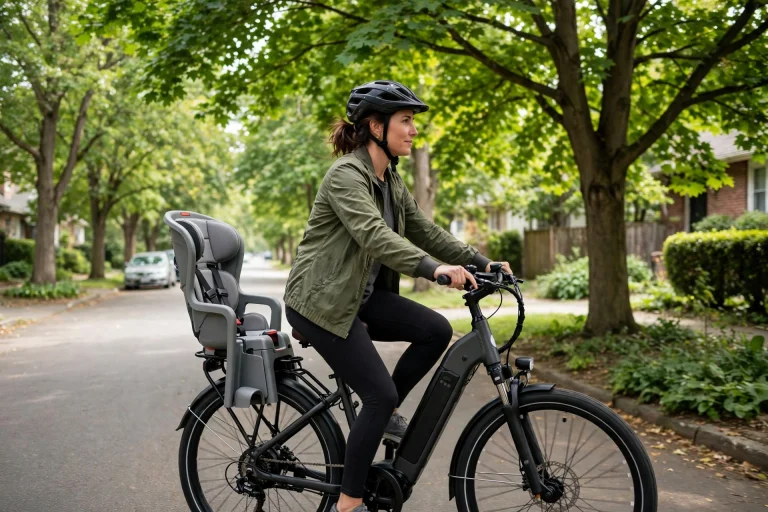
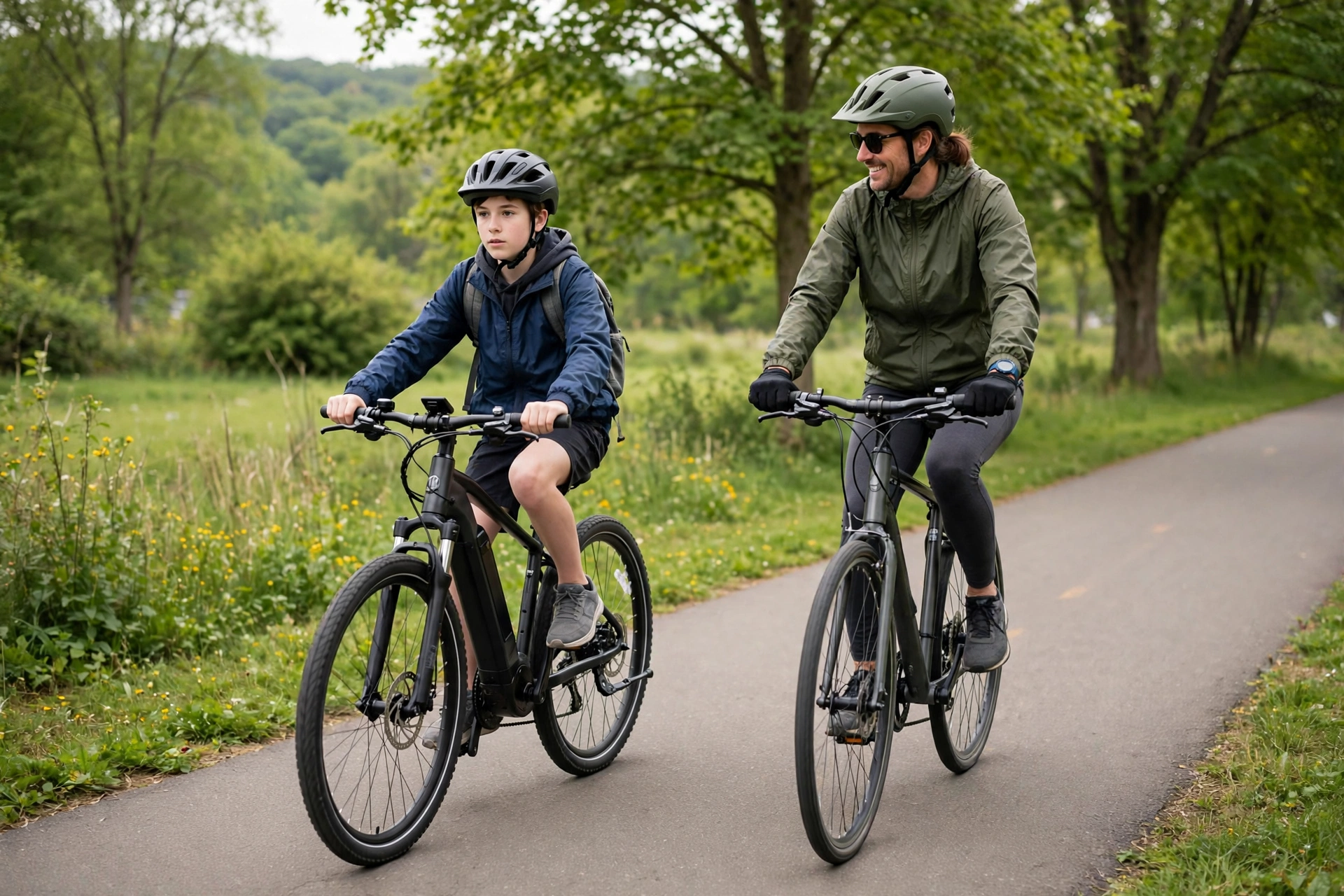
That means a 14-year-old riding a Class 1 e-bike to school needs a helmet, and so does a younger child riding as a passenger — for example in a child seat or on a cargo e-bike. Parents and guardians are the ones expected to make sure it happens.
Adults are not covered by a general state helmet mandate for bicycles or e-bikes. That is a legal minimum, not a safety recommendation — safety groups advise a helmet for every rider, every ride.
How Does North Carolina Define an E-Bike?
North Carolina recognizes an electric-assisted bicycle as a bicycle-style vehicle with fully operable pedals and an electric motor of limited power, in general terms up to 750 watts, that is not capable of exceeding about 20 mph on motor power alone on level ground under the state’s traditional definition. Bikes that fit that definition are treated like bicycles: no license, registration, or insurance requirement for the rider.
Like most states, North Carolina riders also talk in terms of the three-class system used by manufacturers: Class 1 pedal-assist up to 20 mph, Class 2 throttle-assisted up to 20 mph, and Class 3 pedal-assist up to 28 mph. Class 3 machines sit at the edge of the traditional definition, so if you ride one, check how your specific bike is classified and where it is allowed.
Devices with more power or higher motor-only speeds can fall outside the e-bike definition entirely and be treated as mopeds or motor vehicles, with different rules. If a bike has no pedals or a motor well above 750 watts, do not assume bicycle rules — or bicycle helmet rules — are the whole story. For a national overview, see our guide to which states have helmet laws.
Are There Extra Rules for Class 3 E-Bikes?
Class 3 is where riders should pay the closest attention. Because these bikes assist to 28 mph, many states add requirements for them — commonly a helmet requirement for all riders regardless of age, a minimum rider age, and restrictions on where the bike can be ridden, such as bike paths and multi-use trails.
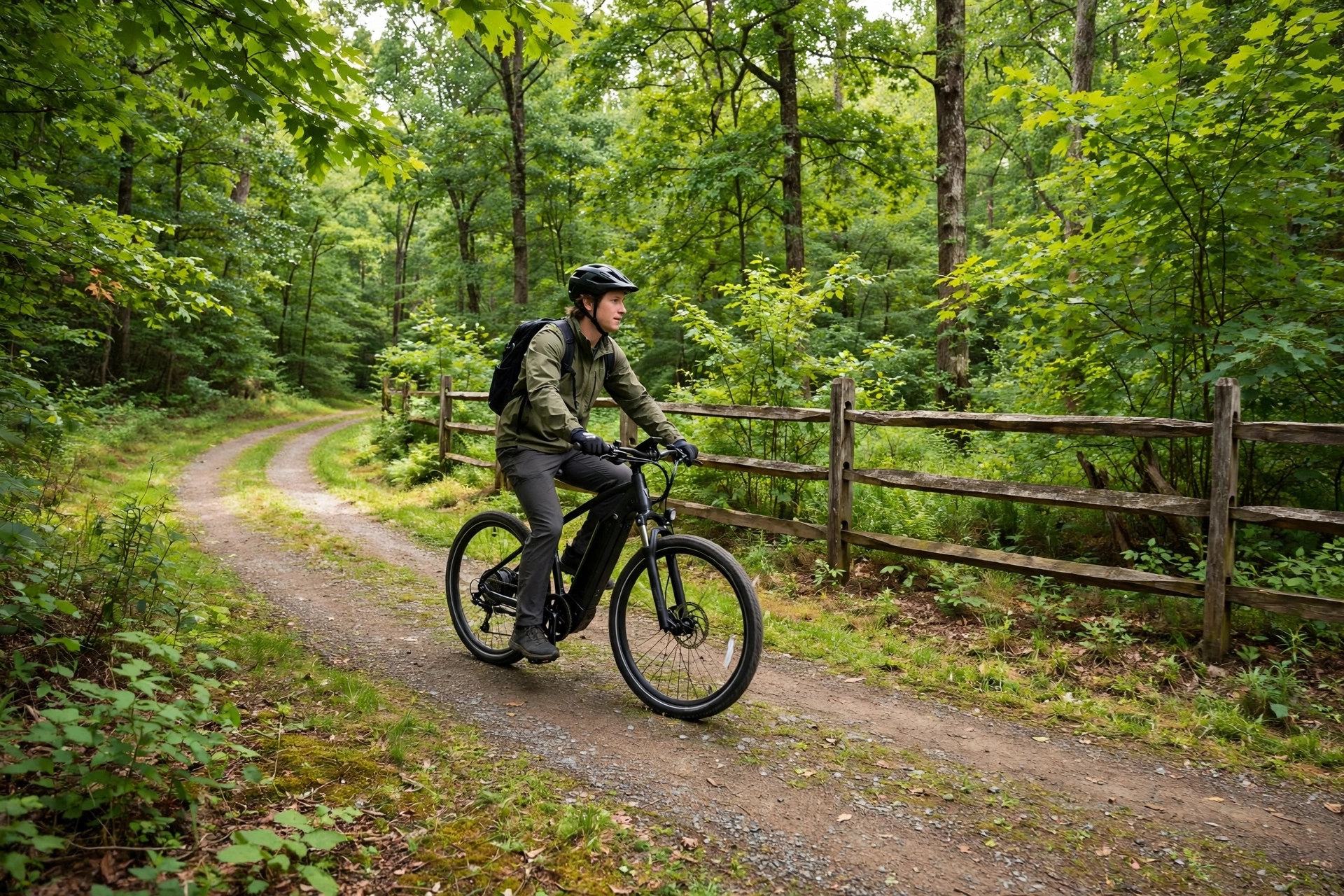
North Carolina’s framework is still evolving, and rules can be updated. Rules for faster e-bikes can change, and in general terms Class 3 riders in many places face helmet requirements that Class 1 and 2 riders do not. Before riding a Class 3 bike on trails or paths, confirm the current state rules and the rules of the trail system itself, since path managers can set their own limits.
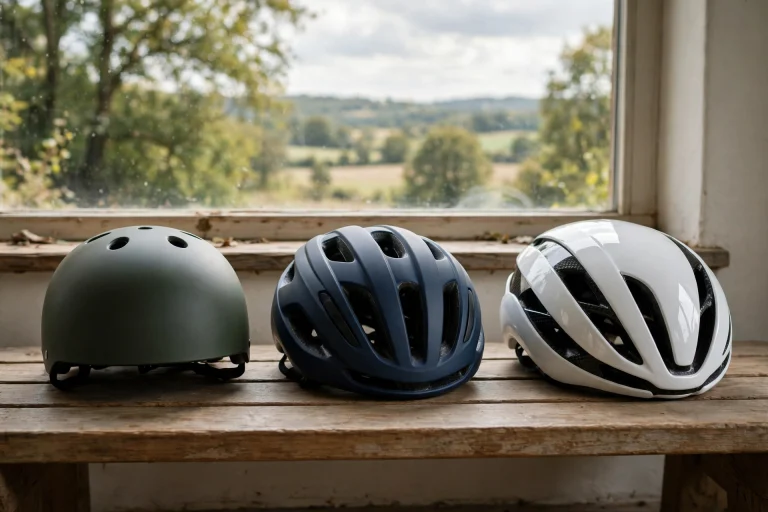
Whatever the paperwork says, the physics are clear: at 28 mph, choose a helmet built for that speed. An e-bike helmet with extended coverage, and ideally NTA 8776 certification, is the sensible match for Class 3 riding anywhere.
Can Cities or Trails in North Carolina Set Their Own Helmet Rules?
Yes, local rules can add to the state baseline. Cities and towns can pass their own ordinances affecting bicycles and e-bikes, and operators of greenways, parks, and trail systems can set conditions for using their facilities — including helmet requirements and class restrictions for e-bikes.
College campuses, military bases, and private trail networks in the state commonly run their own rulebooks as well. Rental and tour operators almost always require helmets for every customer regardless of age, as a condition of the rental, even though state law does not demand it of adults.
The practical habit is simple: if you are riding somewhere new — a different city, a state park, a campus — check the posted rules at the trailhead or on the operator’s website. It takes a minute and avoids a citation or being turned away.
What Happens If a Child Rides Without a Helmet?
Enforcement of the under-16 helmet rule is aimed at education and safety rather than heavy punishment. In general terms, a violation is treated as a minor infraction, and fines vary — they are modest, and in many bicycle helmet laws of this type a first charge can be reduced or dismissed if the rider gets a helmet and shows proof. Do not rely on leniency; the exact handling depends on the locality and the circumstances.
The more important consequence is not financial. A child’s unprotected head in a 15 mph fall onto pavement is how preventable brain injuries happen, and an e-bike lets a young rider reach that speed with almost no effort. A certified helmet that fits properly is inexpensive insurance against that risk.
Fit matters for the helmet to count, legally and physically: it should sit level and snug, straps fastened, with the side straps forming a V below each ear and about one finger of room under the chin strap. A dangling, unstrapped helmet protects nobody.
What Helmet Should North Carolina E-Bike Riders Choose?
For under-16 riders, any properly certified bicycle helmet — look for the CPSC label — worn correctly on every ride satisfies the law. For teens on faster bikes and adults riding voluntarily, stepping up to an e-bike-specific helmet with deeper coverage is worth it.
Modern rotational protection is a smart addition at e-bike speeds; our explainer on what MIPS is and how it works describes how these liners manage angled impacts. Many youth and commuter helmets now include MIPS or a similar system at modest prices.
Replace a child’s helmet after any crash, when it is outgrown, or when the straps and pads wear out — kids outgrow helmets faster than the foam ages. Adults should replace theirs after any impact too, and roughly every five years as materials age, per most manufacturers’ guidance in general terms.
Frequently Asked Questions
Q: Do adults have to wear a helmet on an e-bike in North Carolina?
A: No general state law requires it for riders 16 and older on a standard e-bike. Local ordinances, trail rules, and rental contracts can still require one, and wearing a helmet is strongly recommended regardless.
Q: Does the under-16 helmet rule apply to e-bike passengers too?
A: Yes. North Carolina’s child helmet requirement covers both riders and passengers under 16, whether the child is pedaling, riding in a child seat, or on a cargo e-bike.
Q: What is the fine for a child riding without a helmet in NC?
A: Fines vary by locality and circumstance, and the law is enforced mainly as a safety measure with modest penalties. A first violation may be reduced or dismissed in many cases once a helmet is obtained — but the real risk is injury, not the ticket.

Olivia
Writer at Helmet Today, covering helmet reviews, fit and riding safety.