FIM helmet homologation is the approval given by the FIM, the international governing body for motorcycle racing, to helmets that meet its racing standard and are allowed for use in FIM competitions. In general terms, homologation means the helmet has been tested to the FIM standard and has been listed as approved for racing, rather than simply meeting a road standard such as ECE or DOT. It is the extra step that separates a road-legal helmet from a race-approved one.
For track riders and racers, FIM homologation is the mark that race organisers look for. For road riders, it is less relevant, but it is still a useful sign of a helmet that has been tested to a demanding racing benchmark. This guide explains how FIM homologation works, which helmets carry it, and what it means for track days.
What Is the FIM?
The FIM is the Fédération Internationale de Motocyclisme, the international governing body for motorcycle sport. In general terms, it sets the rules for international motorcycle racing, including the technical rules for the bikes and the safety rules for the riders’ equipment. Its helmet standard is part of that role: it sets out what a helmet must do to be allowed in FIM competitions.
The FIM works with testing laboratories and helmet manufacturers to develop its standard, and it updates the standard as helmet technology and racing knowledge develop. A helmet that is homologated under the current FIM standard has been tested to the version of the standard that is in force at the time of its approval.
Because the FIM governs international racing, its standard is recognised at race tracks around the world. A helmet that carries FIM homologation can be used in FIM events in different countries, which is one reason manufacturers seek the approval for their racing helmets.
How Does FIM Homologation Work?
FIM homologation starts with the helmet manufacturer submitting a helmet model for testing. In general terms, the helmet is tested in a laboratory against the FIM standard, which looks at impact protection, the strength of the shell and liner, and the way the helmet performs in the kinds of impacts a racer is likely to meet. The helmet must pass the tests to be homologated.
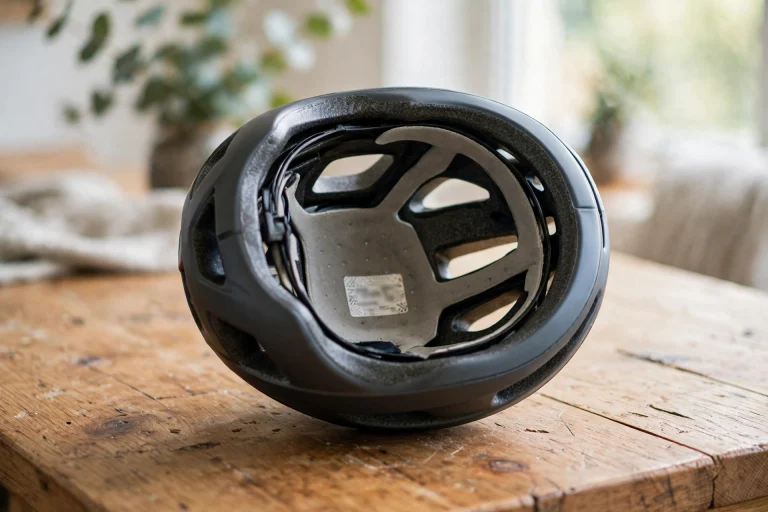
If the helmet passes, it is listed by the FIM as a homologated helmet, and the manufacturer can mark the helmet with the FIM homologation label. That label shows the helmet model, the standard it meets, and a code that identifies the approval. Race officials can check the label and the FIM list to confirm that a helmet is approved for competition.
Homologation is not a one-off event that lasts forever. The FIM can update its standard, and helmets approved under an older version may need to be re-tested or replaced as the standard changes. Racers should check that their helmet is homologated under the version of the standard that their event requires.
Is FIM Homologation the Same as ECE or Snell?
No, FIM homologation is a separate approval from ECE or Snell, even though all three are helmet standards. In general terms, ECE 22.06 is a road standard used in Europe and many other countries, Snell is a voluntary standard used mainly in the United States, and FIM homologation is a racing approval for use in FIM competitions. A helmet can carry more than one of these marks, but each one is granted separately.
Many racing helmets do carry more than one mark. A helmet may be ECE certified for road use, Snell certified as an extra voluntary check, and FIM homologated for racing, all at the same time. That is common for high-end racing helmets, because the manufacturer wants the helmet to be usable on the road, on the track, and in competition.
For a rider, the marks together tell a fuller story than any one mark on its own. The road mark shows the helmet meets the legal standard for road use, while the FIM mark shows it has also been approved for the demands of racing. Neither mark on its own tells you whether the helmet fits you, which is still the first thing to check.
Do You Need a FIM Homologated Helmet for Track Days?
In general terms, most track day organisers do not require FIM homologation, and a helmet that meets a recognised road standard such as ECE 22.06 is usually enough for a track day. FIM homologation is mainly required for racing, where the rules are set by the FIM or by a national racing body that follows FIM rules. A track day is not a race, so the requirements are usually less strict.
That said, some track day organisers may ask for a higher standard than the road minimum, and some riders choose a FIM homologated helmet for the extra reassurance it offers. If you are planning to move from track days into racing, buying a FIM homologated helmet early can save you from having to buy a second helmet later.
If you are learning about the technologies that can sit inside a race-approved helmet, reading about what MIPS is for helmets can help you understand one of the features some modern helmets include in addition to their certification.
What Should You Check Before Buying a FIM Homologated Helmet?
Start with the label. A FIM homologated helmet carries a label showing the FIM homologation mark, the helmet model, and the approval code. Check that the label is clear and permanent, and that the details match the helmet you are holding. If the label is missing or hard to read, ask the seller to explain.
Next, check the fit, because a race helmet that does not fit will not protect you properly. It should sit level, feel snug all round, and stay put when you shake your head. The visor should be clear and free of scratches, the chin strap should fasten securely, and the helmet should feel comfortable enough to wear for a full session on track.
Finally, check the rules of the event you plan to enter. If you are racing, confirm that your helmet is homologated under the version of the FIM standard your event requires, and keep the paperwork that comes with the helmet. A helmet that is FIM homologated, fits well, and is in good condition is the right starting point for racing.
Frequently Asked Questions
Q: Does FIM homologation mean a helmet is legal for road use?
A: Not on its own. FIM homologation is a racing approval, so a helmet also needs to meet the road standard that applies where you ride, such as ECE or DOT, to be legal on the road.
Q: How long does FIM homologation last?
A: In general terms, a homologation applies to a helmet model under the version of the standard in force when it was approved. If the FIM updates its standard, older approvals may no longer meet the current requirement for new events.
Q: Can any helmet be FIM homologated?
A: No. Only helmets that are submitted for testing and pass the FIM standard are homologated. Most road helmets are not submitted, because FIM homologation is aimed at racing helmets.

Olivia
Writer at Helmet Today, covering helmet reviews, fit and riding safety.