JIS helmet standards are the Japanese Industrial Standards that cover helmets sold and used in Japan, setting out how a helmet should perform in testing and how it should be marked. In general terms, JIS is the national standards system of Japan, and the helmet standards within it are the benchmarks that manufacturers, sellers, and riders in Japan look to when they want to know whether a helmet meets a recognised safety requirement. A helmet that meets the relevant JIS standard carries a JIS mark showing that it has been made to that standard.
For riders outside Japan, JIS standards are less familiar than DOT, ECE, or EN standards, but they matter for anyone buying a helmet from Japan or riding there. For riders in Japan, they are the local benchmark. This guide explains what JIS covers, which helmets it applies to, and what to check on the label.
What Is JIS?
JIS stands for Japanese Industrial Standards, the national system of standards used in Japan across many industries, from manufacturing to consumer products. In general terms, a JIS standard is a published set of requirements that a product must meet, and a product that meets the standard can carry the JIS mark. The system is overseen by the Japanese authorities, and the standards are developed with input from industry, testing bodies, and other experts.
Helmet standards are only one part of the JIS system, but they follow the same idea: they set out the performance a helmet should offer, the tests it should pass, and the information that should come with it. A helmet standard covers the shell, the impact-absorbing liner, and the retention system, because all three parts work together to protect the rider.
The JIS mark is a sign that a helmet has been made to the relevant standard. It is not a guarantee that the helmet is the best one for every rider, and it does not replace a proper fit, but it does show that the helmet has been produced to a recognised benchmark rather than to no standard at all.
Which Helmets Do JIS Standards Cover?
JIS standards cover different types of helmet for different uses, including motorcycle helmets and bicycle helmets, with separate standards for each type. In general terms, a motorcycle helmet standard looks at the higher speeds and different impacts of motorcycling, while a bicycle helmet standard looks at the falls a cyclist is likely to meet. A helmet made for one use should not be assumed to meet the standard for another.
This is an important point for buyers. A helmet that carries a JIS mark should be checked to see which standard it meets and which use it was made for. The marking on the helmet, and the information that comes with it, should make that clear. If it does not, ask the seller before you buy.

How Are JIS Helmets Tested?
In general terms, JIS helmet testing follows the same broad approach as other helmet standards: a headform is fitted inside the helmet, the helmet is dropped onto a shaped surface to simulate an impact, and the test measures how much force reaches the headform. The helmet must keep that force within the limits set by the standard, and it is tested at more than one point on the shell.
The retention system is also tested, to check that the chin strap and buckle hold the helmet in place under load. A helmet that absorbs impact well but slips off in a crash would not offer the protection a rider needs, so the strap test is an important part of the standard. The field of vision the helmet allows is also checked, so that a rider can see enough of the road to ride safely.
Helmets may also be tested after being conditioned in different temperatures, because helmet materials can behave differently when they are hot or cold. This matters in Japan, where riders meet hot summers and cold winters, and a helmet that only performs well at room temperature would not be a reliable piece of safety equipment.
How Do You Recognise a JIS Certified Helmet?
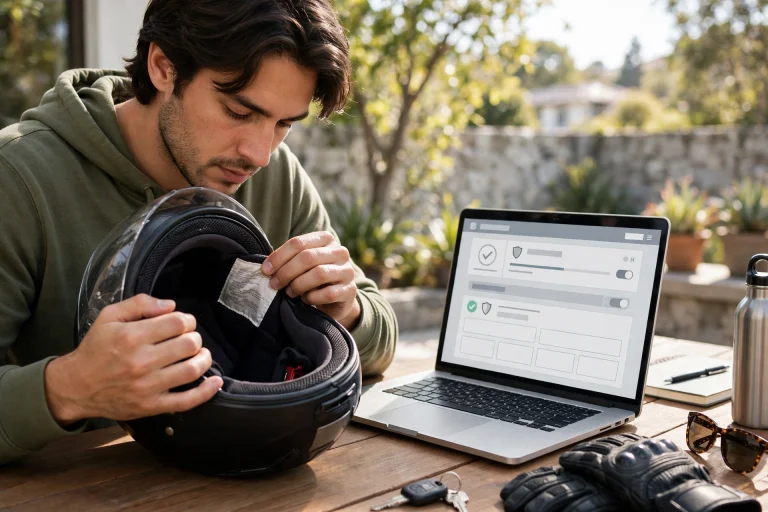
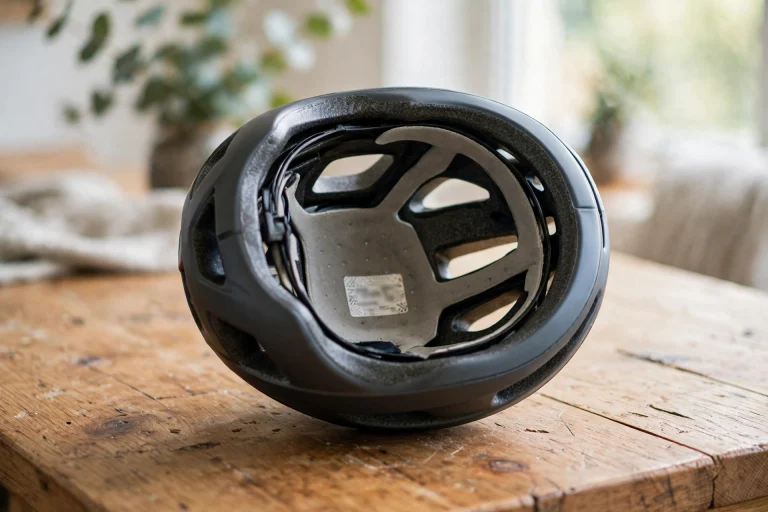
A JIS certified helmet carries the JIS mark, usually on a label inside the helmet or on the shell, along with the number of the standard it meets. In general terms, the label should be clear, permanent, and easy to read, and the details on it should match the helmet you are holding, including the manufacturer and model. A loose sticker that could have been added later is not a good sign.
When you check a helmet, look inside the shell for the label and read it properly. It may be on a tag sewn into the lining or printed on a label fixed to the helmet. If the label is missing, hard to read, or does not match the helmet, ask the seller to explain. A genuine JIS helmet should have no reason to hide its marking.
If you are learning about the technologies that can sit inside a certified helmet, reading about what MIPS is for helmets can help you understand one of the features some modern helmets include in addition to their standard certification.
What Should You Check Before Buying a JIS Helmet?
Start with the marking, then check the fit. The helmet should sit level on your head, feel snug all round without pressing hard in one place, and stay put when you shake your head gently. A helmet that meets the standard but does not fit properly will not protect you as well as it should, so try it on before you buy if you can.
Next, look at the build. The shell should feel solid, the liner should be firm and evenly fitted, and the chin strap should fasten securely. Check the visor, if the helmet has one: it should be clear, free of scratches, and easy to see through. Try the helmet on with any glasses you normally wear, to make sure nothing presses or catches.
Finally, buy from a seller you trust and keep the receipt and any paperwork that comes with the helmet. A helmet should be replaced after a hard impact, even if the damage is not visible, because the liner inside can be damaged in ways you cannot see. A helmet that meets the relevant JIS standard, fits well, and is in good condition is the combination that gives you real protection.
Frequently Asked Questions
Q: Is a JIS helmet legal to use outside Japan?
A: In general terms, a JIS helmet is a properly certified helmet, but other countries recognise their own standards, such as ECE in Europe and DOT in the United States. Check the rules where you ride before you rely on a JIS mark alone.
Q: Does the JIS mark mean a helmet is safe for motorcycling?
A: Only if the helmet meets the JIS standard for motorcycle helmets. A JIS bicycle helmet is made for cycling, not motorcycling, so check which standard the mark refers to before you buy.
Q: Can a helmet carry a JIS mark and another standard mark at the same time?
A: Yes. Many helmets sold by major brands are made to meet more than one standard, so a single helmet can carry the JIS mark alongside marks such as ECE or DOT.

Olivia
Writer at Helmet Today, covering helmet reviews, fit and riding safety.