Hard shell and in-mould are two different ways of building a helmet: a hard shell helmet has a separate, thicker outer shell fitted over the foam liner, while an in-mould helmet bonds a thin shell to the foam in a single moulding step. Both types can meet the same safety standards, and both are widely used. The difference is in weight, toughness, price and how they handle everyday knocks.
Choosing between them is less about safety in the abstract and more about how you ride and what you want from a helmet. This guide explains how each type is built, how they compare, and which suits different kinds of riding.
How Is a Hard Shell Helmet Built?
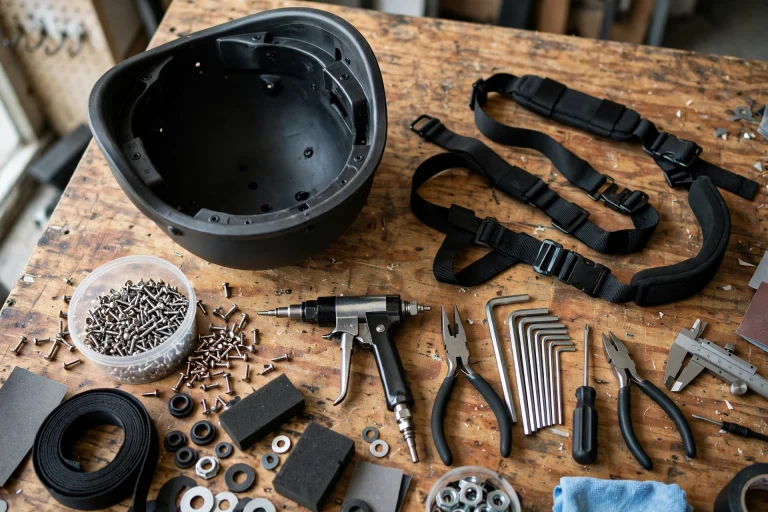
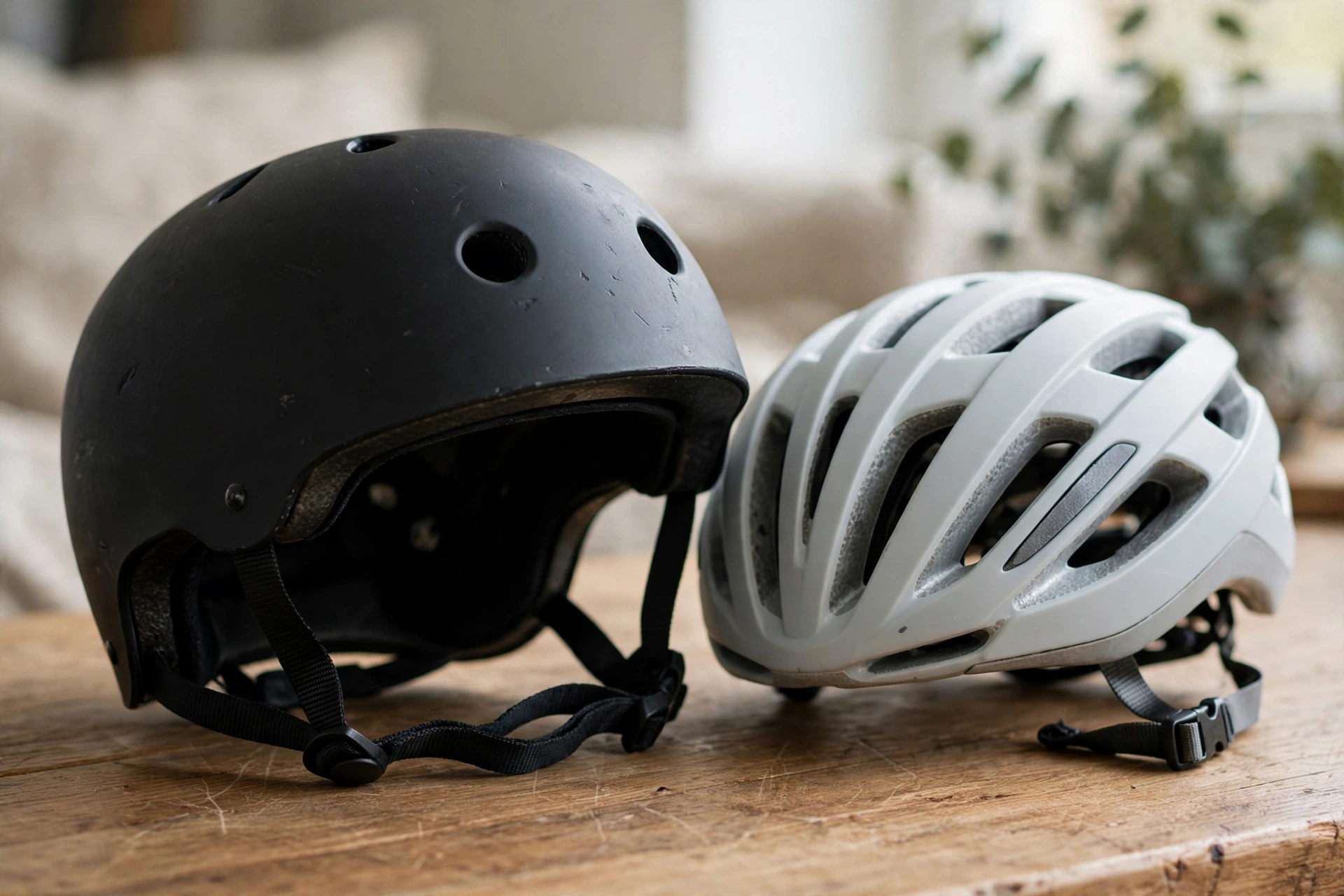
A hard-shell helmet starts with a separate outer shell, usually moulded from ABS plastic. The shell is made on its own, then the foam liner, usually expanded polystyrene (EPS), is fitted inside it. The two parts are held together by glue, clips or a snug fit, and the comfort padding goes in last.
Because the shell is made separately, it can be thicker and tougher than the thin shell of an in-mould helmet. That thickness is what gives a hard-shell helmet its resistance to dents, scrapes and everyday knocks. The shell can take a fair amount of rough handling without showing damage.
Hard-shell helmets are common in skateboarding, BMX, commuting and some ski helmets. They are often the more affordable option, because the moulding process is simpler and the materials are cheaper than those used in many in-mould helmets.
How Is an In-Mould Helmet Built?
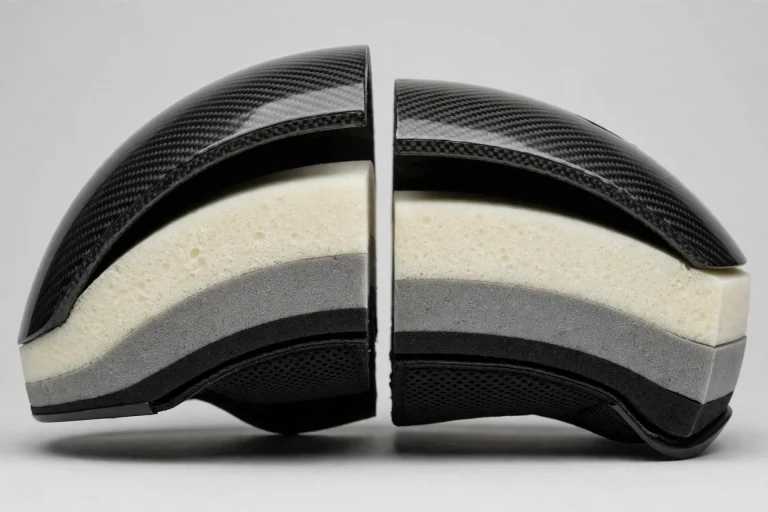
An in-mould helmet is built in one step. A thin polycarbonate shell is placed in a mould, and the foam liner is formed and bonded to it inside the same mould. Heat and pressure fuse the two together, so the helmet comes out as a single piece with no separate join to make.
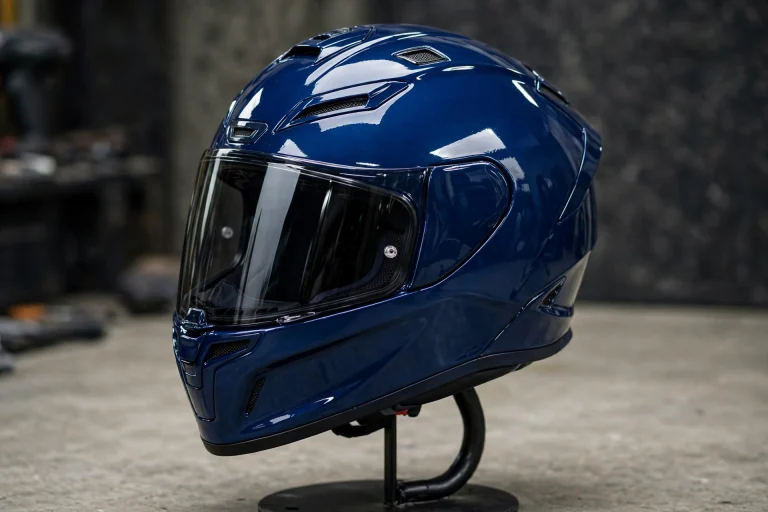
The result is a lighter helmet with a smooth, polished finish. The vents are shaped as part of the mould, so they line up neatly through the shell and the foam. The bond between shell and liner is even across the whole helmet, which helps the two work together in a knock.
In-mould construction is common in road cycling, mountain biking, climbing and many ski helmets, where low weight and good ventilation matter. The thin shell is lighter than a hard shell, but it is also easier to dent, so the helmet needs a little more care.
How Do They Compare on Weight and Ventilation?
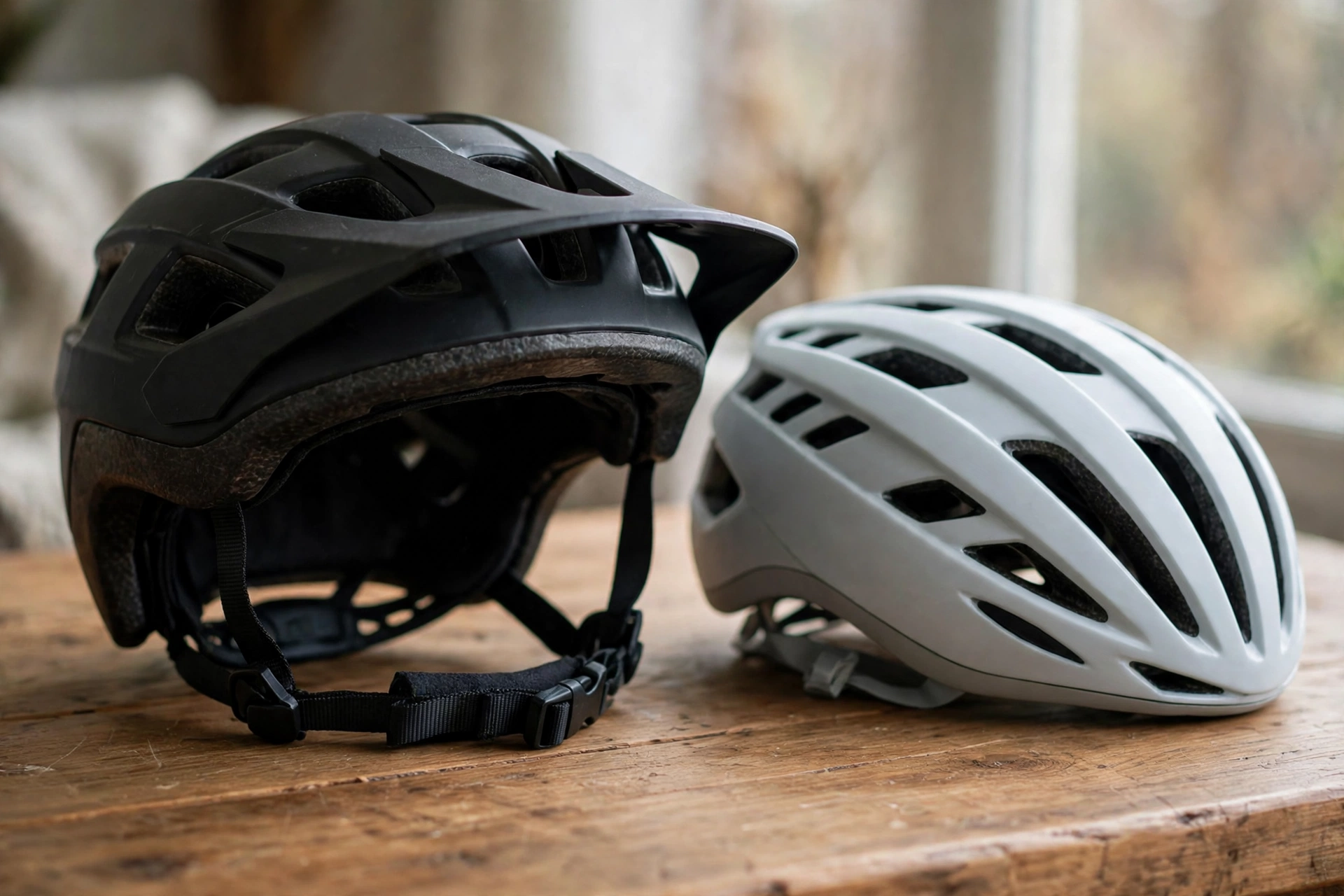
Weight is where the difference is most obvious. An in-mould helmet is usually noticeably lighter than a hard-shell helmet of the same size, because the shell is thin and there are no extra fixings. For a long ride or a full day on the bike, that saving can make the helmet feel more comfortable.
Ventilation also tends to favour in-mould helmets. Because the vents are moulded through the shell and foam together, makers can shape larger, cleaner air channels. A hard-shell helmet can still ventilate well, but the vents are often smaller or fewer, because the thicker shell is harder to shape around large openings.
That said, weight and ventilation are not everything. A hard-shell helmet that fits well and that you are happy to wear every day is a better choice than a light in-mould helmet that you leave at home because it feels fragile or costs too much to replace.
Comfort over a long session is where the weight saving shows most. A lighter helmet puts less strain on your neck, especially on a long climb or a full day on the bike, and good ventilation keeps you cooler when you are working hard. A hard-shell helmet can feel warmer and heavier by the end of the day, though many riders hardly notice the difference on short trips. If you ride for hours at a time, the lighter, better-ventilated helmet is usually the more comfortable choice.
How Do They Compare on Durability and Price?
Durability favours the hard shell. A thick ABS shell resists dents and scrapes better than a thin polycarbonate shell, and it can survive being knocked around in a bag or dropped onto a hard floor with less visible damage. That makes hard-shell helmets a good fit for commuting, skateparks and shared use, where the helmet gets rough treatment.
In-mould helmets are not fragile, but their thin shells mark more easily. A sharp knock can dent the shell, and once the shell is cracked or separated from the foam, the helmet should be replaced. Neither type can be repaired once the shell or liner is damaged.
Price usually favours the hard shell too. Hard-shell helmets are often cheaper, because the materials and the moulding process cost less. In-mould helmets tend to sit a step up in price, though the gap has narrowed as the process has become more common.
Which Type Should You Choose?
Choose a hard-shell helmet if you want a tough, affordable helmet that can take rough handling, or if you ride in places where the helmet is likely to get knocked about. It suits commuting, skateparks, BMX and any use where durability matters more than minimum weight.
Choose an in-mould helmet if you want the lightest helmet you can get, with good ventilation and a smooth finish, and you are willing to take a little more care with it. It suits road cycling, mountain biking, climbing and skiing, where weight and airflow make a real difference over a long session.
Whichever type you choose, check the fit first and the safety standard second. A helmet that fits well and meets a recognised standard will protect you far better than a helmet chosen for its construction type alone. If you are learning about helmet technology, reading about what MIPS is for helmets can help you understand a feature that may be fitted inside either type.
Frequently Asked Questions
Q: Is a hard shell helmet safer than an in-mould helmet?
A: Not automatically. Both types can meet the same safety standards, and both rely on the foam liner to absorb energy. The shell type affects weight and toughness, not the basic level of protection.
Q: Why are in-mould helmets more expensive?
A: The moulding process needs precise tooling, and the thin polycarbonate shell costs more to produce than a thick ABS shell. The price gap has narrowed, but in-mould helmets still tend to cost more.
Q: Can I use a hard shell helmet for road cycling?
A: Yes. A hard-shell helmet that fits and meets a recognised standard is fine for road cycling. You may find it heavier and less ventilated than an in-mould helmet, but it will still protect you.

Olivia
Writer at Helmet Today, covering helmet reviews, fit and riding safety.